






















The best tennis racquets
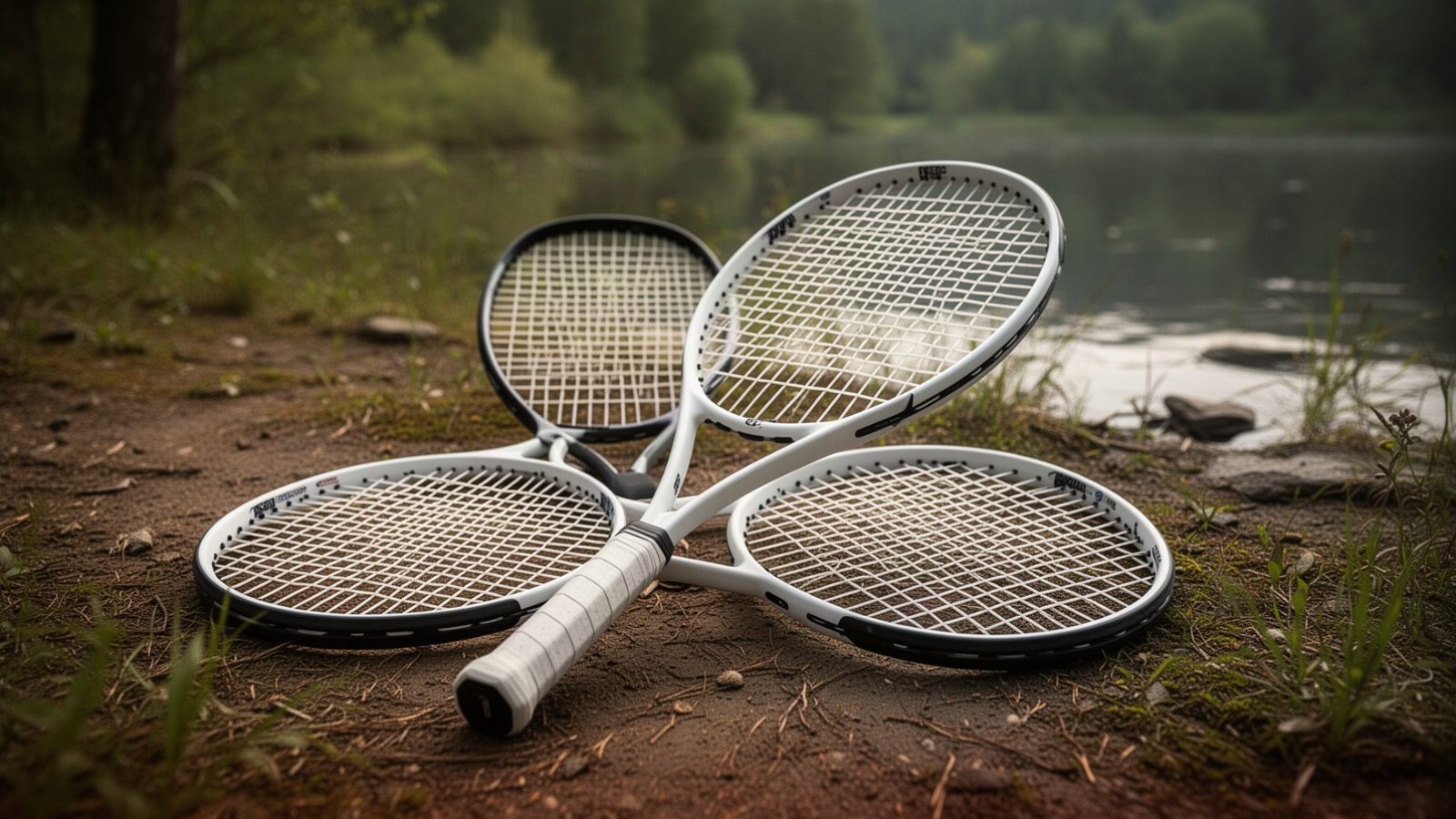
Five adult tennis racquets compared — powerful all-rounders, a flexible comfort frame, a control-focused players’ racquet and a light oversized frame for beginners.
As an Amazon Associate I earn from qualifying purchases. When you buy through links on this page, we may earn a commission at no extra cost to you. Learn more
Choosing a tennis racquet is mostly about matching three numbers to your game: head size, weight and string pattern. A bigger head is more forgiving and powerful; a heavier frame is more stable and controlled but harder to swing; a more open string pattern adds spin. Get those right and almost any well-made racquet will feel good. Get them wrong and even a pro’s favorite frame will feel like a chore.
Most adult players land in the middle: a 100-square-inch head, around 10.5 ounces unstrung and a 16x19 string pattern — the “modern all-rounder” that dominates club courts. Beginners and casual players often do better with lighter, oversized frames, while advanced players may want a smaller, heavier head for control. We compared some of the most established racquets across that range.
Our top picks
-
1
 Illustration
Best overall
Babolat Pure Drive Tennis Racquet
Intermediate and advanced all-court players
Head size100 sq inWeight (unstrung)10.6 oz (300 g)String pattern16x19 -
2
 Illustration
Best for a soft feel
Wilson Clash 100 Tennis Racquet
Players who want a flexible, comfortable-feeling frame
Head size100 sq inWeight (unstrung)10.4 oz (295 g)String pattern16x19 -
3
 Illustration
Best large sweet spot
Yonex EZONE 100 Tennis Racquet
Intermediate players who want power with a plush feel
Head size100 sq inWeight (unstrung)10.6 oz (300 g)String pattern16x19 -
4
 Illustration
Best for advanced players
Wilson Pro Staff 97 Tennis Racquet
Advanced players with full, consistent swings
Head size97 sq inWeight (unstrung)11.1 oz (315 g)String pattern16x19 -
5
 Illustration
Best for beginners
HEAD Ti.S6 Tennis Racquet
Beginners, casual players and short, compact swings
Head size115 sq inWeight (unstrung)Very light, under 9 oz even strungString pattern16x19
Babolat Pure Drive Tennis Racquet
Illustration
The benchmark power-and-spin all-rounder, with a 100-square-inch head and a 16x19 pattern.
Best for: Intermediate and advanced all-court players- Head size
- 100 sq in
- Weight (unstrung)
- 10.6 oz (300 g)
- String pattern
- 16x19
- Length
- 27 inches
What we like
- Easy power from a stiff, stable frame
- Open pattern makes spin accessible
- Forgiving 100 sq in head
- Long-running model, updated regularly
Keep in mind
- Stiff frame transmits more vibration than flexible rivals
- Can feel too powerful for big hitters
- Often sold unstrung
For decades the Pure Drive has been the racquet many club players picture when they think of a modern all-rounder. It pairs a 100-square-inch head and a 16x19 pattern with a stiff, 300-gram frame, producing easy power and spin from all areas of the court.
That combination suits a huge range of players, from improving intermediates to strong club competitors. Serves and groundstrokes come off the strings with pace without needing a huge swing, and the open pattern helps the ball dip into the court.
The stiffness that delivers power also transmits more vibration than flexible frames, and players with long, fast swings sometimes find it hard to keep the ball in. If you want a little more feel, the Wilson Clash 100 is the softer alternative.
Bottom line: The default choice for most intermediate players who want power, spin and forgiveness.
Wilson Clash 100 Tennis Racquet
Illustration
An unusually flexible 100-square-inch frame designed to feel soft and connected without losing stability.
Best for: Players who want a flexible, comfortable-feeling frame- Head size
- 100 sq in
- Weight (unstrung)
- 10.4 oz (295 g)
- String pattern
- 16x19
- Frame feel
- Very flexible
What we like
- Soft, flexible feel that many players find comfortable
- Good control for a 100 sq in frame
- Forgiving and easy to swing
- Open pattern for spin
Keep in mind
- Less free power than stiffer frames
- Flexible feel takes adjusting to for some players
- Often sold unstrung
Wilson designed the Clash to be very flexible while still feeling stable, and it changed what many players expected from a modern frame. Instead of the boardy feel of stiff power racquets, the Clash bends more on contact, giving a soft, connected sensation and good control.
With a 100-square-inch head, 295-gram unstrung weight and 16x19 pattern, it covers the same broad group of players as the Pure Drive, and it is forgiving and easy to swing.
The trade-off is a little less free power, so players who rely on the racquet to do the work may need to swing more fully. For anyone who finds stiff frames harsh or wants more feel on touch shots, it is the 100-inch racquet to try first.
Bottom line: The best 100-inch frame for players who value a soft, controlled feel.
Yonex EZONE 100 Tennis Racquet
Illustration
A 100-square-inch, 300-gram all-rounder known for a large sweet spot and a plush feel.
Best for: Intermediate players who want power with a plush feel- Head size
- 100 sq in
- Weight (unstrung)
- 10.6 oz (300 g)
- String pattern
- 16x19
- Head shape
- Isometric (squared)
What we like
- Squared isometric head enlarges the sweet spot
- Good power with a more muted feel than many rivals
- Open pattern for spin
- Stable for a 300 g frame
Keep in mind
- Plush feel can blur feedback for some players
- Often sold unstrung
- Similar specs to rivals, so feel is the main differentiator
The EZONE 100 competes directly with the Pure Drive on paper — 100 square inches, 300 grams, 16x19 — but it feels different. Yonex’s squared isometric head shape spreads the sweet spot toward the corners of the string bed, and players often describe the response as plush and muted rather than crisp.
That makes it a strong choice for intermediate players who want easy power and spin but find stiffer frames harsh. It is stable for its weight and comfortable from the baseline.
Players who like sharp feedback on every shot may find it a little dampened. Because so many 100-inch racquets share similar numbers, it is worth trying a demo of the Pure Drive, Clash and EZONE if you can, and picking the one that feels best.
Bottom line: A powerful, forgiving all-rounder with a plusher feel than most of its rivals.
Wilson Pro Staff 97 Tennis Racquet
Illustration
A heavier, control-oriented players’ racquet with a 97-square-inch head.
Best for: Advanced players with full, consistent swings- Head size
- 97 sq in
- Weight (unstrung)
- 11.1 oz (315 g)
- String pattern
- 16x19
- Balance
- Head-light
What we like
- Precise, controlled response
- Heavier frame is stable against hard hitters
- Classic feel favored by many advanced players
- Head-light balance keeps it maneuverable
Keep in mind
- Smaller sweet spot punishes mishits
- Demands good technique and swing speed
- Less free power than 100 sq in frames
The Pro Staff name has a long history in tennis, and the Pro Staff 97 is its most approachable modern form for strong club players. The 97-square-inch head and 315-gram unstrung weight give a solid, precise feel that lets advanced players swing out with confidence.
The extra weight makes the frame stable when returning hard serves and heavy groundstrokes, and the head-light balance keeps it manageable at the net.
It is not for everyone. The smaller sweet spot is less forgiving, and players with shorter or slower swings will find it hard work and short on power. If you already hit with good technique and want more control, it is one of the classic choices.
Bottom line: A precise, stable players’ racquet for advanced hitters who want control.
HEAD Ti.S6 Tennis Racquet
Illustration
A very light, oversized and prestrung racquet that has been a recreational favorite for decades.
Best for: Beginners, casual players and short, compact swings- Head size
- 115 sq in
- Weight (unstrung)
- Very light, under 9 oz even strung
- String pattern
- 16x19
- Length
- About 27.75 inches (extended)
What we like
- Huge, forgiving 115 sq in head
- Very light and easy to swing
- Comes prestrung and ready to play
- Budget-friendly
Keep in mind
- Can feel unstable against hard-hit balls
- Too powerful and light for developing advanced strokes
- Basic factory strings
The HEAD Ti.S6 has been on recreational courts for decades because it makes tennis easier. Its oversized 115-square-inch head gives a huge sweet spot, the frame is very light and head-heavy for easy power, and the extended length adds a little reach.
For beginners, returning players and anyone with short, compact swings, that combination means more balls clear the net and land in. It comes prestrung, so it is ready to play out of the box, and it is budget-friendly.
As your strokes develop, its limits appear: it can feel unstable against heavy pace, and it gives so much power that full swings can send the ball long. At that point, step up to a 100-square-inch all-rounder.
Bottom line: A forgiving, budget-friendly racquet for beginners and relaxed recreational play.
Side-by-side comparison
| Product | Head size | Weight (unstrung) | String pattern | Length | Score |
|---|---|---|---|---|---|
| Babolat Pure Drive Tennis RacquetBest overall | 100 sq in | 10.6 oz (300 g) | 16x19 | 27 inches | 9.2 |
| Wilson Clash 100 Tennis RacquetBest for a soft feel | 100 sq in | 10.4 oz (295 g) | 16x19 | — | 9.0 |
| Yonex EZONE 100 Tennis RacquetBest large sweet spot | 100 sq in | 10.6 oz (300 g) | 16x19 | — | 8.9 |
| Wilson Pro Staff 97 Tennis RacquetBest for advanced players | 97 sq in | 11.1 oz (315 g) | 16x19 | — | 8.7 |
| HEAD Ti.S6 Tennis RacquetBest for beginners | 115 sq in | Very light, under 9 oz even strung | 16x19 | About 27.75 inches (extended) | 8.3 |
Specifications are from manufacturer listings at the time of writing and can change between production runs.
Head size
- Midsize to midplus (95–98 sq in): more control and precision, smaller sweet spot. Suits advanced players with full, consistent swings.
- 100 sq in: the most popular size — a good blend of forgiveness, power and control for most club players.
- Oversize (105 sq in and up): big sweet spot and easy power, ideal for beginners, casual players and those with shorter swings.
Weight and balance
Unstrung weights usually range from about 8 to 11.5 ounces. Lighter racquets are easy to swing and maneuver but less stable against hard-hitting opponents. Heavier racquets absorb pace, feel solid and give more control, but they demand good technique and fitness. Head-heavy balance adds power to light frames; head-light balance makes heavier frames easier to whip around at the net.
String pattern and stiffness
A 16x19 pattern (16 main strings, 19 cross strings) is open, making spin and power easier. An 18x20 pattern is denser for more control and a flatter ball. Stiffer frames return more power but transmit more vibration; flexible frames feel softer and more connected, at the cost of a little free power.
Grip size
US grip sizes run from about 4 inches to 4 5/8 inches. A common way to check is that your index finger should just fit between your fingertips and the base of your palm when you hold the handle. If you are between sizes, choose the smaller one — you can build it up with an overgrip, but you cannot make a grip smaller. Many shops and clubs rent or lend demo racquets, and hitting with two or three frames before you buy is the most reliable way to choose.
Strung or unstrung?
Many performance racquets are sold unstrung so you can choose your own string and tension at a pro shop. Recreational racquets are usually prestrung. If you buy unstrung, budget for stringing and start in the middle of the manufacturer's recommended tension range. Polyester strings add spin and control for full swings; synthetic gut and multifilament strings feel softer and suit most recreational players.
Care tips
Do not leave racquets in hot cars, which can damage strings and frames. Replace the overgrip when it gets slick, use a bumper guard to protect the frame from scrapes, and restring regularly — many players aim for roughly as many times a year as they play per week.
Frequently asked questions
What tennis racquet should a beginner buy?
Most adult beginners do well with a light to medium-weight racquet with a large head of about 100 to 110 square inches or more. It is forgiving on off-center hits and gives easy power while you develop your swing.
What does 16x19 mean on a tennis racquet?
It is the string pattern: 16 main (vertical) strings and 19 cross strings. Open patterns like 16x19 make spin and power easier; denser patterns like 18x20 favor control.
How do I choose the right grip size?
A common check is that your index finger fits between your fingertips and palm when you hold the grip. If you are between sizes, choose the smaller grip and add an overgrip.
How often should I restring my racquet?
A widely used rule of thumb is to restring as many times per year as you play per week. Players who use polyester strings or hit with heavy spin often restring more frequently.
Do professional players use the same racquets sold in stores?
The models share names and designs, but many professionals have their frames customized with extra weight, different grips and specific strings. The retail versions are designed for a wider range of players.
How we picked
We compared manufacturer specifications for head size, unstrung weight, string pattern, length and intended player level, along with independent reviews and player feedback on feel, power and control, for established tennis racquets consistently available online. Our picks and scores are based on this research — we have not tested these products hands-on. Brands cannot pay to be included. Read our full method.