






















The best tennis balls
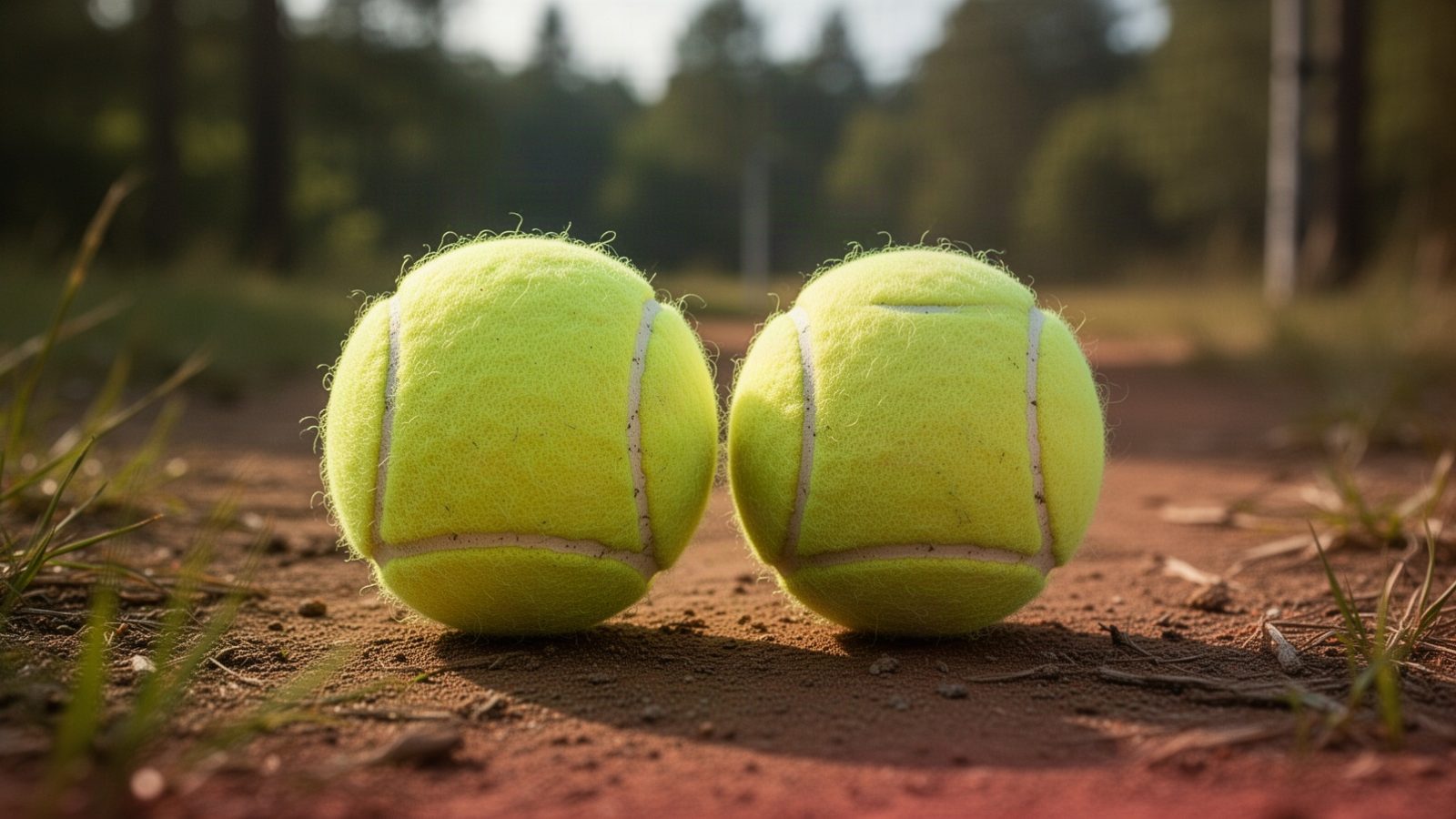
Five tennis balls compared — match balls for hard courts and clay, an everyday club ball, a pressureless practice ball and a slower orange ball for kids.
As an Amazon Associate I earn from qualifying purchases. When you buy through links on this page, we may earn a commission at no extra cost to you. Learn more
A can of tennis balls is the most frequent purchase any tennis player makes, and it is easy to grab whatever is on the shelf. But the ball affects how the game feels: the wrong felt for your court wears out in a set or plays heavy and slow, and a ball that has lost pressure bounces low and dull no matter how well you hit it.
The choice comes down to a few questions. Are you playing on hard courts or clay? Is this for matches, casual hitting or a ball machine? Is the player an adult or a child still learning on a smaller court? Answer those and the right ball is obvious. We compared some of the most widely used balls in the US and explain which one suits each situation.
Our top picks
-
1
 Illustration
Best overall
Wilson US Open Extra Duty Tennis Balls
Match play on hard courts
TypePressurized, extra-duty feltBest surfaceHard courtsBest useMatches and league play -
2
 Illustration
Best value
Penn Championship Extra Duty Tennis Balls
Everyday club play and practice
TypePressurized, extra-duty feltBest surfaceHard courtsBest useRecreational play and practice -
3
 Illustration
Best for clay and indoor courts
Wilson US Open Regular Duty Tennis Balls
Clay and indoor court players
TypePressurized, regular-duty feltBest surfaceClay and indoor courtsBest useMatches and league play -
4
 Illustration
Best pressureless
Tretorn Micro X Pressureless Tennis Balls
Ball machines, practice baskets and occasional players
TypePressurelessBest surfaceAll surfaces (practice)Best useBall machines and practice baskets -
5
 Illustration
Best for kids
Penn QST 60 Orange Felt Tennis Balls
Young players learning on 60-foot courts
TypeLow-compression orange stage ballBest surface60-foot youth courtsBest useKids learning to rally
Wilson US Open Extra Duty Tennis Balls
Illustration
The official ball of the US Open, with extra-duty felt for hard courts.
Best for: Match play on hard courts- Type
- Pressurized, extra-duty felt
- Best surface
- Hard courts
- Best use
- Matches and league play
- Official status
- Official ball of the US Open
What we like
- Same ball used at the US Open
- Durable extra-duty felt for hard courts
- Consistent bounce from can to can
- Widely sold in single cans and cases
Keep in mind
- Loses pressure once opened, like all pressurized balls
- Felt fluffs up and plays heavy on clay
- Premium-priced compared with everyday club balls
If you want one ball for hard-court matches, the Wilson US Open Extra Duty is the natural choice. It is the official ball of the US Open, and its extra-duty felt is designed for the abrasive acrylic and asphalt courts most American players use.
Players generally find it consistent from can to can, with a lively bounce when fresh and felt that holds up well through a match. It is also easy to find in single cans and multi-can cases, which matters for league players.
Like every pressurized ball, it starts losing bounce once the can is opened, and its thick felt is not ideal for clay. For hard-court match play, though, it sets the standard.
Bottom line: The best all-round match ball for hard courts.
Penn Championship Extra Duty Tennis Balls
Illustration
A long-standing everyday ball for recreational players on hard courts.
Best for: Everyday club play and practice- Type
- Pressurized, extra-duty felt
- Best surface
- Hard courts
- Best use
- Recreational play and practice
- Sold as
- Cans and multi-can cases
What we like
- Budget-friendly for regular players
- Extra-duty felt suits hard courts
- Easy to find almost everywhere
- Familiar feel for most recreational players
Keep in mind
- Loses bounce faster than premium match balls
- Not designed for clay courts
- Less consistent than top tournament balls
Penn Championship has been the everyday ball of American recreational tennis for decades. It is the can most club players reach for when they want fresh balls without paying for a premium match ball, and it is stocked almost everywhere.
The extra-duty version is designed for hard courts, and it plays well for casual matches, drills and hitting sessions. Most players will notice it losing bounce a little sooner than premium balls, which is the main trade-off for the budget-friendly price.
If you play several times a week, buying it by the case keeps fresh balls on hand. For important matches, a premium ball such as the Wilson US Open gives a little more consistency.
Bottom line: The sensible everyday ball for recreational hard-court play.
Wilson US Open Regular Duty Tennis Balls
Illustration
The regular-duty version of the US Open ball, with thinner felt that picks up less clay.
Best for: Clay and indoor court players- Type
- Pressurized, regular-duty felt
- Best surface
- Clay and indoor courts
- Best use
- Matches and league play
What we like
- Thinner felt stays lighter on clay
- Plays faster and cleaner on indoor courts
- Same trusted line as the US Open ball
- Good consistency between cans
Keep in mind
- Wears quickly on hard courts
- Loses pressure once opened
- Less common in stores than extra-duty balls
Clay-court players need a different ball. Extra-duty felt fluffs up and collects clay, making the ball heavy and slow after a few games. The regular-duty version of Wilson’s US Open ball uses thinner felt that sheds clay better and stays livelier.
It also suits indoor courts, where the surface is smooth and thick felt is unnecessary. Players get the same consistency they expect from the US Open line.
The caveat is simple: do not use it on outdoor hard courts, where the thinner felt wears bald quickly. Clay and indoor players who struggle with heavy, slow balls should make the switch.
Bottom line: The right match ball for clay and indoor courts.
Tretorn Micro X Pressureless Tennis Balls
Illustration
A pressureless ball with a micro-cellular core that keeps its bounce until the felt wears out.
Best for: Ball machines, practice baskets and occasional players- Type
- Pressureless
- Best surface
- All surfaces (practice)
- Best use
- Ball machines and practice baskets
- Core
- Micro-cellular
What we like
- Does not go flat after opening
- Long-lasting for practice and ball machines
- Good for occasional players who hit infrequently
- Consistent bounce over many sessions
Keep in mind
- Feels firmer and heavier than fresh pressurized balls
- Not what most players want for matches
- Felt eventually wears smooth
A pressurized ball starts dying as soon as the can is opened, which is wasteful if you fill a practice basket or ball machine. Tretorn’s Micro X takes a different approach: instead of pressurized air, its core is made of tiny gas-filled cells that keep the bounce consistent until the felt itself wears out.
That makes it a long-standing favorite for coaches, ball machines and players who only hit occasionally and are tired of finding flat balls in the bag.
The feel is the trade-off. Pressureless balls feel firmer and heavier off the strings than a fresh pressurized ball, so most players switch back to a standard ball for matches.
Bottom line: The practical choice for practice baskets, ball machines and occasional hitters.
Penn QST 60 Orange Felt Tennis Balls
Illustration
A slower, lower-bouncing orange stage ball that helps kids rally on smaller courts.
Best for: Young players learning on 60-foot courts- Type
- Low-compression orange stage ball
- Best surface
- 60-foot youth courts
- Best use
- Kids learning to rally
What we like
- Slower, lower bounce suits smaller players
- Helps kids rally sooner and build confidence
- Fits youth tennis progression
- Also useful for adult beginners on short courts
Keep in mind
- Too slow for full-court adult play
- Only suits one stage of the youth progression
- Felt wears like any ball
Children learning with standard balls spend most of their time chasing balls bouncing above their heads. Stage balls fix that, and Penn’s QST 60 is the orange ball designed for 60-foot courts, the middle step of the youth progression.
It is slower and bounces lower than a standard ball, so kids using shorter racquets can hit in their strike zone and keep rallies going. That makes lessons and family hitting sessions far more fun.
It is not a ball for full-court adult play, and children will move on to green balls as they grow. Follow the guidance of your child's coach or youth program on which stage fits.
Bottom line: An easy way to help young players rally sooner on smaller courts.
Side-by-side comparison
| Product | Type | Best surface | Best use | Official status | Score |
|---|---|---|---|---|---|
| Wilson US Open Extra Duty Tennis BallsBest overall | Pressurized, extra-duty felt | Hard courts | Matches and league play | Official ball of the US Open | 9.1 |
| Penn Championship Extra Duty Tennis BallsBest value | Pressurized, extra-duty felt | Hard courts | Recreational play and practice | — | 8.8 |
| Wilson US Open Regular Duty Tennis BallsBest for clay and indoor courts | Pressurized, regular-duty felt | Clay and indoor courts | Matches and league play | — | 8.6 |
| Tretorn Micro X Pressureless Tennis BallsBest pressureless | Pressureless | All surfaces (practice) | Ball machines and practice baskets | — | 8.4 |
| Penn QST 60 Orange Felt Tennis BallsBest for kids | Low-compression orange stage ball | 60-foot youth courts | Kids learning to rally | — | 8.2 |
Specifications are from manufacturer listings at the time of writing and can change between production runs.
Pressurized or pressureless?
Pressurized balls have air inside at higher than atmospheric pressure, which gives them a lively bounce and a soft feel. They are what you play matches with, but they start losing pressure as soon as the can is opened. Pressureless balls get their bounce from a thicker or specially engineered rubber core. They feel firmer and heavier at first, but they do not go flat — the felt wears out instead — which makes them popular for ball machines, practice baskets and occasional players.
Extra duty or regular duty?
- Extra-duty felt is thicker and more tightly woven, so it lasts longer on abrasive hard courts.
- Regular-duty felt is thinner and picks up less clay, so it stays lighter and faster on clay and indoor courts.
Using a regular-duty ball on hard courts wears the felt bald quickly; using an extra-duty ball on clay makes it fluff up and play heavy.
How long tennis balls last
Once opened, pressurized balls gradually lose their bounce. Regular players often find a can good for one to three sessions before the balls feel noticeably dead, while casual players may stretch it further for relaxed hitting. Signs it is time for a new can: the ball bounces noticeably lower than a fresh one, feels soft when squeezed, or the felt is worn smooth. Unopened cans stay fresh much longer, but not forever, so do not stockpile years of supply.
Balls for kids and beginners
Youth tennis uses slower, lower-bouncing stage balls so children can rally on smaller courts with smaller racquets:
- Red balls (often foam or low-compression felt) for the youngest players on 36-foot courts.
- Orange balls for 60-foot courts.
- Green balls, slightly slower than standard, for full courts as players transition.
Adult beginners can also enjoy green balls, which give more time to set up for each shot.
Specialty balls and care
High-altitude balls are made with lower internal pressure for courts well above sea level, where standard balls fly fast and bounce high. Whatever you buy, store opened balls at room temperature rather than in a hot car, and keep pressurized balls in their sealed can until you need them. Old balls still have uses — for dogs, chair legs and practice drills — and some programs collect them for recycling.
Frequently asked questions
How long does a can of tennis balls last?
Once opened, pressurized balls lose bounce over time and with play. Regular players often replace them after one to three sessions, while casual players may use them longer for relaxed hitting.
What is the difference between extra duty and regular duty tennis balls?
Extra-duty balls have thicker felt that lasts longer on hard courts. Regular-duty balls have thinner felt that picks up less clay, making them better for clay and indoor courts.
Are pressureless tennis balls good for matches?
They are mainly used for practice, ball machines and casual play. They feel firmer and heavier than fresh pressurized balls, so most players prefer pressurized balls for matches.
Can you restore the pressure in old tennis balls?
Some pressurizing containers claim to slow pressure loss, but there is no simple way to fully restore a flat ball. For matches, a fresh can gives the most consistent bounce.
What color tennis ball should kids use?
It depends on age and court size. Red balls are for the youngest players on short courts, orange for 60-foot courts and green for players moving to the full court. Coaches and youth programs can advise on the right stage.
How we picked
We compared ball type, felt, intended court surface, intended player level and official-ball status published by the manufacturers, along with independent player feedback on durability and consistency, for tennis balls consistently available online. Our picks and scores are based on this research — we have not tested these products hands-on. Brands cannot pay to be included. Read our full method.