






















The best pickleball paddles
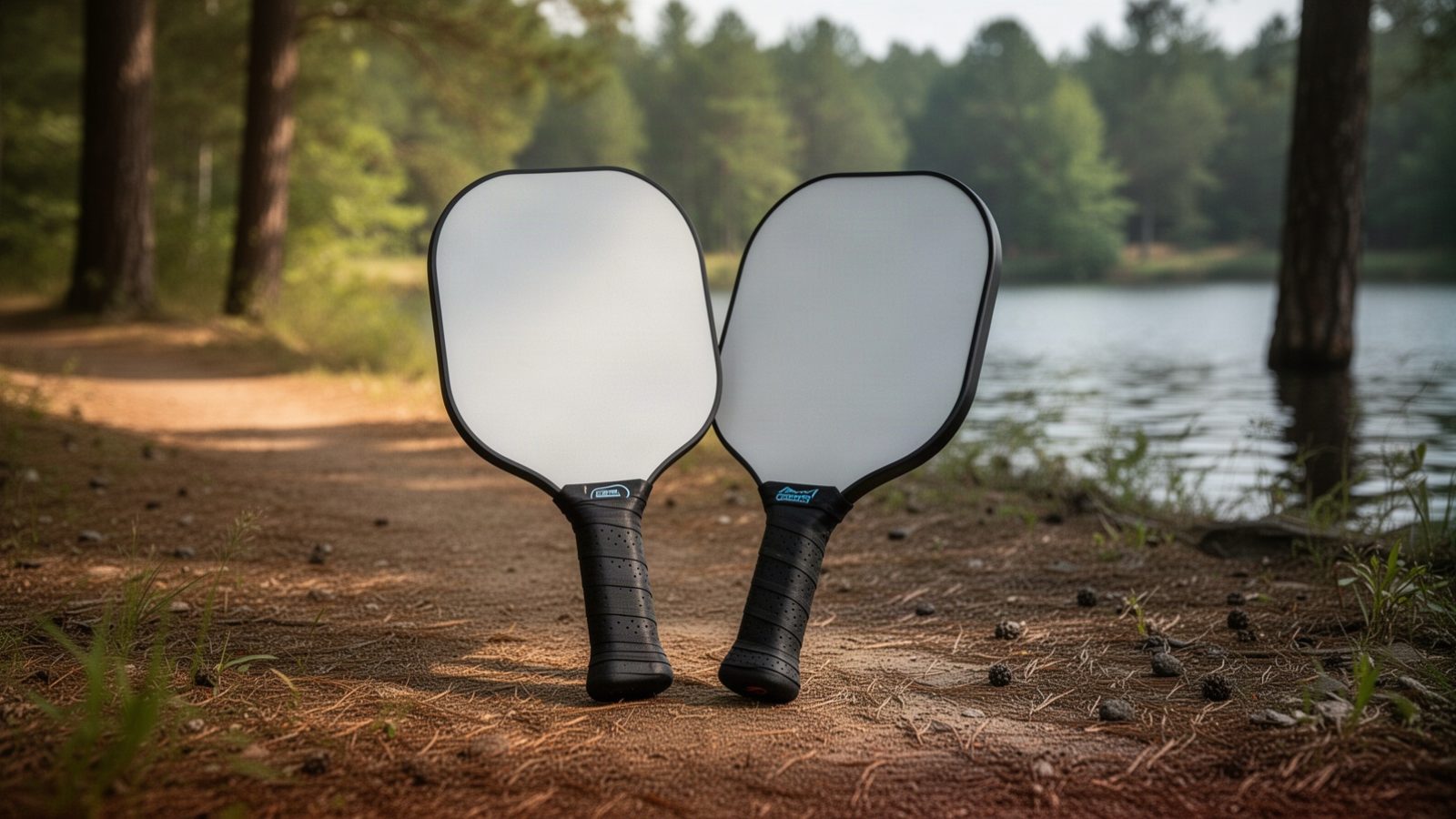
Four pickleball paddles compared — a carbon-face elongated paddle for spin and reach, a classic wide-body graphite paddle, a soft-touch control paddle and a budget pick for beginners.
As an Amazon Associate I earn from qualifying purchases. When you buy through links on this page, we may earn a commission at no extra cost to you. Learn more
Pickleball paddles all look like oversized ping pong paddles, but small differences in face material, core thickness and shape change how the ball comes off them. A thicker core feels softer and more controlled at the kitchen line; a textured carbon face adds spin; an elongated shape adds reach and power at the cost of a smaller sweet spot.
For most recreational players, the best paddle is the one that forgives off-center hits and feels comfortable for a couple of hours of doubles. Competitive players care more about spin, power and the exact weight and handle length. We compared well-established paddles across that range — from a budget-friendly beginner paddle to a carbon-face favorite among competitive players — and explain how to choose between them.
Our top picks
-
1
 Illustration
Best overall
JOOLA Ben Johns Hyperion CFS 16 Paddle
Improving and competitive players who want spin and reach
FaceTextured carbon fiberCorePolymer honeycomb, 16 mmShapeElongated -
2
 Illustration
Best for touch
Paddletek Tempest Wave Pro Paddle
Control players who live at the kitchen line
FaceTextured compositeCorePolymer honeycombShapeStandard, wide face -
3
 Illustration
Best wide body
Onix Graphite Z5 Paddle
Recreational players who want a big sweet spot
FaceGraphiteCoreNomex honeycombShapeWide body -
4
 Illustration
Best for beginners
HEAD Radical Elite Paddle
New players and occasional recreational games
FaceFiberglass compositeCorePolymer honeycombShapeStandard
JOOLA Ben Johns Hyperion CFS 16 Paddle
Illustration
An elongated carbon-face paddle with a thick 16 mm core that balances spin, control and reach.
Best for: Improving and competitive players who want spin and reach- Face
- Textured carbon fiber
- Core
- Polymer honeycomb, 16 mm
- Shape
- Elongated
- Size
- About 16.5 × 7.5 inches
What we like
- Textured carbon face generates plenty of spin
- Thick 16 mm core keeps dinks and resets controlled
- Elongated shape adds reach and power on drives
- Long handle leaves room for two-handed backhands
Keep in mind
- Smaller sweet spot than wide-body paddles
- Premium-priced
- Can feel head-heavy for beginners
The Hyperion CFS 16 is the elongated paddle associated with Ben Johns, one of the sport's most successful players, and it became one of the reference points for modern carbon-face paddles. Its textured carbon surface grips the ball for spin on serves, drives and rolls, while the thick 16 mm polymer core keeps soft shots at the kitchen line calm and predictable.
The elongated shape gives extra reach and leverage, and the long handle suits players who hit two-handed backhands.
The trade-offs come with that shape. The sweet spot is narrower than on a wide-body paddle, so off-center hits are less forgiving, and the extra length can feel head-heavy to newer players. For anyone who has outgrown a beginner paddle and wants more spin and reach, it is a strong all-round upgrade.
Bottom line: The best all-round upgrade for players who want carbon-face spin with a controlled feel.
Paddletek Tempest Wave Pro Paddle
Illustration
A long-running control paddle with a textured face and a soft, forgiving response.
Best for: Control players who live at the kitchen line- Face
- Textured composite
- Core
- Polymer honeycomb
- Shape
- Standard, wide face
What we like
- Soft, controlled feel for dinks and drops
- Forgiving face for off-center hits
- Textured surface adds some spin
- Long-running design with a loyal following
Keep in mind
- Less raw power than elongated carbon paddles
- Shorter reach than elongated shapes
- Premium-priced for a non-carbon paddle
The Tempest Wave Pro has been around for years in a sport where paddles change constantly, and it keeps a loyal following among players who win points with patience rather than power. Its textured composite face and polymer core give a soft, muted response that makes dinks, drops and resets easier to place.
The standard shape keeps the face wide and forgiving, so balls hit slightly off-center still go roughly where you intended — a real advantage during fast hand battles at the net.
What you give up is pace. Hard drivers and players who rely on put-aways will find more power in elongated carbon paddles. If your game is built around control at the kitchen line, the Tempest Wave Pro rewards it.
Bottom line: A proven control paddle for patient players who value placement over power.
Onix Graphite Z5 Paddle
Illustration
A classic wide-body paddle with a light graphite face and a Nomex honeycomb core.
Best for: Recreational players who want a big sweet spot- Face
- Graphite
- Core
- Nomex honeycomb
- Shape
- Wide body
What we like
- Wide face with a generous sweet spot
- Light graphite face is quick in hand battles
- Crisp, responsive feel on volleys
- One of the most widely played paddles for years
Keep in mind
- Nomex core is louder than polymer cores
- Less spin than textured carbon faces
- Firmer feel on soft shots
The Onix Graphite Z5 is one of the paddles that helped pickleball grow, and it remains a sensible choice for recreational players. Its wide-body shape gives a big, forgiving sweet spot, and the thin graphite face feels crisp and quick when the ball comes at you fast at the net.
Under the face is a Nomex honeycomb core. It gives the Z5 a lively, responsive feel, but it is also louder than modern polymer cores — worth knowing if your local courts are near homes and have noise guidance.
The smooth graphite surface produces less spin than textured carbon paddles, and soft shots feel a little firmer. For social doubles and players who want forgiveness above all, those are reasonable trade-offs.
Bottom line: A forgiving, proven wide-body paddle for social and recreational doubles.
HEAD Radical Elite Paddle
Illustration
A budget-friendly composite paddle with a polymer core from a major racquet-sports brand.
Best for: New players and occasional recreational games- Face
- Fiberglass composite
- Core
- Polymer honeycomb
- Shape
- Standard
What we like
- Budget-friendly way to start playing
- Composite face gives easy power for beginners
- Quiet polymer core
- Widely available from a long-established racquet brand
Keep in mind
- Little spin compared with textured faces
- Feel and consistency fall short of premium paddles
- You may outgrow it as your game develops
If you are just starting out or need spare paddles for friends and family, there is little reason to spend heavily. HEAD’s Radical Elite gives new players a well-made, budget-friendly paddle from a brand with a long racquet-sports history.
The composite face is a little springy, which helps beginners get the ball deep without swinging hard, and the polymer honeycomb core keeps it quiet. The standard shape gives a reasonably forgiving hitting area for learning the basics.
As your game improves, you will notice what it lacks: less spin than textured carbon paddles, and a less refined, consistent feel on delicate shots. At that point it makes a good backup paddle while you upgrade.
Bottom line: A sensible, budget-friendly first paddle for new and occasional players.
Side-by-side comparison
| Product | Face | Core | Shape | Size | Score |
|---|---|---|---|---|---|
| JOOLA Ben Johns Hyperion CFS 16 PaddleBest overall | Textured carbon fiber | Polymer honeycomb, 16 mm | Elongated | About 16.5 × 7.5 inches | 9.2 |
| Paddletek Tempest Wave Pro PaddleBest for touch | Textured composite | Polymer honeycomb | Standard, wide face | — | 8.8 |
| Onix Graphite Z5 PaddleBest wide body | Graphite | Nomex honeycomb | Wide body | — | 8.5 |
| HEAD Radical Elite PaddleBest for beginners | Fiberglass composite | Polymer honeycomb | Standard | — | 8.0 |
Specifications are from manufacturer listings at the time of writing and can change between production runs.
Face material
- Fiberglass (composite) faces are a little springy, giving easy power. They are common on budget and beginner paddles.
- Graphite faces are thin, stiff and light, which gives a crisp, precise feel.
- Raw or textured carbon fiber grips the ball for more spin and gives a controlled, consistent response. It is the material of choice on most modern performance paddles.
Core material and thickness
Most paddles use a polymer (polypropylene) honeycomb core, which is quiet and soft. Older Nomex cores are harder and louder — some communities with noise rules discourage them — and aluminum cores are light but less common now. Thickness matters as much as material: 16 mm cores feel softer and more controlled, while 13–14 mm cores feel livelier and pop the ball faster.
Shape and weight
- Standard or wide-body paddles have the biggest sweet spot and are the most forgiving — ideal for beginners and fast exchanges at the net.
- Elongated paddles are longer and narrower, adding reach and power on serves and drives, but they are less forgiving on mishits.
- Weight: most paddles sit around 7.5 to 8.5 ounces. Lighter paddles are quicker at the net; heavier ones add power and stability. Lead tape lets you fine-tune later.
Grip circumference matters too. If you are between sizes, choose the smaller grip and add an overgrip. Handle length is worth checking if you hit two-handed backhands: longer handles of around 5.5 inches leave room for both hands, while shorter handles leave more of the length for the face.
Where to spend and where to save
Beginners and occasional players gain little from a premium carbon paddle; a forgiving, budget-friendly composite paddle lets you learn the basics and work out what you like. Once you play several times a week, a better paddle starts to pay off in spin, touch and consistency. Buying a spare budget paddle for guests is also handy if you host games.
Rules and approval
If you play in sanctioned tournaments, your paddle must appear on the USA Pickleball approved list. Most established brands' paddles do, but check the list for the exact model — approvals can change. Recreational club play rarely enforces this, though many leagues follow the same list.
Care
Store paddles out of hot cars, where heat can weaken adhesives and cores. Clean textured faces gently with a damp cloth or a dedicated face eraser, without harsh solvents. Replace the overgrip when it gets slick. An edge guard protects the paddle from scrapes when you scoop low balls, but a cracked face or a rattling, dead-feeling core means it is time to replace it.
Frequently asked questions
What pickleball paddle weight is best for beginners?
A midweight paddle of roughly 7.5 to 8.2 ounces suits most beginners. It is light enough to react quickly at the net while still giving enough stability and power for serves and drives.
Is a 16 mm or 14 mm paddle better?
A 16 mm core feels softer and more controlled, which helps with dinks and resets. A 13–14 mm core feels livelier and adds pop. Most beginners and control-oriented players prefer 16 mm.
Are carbon fiber paddles worth it?
For improving and competitive players, often yes. Textured carbon faces add spin and a consistent feel. Beginners can enjoy the game just as much with a budget-friendly fiberglass paddle.
Do I need a USA Pickleball approved paddle?
Only for sanctioned tournaments and leagues that require it. Check the USA Pickleball approved list for your exact model if you plan to compete.
How long does a pickleball paddle last?
It depends on how often you play. Regular players may notice a textured face losing grip or the core softening within months to a couple of years, while occasional players can use one paddle much longer.
How we picked
We compared face and core materials, core thickness, shape, published weight ranges and approval status for well-established pickleball paddles consistently available online, along with independent reviews and player feedback on feel and durability. Our picks and scores are based on this research — we have not tested these products hands-on. Brands cannot pay to be included. Read our full method.