






















The best wireless lavalier microphones
Six clip-on wireless mic systems compared — Rode, Hollyland, Sennheiser and Shure — for phone videos, interviews, vlogging and camera work.
As an Amazon Associate I earn from qualifying purchases. When you buy through links on this page, we may earn a commission at no extra cost to you. Learn more
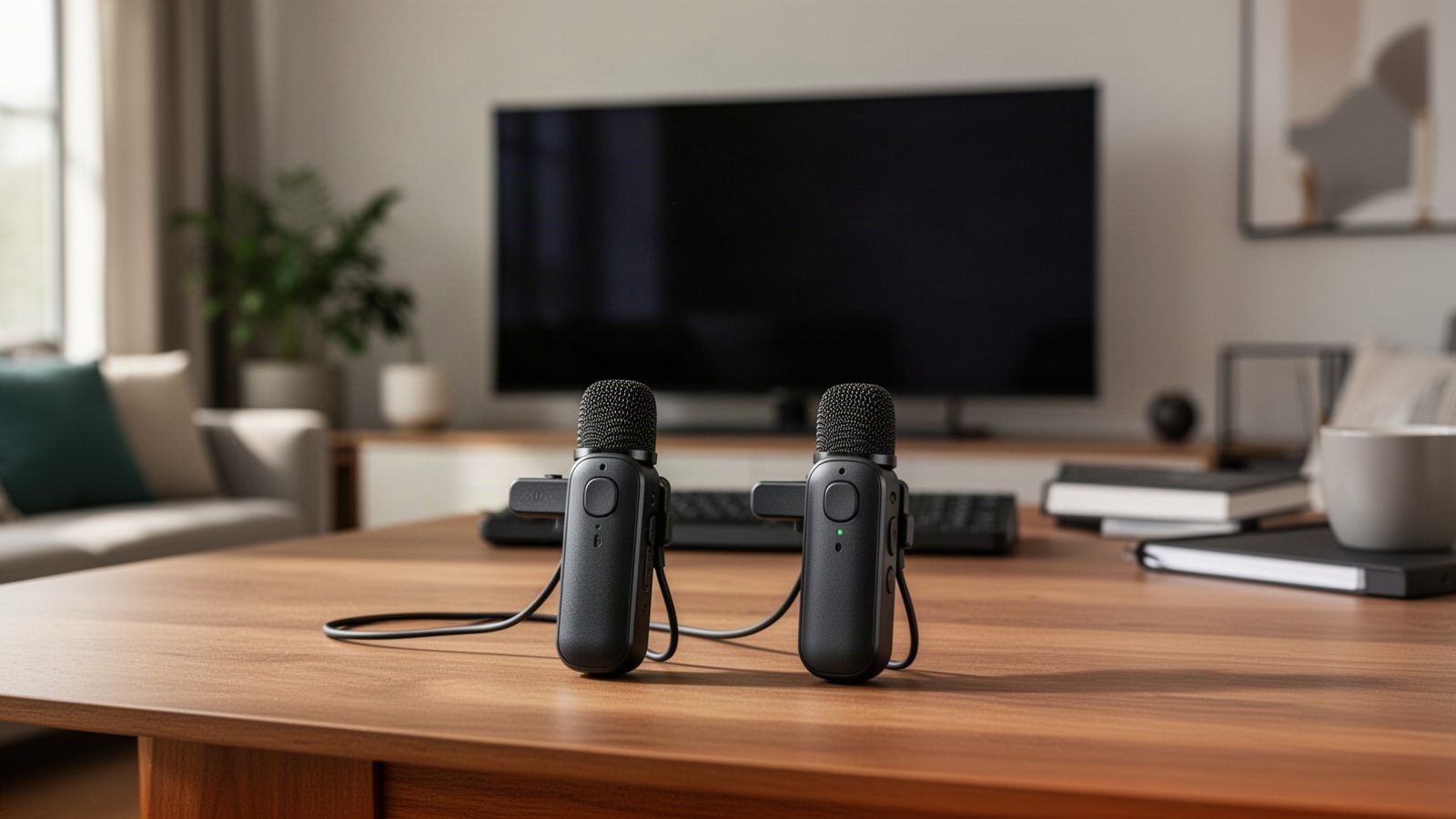
Bad audio ruins good video faster than anything else. Built-in phone and camera microphones pick up room echo, wind and background chatter, and the speaker’s voice gets lost as soon as they step back. A wireless clip-on microphone fixes that by putting a small mic a few inches from the speaker’s mouth and sending the sound wirelessly to your phone, camera or computer.
Today’s systems are tiny: a matchbox-size transmitter clips to a collar and a small receiver plugs into your device, often with a charging case to keep everything topped up. Many record a backup copy inside the transmitter, so a wireless dropout doesn’t cost you the take. We compared popular wireless mic kits from Rode, Hollyland, Sennheiser and Shure — looking at what each connects to, kit contents, on-board recording, noise reduction and ease of use — and picked the best for creators, interviewers, professionals and tighter budgets.
Our top picks
-
1
 Illustration
Best overall
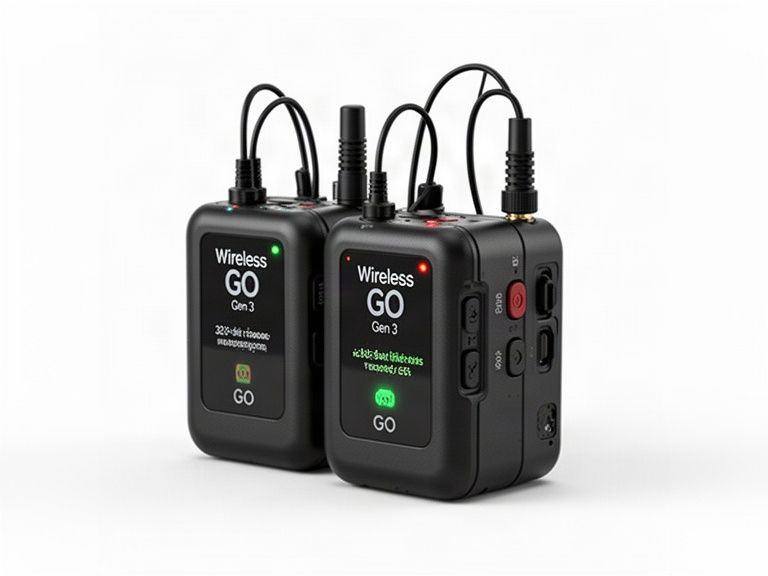
Rode Wireless GO (Gen 3)
Creators who film with cameras, phones and computers
KitTwo transmitters + receiverConnects toCameras, phones and computersStandout feature32-bit float on-board recording -
2
 Illustration
Best for professionals
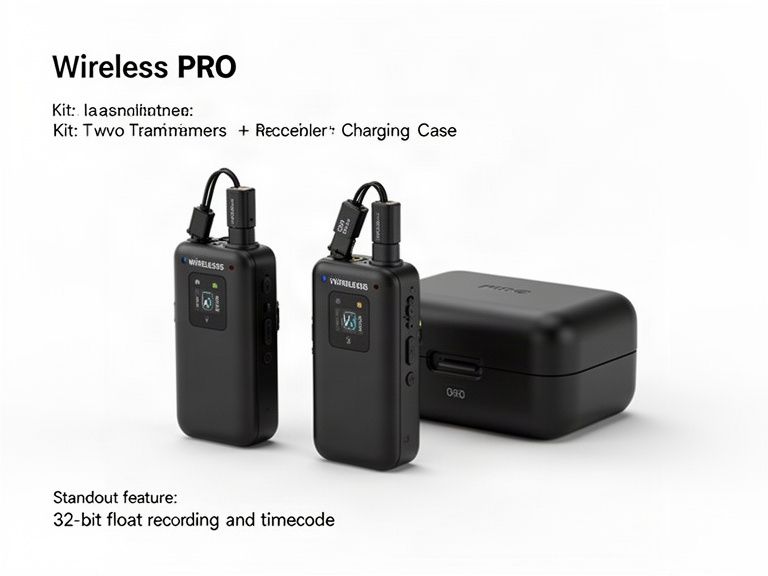
Rode Wireless PRO
Filmmakers and professional productions
KitTwo transmitters + receiver, charging caseConnects toCameras, phones and computersStandout feature32-bit float recording and timecode -
3
 Illustration
Best for phones
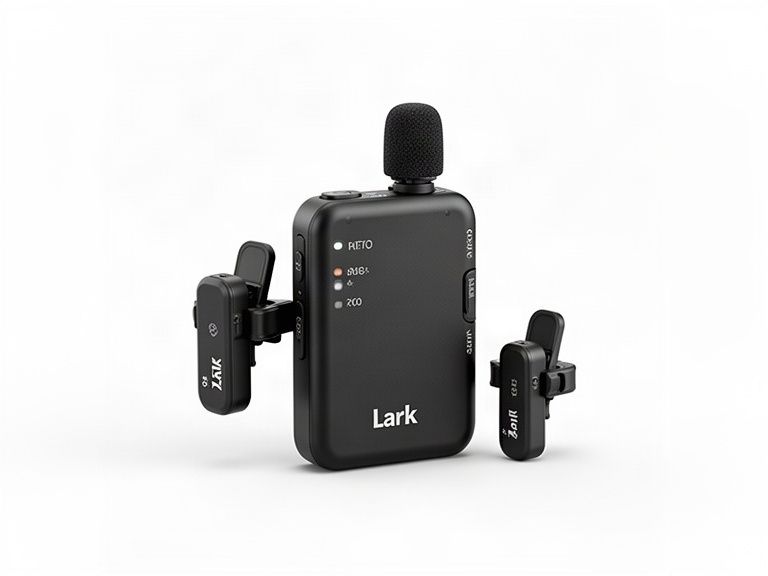
Hollyland Lark M2S
Phone creators, vloggers and social video
KitTwo transmitters + receiver (kits vary)Connects toPhones; cameras with the camera kitStandout featureVery small, discreet transmitters -
4
 Illustration
Best for flexibility
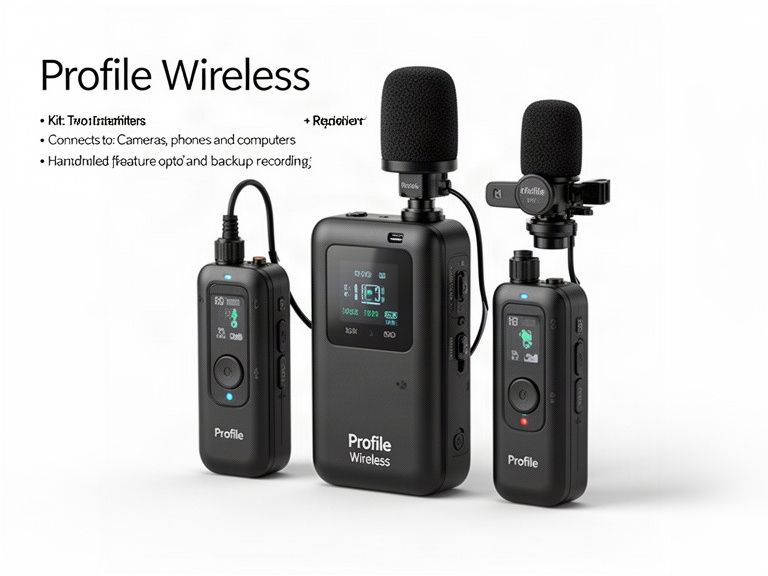
Sennheiser Profile Wireless
Creators who switch between clip-on and handheld use
KitTwo transmitters + receiverConnects toCameras, phones and computersStandout featureHandheld option and backup recording -
5
 Illustration
Best receiver-free
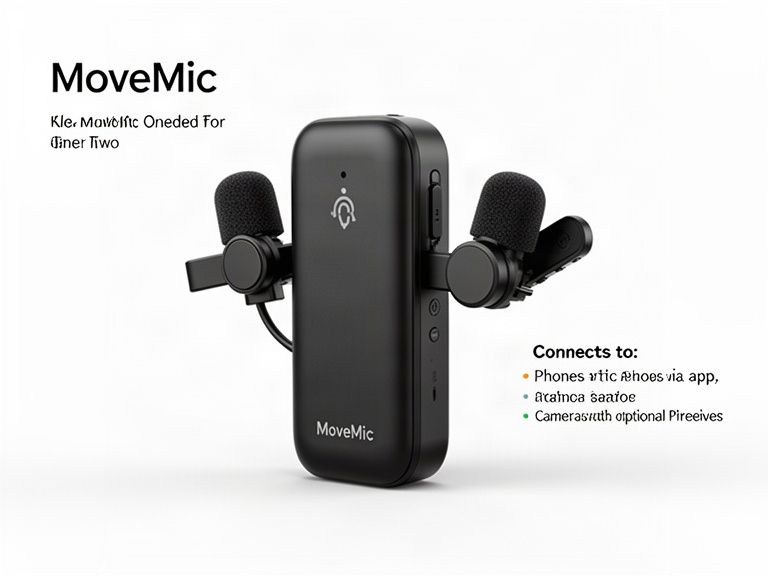
Shure MoveMic
Phone creators who don’t want a dongle
KitOne or two mics (MoveMic One or Two)Connects toPhones via app; cameras with optional receiverStandout featureNo receiver needed for phones -
6
 Illustration
Best budget
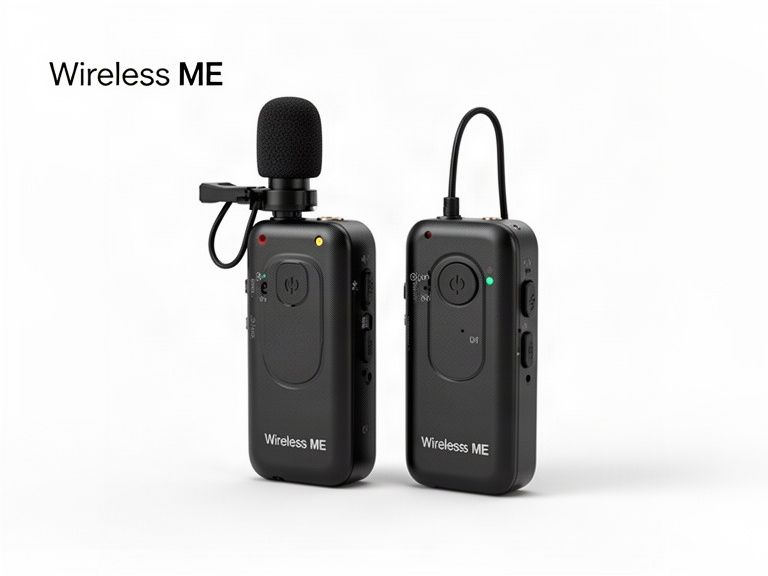
Rode Wireless ME
Solo creators interviewing one guest
KitOne transmitter + receiver with built-in micConnects toCameras, phones and computersStandout featureRecords you and your subject
Rode Wireless GO (Gen 3)
Illustration
A compact two-person system with 32-bit float on-board recording and outputs for cameras, phones and computers.
Best for: Creators who film with cameras, phones and computers- Kit
- Two transmitters + receiver
- Connects to
- Cameras, phones and computers
- Standout feature
- 32-bit float on-board recording
What we like
- 32-bit float backup recording in each transmitter
- Works with cameras, phones and computers
- Built-in mics plus inputs for external lavaliers
- Compact, proven design
Keep in mind
- No charging case in the standard kit
- Backup files need normalizing in editing
- Pricier than phone-only kits
Rode’s Wireless GO helped define the clip-on wireless mic category, and the third generation adds features that used to belong to pricier systems. Each transmitter records a backup to its internal storage in 32-bit float, with enough space for many hours, so a wireless dropout or a badly set level doesn’t ruin a recording.
The receiver connects to cameras through a 3.5mm output and to phones and computers over USB-C, which makes this one kit for nearly every situation. The transmitters have built-in mics and accept external lavalier mics if you want a more discreet look.
Rode notes that the 32-bit float backup files need normalizing in editing software, or exporting through its RØDE Central app. That’s a small price for the safety net. For most creators, it is the most versatile choice.
Bottom line: The most versatile wireless mic kit for creators who use several devices.
Rode Wireless PRO
Illustration
Rode’s flagship kit with 32-bit float recording, timecode, lavalier mics and a charging case included.
Best for: Filmmakers and professional productions- Kit
- Two transmitters + receiver, charging case
- Connects to
- Cameras, phones and computers
- Standout feature
- 32-bit float recording and timecode
What we like
- Timecode for syncing multi-camera shoots
- 32-bit float on-board recording
- Charging case and lavalier mics included
- Works with cameras, phones and computers
Keep in mind
- Premium-priced
- Timecode is overkill for casual creators
- More settings to learn
The Wireless PRO is Rode’s answer for professional work. Like the Wireless GO, each transmitter records a 32-bit float backup internally, but the PRO adds timecode, which lets editors sync audio and video from multiple cameras automatically — a big time saver on interviews and documentary shoots.
The kit is complete out of the box, with a charging case and lavalier microphones included, so you can hide mics under clothing for a cleaner look. The receiver connects to cameras, phones and computers, and Rode’s apps manage settings and file transfers.
For YouTube videos and social clips, it is more than you need. For filmmakers, wedding videographers and production teams, it is the most capable kit here.
Bottom line: The best choice for professional productions that need timecode and backup recording.
Hollyland Lark M2S
Illustration
Tiny transmitters, plug-in phone receivers and a charging case in a budget-friendly kit.
Best for: Phone creators, vloggers and social video- Kit
- Two transmitters + receiver (kits vary)
- Connects to
- Phones; cameras with the camera kit
- Standout feature
- Very small, discreet transmitters
What we like
- Very small, discreet transmitters
- Plug-in USB-C receiver for phones, with Lightning and camera versions
- Charging case included
- Budget-friendly
Keep in mind
- Kit options can be confusing — check the receiver type
- No 32-bit float backup recording
- Small size makes them easy to misplace
The Hollyland Lark M2S is built for people who film mostly on phones. The transmitters are remarkably small, so they nearly disappear on a shirt, and the receiver plugs directly into a USB-C phone. Hollyland also sells Lightning and camera receivers, plus combo kits that include several.
A charging case tops up the transmitters and receiver, and Hollyland rates the full system at up to 27 hours of use with the case. Hollyland lists a line-of-sight range of up to 300 meters (about 1,000 feet), and reviews generally praise the sound for the price.
Pay attention to which kit you buy, since the receiver type determines what it works with. There’s no 32-bit float backup recording. For phone-first creators who want discreet, affordable mics, it is the best fit.
Bottom line: The best wireless mic kit for phone-first creators.
Sennheiser Profile Wireless
Illustration
A two-mic kit from a pro-audio brand with a display on the receiver, backup recording and a handheld option.
Best for: Creators who switch between clip-on and handheld use- Kit
- Two transmitters + receiver
- Connects to
- Cameras, phones and computers
- Standout feature
- Handheld option and backup recording
What we like
- Charging bar doubles as a handle for handheld interviews
- On-board backup recording
- Receiver display shows levels at a glance
- Sennheiser audio pedigree
Keep in mind
- Pricier than budget phone-only kits
- Fewer accessory options than Rode
- More features to learn than simpler kits
Sennheiser, a major name in professional microphones, brought its experience to creator gear with the Profile Wireless. The kit includes two clip-on transmitters and a receiver with a small display, so you can check levels and battery at a glance, with connections for cameras, phones and computers.
Its most distinctive feature is flexibility: the charging bar that holds the transmitters can double as a handle, turning a transmitter into a handheld mic for street interviews. Transmitters can also record a backup internally, which protects against dropouts.
It costs more than budget phone-only kits, and the accessory ecosystem is smaller than Rode’s. For creators who move between vlogging, interviews and on-the-street segments, it is a versatile and well-built choice.
Bottom line: A flexible kit for creators who want clip-on and handheld options in one system.
Shure MoveMic
Illustration
Clip-on wireless mics that connect straight to a phone through Shure’s app, with an optional receiver for cameras.
Best for: Phone creators who don’t want a dongle- Kit
- One or two mics (MoveMic One or Two)
- Connects to
- Phones via app; cameras with optional receiver
- Standout feature
- No receiver needed for phones
What we like
- Connects to phones without a plug-in receiver
- Shure’s respected sound tuning
- Charging case included
- Available as a single or dual kit
Keep in mind
- Direct phone connection works through compatible apps
- Camera use requires a separate receiver
- Pricier than plug-in phone kits
Most wireless mics for phones rely on a receiver that plugs into the charging port. Shure’s MoveMic skips that: the clip-on mics connect directly to your phone and record through Shure’s MOTIV Video app and other compatible apps. That keeps your phone’s port free and reduces the gear you carry.
It comes as MoveMic One with a single mic or MoveMic Two for interviews, with a charging case, and Shure offers a separate receiver for using the mics with cameras. The sound benefits from Shure’s long experience with professional microphones.
The catch is app support: the direct connection works only with compatible apps, so check that your preferred camera or social app is supported. If you want the simplest phone setup, it is a clever option.
Bottom line: The best pick for phone users who want wireless mics without a plug-in receiver.
Rode Wireless ME
Illustration
A one-transmitter kit whose receiver has its own mic, so it records you and your subject.
Best for: Solo creators interviewing one guest- Kit
- One transmitter + receiver with built-in mic
- Connects to
- Cameras, phones and computers
- Standout feature
- Records you and your subject
What we like
- Receiver’s built-in mic captures the person behind the camera
- Works with cameras, phones and computers
- GainAssist helps manage levels automatically
- More budget-friendly than two-transmitter kits
Keep in mind
- Only one clip-on transmitter
- Receiver mic picks up more room sound
- Fewer pro features than the Wireless GO
The Wireless ME solves a common problem for solo creators: you want a clip-on mic for your guest, but your own voice also needs to be heard. Rode built a microphone into the receiver, so as it sits on your camera or phone it picks up your questions while the transmitter captures your subject.
Rode’s GainAssist technology automatically manages levels, and the receiver connects to cameras, phones and computers. You get a single transmitter, which keeps the kit more budget-friendly than two-transmitter systems.
The receiver mic is farther from your mouth, so it captures more room sound than a clip-on, and you miss some advanced features of the Wireless GO. For interviews, street questions and tutorials on a budget, it is a smart, simple setup.
Bottom line: A clever, budget-friendly kit for one-on-one interviews.
Side-by-side comparison
| Product | Kit | Connects to | Standout feature | Score |
|---|---|---|---|---|
| Rode Wireless GO (Gen 3)Best overall | Two transmitters + receiver | Cameras, phones and computers | 32-bit float on-board recording | 9.3 |
| Rode Wireless PROBest for professionals | Two transmitters + receiver, charging case | Cameras, phones and computers | 32-bit float recording and timecode | 9.2 |
| Hollyland Lark M2SBest for phones | Two transmitters + receiver (kits vary) | Phones; cameras with the camera kit | Very small, discreet transmitters | 8.9 |
| Sennheiser Profile WirelessBest for flexibility | Two transmitters + receiver | Cameras, phones and computers | Handheld option and backup recording | 8.8 |
| Shure MoveMicBest receiver-free | One or two mics (MoveMic One or Two) | Phones via app; cameras with optional receiver | No receiver needed for phones | 8.5 |
| Rode Wireless MEBest budget | One transmitter + receiver with built-in mic | Cameras, phones and computers | Records you and your subject | 8.4 |
Specifications are from manufacturer listings at the time of writing and can change between production runs.
Why go wireless?
Wired lavalier mics are affordable, but the cable limits how far the speaker can move and is easy to trip over. Wireless systems let presenters walk, demonstrate and interact naturally while the mic stays close to their mouth, which keeps voice levels consistent and background noise down. They also set up in seconds, which matters for run-and-gun filming and quick social videos.
Built-in mic or separate lavalier?
Most transmitters have a built-in microphone and clip directly to clothing. That’s fast and works well for vlogging and interviews. For a more discreet look, or film and TV work, plug a separate lavalier microphone into the transmitter’s 3.5mm input and hide the transmitter on a belt or in a pocket. Some kits include lavalier mics; others sell them separately.
Connecting to phones, cameras and computers
Check what each kit connects to before buying:
- Phones: look for a receiver with a USB-C plug (and Lightning for older iPhones) or a system that connects through an app.
- Cameras: a receiver with a 3.5mm output and a shoe mount.
- Computers: a USB-C receiver that shows up as a standard audio input.
Many kits include cables or adapters for all three, but phone-only kits are often more budget-friendly.
Features worth paying for
- On-board backup recording saves a copy in the transmitter in case the wireless link drops.
- 32-bit float recording makes clipped or too-quiet backup recordings far easier to fix.
- A charging case keeps transmitters and receiver charged between shoots.
- Noise reduction helps outdoors and in busy places, though heavy settings can make voices sound processed.
- Timecode matters for professional multi-camera productions.
What to skip
Treat range claims with caution — they are usually measured in clear line of sight. Walls, bodies and crowds shorten real-world range considerably. Don’t pay for timecode unless your workflow uses it. Be wary of unbranded kits with inflated specs, too: established brands provide firmware updates, replacement windscreens and clips, and warranty support when a transmitter stops charging.
Setup tips
Clip the mic about a hand’s width below the chin, in the center of the chest. Use the included foam or furry windscreen outdoors. Keep clothing from rubbing against the mic, which causes rustle, and make a quick test recording before every shoot. Fully charge everything the night before, following the manufacturer’s charging instructions.
Frequently asked questions
Do wireless lavalier mics work with iPhone?
Yes. Recent iPhones with USB-C work with USB-C receivers, and many kits offer Lightning receivers or adapters for older models. Some systems, such as the Shure MoveMic, connect to the phone through an app instead of a plug-in receiver.
What is 32-bit float recording?
It is a recording format with an enormous dynamic range, so recordings that sound too quiet or too loud during capture can usually be corrected later in editing without distortion. It applies to on-board backup recordings on supported transmitters.
How far can wireless mics transmit?
Makers quote ranges measured in open line of sight. Indoors or in crowds, expect much less. Keep the receiver within clear view of the transmitters when possible for the most reliable connection.
Can I use two mics for an interview?
Yes. Two-transmitter kits are designed for interviews and podcasts. Most let you record both speakers mixed together or on separate left and right channels, which makes balancing them in editing easier.
Do I need a separate lavalier microphone?
Not usually. The built-in mics on modern transmitters sound good for most videos. An external lavalier is useful when you want the mic hidden or less visible on camera.
How we picked
We compared manufacturer specifications for kit contents, receiver outputs, phone and camera compatibility, on-board recording, charging cases and noise-reduction features, along with published reviews of sound quality and reliability, for popular wireless microphone systems from Rode, Hollyland, Sennheiser and Shure. Our picks and scores are based on this research — we have not tested these products hands-on. Brands cannot pay to be included. Read our full method.