






















The best emergency weather radios
Six NOAA weather radios compared — hand-crank and solar emergency radios from Midland, Kaito, Eton and Sangean, plus a desktop alert radio for the bedside.
As an Amazon Associate I earn from qualifying purchases. When you buy through links on this page, we may earn a commission at no extra cost to you. Learn more
When storms knock out power and cell service gets patchy, a weather radio can keep you informed. These radios receive NOAA Weather Radio broadcasts from the National Weather Service, which carry forecasts, watches and warnings around the clock, along with regular AM and FM stations for local news.
There are two main types. Portable emergency radios combine the weather band with backup power — a hand crank, a small solar panel and a rechargeable battery — plus extras like a flashlight and a USB port to top up a phone. Desktop alert radios sit on a nightstand and stay silent until the weather service issues an alert for your area, then sound an alarm. Many households benefit from one of each. We compared popular, long-running models from Midland, Kaito, Eton and Sangean and picked the best for home alerts, emergency kits, shortwave listening and tighter budgets.
Our top picks
-
1
 Illustration
Best overall
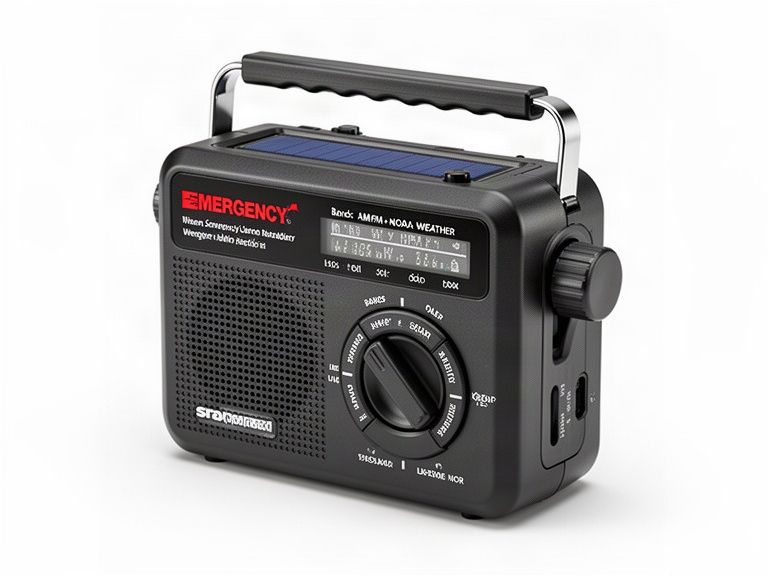
Midland ER310 Emergency Crank Radio
Emergency kits and power outages
BandsAM/FM + NOAA weatherPower sourcesHand crank, solar, rechargeable batteryWeather alertYes -
2
 Illustration
Best for home alerts
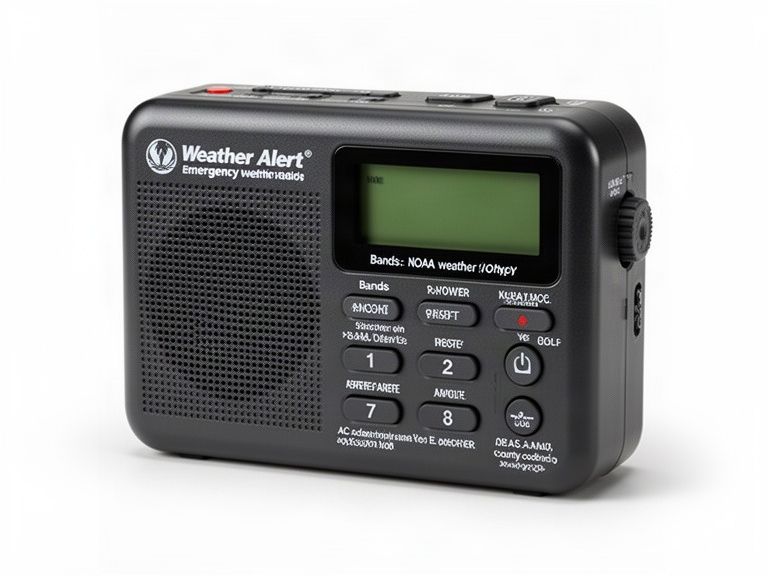
Midland WR120 Weather Alert Radio
Overnight warnings at home
BandsNOAA weather onlyPower sourcesAC adapter with AA battery backupWeather alertYes, with S.A.M.E. county coding -
3
 Illustration
Best for everyday listening
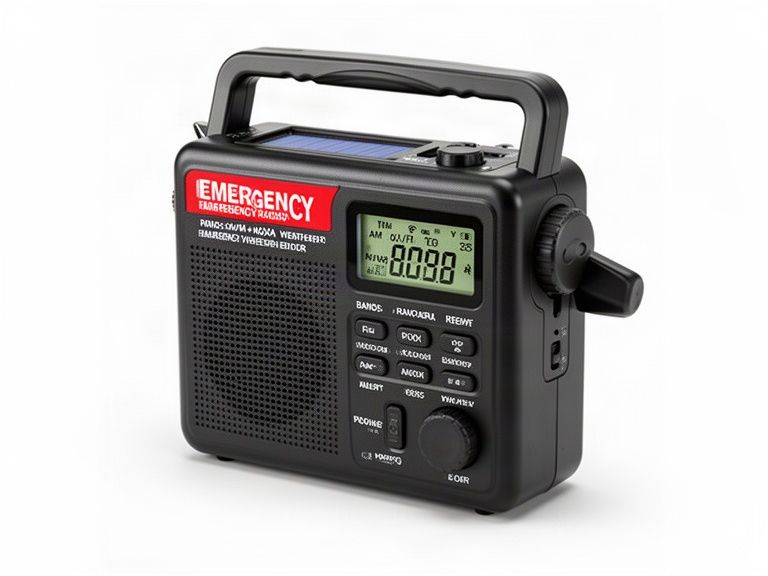
Sangean MMR-88 Emergency Radio
People who want a solid radio they’ll use year-round
BandsAM/FM + NOAA weatherPower sourcesHand crank, solar, rechargeable batteryWeather alertYes -
4
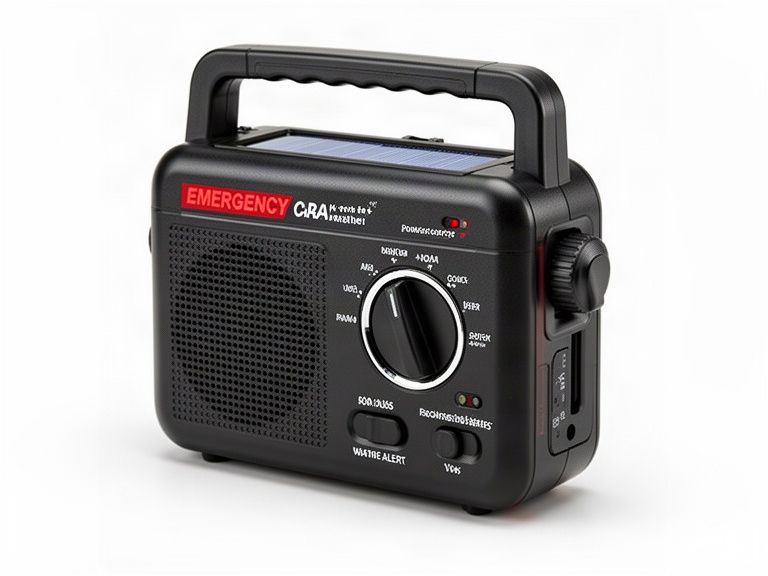 Illustration
Best compact
Midland ER210 Emergency Crank Radio
Go-bags, cars and small spaces
BandsAM/FM + NOAA weatherPower sourcesHand crank, solar, rechargeable batteryWeather alertYes -
5
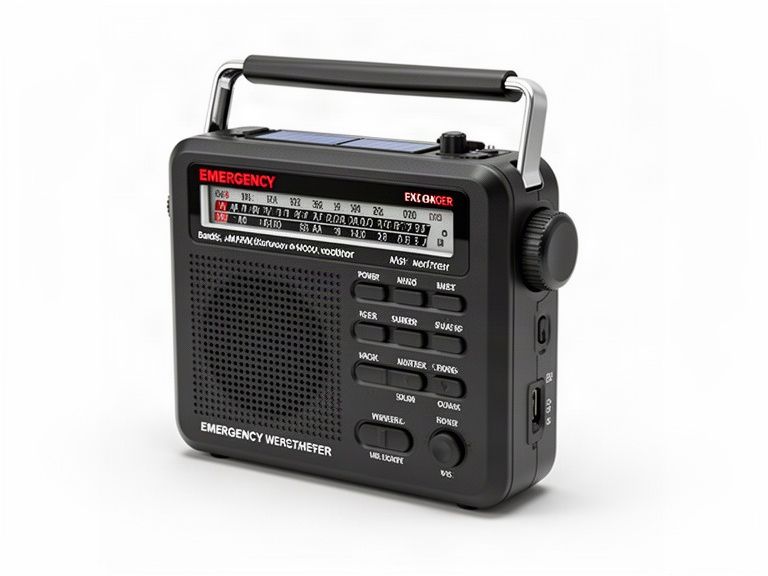 Illustration
Best for shortwave
Kaito KA500 Emergency Radio
Listeners who want shortwave as well as weather
BandsAM/FM/shortwave + NOAA weatherPower sourcesHand crank, solar, AA batteries, USBWeather alertYes -
6
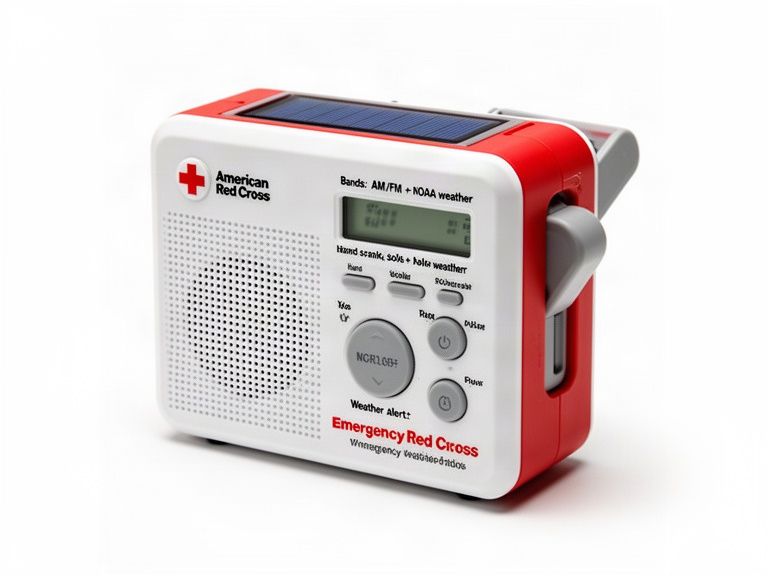 Illustration
Best value
Eton American Red Cross FRX3 Radio
A first emergency radio on a budget
BandsAM/FM + NOAA weatherPower sourcesHand crank, solar, rechargeable batteryWeather alertYes
Midland ER310 Emergency Crank Radio
Illustration
A well-equipped emergency radio with NOAA alerts, multiple power sources, a flashlight and a USB output.
Best for: Emergency kits and power outages- Bands
- AM/FM + NOAA weather
- Power sources
- Hand crank, solar, rechargeable battery
- Weather alert
- Yes
What we like
- NOAA weather alert function
- Several ways to power it during long outages
- Bright flashlight with SOS strobe
- USB port to top up a phone
Keep in mind
- Solar panel charges slowly
- Bulkier than compact crank radios
- Alert monitoring drains the battery over time
The Midland ER310 is one of the most popular emergency radios for good reason: it covers nearly everything you need in an outage. It receives AM, FM and all NOAA weather channels and can monitor the weather band for alerts, so it can sound when a warning is issued.
Power comes from a rechargeable battery that you can top up with the hand crank or the solar panel. A bright flashlight with an SOS strobe, an ultrasonic dog whistle and a USB port for giving your phone some charge round out the emergency features.
As with every radio of this type, the solar panel is a slow trickle charger and alert monitoring uses battery, so keep it charged between storms. For a household emergency kit, it is our top pick.
Bottom line: The most complete all-round emergency radio for outages and storm season.
Midland WR120 Weather Alert Radio
Illustration
A desktop NOAA alert radio with S.A.M.E. county programming that stays quiet until a warning is issued.
Best for: Overnight warnings at home- Bands
- NOAA weather only
- Power sources
- AC adapter with AA battery backup
- Weather alert
- Yes, with S.A.M.E. county coding
What we like
- Designed for continuous alert monitoring
- S.A.M.E. coding targets alerts to your county
- Battery backup during power cuts
- Loud alarm to wake you
Keep in mind
- No AM/FM radio
- Not designed as a portable emergency radio
- Initial programming takes a few minutes
The Midland WR120 does one job: sit on a nightstand or kitchen counter, monitor NOAA Weather Radio continuously and sound an alarm when the weather service issues an alert. It is the kind of radio many people keep by the bed in tornado and hurricane country.
S.A.M.E. programming lets you enter county codes so it sounds only for alerts that affect your area, cutting down on false alarms for distant counties. It runs from an AC adapter, with AA batteries as backup if the power goes out.
There’s no AM or FM, no flashlight and no crank, so it doesn’t replace a portable emergency radio. Paired with one, it covers both overnight alerts and outage listening.
Bottom line: The best way to get overnight NOAA warnings at home.
Sangean MMR-88 Emergency Radio
Illustration
A sturdy emergency radio from a respected radio maker, with NOAA alerts, crank, solar and a flashlight.
Best for: People who want a solid radio they’ll use year-round- Bands
- AM/FM + NOAA weather
- Power sources
- Hand crank, solar, rechargeable battery
- Weather alert
- Yes
What we like
- Reception from a well-regarded radio maker
- NOAA weather alert function
- Sturdy, rugged build
- Flashlight and USB phone charging
Keep in mind
- Small speaker limits sound quality
- Crank and solar charge slowly
- Premium-priced for the category
Sangean is best known for well-built AM/FM and shortwave radios, and the MMR-88 brings that experience to an emergency radio. Reviews frequently highlight its reception and sturdy construction, which matter if you rely on distant stations during an outage.
It covers AM, FM and the NOAA weather band with alert capability, and you can power it from its rechargeable battery, the hand crank or the solar panel. A flashlight and USB output for phone charging cover the emergency basics.
Like all compact crank radios, the speaker is small and the crank and solar panel charge slowly. If you want an emergency radio that also works well as an everyday kitchen or garage radio, it is a strong pick.
Bottom line: A rugged, well-made emergency radio for people who value reception.
Midland ER210 Emergency Crank Radio
Illustration
A smaller sibling of the ER310 with NOAA alerts, crank and solar power and a flashlight.
Best for: Go-bags, cars and small spaces- Bands
- AM/FM + NOAA weather
- Power sources
- Hand crank, solar, rechargeable battery
- Weather alert
- Yes
What we like
- Compact enough for go-bags and glove boxes
- NOAA weather alert function
- Flashlight with SOS strobe
- USB port for phone top-ups
Keep in mind
- Smaller battery than the ER310
- Small speaker
- Crank charging is slow
The Midland ER210 packs much of the ER310’s feature set into a smaller body that fits more easily in a go-bag, car or apartment closet. You still get AM, FM and NOAA weather channels with alert capability, along with crank and solar charging for its rechargeable battery.
A flashlight with an SOS strobe and a USB port for topping up a phone make it a practical emergency companion. The trade-off for the smaller size is a smaller battery and speaker, so it won’t run as long or sound as full as its bigger sibling.
If space is tight or you want a second radio for the car or a go-bag, it is an easy recommendation.
Bottom line: The best compact emergency radio for go-bags and cars.
Kaito KA500 Emergency Radio
Illustration
A long-running multi-band emergency radio with shortwave, NOAA alerts and five ways to power it.
Best for: Listeners who want shortwave as well as weather- Bands
- AM/FM/shortwave + NOAA weather
- Power sources
- Hand crank, solar, AA batteries, USB
- Weather alert
- Yes
What we like
- Shortwave bands for distant news broadcasts
- Runs on standard AA batteries as well as crank and solar
- NOAA weather alert function
- Flashlight and reading light
Keep in mind
- Older design with busier controls
- Solar panel is small
- Bulkier than compact crank radios
The Kaito KA500 has been around for years and remains popular with preparedness-minded buyers because it covers so many bases. In addition to AM, FM and the NOAA weather band with alerts, it receives shortwave, which lets you tune in to broadcasts from much further away when local stations are off the air.
Its biggest practical strength is power flexibility. Beyond the crank and solar panel, it can run on standard AA batteries and charge via USB, so you can keep it going during a long outage with spare batteries from the drawer. A flashlight and reading light are built in.
The controls look dated and the design is bulky. If shortwave matters to you, though, it is one of the most versatile emergency radios available.
Bottom line: The most versatile pick for buyers who want shortwave and flexible power.
Eton American Red Cross FRX3 Radio
Illustration
A budget-friendly crank and solar radio with NOAA alerts, a flashlight and a USB phone-charging port.
Best for: A first emergency radio on a budget- Bands
- AM/FM + NOAA weather
- Power sources
- Hand crank, solar, rechargeable battery
- Weather alert
- Yes
What we like
- Budget-friendly
- NOAA weather alert function
- Built-in flashlight
- USB port for phone top-ups
Keep in mind
- Plastic build feels light
- Small speaker
- Crank and solar charging are slow
Eton’s FRX3, sold with American Red Cross branding, is a long-running entry point into emergency radios. It covers AM, FM and NOAA weather channels with an alert function, and its rechargeable battery can be topped up by crank or solar panel.
Emergency extras include a built-in flashlight and a USB port that can give a phone a small boost. It is compact and light enough to keep in a kitchen drawer or emergency kit.
The build is lighter than the Midland and Sangean models, and the small speaker is best for news and weather rather than music. As a budget-friendly first radio, it covers the essentials.
Bottom line: A budget-friendly way to add a weather alert radio to your emergency kit.
Side-by-side comparison
| Product | Bands | Power sources | Weather alert | Score |
|---|---|---|---|---|
| Midland ER310 Emergency Crank RadioBest overall | AM/FM + NOAA weather | Hand crank, solar, rechargeable battery | Yes | 9.2 |
| Midland WR120 Weather Alert RadioBest for home alerts | NOAA weather only | AC adapter with AA battery backup | Yes, with S.A.M.E. county coding | 9.0 |
| Sangean MMR-88 Emergency RadioBest for everyday listening | AM/FM + NOAA weather | Hand crank, solar, rechargeable battery | Yes | 8.7 |
| Midland ER210 Emergency Crank RadioBest compact | AM/FM + NOAA weather | Hand crank, solar, rechargeable battery | Yes | 8.6 |
| Kaito KA500 Emergency RadioBest for shortwave | AM/FM/shortwave + NOAA weather | Hand crank, solar, AA batteries, USB | Yes | 8.6 |
| Eton American Red Cross FRX3 RadioBest value | AM/FM + NOAA weather | Hand crank, solar, rechargeable battery | Yes | 8.5 |
Specifications are from manufacturer listings at the time of writing and can change between production runs.
Portable emergency radio or desktop alert radio?
Portable emergency radios are built for outages and evacuations. They run without wall power, include a flashlight and can charge a phone a little. Most can monitor the weather band for alerts, but only while switched into alert mode, which drains the battery over time.
Desktop alert radios, such as the Midland WR120, plug into the wall with battery backup and are designed to monitor continuously. They are the better choice for waking you when a warning is issued overnight. If you can have only one, think about whether your bigger need is overnight alerts or power-outage resilience.
How NOAA weather alerts work
NOAA Weather Radio broadcasts on seven frequencies in the VHF band. Your radio needs to be tuned to the strongest station for your area. Better alert radios support S.A.M.E. (Specific Area Message Encoding), which lets you program your county code so the radio sounds only for alerts that affect your area rather than for the entire broadcast region. Coverage is broad but not universal, and reception can be weak in valleys, basements and remote areas, so check reception where you plan to use the radio.
Power sources: crank, solar and batteries
Hand cranks are a backup rather than a main power source — a few minutes of cranking usually yields a limited amount of listening time. Small solar panels trickle-charge slowly in direct sun. The rechargeable battery does most of the work, so keep it charged. Models that also accept standard batteries are useful because spare alkaline cells store well.
Features worth having
- An alert mode that sounds a siren or tone when a warning is issued.
- A USB output to give a phone an emergency top-up.
- A bright flashlight, and ideally an SOS strobe.
- A headphone jack to save battery and listen quietly.
- Shortwave bands if you want news from further afield.
What to skip
Don’t rely on phone-charging claims: small radio batteries and hand cranks deliver only modest charge. Gimmicks like built-in compasses add little.
Keeping your radio ready
Test the radio monthly — the weather service runs routine test messages that make this easy. Charge the internal battery every few months, store spare batteries nearby, and follow the manufacturer’s instructions for charging and battery care. A weather radio is one of several ways to receive warnings, so also enable emergency alerts on your phone and follow local officials’ guidance during severe weather.
Frequently asked questions
Do weather radios need a subscription or internet connection?
No. NOAA Weather Radio is a free over-the-air broadcast from the National Weather Service. Any radio with the weather band can receive it where there is coverage, with no internet or cell service needed.
How do I find my local NOAA Weather Radio station and county code?
The National Weather Service publishes transmitter frequencies and S.A.M.E. county codes on its website. Enter your county code into an alert radio that supports S.A.M.E. so it sounds only for warnings in your area.
Can a hand-crank radio charge my phone?
A little. Cranking produces a small amount of power, enough for an emergency call or text rather than a full charge. Use the radio’s rechargeable battery for charging when it is full, and keep a separate power bank in your emergency kit.
Will a portable radio wake me up for overnight warnings?
Only if it is left in alert mode, and battery-powered alert monitoring drains the battery over time. A plug-in desktop alert radio with battery backup is better suited to overnight monitoring.
Why can’t my radio pick up the weather band?
You may be in a coverage gap or indoors where the signal is weak. Extend the antenna fully, move near a window or higher floor, and try each of the seven weather channels.
How we picked
We compared manufacturer specifications for bands, alert features, power sources, lights, phone-charging outputs and build, along with published reviews of reception and usability, for long-running emergency and weather alert radios widely sold in the US. Our picks and scores are based on this research — we have not tested these products hands-on. No radio can guarantee you will receive every alert. Brands cannot pay to be included. Read our full method.