






















The best family board games
Six modern family board games compared — route-building, tile-laying and dice games that kids from about age 7 and adults can enjoy at the same table.
As an Amazon Associate I earn from qualifying purchases. When you buy through links on this page, we may earn a commission at no extra cost to you. Learn more
A good family board game has to clear a high bar: the rules need to fit in one short explanation, a younger player needs a real chance of winning, and the adults still have to make interesting decisions so they don't drift off to their phones. The classics many of us grew up with tend to fail that last test, because the dice or a spinner decide almost everything.
The games below come from the modern "gateway" tradition. Each one plays in under an hour, sets up in a few minutes and has turns short enough that nobody waits long. We compared player counts, publisher age grades, rules length, play time and how much luck versus planning each game involves, then picked the best option for different families — from a quick 15-minute filler to a game that can anchor a whole evening.
Our top picks
-
1
 Illustration
Best overall
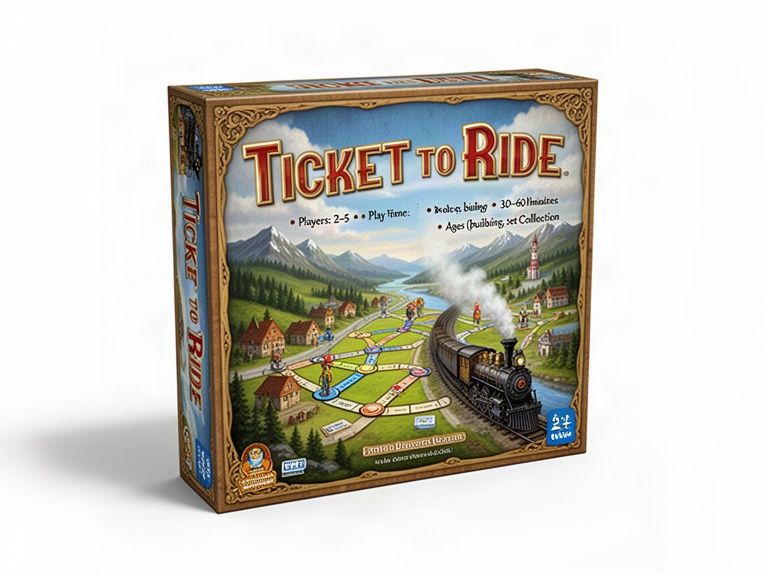
Ticket to Ride
Families with kids around 8 and up
Players2–5Play time30–60 minutesTypeRoute-building, set collection -
2
 Illustration
Best for mixed ages
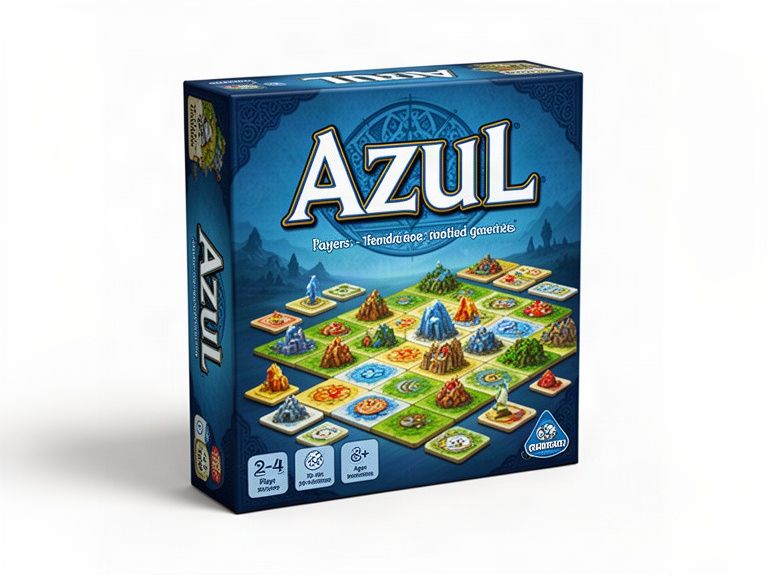
Azul
Families who like puzzles and pretty pieces
Players2–4Play time30–45 minutesTypeTile drafting, pattern building -
3
 Illustration
Best tile-laying game
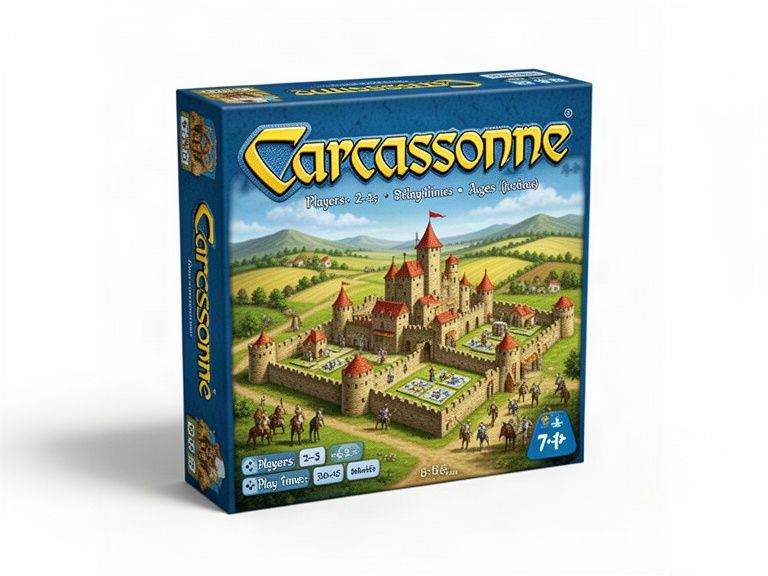
Carcassonne
Families who want a game that grows with them
Players2–5Play time30–45 minutesTypeTile placement, area control -
4
 Illustration
Best quick game
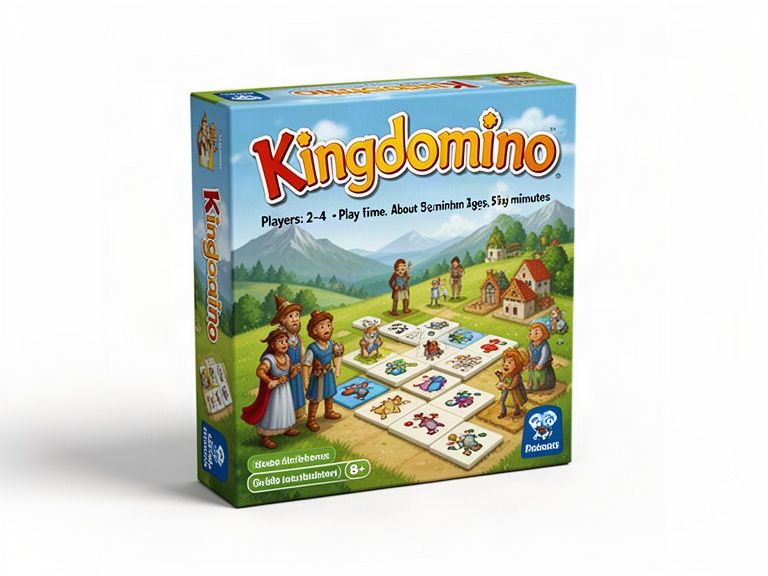
Kingdomino
School nights and short attention spans
Players2–4Play timeAbout 15 minutesTypeTile drafting, domino matching -
5
 Illustration
Best for bigger groups
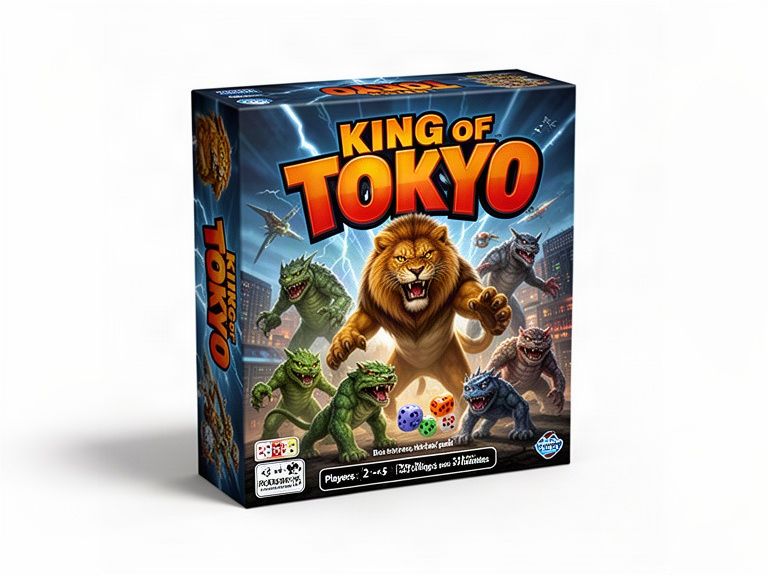
King of Tokyo
Loud, dice-loving families of up to six
Players2–6Play timeAbout 30 minutesTypeDice rolling, push your luck -
6
 Illustration
Best for younger kids
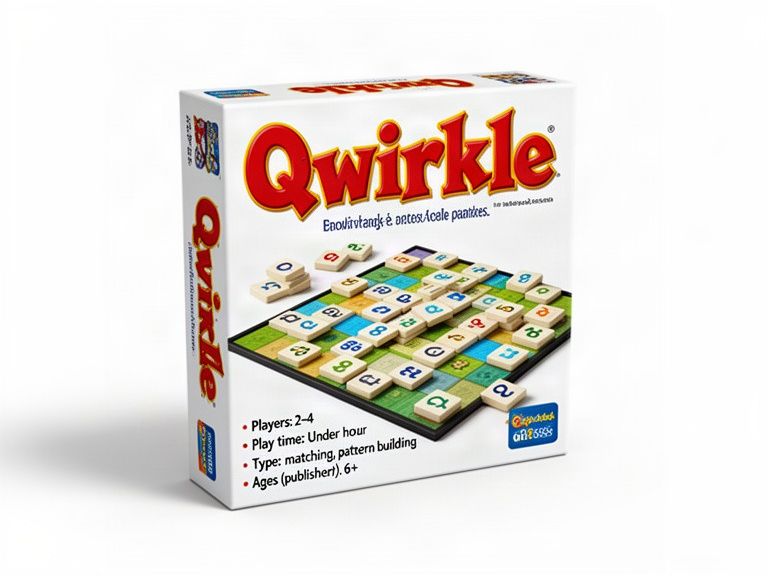
Qwirkle
Families with kids around 6 and up
Players2–4Play timeUnder an hourTypeTile matching, pattern building
Ticket to Ride
Illustration
A train-route game where you collect colored cards and claim railway lines across a map of North America.
Best for: Families with kids around 8 and up- Players
- 2–5
- Play time
- 30–60 minutes
- Type
- Route-building, set collection
- Ages (publisher)
- 8+
What we like
- Rules fit in a few minutes, yet adults still plan ahead
- Tense moments when someone claims the route you needed
- Plays well from two to five players
- Large board and colorful trains are easy for kids to read
Keep in mind
- Needs a full-size table
- Longer than a filler at five players
- Scoring the long routes at the end can confuse first-timers
Ticket to Ride has become a default recommendation for a reason. On your turn you do just one thing: draw train cards, claim a route by playing matching cards, or take new destination tickets. That simplicity means an 8-year-old can follow along from the first turn, while the destination tickets give adults a quiet layer of planning.
The game's tension comes from shared space. Everyone is racing for the same short routes between cities, so there is drama without anyone directly attacking another player — a good fit for families where losses can turn tearful.
The trade-offs are size and length. The board takes up a whole dining table, and a five-player game can run close to an hour. If you want something more portable, the many spin-off maps and travel editions keep the same core rules.
Bottom line: The most dependable first modern board game for most families, with enough depth to stay in rotation for years.
Azul
Illustration
An abstract tile-drafting game in which players pick colored tiles and arrange them on a personal board to score patterns.
Best for: Families who like puzzles and pretty pieces- Players
- 2–4
- Play time
- 30–45 minutes
- Type
- Tile drafting, pattern building
- Ages (publisher)
- 8+
What we like
- Chunky, tactile tiles kids enjoy handling
- Very short rules explanation
- Excellent with exactly two players
- Each player works on their own board, so there is little conflict
Keep in mind
- Scoring takes a little practice for younger players
- Tops out at four players
- Abstract theme won't grab every child
Azul looks like a decorative object on the table, and the tiles feel a bit like heavy candy, which helps win over reluctant players. Each round, players take all tiles of one color from a shared display and slot them into rows on their own board. Fill a row and one tile moves over to your wall, scoring points for neighbors.
The clever part is that leftover tiles you can't place count against you, so taking the tiles you want sometimes means leaving painful scraps for someone else. That gives adults something to think about, while kids can simply aim for pretty patterns and still score respectably.
Scoring is the main hurdle: it is easy to forget the end-of-game bonuses. Expect an adult to keep score for the first few games.
Bottom line: A beautiful, quick puzzle game that suits families where kids and adults like different kinds of challenge.
Carcassonne
Illustration
Players draw and place landscape tiles to build a shared map of roads, cities and fields, then claim features with wooden followers.
Best for: Families who want a game that grows with them- Players
- 2–5
- Play time
- 30–45 minutes
- Type
- Tile placement, area control
- Ages (publisher)
- 7+
What we like
- One tile per turn keeps turns fast
- The map you build together is different every game
- Works well with two, scales to five
- Deep pool of expansions once you want more
Keep in mind
- Farmer scoring confuses many new players
- Luck of the tile draw can decide close games
- Pieces are small for very young kids
Carcassonne has been a staple of family game shelves for more than two decades. Each turn you draw one tile showing part of a road, city or field, add it to the growing map and optionally place one of your wooden followers on it to claim that feature. Finished roads and cities score; unfinished ones score less.
That loop is easy to explain to a 7-year-old, and the shared map makes the game feel cooperative even though it isn't. As players gain experience they start sharing big cities, blocking each other and planning around the remaining tiles, which is why many families keep playing it for years.
Many groups skip the field-scoring rules for the first few plays, which is a sensible way to ease in. With two players the game becomes noticeably more tactical.
Bottom line: A timeless, flexible tile game that rewards families who play it often.
Kingdomino
Illustration
A domino-style game where players pick terrain tiles and fit them into a small kingdom to score matching areas.
Best for: School nights and short attention spans- Players
- 2–4
- Play time
- About 15 minutes
- Type
- Tile drafting, domino matching
- Ages (publisher)
- 8+
What we like
- Finishes in about a quarter of an hour
- Domino matching is instantly familiar
- Clever pick order balances strong and weak tiles
- Compact box travels well
Keep in mind
- Scoring by multiplying areas trips up young kids
- Light on depth for adults who want a long game
- Four players maximum
Kingdomino is the game to reach for when you have 20 minutes before bedtime. Players take turns picking dominoes showing two pieces of terrain, then connect them to their kingdom so the land types match. The twist is that taking a valuable tile pushes you to the back of the line for the next pick, so greedy choices come with a cost.
Each kingdom fits in a five-by-five grid, which keeps games short and stops anyone from falling hopelessly behind. Scoring multiplies the size of each region by the crowns it contains; younger players may need help with the math, but they understand the idea of "bigger fields with more crowns" quickly.
It is light by design. Families who want more can try its bigger sibling, Queendomino, but most will be happy with the original.
Bottom line: A smart, fast tile game that gets played far more often than longer games simply because it fits into a busy evening.
King of Tokyo
Illustration
A push-your-luck dice game in which giant monsters battle for control of Tokyo.
Best for: Loud, dice-loving families of up to six- Players
- 2–6
- Play time
- About 30 minutes
- Type
- Dice rolling, push your luck
- Ages (publisher)
- 8+
What we like
- Rolling chunky dice is fun for every age
- Handles up to six players
- Monster theme is a hit with kids
- Power cards add variety between games
Keep in mind
- Players can be knocked out before the end
- More luck than the other picks
- Direct attacks may upset sensitive kids
King of Tokyo is the most boisterous pick here. Each player controls a giant monster and rolls six dice up to three times, keeping the faces they want. Dice can heal you, earn energy for power cards, score points or attack. The monster in Tokyo hits everyone outside, and everyone outside hits the monster in Tokyo, which creates constant back-and-forth.
It is easy to learn, plays in about half an hour and handles six players, which makes it a good choice for cousins' visits and bigger households. The power cards add surprises — extra heads, armor, wings — so games feel different each time.
The flip side is player elimination: a monster can be knocked out early and have to wait. Most games are short enough that this isn't a big problem, but consider it if you have a child who struggles with losing.
Bottom line: The best choice when you want energy, laughter and up to six players more than deep strategy.
Qwirkle
Illustration
A shape-and-color matching game played with wooden blocks, a little like Scrabble without words.
Best for: Families with kids around 6 and up- Players
- 2–4
- Play time
- Under an hour
- Type
- Tile matching, pattern building
- Ages (publisher)
- 6+
What we like
- No reading required
- Sturdy wooden blocks survive rough handling
- Younger kids can compete with adults on equal footing
- No board, so it fits small tables
Keep in mind
- Scoring needs an adult at first
- Can feel repetitive for strategy fans
- The bag of tiles is the only storage
Qwirkle is the youngest-friendly game on this list. Players hold six wooden blocks marked with colored shapes and build lines in which every block shares either the same color or the same shape, with no repeats. A line of all six is a Qwirkle and scores a big bonus.
Because it relies on matching rather than reading, children who are still learning letters can play as equals, and the blocks are sturdy enough to survive being knocked off the table. There is real tactical choice — setting up a big line for yourself without leaving one for the next player — so adults stay engaged.
It is less exciting than the other picks and can run long if players think slowly. Still, for families with kids at the bottom of the usual age range, it is one of the easiest bridges into modern games.
Bottom line: A sturdy, reading-free matching game that lets younger children compete fairly with adults.
Side-by-side comparison
| Product | Players | Play time | Type | Ages (publisher) | Score |
|---|---|---|---|---|---|
| Ticket to RideBest overall | 2–5 | 30–60 minutes | Route-building, set collection | 8+ | 9.4 |
| AzulBest for mixed ages | 2–4 | 30–45 minutes | Tile drafting, pattern building | 8+ | 9.1 |
| CarcassonneBest tile-laying game | 2–5 | 30–45 minutes | Tile placement, area control | 7+ | 8.9 |
| KingdominoBest quick game | 2–4 | About 15 minutes | Tile drafting, domino matching | 8+ | 8.8 |
| King of TokyoBest for bigger groups | 2–6 | About 30 minutes | Dice rolling, push your luck | 8+ | 8.6 |
| QwirkleBest for younger kids | 2–4 | Under an hour | Tile matching, pattern building | 6+ | 8.4 |
Specifications are from manufacturer listings at the time of writing and can change between production runs.
Start with your player count
Check the number on the box against the number of people who will actually play. Most family games are designed for 2–4 or 2–5 players, and a few stretch to six. A game that technically plays five may drag with five, so if your household is large or you often have guests, favor games where turns are quick or happen at the same time.
Two-player households should also look at whether a game works well with just two. Some, like Kingdomino and Azul, play tightly with a pair; others feel thin until you add a third person.
Read the age grade as a starting point
Publisher age grades reflect rules complexity and small parts, not just maturity. A child who reads well and has played other games can often join a game graded a year or two older, especially if an adult partners with them for the first few rounds. Younger children usually struggle most with long-term planning and with games that require reading cards, so picture-based games are easier to start with.
Keep games with small pieces away from toddlers and pets, and follow the warnings on the box.
Luck versus strategy
The best family games mix the two. Pure luck keeps everyone in it but bores adults; pure strategy lets the most experienced player win every time. Look for:
- Random draws with real choices, such as picking which cards or tiles to take.
- Short games, so a loss stings less and a rematch is easy.
- Little direct attack, which keeps younger players from feeling picked on.
Table space and setup
Measure your table before buying anything with a big board. Ticket to Ride needs a full dining table, while tile games like Kingdomino and Carcassonne grow outward as you play. Setup time matters more than people think: a game that takes 15 minutes to lay out gets played less on school nights.
Expansions and extra versions
Popular family games come in many editions — travel versions, kids' versions and expansions that add players or new rules. Buy the base game first and only add an expansion once the family has played it enough to want more. Kids' spin-offs are a good bridge for children under the main game's age grade.
Care tips
Keep the original box inserts or add a few resealable bags so pieces don't mix. Store boxes flat rather than on their sides, and sleeve frequently shuffled cards if little hands are rough on them.
Frequently asked questions
What age can kids start playing family board games?
Most modern family games are graded by their publishers for ages 7 or 8 and up. Younger children can often play with an adult partner, or start with games designed specifically for preschoolers and early readers.
Which family game is easiest to teach?
Kingdomino and Azul both have short rules that can be explained in a few minutes. Ticket to Ride is also quick to teach, though a full game takes longer.
Are expansions worth buying?
Only once the base game is a hit. Expansions add variety or extra players, but they also add rules, so they make the most sense after the family knows the core game well.
How do we keep games fair for younger players?
Choose games with some luck and little direct conflict, let a younger child team up with an adult, or give them a small head start. Short games help too, because a quick rematch softens a loss.
Do these games work with only two players?
Most of them play with two. Kingdomino, Azul and Carcassonne are especially good as two-player games, while King of Tokyo is more fun with a bigger group.
How we picked
We compared publisher player counts, age grades and play times, rules length, component quality, setup time and the balance of luck and strategy for long-running family board games that are widely available online, and looked at how each suits different household sizes and ages. Our picks and scores are based on this research — we have not tested these products hands-on. Brands cannot pay to be included. Read our full method.