






















The best stereo microscopes for inspection and dissection
Four stereo microscopes compared, from fixed 20X classroom scopes to a 3.5X–90X zoom on a boom stand for circuit boards, with advice on stands, lighting and working distance.
As an Amazon Associate I earn from qualifying purchases. When you buy through links on this page, we may earn a commission at no extra cost to you. Learn more
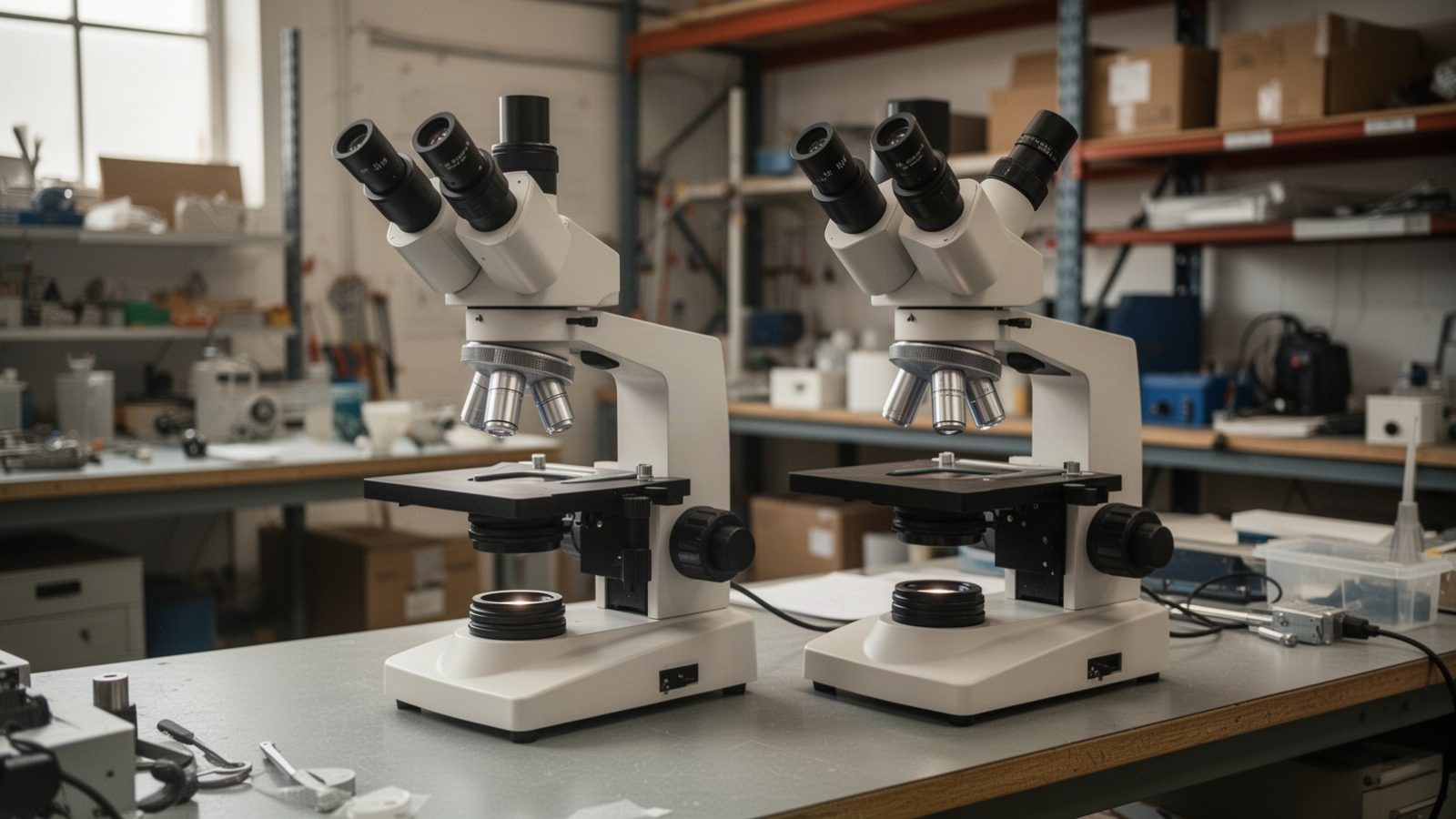
A stereo microscope, sometimes called a dissecting microscope, gives each eye its own optical path, so you see solid objects in three dimensions at low to moderate magnification. It is the right tool for looking at things rather than through them: insects, flowers, rocks, coins, stamps, jewelry, watch parts and circuit boards. Its long working distance leaves room to work under the lens with tweezers, a scalpel or a soldering iron.
The key choices are magnification type, stand and lighting. Fixed and stepped-magnification scopes are simple and affordable; zoom scopes let you glide from an overview to fine detail. Pillar stands suit small items, while boom stands reach over large boards and parts. We compared popular stereo microscopes from AmScope and Celestron on magnification range, head design, stand type, lighting and camera options, and matched each to the work it suits best.
Our top picks
-
1
 Illustration
Best overall
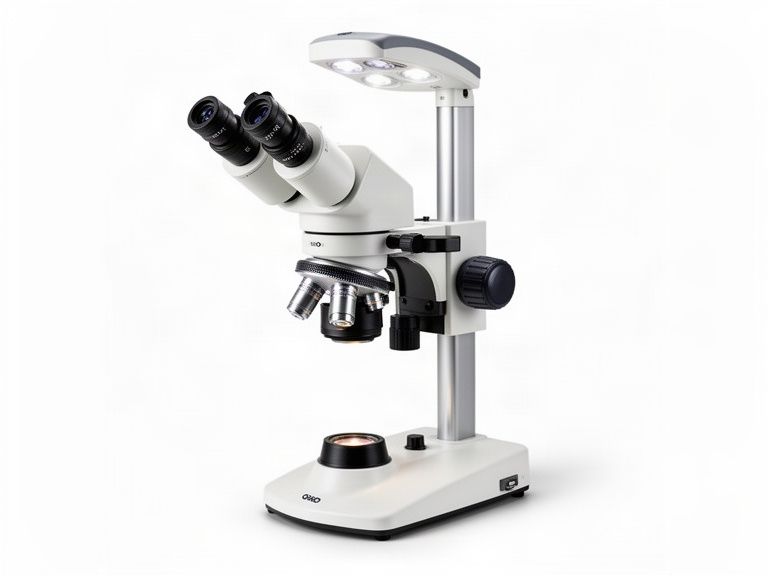
AmScope SE306R-PZ-LED Forward-Mounted Stereo Microscope
Dissection, biology, coins and general hobby use
HeadBinocular, forward-mountedMagnification20X, 40X and 80XStandPillar -
2
 Illustration
Best for electronics
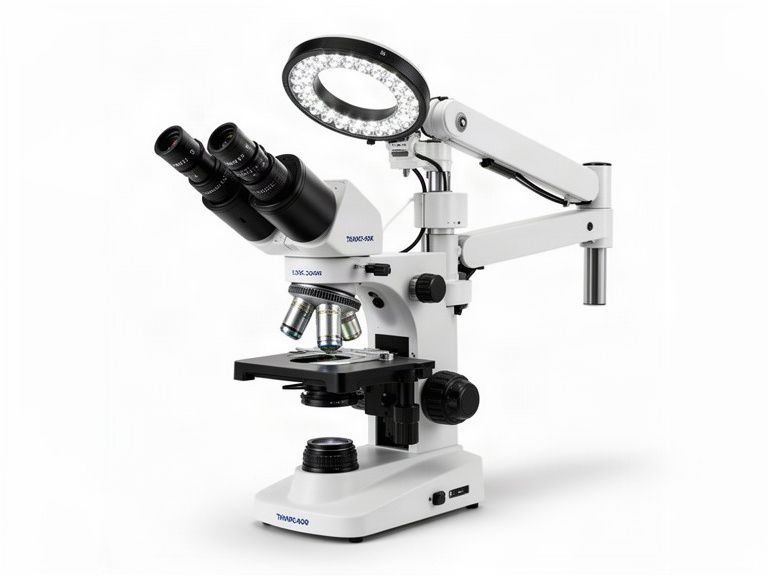
AmScope SM-4TZ-144A Trinocular Zoom Stereo Microscope
Circuit board work, repair benches and imaging
HeadTrinocularMagnification3.5X–90X zoomStandDouble-arm boom -
3
 Illustration
Best value
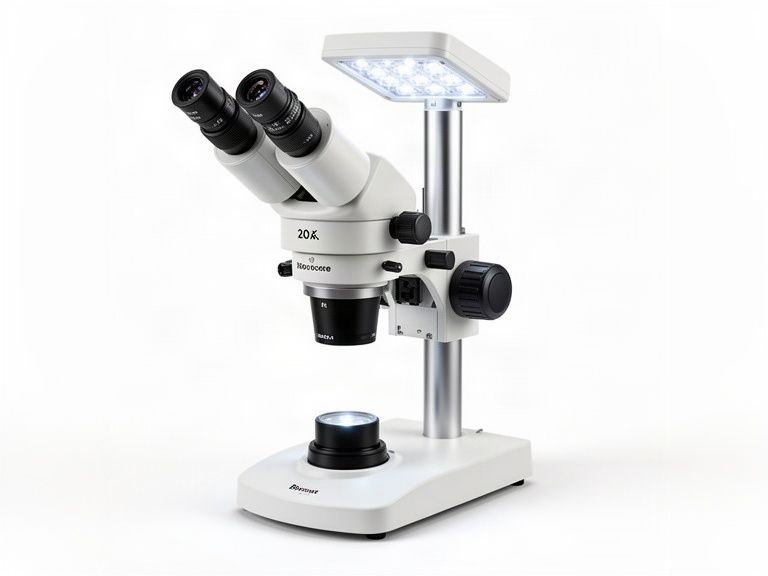
AmScope SE400-Z Binocular Stereo Microscope
Beginners, kids and simple inspection tasks
HeadBinocularMagnification20X fixedStandPillar -
4
 Illustration
Best for home and classroom
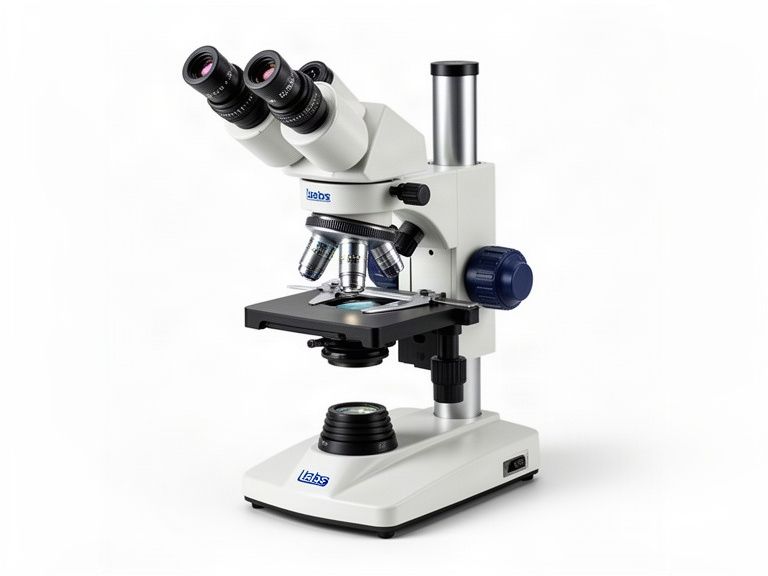
Celestron Labs S10-60 Stereo Microscope
Families and classrooms wanting several magnification steps
HeadBinocularMagnification10X to 60X, steppedStandPillar
AmScope SE306R-PZ-LED Forward-Mounted Stereo Microscope
Illustration
A binocular stereo microscope with three magnification steps, top and bottom LED lights and a forward-mounted head.
Best for: Dissection, biology, coins and general hobby use- Head
- Binocular, forward-mounted
- Magnification
- 20X, 40X and 80X
- Stand
- Pillar
- Lighting
- Upper and lower LED
What we like
- Three magnification steps cover most hobby and classroom tasks
- Forward-mounted head leaves room to work
- Top and bottom lighting for opaque and translucent objects
- Reversible stage plate for light and dark specimens
Keep in mind
- Stepped rather than smooth zoom
- Pillar stand limits the size of objects
- No camera port
The SE306R-PZ-LED is a well-rounded stereo microscope for people who want more than one magnification without paying for a zoom. A rotating objective turret and two sets of eyepieces give 20X, 40X and 80X, covering everything from a whole insect to fine detail on a coin.
The forward-mounted head places the optics further over the stage, leaving more room for hands and tools during dissection. Upper and lower LED lights handle both opaque objects and translucent specimens, and a reversible black and white stage plate improves contrast.
Changing magnification is a click rather than a smooth zoom, and the pillar stand limits how large an object can be. For biology, coins, minerals and general hobby use, it is a versatile and sensible choice.
Bottom line: A versatile stereo microscope for classrooms, biology and hobbies.
AmScope SM-4TZ-144A Trinocular Zoom Stereo Microscope
Illustration
A 3.5X–90X zoom stereo microscope on a double-arm boom stand with a 144-LED ring light and camera port.
Best for: Circuit board work, repair benches and imaging- Head
- Trinocular
- Magnification
- 3.5X–90X zoom
- Stand
- Double-arm boom
- Lighting
- 144-LED ring light
What we like
- Smooth zoom from overview to fine detail
- Boom stand reaches over large boards and parts
- Camera port for documentation and teaching
- Ring light gives even, low-shadow illumination
Keep in mind
- Boom stand takes up a lot of bench space
- Heavier and more complex to set up
- Camera sold separately
For electronics repair, soldering and inspection, the SM-4TZ-144A is a popular bench microscope. Its zoom body moves smoothly through a wide range, so you can find a component at low power and zoom in on a solder joint without losing your place.
The double-arm boom stand swings the head out over the bench, which means large circuit boards, castings and models sit directly on the work surface rather than squeezing onto a small base. A 144-LED ring light gives even, low-shadow light around the lens, and the trinocular head adds a port for a microscope camera.
The setup needs space and a sturdy bench, and it takes more effort to assemble and balance than a pillar scope. For electronics and repair work, that flexibility is the point.
Bottom line: The best pick for electronics benches and anyone working on larger objects.
AmScope SE400-Z Binocular Stereo Microscope
Illustration
An affordable fixed-20X binocular stereo microscope with top and bottom LED lighting.
Best for: Beginners, kids and simple inspection tasks- Head
- Binocular
- Magnification
- 20X fixed
- Stand
- Pillar
- Lighting
- Upper and lower LED
What we like
- Simple to use with no settings to change
- Binocular 3D view at an accessible cost
- Top and bottom LED lighting
- Good magnification for insects, plants and stamps
Keep in mind
- Single magnification only
- Small stage limits object size
- No camera port
Not everyone needs a range of magnifications. The SE400-Z sticks to a single 20X setting, which is ideal for looking at insects, flowers, rocks, stamps and fabric, and keeps the microscope simple enough for kids and beginners.
You still get proper binocular stereo viewing, which gives the 3D effect that makes this kind of microscope so engaging, plus upper and lower LED lighting for opaque and translucent objects.
The fixed magnification is its limit. You cannot zoom out for an overview or in for fine detail, and the pillar stand suits small objects only. For a first stereo microscope or a classroom set, simplicity is often the right call.
Bottom line: A simple, affordable first stereo microscope.
Celestron Labs S10-60 Stereo Microscope
Illustration
A compact stereo microscope with stepped magnification up to 60X and top and bottom lighting.
Best for: Families and classrooms wanting several magnification steps- Head
- Binocular
- Magnification
- 10X to 60X, stepped
- Stand
- Pillar
What we like
- Several magnification steps from 10X to 60X
- Top and bottom lighting
- Compact and easy to store
- From a well-known optics brand
Keep in mind
- Stepped magnification needs eyepiece or objective changes
- Lighter build than lab-grade scopes
- No camera port
Celestron is best known for telescopes, and its Labs range brings that consumer-friendly approach to microscopes. The S10-60 offers stepped magnification from 10X up to 60X, so you can start with a wide view of a whole specimen and move closer for detail.
It includes top and bottom lighting for both solid objects and translucent specimens, and its compact size makes it easy to bring out at the kitchen table or store on a classroom shelf.
Changing magnification means swapping eyepieces or turning the objective rather than zooming smoothly, and the build is lighter than lab-grade instruments. For families and classrooms, that is a sensible balance of flexibility and simplicity.
Bottom line: A friendly, flexible stereo microscope for home and classroom exploring.
Side-by-side comparison
| Product | Head | Magnification | Stand | Lighting | Score |
|---|---|---|---|---|---|
| AmScope SE306R-PZ-LED Forward-Mounted Stereo MicroscopeBest overall | Binocular, forward-mounted | 20X, 40X and 80X | Pillar | Upper and lower LED | 8.8 |
| AmScope SM-4TZ-144A Trinocular Zoom Stereo MicroscopeBest for electronics | Trinocular | 3.5X–90X zoom | Double-arm boom | 144-LED ring light | 8.7 |
| AmScope SE400-Z Binocular Stereo MicroscopeBest value | Binocular | 20X fixed | Pillar | Upper and lower LED | 8.2 |
| Celestron Labs S10-60 Stereo MicroscopeBest for home and classroom | Binocular | 10X to 60X, stepped | Pillar | — | 8.0 |
Specifications are from manufacturer listings at the time of writing and can change between production runs.
Why choose a stereo microscope?
Compared with a compound microscope, a stereo scope gives a 3D, upright image at lower magnification, usually between about 10X and 90X, with several inches of space between the lens and the object. You do not need to prepare slides: put a leaf, a bug or a circuit board on the stage and look. If you need to see individual cells or bacteria, you need a compound microscope instead.
Fixed, stepped or zoom magnification
- Fixed scopes offer one magnification, often 20X. They are the simplest and most affordable, and fine for many classroom and hobby tasks.
- Stepped scopes switch between two or three magnifications with a turret or swappable eyepieces.
- Zoom scopes adjust continuously across a range, such as 0.7X to 4.5X on the zoom body, which makes it easy to find an object at low power and zoom in without losing it.
For soldering and assembly, 10X to 20X is usually plenty; inspection of fine solder joints and small components benefits from higher zoom.
Stand types: pillar, track and boom
A pillar stand has a base and a vertical post, which is compact and stable for small objects. Forward-mounted heads place the optics further forward so you can reach in more easily. A boom stand puts the head on an arm that swings over a bench, letting you inspect large circuit boards, castings or artwork that would not fit on a pillar base.
Lighting: top, bottom and ring lights
Top (incident) light illuminates opaque objects. Bottom (transmitted) light shines through translucent specimens such as thin leaves and insect wings. LED ring lights around the objective give even, low-shadow light that suits electronics. Adjustable brightness matters, especially with shiny metal.
Working distance, setup and care
- Working distance is the space between the lens and the focused object. A 0.5X Barlow lens increases working distance and field of view at the cost of halving magnification.
- Adjust the eyepieces to your eye spacing and set the diopter on one eyepiece so both eyes are in focus.
- When soldering under a microscope, use fume extraction; flux smoke can coat the optics and should not be breathed in.
- Clean lenses with lens tissue and cleaner, cover the scope when not in use and keep it away from humidity.
- Handle dissection tools carefully and follow lab rules for preserved specimens.
Frequently asked questions
What is the difference between a stereo and a compound microscope?
A stereo microscope shows solid objects in 3D at lower magnification, typically 10X to 90X, with room to work underneath. A compound microscope magnifies thin specimens on slides much more, typically 40X to 1000X, but shows a flat image with very little working space.
How much magnification do I need for soldering?
Most soldering and rework happens comfortably between about 7X and 20X, where you can see the joint and still move the iron easily. Higher magnification is useful for inspecting fine-pitch components after soldering.
What is working distance?
It is the space between the bottom of the objective lens and the object in focus. A longer working distance leaves room for tools and fingers. Adding a 0.5X Barlow lens increases it, though magnification drops by half.
Can I attach a camera to a stereo microscope?
Trinocular models have a dedicated camera port, which is the most convenient option. On binocular models, eyepiece cameras and phone adapters work, though they are less convenient for continuous use.
Do I need top and bottom lighting?
Top lighting is essential for opaque objects like coins, rocks and circuit boards. Bottom lighting helps with translucent specimens such as thin leaves, wings and small aquatic organisms in a dish. Many classroom scopes include both.
How we picked
We compared manufacturer specifications for magnification range, head design, zoom range, stand type, lighting, working distance and camera options, alongside build materials and warranty terms, for widely available stereo microscopes. Our picks and scores are based on this research — we have not tested these products hands-on. Brands cannot pay to be included. Read our full method.