






















The best precision lab scales and balances
Five precision lab scales compared, from 0.1 mg analytical balances to portable 0.01 g classroom balances and compact milligram scales, with tips on calibration and placement.
As an Amazon Associate I earn from qualifying purchases. When you buy through links on this page, we may earn a commission at no extra cost to you. Learn more
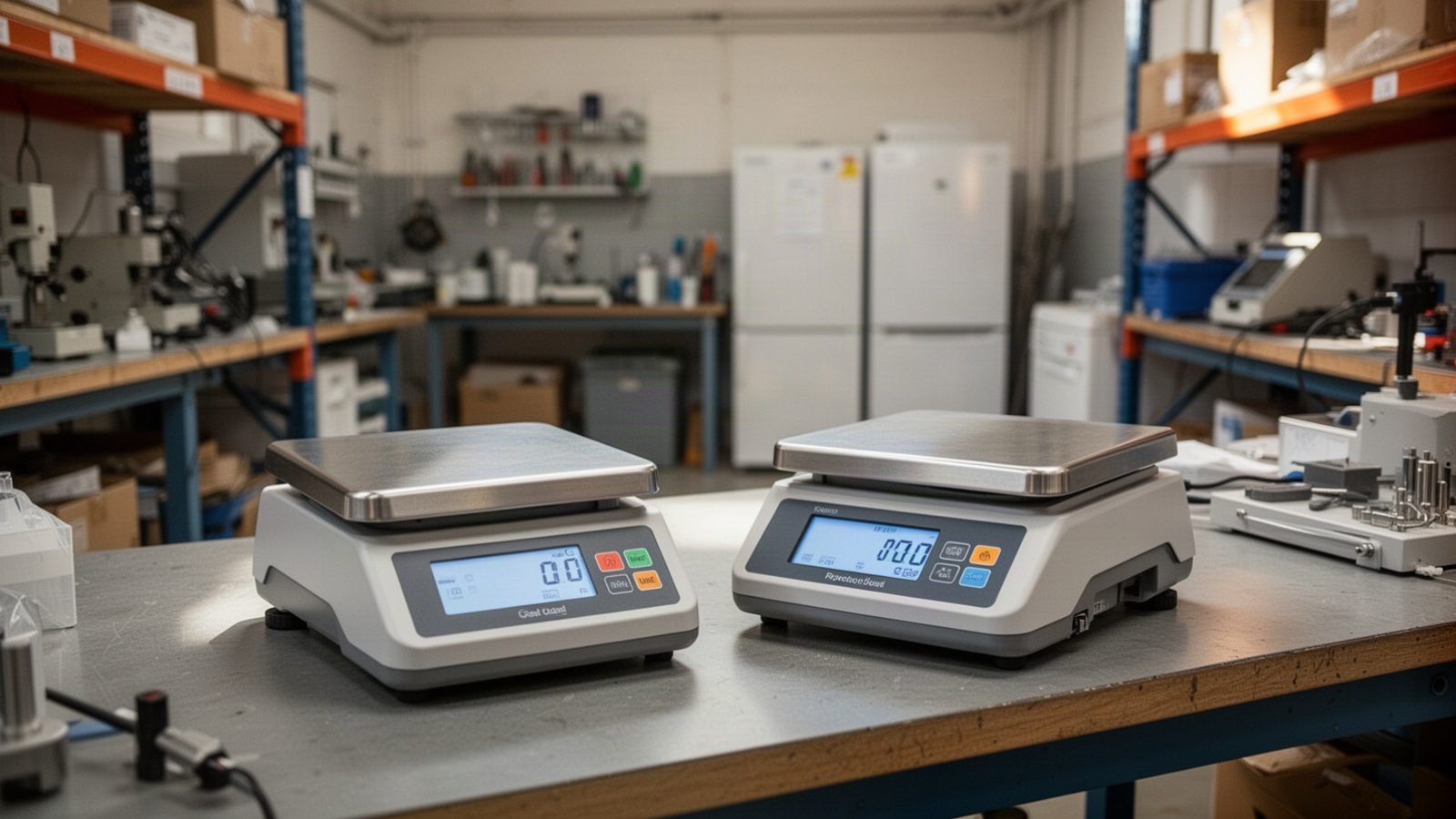
A precision lab scale, usually called a balance, measures small masses far more finely than a kitchen or postal scale. Depending on the model, it reads to 0.1 gram, 0.01 gram, a milligram or even a tenth of a milligram. Labs use them for preparing solutions and samples, classrooms for experiments, and hobbyists for reloading, jewelry, soap making, cosmetics and model building.
Choosing one comes down to two numbers, capacity and readability, plus how the scale is calibrated and how much you will rely on it. Finer readability needs a quieter, steadier environment and more care, so the most precise balance is not always the best choice. We compared well-regarded lab balances from Ohaus and A&D Weighing and a popular compact milligram scale from American Weigh Scales on capacity, readability, calibration options, draft protection and build, and matched each to the work it suits best.
Our top picks
-
1
 Illustration
Best overall
Ohaus Scout SPX222 Portable Balance
Classrooms, teaching labs and general precision weighing
Capacity220 gReadability0.01 gTypePortable precision balance -
2
 Illustration
Best analytical balance
Ohaus Pioneer PX224 Analytical Balance
Labs that need 0.1 mg readings
Capacity220 gReadability0.0001 g (0.1 mg)TypeAnalytical balance with draft shield -
3
 Illustration
Best milligram balance
A&D Weighing FX-120i Precision Balance
Lab work and serious hobbies needing 1 mg readability
Capacity122 gReadability0.001 gTypePrecision balance -
4
 Illustration
Best for larger samples
Ohaus Scout SPX2201 Portable Balance
Heavier containers, soil samples and bulk materials
Capacity2,200 gReadability0.1 gTypePortable precision balance -
5
 Illustration
Best budget milligram scale
American Weigh Scales Gemini-20 Milligram Scale
Hobbyists weighing very small amounts
Capacity20 gReadability0.001 gTypeCompact milligram scale
Ohaus Scout SPX222 Portable Balance
Illustration
A rugged, portable 0.01 g balance from a long-established lab brand.
Best for: Classrooms, teaching labs and general precision weighing- Capacity
- 220 g
- Readability
- 0.01 g
- Type
- Portable precision balance
- Calibration
- External
What we like
- Durable build suited to classrooms and shared labs
- Useful 0.01 g readability for most teaching and hobby work
- Compact and easy to move between benches
- From a widely used lab balance maker
Keep in mind
- Calibration mass sold separately
- Not fine enough for milligram work
- No draft shield, so drafts can affect the last digit
The Ohaus Scout is a familiar sight in school and university labs, and the SPX222 is the all-rounder of the range. It weighs up to 220 grams with 0.01 g readability, which covers chemistry practicals, sample preparation, soap and cosmetic formulation and many workshop tasks.
It is built to be handled by many people and moved between benches, with a compact footprint and simple controls. Ohaus has long experience supporting education and labs, so documentation and accessories are easy to find.
Calibration is external, so budget for a suitable calibration mass. At 0.01 g, it is not designed for milligram work, and without a draft shield, a busy room can nudge the last digit; keep it away from vents and doors.
Bottom line: A durable, versatile balance for classrooms and everyday lab weighing.
Ohaus Pioneer PX224 Analytical Balance
Illustration
A 0.1 mg analytical balance with a glass draft shield for preparing standards and small samples.
Best for: Labs that need 0.1 mg readings- Capacity
- 220 g
- Readability
- 0.0001 g (0.1 mg)
- Type
- Analytical balance with draft shield
What we like
- 0.1 mg readability for analytical work
- Glass draft shield protects readings from air currents
- Widely supported lab brand with service options
- Intuitive interface for routine lab use
Keep in mind
- Needs a stable, vibration-free bench and calm room
- Premium-priced
- Overkill for classroom and hobby tasks
When you need to weigh to a tenth of a milligram, you need an analytical balance, and the Ohaus Pioneer PX224 is a widely used entry point into that class. It weighs up to 220 grams with 0.1 mg readability, suitable for preparing analytical standards, weighing small samples and quantitative lab work.
A glass draft shield surrounds the pan, because at this level even a breath or a nearby door can move the reading. Ohaus offers versions with different calibration options, so check which one suits your lab's procedures.
To get the performance it is capable of, place it on a heavy, level, vibration-free bench away from vents, let it warm up and use careful technique. For most teaching and hobby work, a 0.01 g or 0.001 g balance is easier to live with.
Bottom line: A capable analytical balance for labs that genuinely need 0.1 mg.
A&D Weighing FX-120i Precision Balance
Illustration
A fast, compact milligram balance from a respected weighing manufacturer.
Best for: Lab work and serious hobbies needing 1 mg readability- Capacity
- 122 g
- Readability
- 0.001 g
- Type
- Precision balance
- Calibration
- External
What we like
- Milligram readability with quick stabilization
- Compact footprint for crowded benches
- Respected brand known for consistent performance
- Data output options for recording results
Keep in mind
- Calibration mass sold separately
- Lower capacity than 0.01 g balances
- Premium-priced compared with hobby milligram scales
A&D Weighing is a respected name in laboratory balances, and the FX-120i is a compact milligram balance that sits between a classroom scale and a full analytical balance. It weighs up to 122 grams with 0.001 g readability and is known for settling quickly, which speeds up repetitive weighing.
That makes it a popular choice for labs, formulation work and precision hobbies such as reloading, where consistent milligram-level results matter. Interface options let you send readings to a computer or printer for records.
Calibration is external on this model, so you will need a suitable calibration mass; A&D's FZ-i series adds internal calibration if you want it. Like any milligram balance, it needs a steady bench and shelter from drafts.
Bottom line: A quick, dependable milligram balance for lab and precision hobby work.
Ohaus Scout SPX2201 Portable Balance
Illustration
A higher-capacity Scout balance for weighing larger samples at 0.1 g.
Best for: Heavier containers, soil samples and bulk materials- Capacity
- 2,200 g
- Readability
- 0.1 g
- Type
- Portable precision balance
- Calibration
- External
What we like
- Large capacity for heavy containers and samples
- Same rugged, portable Scout design
- Less sensitive to drafts than finer balances
- Good for field and classroom work
Keep in mind
- 0.1 g readability is too coarse for small samples
- Calibration mass sold separately
- Larger footprint than milligram scales
Not every lab task needs fine readability; sometimes you need to weigh a full beaker, a soil core or a batch of material. The Scout SPX2201 handles up to 2,200 grams with 0.1 g readability, in the same rugged, portable design as the SPX222.
The coarser readability makes it less fussy about drafts and vibration, which suits busy classrooms, field stations and workshops. It is a natural partner to a finer balance for a lab that weighs both large and small samples.
Do not expect it to handle small quantities: at 0.1 g, weighing a few hundred milligrams is not meaningful. Use a suitable external calibration mass to keep it accurate.
Bottom line: The pick for weighing larger samples and containers with a sturdy portable balance.
American Weigh Scales Gemini-20 Milligram Scale
Illustration
A compact, affordable 20 g milligram scale with a small draft cover.
Best for: Hobbyists weighing very small amounts- Capacity
- 20 g
- Readability
- 0.001 g
- Type
- Compact milligram scale
What we like
- Very affordable milligram readability
- Small draft cover helps steady readings
- Compact and portable
- Simple controls
Keep in mind
- Only 20 g capacity
- Less stable and repeatable than lab balances
- Sensitive to drafts, static and uneven surfaces
The Gemini-20 is a popular way to get milligram readability without lab-balance cost. It weighs up to 20 grams in 0.001 g steps, and a small cover over the pan helps shield readings from drafts.
That suits hobbies where tiny amounts matter, such as jewelry making, small-batch cosmetics, model building and weighing powders for crafts. It is compact enough to store in a drawer and set up on any level surface.
Expect it to be more sensitive to air currents, static and uneven tables than the lab balances above, and less consistent at the last digit. Calibrate it regularly following the manual, and for anything where accuracy is critical, use a lab-grade balance.
Bottom line: An affordable milligram scale for hobby work, not a substitute for a lab balance.
Side-by-side comparison
| Product | Capacity | Readability | Type | Calibration | Score |
|---|---|---|---|---|---|
| Ohaus Scout SPX222 Portable BalanceBest overall | 220 g | 0.01 g | Portable precision balance | External | 8.9 |
| Ohaus Pioneer PX224 Analytical BalanceBest analytical balance | 220 g | 0.0001 g (0.1 mg) | Analytical balance with draft shield | — | 8.8 |
| A&D Weighing FX-120i Precision BalanceBest milligram balance | 122 g | 0.001 g | Precision balance | External | 8.6 |
| Ohaus Scout SPX2201 Portable BalanceBest for larger samples | 2,200 g | 0.1 g | Portable precision balance | External | 8.3 |
| American Weigh Scales Gemini-20 Milligram ScaleBest budget milligram scale | 20 g | 0.001 g | Compact milligram scale | — | 7.8 |
Specifications are from manufacturer listings at the time of writing and can change between production runs.
Capacity and readability
Capacity is the maximum mass the scale can weigh. Readability is the smallest increment it displays, such as 0.01 g. Choose the readability your work genuinely needs, then pick a capacity comfortably above your heaviest container plus sample. A balance that reads to 0.001 g but is overloaded by your beaker is no use.
Readability is not the same as accuracy (how close the reading is to the true mass) or repeatability (how consistently it gives the same reading). Lab balance specifications list repeatability and linearity, which tell you more about real performance than the display alone.
Precision balance, analytical balance or pocket scale?
- Precision (top-loading) balances typically read to 0.1, 0.01 or 0.001 g and handle general lab, classroom and workshop weighing.
- Analytical balances read to 0.1 mg (0.0001 g) and have an enclosed glass draft shield, because even gentle air currents move the reading at that level. They need a very stable environment.
- Compact milligram scales are small and affordable, with low capacity. They suit hobby work where very small amounts matter but full lab performance does not.
Calibration: internal or external
Every balance needs calibrating to stay accurate, especially after it is moved or the temperature changes. External calibration uses a certified calibration mass that you place on the pan. Internal calibration uses a built-in mass and a motor, often automatically, which is far more convenient for analytical work. Use calibration masses of an appropriate accuracy class for your balance and handle them with gloves or tweezers.
If you sell products by weight in the US, you generally need a scale that is legal for trade, which typically means an NTEP-certified model. Most lab balances are not, unless the maker says so.
Placement and environment
- Set the balance on a solid, level, vibration-free bench, away from doors, vents, fans and direct sunlight.
- Level it with the built-in bubble and leveling feet.
- Let it warm up as the manufacturer recommends before calibrating or weighing.
- Fine-reading balances are sensitive to static from plastic containers and to warm samples, which create air currents. Let samples reach room temperature.
Weighing technique and care
- Use the tare function with a clean, dry container and the same container each time.
- Close draft shield doors before reading, and keep hands and breath away from the pan.
- Never exceed the capacity, and avoid dropping items onto the pan.
- Brush spills off immediately and follow safety data sheets when weighing chemicals, using appropriate gloves, eye protection and ventilation.
Frequently asked questions
What is the difference between readability and accuracy?
Readability is the smallest increment the display shows. Accuracy is how close the reading is to the true mass, and repeatability is how consistently it gives the same result. A scale can display 0.001 g without being accurate to that level, so look at repeatability and linearity specifications too.
Do I need an analytical balance?
Only if your work needs readings to 0.1 mg, such as preparing analytical standards or weighing very small samples. Analytical balances need a stable, draft-free environment and careful technique. For most classroom, workshop and hobby tasks, 0.01 g or 0.001 g is enough.
How often should I calibrate a lab balance?
Calibrate after setting it up, after moving it, when the temperature changes significantly and on the schedule your lab or the manufacturer recommends. Balances with internal calibration can do this automatically. Check accuracy regularly with a known calibration mass.
What does legal for trade mean?
In the US, scales used to sell goods by weight generally need to be legal for trade, which typically means NTEP certification and local inspection. Most lab and hobby balances are not certified for trade, so check before using one commercially.
Why does my balance reading drift?
Common causes are air currents, vibration, temperature changes, a warm or cold sample, static electricity from plastic containers and an unlevel surface. Close the draft shield, let samples reach room temperature, level the balance and keep it away from vents and doors.
How we picked
We compared manufacturer specifications for capacity, readability, repeatability, calibration options, draft protection, pan size, power and build, alongside warranty terms, for widely available precision balances, analytical balances and compact milligram scales. Our picks and scores are based on this research — we have not tested these products hands-on. Brands cannot pay to be included. Read our full method.