






















The best smoke and carbon monoxide detectors
Five smoke and CO alarms compared: sealed-battery combos, wire-free and hardwired interconnect, a Wi-Fi model and a plug-in CO alarm, plus placement and testing tips.
As an Amazon Associate I earn from qualifying purchases. When you buy through links on this page, we may earn a commission at no extra cost to you. Learn more
Smoke alarms and carbon monoxide (CO) alarms are some of the least exciting things you can buy for a home and some of the most important. A smoke alarm gives early warning of a fire, often while people are asleep. A CO alarm warns of a gas you cannot see or smell, produced by furnaces, water heaters, gas stoves, fireplaces, generators and cars.
Most of the decisions come down to a few practical questions: do you need smoke, CO or both in one unit, should it run on a sealed 10-year battery or your home's wiring, and do you want every alarm in the house to sound when one detects a problem? We compared widely available models from Kidde and X-Sense on sensor type, power, interconnection, alerts and end-of-life features. Whatever you choose, follow the manufacturer's instructions and your local fire and building codes for placement and installation.
Our top picks
-
1
 Illustration
Best overall
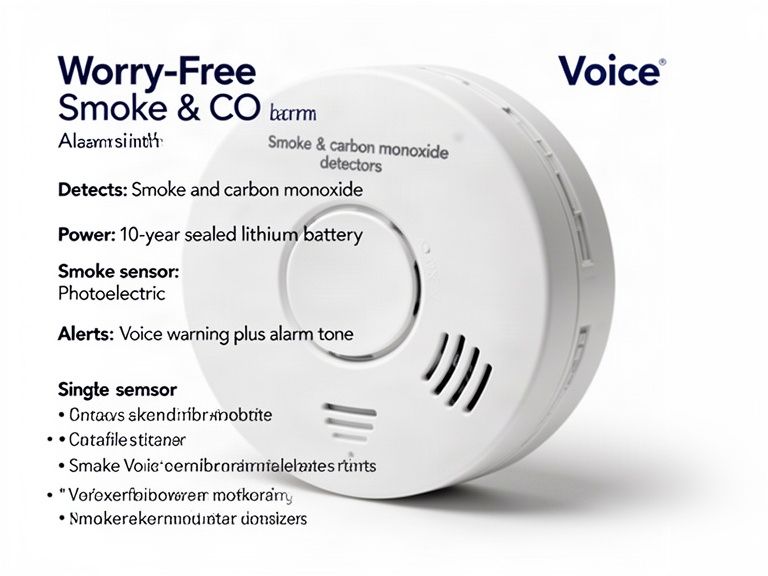
Kidde Worry-Free Smoke & CO Alarm with Voice
Bedrooms and hallways in most homes
DetectsSmoke and carbon monoxidePower10-year sealed lithium batterySmoke sensorPhotoelectric -
2
 Illustration
Best wire-free interconnect
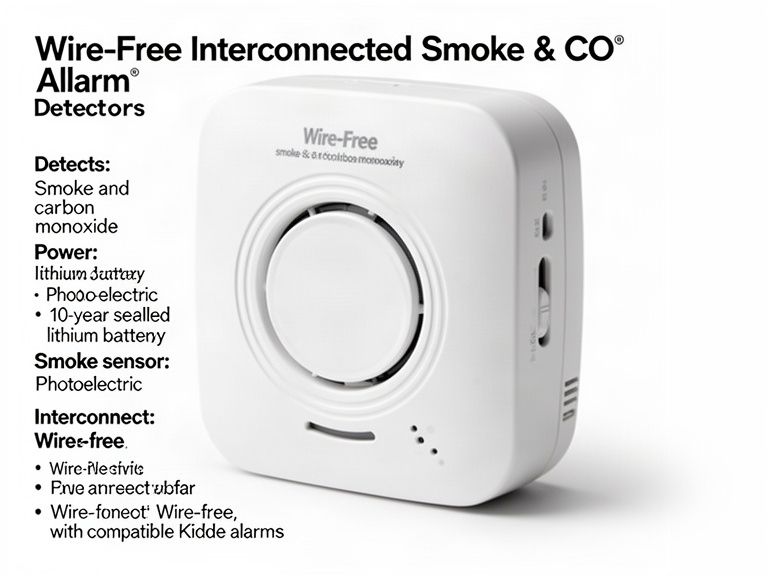
Kidde Wire-Free Interconnected Smoke & CO Alarm
Larger or multi-story homes without interconnect wiring
DetectsSmoke and carbon monoxidePower10-year sealed lithium batterySmoke sensorPhotoelectric -
3
 Illustration
Best hardwired
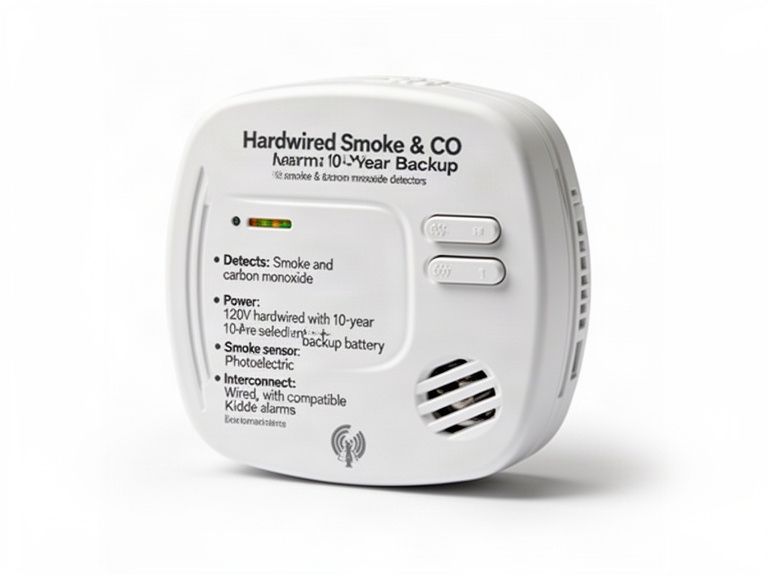
Kidde Hardwired Smoke & CO Alarm with 10-Year Backup
Replacing existing hardwired, interconnected alarms
DetectsSmoke and carbon monoxidePower120V hardwired with 10-year sealed backup batterySmoke sensorPhotoelectric -
4
 Illustration
Best smart alarm
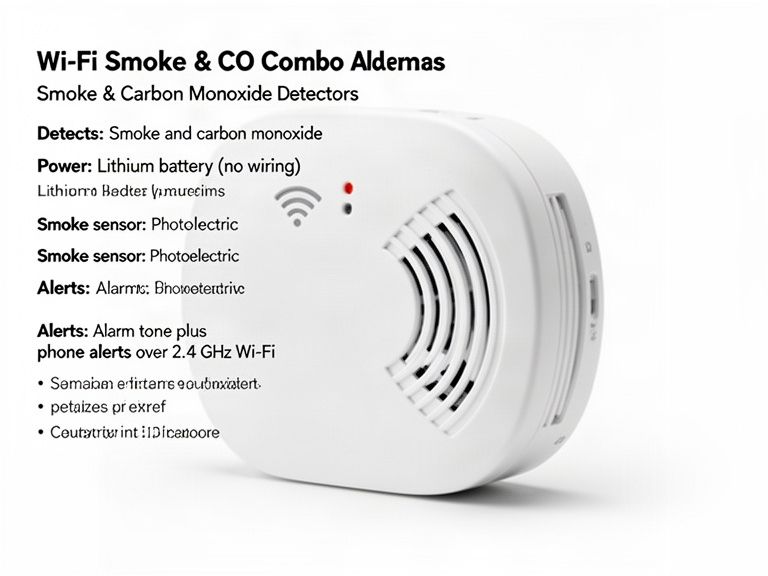
X-Sense Wi-Fi Smoke & CO Combo Alarm SC07-WX
Vacation homes and people who want phone alerts
DetectsSmoke and carbon monoxidePowerLithium battery (no wiring)Smoke sensorPhotoelectric -
5
 Illustration
Best plug-in CO alarm
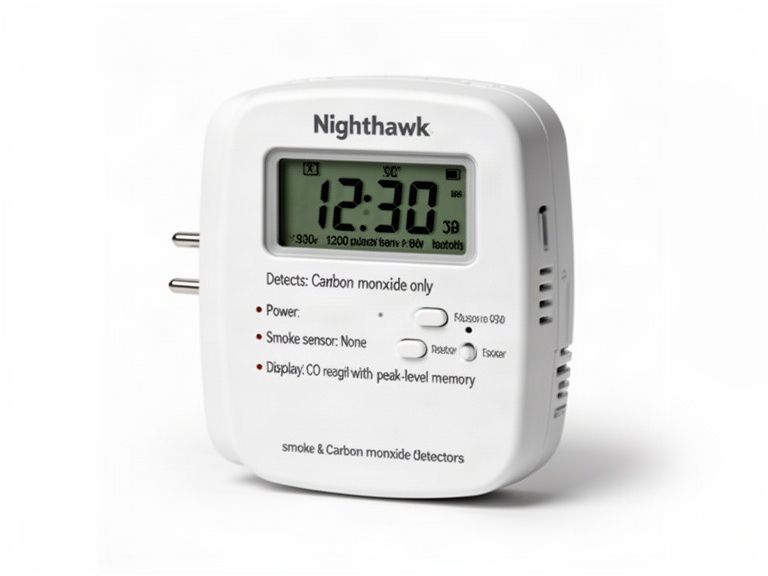
Kidde Nighthawk Plug-In CO Alarm with Display
Adding CO detection near bedrooms without tools
DetectsCarbon monoxide onlyPower120V plug-in with 9V battery backupSmoke sensorNone
Kidde Worry-Free Smoke & CO Alarm with Voice
Illustration
A combination smoke and CO alarm with a sealed 10-year battery and spoken warnings.
Best for: Bedrooms and hallways in most homes- Detects
- Smoke and carbon monoxide
- Power
- 10-year sealed lithium battery
- Smoke sensor
- Photoelectric
- Alerts
- Voice warning plus alarm tone
What we like
- No battery changes for the life of the alarm
- Voice warnings say whether the danger is fire or CO
- Photoelectric sensor is less prone to cooking nuisance alarms
- End-of-life signal tells you when to replace it
Keep in mind
- Not interconnected with other alarms
- The whole unit is replaced when the battery ends
- Costs more upfront than basic 9-volt alarms
This Kidde combination alarm covers the two biggest household threats in one ceiling unit and removes the most common failure point: a dead or missing battery. The lithium battery is sealed in for the life of the alarm, and the unit tells you when it is time to replace the whole thing.
Voice warnings are a practical extra. Instead of guessing what a beeping pattern means, you hear whether the alarm has detected fire or carbon monoxide, which matters because the right response differs. The photoelectric smoke sensor is a good default for bedrooms and hallways near kitchens.
Its limit is that it works on its own: smoke in the basement will not set off this alarm upstairs. For larger homes, consider Kidde's wire-free interconnected version below.
Bottom line: An easy, low-maintenance combination alarm for most rooms and homes.
Kidde Wire-Free Interconnected Smoke & CO Alarm
Illustration
A sealed-battery smoke and CO alarm that links by radio, so all linked alarms sound together.
Best for: Larger or multi-story homes without interconnect wiring- Detects
- Smoke and carbon monoxide
- Power
- 10-year sealed lithium battery
- Smoke sensor
- Photoelectric
- Interconnect
- Wire-free, with compatible Kidde alarms
What we like
- Linked alarms sound together without running new wires
- Sealed 10-year battery
- Voice notifications for fire and CO
- Good fit for older homes and additions
Keep in mind
- Only links with compatible Kidde wire-free alarms
- Each alarm costs more than a standalone unit
- Radio range can be affected by thick walls and floors
Interconnection is one of the most useful upgrades you can make in a larger home: when one alarm detects smoke or CO, every linked alarm sounds. Normally that requires wiring between units, but this Kidde model links by radio instead.
That makes it a strong choice for older houses, additions and multi-story homes where running interconnect wire is impractical. Each unit has a sealed 10-year battery, a photoelectric smoke sensor and voice notifications, so the everyday experience matches our top pick.
You will need compatible Kidde wire-free alarms throughout to build the network, and very thick walls or large distances can affect the signal, so test the whole system after installation following Kidde's instructions.
Bottom line: The simplest way to get whole-home interconnected alarms without new wiring.
Kidde Hardwired Smoke & CO Alarm with 10-Year Backup
Illustration
An AC-powered combination alarm with a sealed 10-year backup battery and voice alerts.
Best for: Replacing existing hardwired, interconnected alarms- Detects
- Smoke and carbon monoxide
- Power
- 120V hardwired with 10-year sealed backup battery
- Smoke sensor
- Photoelectric
- Interconnect
- Wired, with compatible Kidde alarms
What we like
- Runs on house power with a sealed backup battery
- No backup battery changes for the life of the alarm
- Wired interconnect with compatible Kidde alarms
- Voice messages identify fire or CO
Keep in mind
- Needs an existing hardwired circuit
- Mixing brands on one circuit may break interconnection
- New circuits require a licensed electrician
Many homes built in recent decades have hardwired, interconnected smoke alarms, and those units eventually reach the end of their life. This Kidde combination alarm is a straightforward replacement that adds CO detection while keeping house power and a sealed 10-year backup battery, so you never need to replace a backup 9-volt.
It interconnects through the existing wiring with compatible Kidde alarms. If your current alarms are a different brand, plan to replace every unit on the circuit together so they all communicate, and turn off the breaker before swapping.
Replacing like-for-like is usually manageable for a confident DIYer following the instructions, but adding new circuits or alarm locations is a job for a licensed electrician.
Bottom line: A low-maintenance upgrade for homes that already have hardwired alarms.
X-Sense Wi-Fi Smoke & CO Combo Alarm SC07-WX
Illustration
A combination alarm that sends notifications to your phone over Wi-Fi without a base station.
Best for: Vacation homes and people who want phone alerts- Detects
- Smoke and carbon monoxide
- Power
- Lithium battery (no wiring)
- Smoke sensor
- Photoelectric
- Alerts
- Alarm tone plus phone alerts over 2.4 GHz Wi-Fi
What we like
- Phone notifications when you are away
- No base station or hub required
- Combination smoke and CO in one unit
- Good option for rentals and second homes
Keep in mind
- Only works on 2.4 GHz Wi-Fi networks
- Alerts depend on your Wi-Fi and internet connection
- App adds another account to manage
A regular alarm only helps if someone is there to hear it. The X-Sense SC07-WX adds phone notifications over Wi-Fi, so you hear about smoke or CO at a vacation home, a rental unit or your own house while you are at work.
It connects directly to a 2.4 GHz network, with no base station to buy, and combines a photoelectric smoke sensor with a CO sensor. Inside the home it behaves like any other alarm, sounding loudly when it detects a problem.
Remember that the phone alert relies on Wi-Fi and internet service, which can fail during a power cut. Treat it as a useful extra layer on top of correctly placed local alarms, not a monitoring service.
Bottom line: A practical way to get smoke and CO alerts on your phone without a hub.
Kidde Nighthawk Plug-In CO Alarm with Display
Illustration
A plug-in carbon monoxide alarm with a digital ppm display, peak memory and 9-volt backup.
Best for: Adding CO detection near bedrooms without tools- Detects
- Carbon monoxide only
- Power
- 120V plug-in with 9V battery backup
- Smoke sensor
- None
- Display
- Digital CO reading with peak-level memory
What we like
- Plugs straight into an outlet, no installation
- Digital display shows CO levels in parts per million
- Peak memory records the highest level detected
- 9-volt backup keeps it working during outages
Keep in mind
- Does not detect smoke
- Outlet placement may not match ideal height in every room
- Backup battery needs periodic replacement
The Nighthawk is a long-running, simple way to add CO protection: plug it into an outlet near sleeping areas and it starts monitoring. A 9-volt battery keeps it working if the power goes out, which matters because generators and gas heaters are often in use during outages.
Its digital display is the main reason to choose it over a basic CO alarm. It shows the current CO reading and stores the peak level, which can help a technician understand what happened after an alarm or a low-level event.
It does not detect smoke, so pair it with smoke alarms. Follow Kidde's placement guidance, keep it out of the way of furniture and curtains, and replace it by the end-of-life date on the label.
Bottom line: An easy, informative CO alarm to plug in outside bedrooms.
Side-by-side comparison
| Product | Detects | Power | Smoke sensor | Alerts | Score |
|---|---|---|---|---|---|
| Kidde Worry-Free Smoke & CO Alarm with VoiceBest overall | Smoke and carbon monoxide | 10-year sealed lithium battery | Photoelectric | Voice warning plus alarm tone | 9.0 |
| Kidde Wire-Free Interconnected Smoke & CO AlarmBest wire-free interconnect | Smoke and carbon monoxide | 10-year sealed lithium battery | Photoelectric | — | 8.9 |
| Kidde Hardwired Smoke & CO Alarm with 10-Year BackupBest hardwired | Smoke and carbon monoxide | 120V hardwired with 10-year sealed backup battery | Photoelectric | — | 8.7 |
| X-Sense Wi-Fi Smoke & CO Combo Alarm SC07-WXBest smart alarm | Smoke and carbon monoxide | Lithium battery (no wiring) | Photoelectric | Alarm tone plus phone alerts over 2.4 GHz Wi-Fi | 8.3 |
| Kidde Nighthawk Plug-In CO Alarm with DisplayBest plug-in CO alarm | Carbon monoxide only | 120V plug-in with 9V battery backup | None | — | 8.4 |
Specifications are from manufacturer listings at the time of writing and can change between production runs.
Smoke, CO or combination?
Combination alarms detect both smoke and carbon monoxide in one unit, which means fewer devices on the ceiling and one test button. Smoke-only and CO-only alarms let you place each where it works best, for example a plug-in CO alarm with a digital display near bedrooms and smoke alarms in every bedroom. Homes with fuel-burning appliances, a fireplace or an attached garage need CO protection; every home needs smoke alarms.
Photoelectric vs ionization sensors
Photoelectric sensors are generally quicker to respond to slow, smoldering fires and tend to give fewer false alarms from cooking. Ionization sensors are generally quicker to respond to fast, flaming fires. Fire-safety organizations suggest using both technologies or dual-sensor alarms for the broadest coverage. All the smoke-sensing picks below use photoelectric sensors, a sensible default near kitchens and bedrooms.
Power: sealed battery, replaceable battery or hardwired
- 10-year sealed battery: no battery changes and no chirping 9-volt at 3 a.m. When the battery ends, you replace the whole alarm, which you should do at about that age anyway. Some states and cities now require sealed-battery alarms when battery-only units are installed.
- Replaceable battery: cheaper upfront, but batteries need changing on schedule.
- Hardwired with battery backup: required in many new homes and renovations, and usually interconnected through the wiring. Replacing an existing hardwired alarm is often a simple swap with an adapter, but adding new circuits is a job for a licensed electrician.
Interconnection and smart alerts
When alarms are interconnected, smoke in the basement sets off the alarm in the bedroom too. Hardwired alarms connect through the wiring; wire-free models link by radio. Wi-Fi alarms add phone notifications when you are away, which is useful for vacation homes, but they still need to be loud enough to wake everyone inside.
Placement, testing and replacement
- Follow the manufacturer's placement instructions and local codes. As a general guide, fire-safety organizations recommend smoke alarms inside each bedroom, outside each sleeping area and on every level, including the basement, and CO alarms outside sleeping areas and on every level.
- Keep smoke alarms about 10 feet from cooking appliances to cut nuisance alarms, and away from bathrooms, vents and ceiling fans.
- Look for UL 217 (smoke) and UL 2034 (CO) listings on the packaging.
- Press the test button monthly, and replace alarms when they reach the end-of-life date on the label or start an end-of-life signal; most are designed to last about 10 years.
- If an alarm sounds, get everyone outside and call 911 from fresh air. Do not go back in to find the source.
Frequently asked questions
How many smoke and CO alarms does a home need?
A common guideline is a smoke alarm in every bedroom, outside each sleeping area and on every level, plus CO alarms outside sleeping areas and on every level. Requirements differ by state and city, so check your local code and follow each manufacturer’s placement instructions.
Should I choose photoelectric or ionization smoke alarms?
Photoelectric alarms are generally quicker with smoldering fires and less prone to cooking nuisance alarms, while ionization alarms are generally quicker with fast flaming fires. Many fire-safety organizations recommend using both types or dual-sensor alarms for the widest coverage.
How often should smoke and CO alarms be replaced?
Most smoke alarms should be replaced about 10 years after the manufacture date printed on the back, and CO alarms at the end of the life stated by the manufacturer, often 7 to 10 years. Many newer units sound a distinct end-of-life signal.
What should I do if my carbon monoxide alarm goes off?
Get everyone, including pets, outside into fresh air right away and call 911 or your fire department from outside. Do not go back in until emergency responders say it is safe, and have fuel-burning appliances checked by a qualified technician.
Can I replace a hardwired alarm with a different brand?
Usually, but the wiring connector and interconnect signal differ between brands, so a mix of brands may not interconnect. Many people replace every alarm on the circuit with the same brand at once. If wiring needs changing, use a licensed electrician.
Why does my alarm keep chirping?
A regular chirp usually means a low battery or an end-of-life warning. Check the manual, because the pattern tells you which one. Sealed-battery alarms that chirp at the end of their life need replacing, not a new battery.
How we picked
We compared manufacturer specifications, sensor types, power sources, interconnect options, alert features, end-of-life signaling, published listings and warranty terms for widely available smoke and carbon monoxide alarms, and weighed how each suits different homes. Our picks and scores are based on this research — we have not tested these products hands-on. Brands cannot pay to be included. Read our full method.