






















The best rugged outdoor watches
Five rugged GPS watches compared — Garmin, Coros, Amazfit and Casio — for hikers, backpackers and mountain athletes, plus what to know about maps, solar charging and battery life.
As an Amazon Associate I earn from qualifying purchases. When you buy through links on this page, we may earn a commission at no extra cost to you. Learn more
A rugged outdoor watch is built for the days when a phone isn't enough: long hikes far from a charger, scrambles where your hands need to stay free, and cold, wet conditions that drain batteries and crack screens. These watches combine tough cases and scratch-resistant glass with GPS navigation, altimeters, barometers and compasses, and many last weeks between charges.
The best choice depends on how far into the backcountry you go. Some watches carry full topographic maps for turn-by-turn navigation; others offer simpler breadcrumb trails back to your start point. Battery life ranges from a week to well over a month, and solar charging can extend it further in good light. We compared rugged watches from Garmin, Coros, Amazfit and Casio and picked the best for different adventurers, from weekend hikers to expedition athletes.
Our top picks
-
1
 Illustration
Best overall
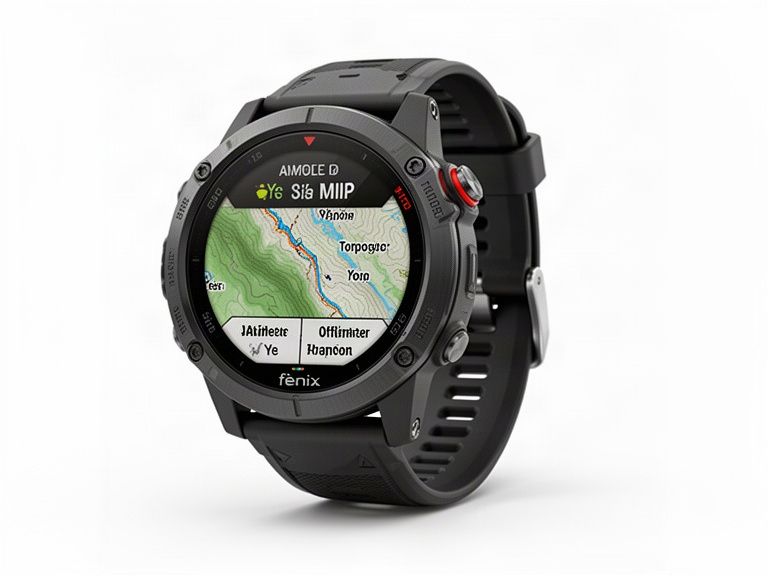
Garmin fēnix Series
Serious hikers, mountaineers and multisport athletes
DisplayAMOLED or solar MIP, by versionOffline mapsYes, topographicSolar chargingOn solar versions -
2
 Illustration
Best value
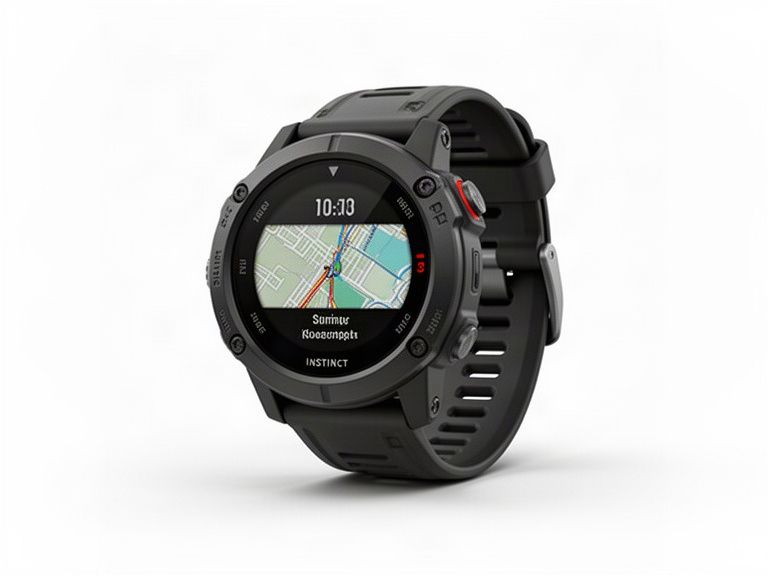
Garmin Instinct 3
Hikers and outdoor workers who want toughness without flagship pricing
DisplayAMOLED or solar MIP, by versionOffline mapsNo (breadcrumb navigation)Solar chargingOn solar versions -
3
 Illustration
Best for expeditions
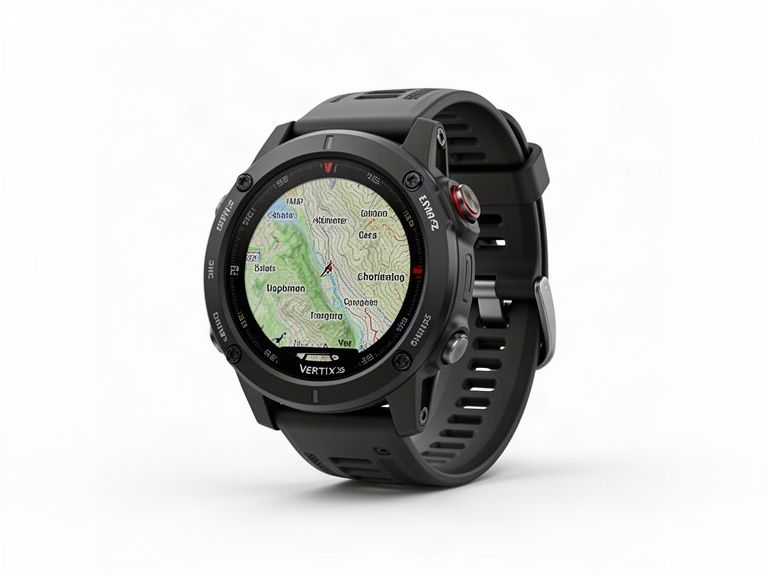
Coros Vertix 2S
Mountaineers and ultra-distance athletes
DisplayMIP, always onOffline mapsYes, topographicSolar chargingNo -
4
 Illustration
Best budget
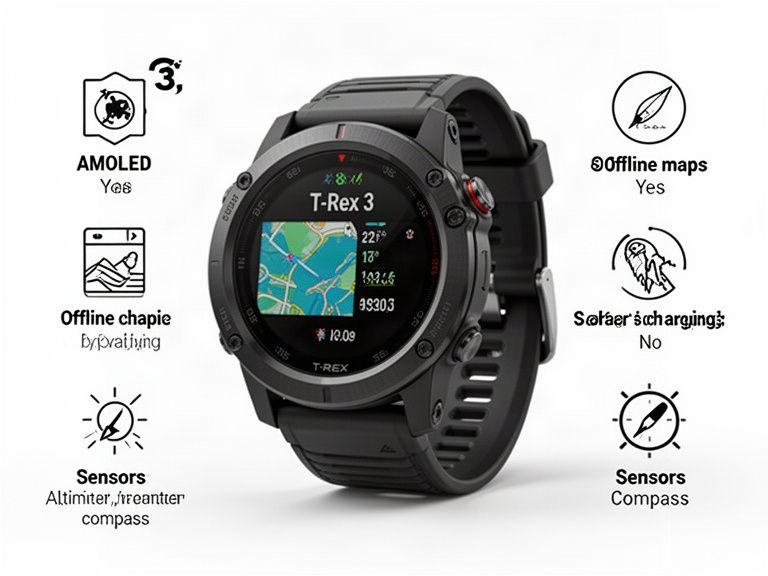
Amazfit T-Rex 3
Budget-minded hikers who want maps and a bright screen
DisplayAMOLEDOffline mapsYesSolar chargingNo -
5
 Illustration
Best G-Shock
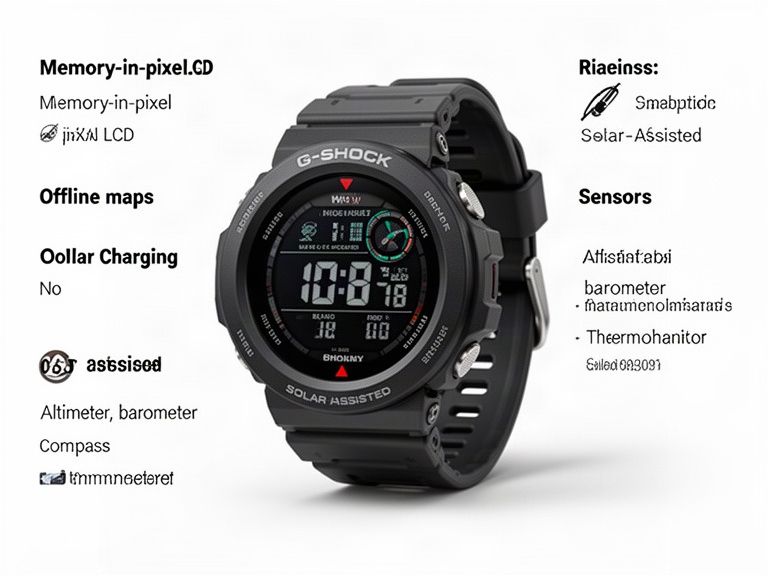
Casio G-Shock Move GBD-H2000
G-Shock fans who want GPS and heart rate in a famously tough watch
DisplayMemory-in-pixel LCDOffline mapsNoSolar chargingSolar-assisted
Garmin fēnix Series
Illustration
Garmin's flagship outdoor watch line, with full topographic maps, a premium rugged build and Garmin's complete training and navigation tools.
Best for: Serious hikers, mountaineers and multisport athletes- Display
- AMOLED or solar MIP, by version
- Offline maps
- Yes, topographic
- Solar charging
- On solar versions
- Sensors
- Altimeter, barometer, compass
What we like
- Full topographic maps with routing
- Premium materials and multiple sizes
- Complete Garmin training, health and navigation features
- Long battery life, especially on solar versions
Keep in mind
- Premium-priced
- Heavy on smaller wrists
- More features than many hikers need
The fēnix line is Garmin's do-everything outdoor watch and the benchmark others are measured against. It carries full topographic maps with routing and turn-by-turn guidance, altimeter, barometer and compass sensors, multi-band GPS and Garmin's full suite of training, sleep and recovery tools.
Garmin offers the fēnix in several sizes and in both bright AMOLED and longer-lasting solar versions, with premium materials such as titanium and sapphire on higher trims. The line is refreshed periodically, so check which generation and version you're buying; recent generations share the same core strengths.
The main drawbacks are cost and size. It is premium-priced and can feel bulky, and casual hikers may never use half its features. For people who spend serious time in the mountains, it is the most complete watch available.
Bottom line: The most capable outdoor watch line for serious adventurers.
Garmin Instinct 3
Illustration
A tough, fiber-reinforced Garmin with breadcrumb navigation, ABC sensors and AMOLED or solar versions.
Best for: Hikers and outdoor workers who want toughness without flagship pricing- Display
- AMOLED or solar MIP, by version
- Offline maps
- No (breadcrumb navigation)
- Solar charging
- On solar versions
- Sensors
- Altimeter, barometer, compass
What we like
- Very tough, simple design
- Solar versions can run for a very long time in good light
- Altimeter, barometer and compass
- Garmin fitness and sleep tracking included
Keep in mind
- No onboard maps
- Basic look compared with the fēnix
- Solar-version screen is less vivid
The Instinct 3 is Garmin's rugged watch for people who want durability and battery life without paying flagship prices. Its fiber-reinforced case is built to take knocks, and it comes in two styles: a bright AMOLED version and a solar version with a memory-in-pixel screen that can run for extended periods in good sunlight.
Navigation uses breadcrumb trails and TracBack to return to your starting point, backed by altimeter, barometer and compass sensors. You also get Garmin's fitness, sleep and recovery tracking and phone notifications.
It doesn't carry topographic maps, and its utilitarian design isn't for everyone. For day hikers, hunters, anglers and outdoor workers who want a nearly indestructible watch with excellent battery life, it's great value.
Bottom line: The best-value tough watch for most outdoor people.
Coros Vertix 2S
Illustration
An expedition watch with offline topographic maps, a sapphire-and-titanium build and very long battery life.
Best for: Mountaineers and ultra-distance athletes- Display
- MIP, always on
- Offline maps
- Yes, topographic
- Solar charging
- No
- Sensors
- Altimeter, barometer, compass
What we like
- Exceptional battery life for multi-day trips
- Offline topographic maps
- Sapphire glass and titanium bezel
- No subscription for training tools
Keep in mind
- Large and heavy
- MIP screen is less vivid than AMOLED
- Fewer smart features than Garmin
Coros built the Vertix 2S for long days and longer expeditions. Its headline feature is battery life: it's designed to last for weeks of daily use and very long stretches of GPS tracking, which matters on multi-day mountain routes where charging is impossible.
It carries offline topographic maps, multi-band GPS and the full set of altimeter, barometer and compass sensors, all in a sapphire-glass and titanium-bezel build. Coros's free training platform covers training load and recovery without a subscription.
The trade-offs are size and polish. It's a big, heavy watch, the MIP screen is functional rather than beautiful, and the smart features are simpler than Garmin's. For mountaineers and ultra athletes who care most about stamina, it's a standout.
Bottom line: The best pick when battery life on long expeditions is the top priority.
Amazfit T-Rex 3
Illustration
A rugged, budget-friendly outdoor watch with an AMOLED screen, offline maps and long battery life.
Best for: Budget-minded hikers who want maps and a bright screen- Display
- AMOLED
- Offline maps
- Yes
- Solar charging
- No
- Sensors
- Altimeter, barometer, compass
What we like
- Offline maps at a budget-friendly price
- Bright AMOLED screen
- Long battery life
- Works with iPhone and Android
Keep in mind
- Software and maps are less refined than Garmin's
- Bulky case
- Smaller ecosystem of apps and accessories
The T-Rex 3 is the most affordable way to get serious outdoor features. It packs a bright AMOLED screen, offline maps, multi-band GPS and altimeter, barometer and compass sensors into a rugged case, with battery life that comfortably stretches across long trips.
Amazfit's Zepp app handles route planning and syncing, and the watch covers fitness, sleep and wellness tracking without a subscription. It works with both iPhone and Android.
Garmin's software and maps are more polished, and the T-Rex is a chunky watch that won't suit small wrists. Amazfit also offers higher-end T-Rex variants with premium materials. For hikers on a budget who want maps on their wrist, the T-Rex 3 is excellent value.
Bottom line: The best budget outdoor watch with maps.
Casio G-Shock Move GBD-H2000
Illustration
A G-Shock with built-in GPS, wrist heart rate and solar-assisted charging in Casio's shock-resistant construction.
Best for: G-Shock fans who want GPS and heart rate in a famously tough watch- Display
- Memory-in-pixel LCD
- Offline maps
- No
- Solar charging
- Solar-assisted
- Sensors
- Altimeter, barometer, compass, thermometer
What we like
- Classic G-Shock shock resistance
- Built-in GPS and wrist heart rate
- Solar-assisted charging
- Distinctive, rugged styling
Keep in mind
- Training software is basic compared with Garmin
- No maps
- Bulky and heavy
For many people, a rugged watch means a G-Shock. The GBD-H2000 brings Casio's shock-resistant construction together with built-in GPS, wrist-based heart rate and sensors for altitude, pressure, direction and temperature, making it a capable companion for runs and hikes.
Solar-assisted charging tops up the battery in daylight, and the memory-in-pixel screen stays readable in bright sun. Workouts sync to Casio's companion app on your phone for review.
As a sports watch, it's simpler than Garmin or Coros: training analysis is basic, there are no maps, and it's big and heavy. If you love G-Shock styling and toughness and want GPS for your outdoor activities, it's a fun, durable choice.
Bottom line: The best way to get GPS tracking in classic G-Shock form.
Side-by-side comparison
| Product | Display | Offline maps | Solar charging | Sensors | Score |
|---|---|---|---|---|---|
| Garmin fēnix SeriesBest overall | AMOLED or solar MIP, by version | Yes, topographic | On solar versions | Altimeter, barometer, compass | 9.4 |
| Garmin Instinct 3Best value | AMOLED or solar MIP, by version | No (breadcrumb navigation) | On solar versions | Altimeter, barometer, compass | 9.0 |
| Coros Vertix 2SBest for expeditions | MIP, always on | Yes, topographic | No | Altimeter, barometer, compass | 8.8 |
| Amazfit T-Rex 3Best budget | AMOLED | Yes | No | Altimeter, barometer, compass | 8.5 |
| Casio G-Shock Move GBD-H2000Best G-Shock | Memory-in-pixel LCD | No | Solar-assisted | Altimeter, barometer, compass, thermometer | 8.0 |
Specifications are from manufacturer listings at the time of writing and can change between production runs.
Navigation: maps or breadcrumbs?
Full offline topographic maps let you see trails, contour lines and terrain on your wrist, and often offer turn-by-turn directions on planned routes. They are the most useful feature for unfamiliar trails. Breadcrumb navigation shows a line to follow and a path back to your start, which is enough for many day hikes. Whatever you choose, carry a paper map and compass in remote areas and know how to use them — electronics can fail.
Sensors that matter outdoors
Look for an altimeter, barometer and compass (often called ABC sensors). The barometer can show pressure trends and storm alerts, and the altimeter tracks ascent. Multi-band GPS improves accuracy in canyons and under dense trees.
Battery life and solar charging
Compare GPS battery hours rather than smartwatch days if you plan multi-day trips. Expedition or ultratrac modes extend battery life by recording less often. Solar charging can stretch battery life considerably in strong sun but rarely charges a watch from empty on its own. Memory-in-pixel (MIP) screens last longer than AMOLED screens; AMOLED is brighter and easier to read indoors and at dusk.
Toughness and water resistance
Sapphire glass and titanium or fiber-reinforced cases resist scratches and knocks. Check the water-resistance rating for swimming and paddling, and the operating temperature range if you head into winter conditions. Military-standard testing claims are useful context but not a guarantee against damage.
Size is the trade-off for toughness. Rugged watches are typically larger and heavier than everyday smartwatches, which can be uncomfortable for sleep tracking or under shirt cuffs. Many lines come in two or three case sizes; the smaller ones usually have shorter battery life but fit slimmer wrists much better. Also check button layout: large, well-spaced buttons are far easier to press with gloves than a touchscreen, and they keep working when the screen is wet.
Safety and communication features
Some watches can share your location with contacts through a paired phone, and a few higher-end models offer satellite or LTE messaging on specific versions. These features depend on coverage and subscriptions; for true backcountry emergencies, carry a dedicated satellite communicator and follow its maker's instructions.
Care tips
Rinse the watch after saltwater, sweat and mud, and charge it fully before trips. Calibrate the altimeter and compass as the manufacturer recommends, and update maps and software before you leave home, not at the trailhead. Pack a small power bank and the charging cable on multi-day trips, and tell someone your route and expected return time.
Frequently asked questions
Do I need maps on my outdoor watch?
For well-marked day hikes, breadcrumb navigation is usually enough. For unfamiliar or remote trails, multi-day trips and off-trail travel, full topographic maps are a major advantage. Always carry a backup paper map and compass in remote areas.
How much does solar charging help?
In strong, direct sunlight it can significantly extend battery life, especially on MIP-display watches. On cloudy days or under trees the gains are small, so treat solar as a bonus rather than a charger replacement.
Is an AMOLED or MIP screen better for hiking?
MIP screens are easier to read in bright sun and use less power, so battery life is longer. AMOLED screens are brighter and more vivid indoors and in low light but drain the battery faster.
Can I rely on a watch's barometer for weather?
A barometer shows pressure trends, and a fast drop can signal approaching bad weather. It is a helpful extra, not a forecast; check official forecasts before trips and turn back if conditions change.
Are these watches good for everyday wear?
Yes, most double as fitness and sleep trackers and show phone notifications. They are larger and heavier than lifestyle smartwatches, so try the case size if you have smaller wrists.
How we picked
We compared navigation and mapping features, sensors, display types, claimed battery life and solar charging, materials and water resistance, and safety-related features for rugged outdoor watches sold online in 2025–2026, using manufacturer specifications and published documentation. Because Garmin refreshes its flagship line periodically, we name that product line rather than a single generation. Our picks and scores are based on this research — we have not tested these products hands-on. Brands cannot pay to be included. Read our full method.