






















The best rotary cutters for quilting and precise fabric cutting
Five rotary cutters compared — straight, loop and ergonomic handles in 45 mm, plus a 60 mm cutter for thick layers — and how to choose a cutting mat.
As an Amazon Associate I earn from qualifying purchases. When you buy through links on this page, we may earn a commission at no extra cost to you. Learn more
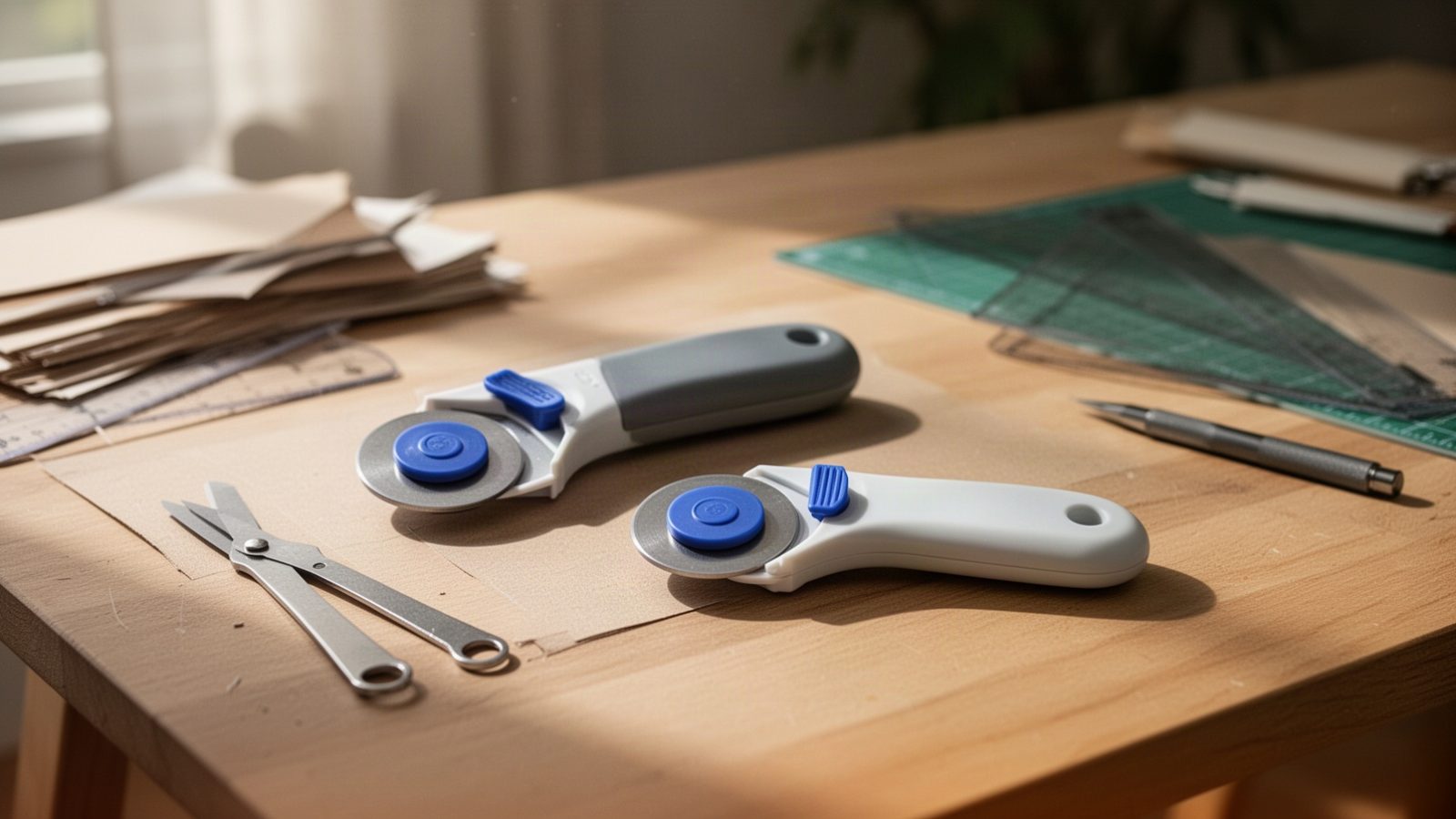
A rotary cutter is a round blade on a handle that slices fabric as you roll it along a ruler. Paired with a self-healing mat and an acrylic quilting ruler, it cuts long, perfectly straight strips and stacks of identical pieces far faster and more accurately than scissors, which is why it is the core tool of modern quilting and a big time-saver for garment sewing.
The blade is the business end, but the handle decides how comfortable and controlled a cutter feels, and the blade cover decides how easy it is to keep that very sharp edge closed when you set it down. Blade size matters too: 45 mm is the all-rounder, 28 mm handles curves and 60 mm powers through thick layers. We compared popular cutters from Olfa, Fiskars, Martelli and Clover on blade size, handle design, blade-cover mechanism, left- and right-hand use and blade availability, and matched each to a type of sewist.
Our top picks
-
1
 Illustration
Best overall
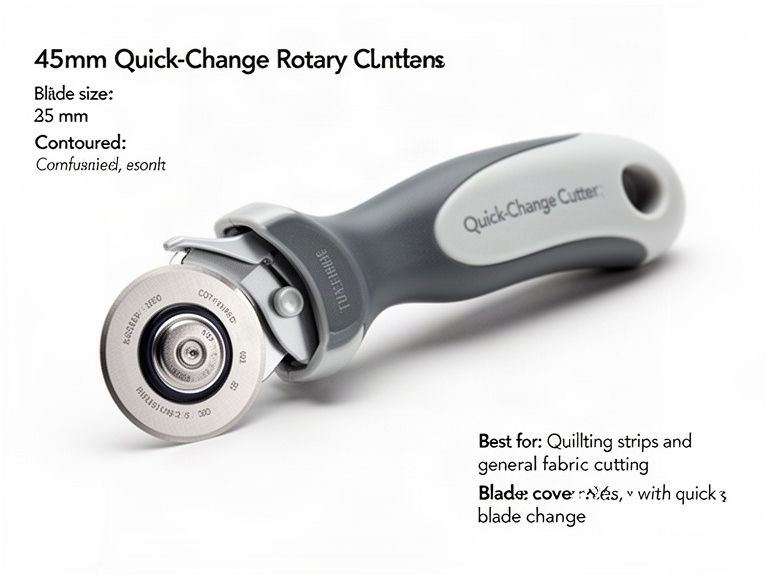
Olfa 45mm Quick-Change Rotary Cutter (RTY-2/C)
Most quilters and garment sewists
Blade size45 mmHandleContouredBest forQuilting strips and general fabric cutting -
2
 Illustration
Best loop handle
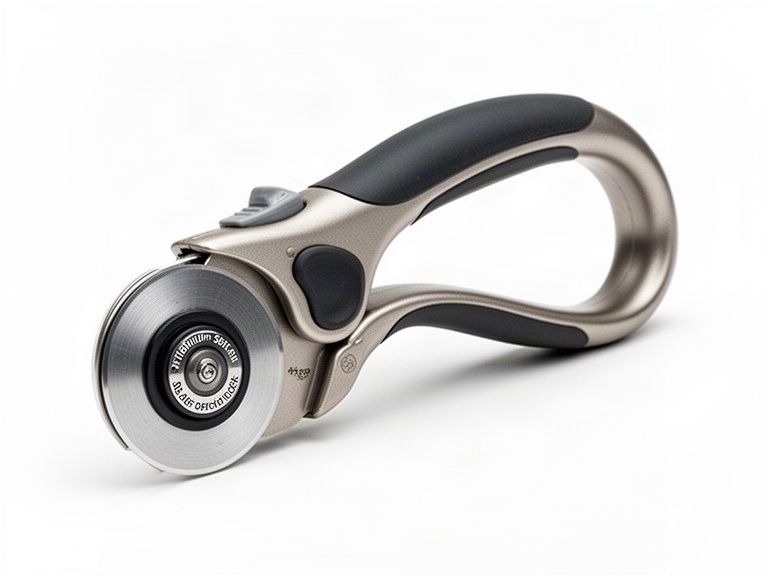
Fiskars Titanium Softgrip Loop Rotary Cutter, 45mm
Sewists who want palm-pressure control
Blade size45 mmHandleCurved loop with Softgrip touchpointsBest forLong cutting sessions with less grip effort -
3
 Illustration
Best ergonomic
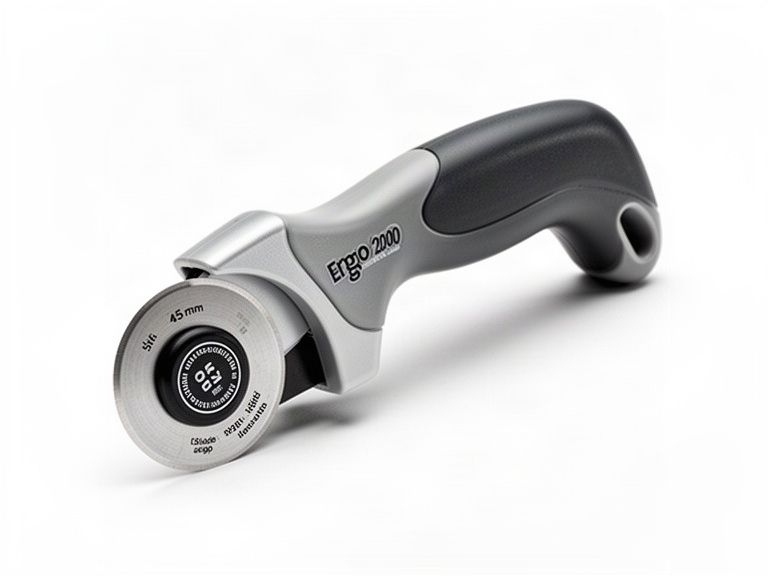
Martelli Ergo 2000 Rotary Cutter, 45mm
Quilters who find standard handles tiring
Blade size45 mmHandleAngled ergonomic gripBest forLong quilting sessions and tired hands -
4
 Illustration
Best cushioned grip
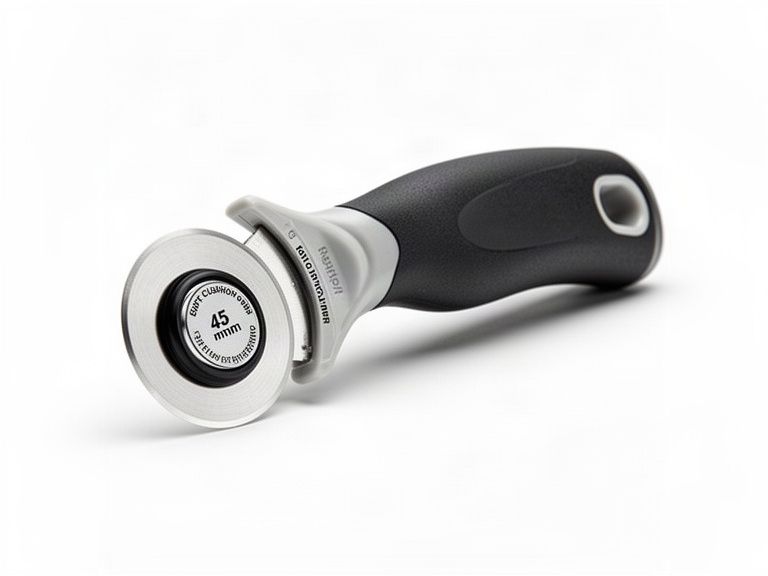
Clover 45mm Rotary Cutter
Sewists who prefer a soft, cushioned handle
Blade size45 mmHandleSoft cushion gripBest forEveryday quilting and sewing -
5
 Illustration
Best for thick layers
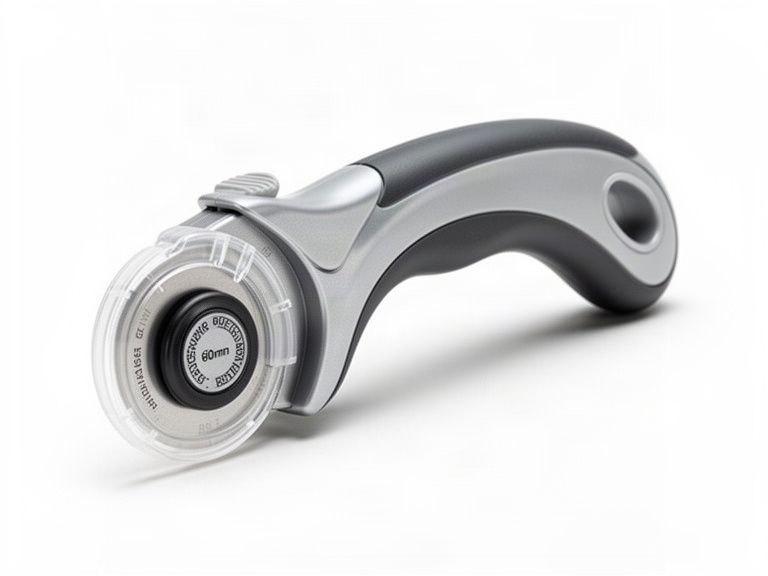
Olfa 60mm Ergonomic Rotary Cutter (RTY-3/DX)
Fleece, wool, batting and stacked layers
Blade size60 mmHandleCurved, anti-slip ergonomic gripBest forThick fabrics and many layers
Olfa 45mm Quick-Change Rotary Cutter (RTY-2/C)
Illustration
A contoured 45 mm cutter with a blade cover and quick blade changes, usable in either hand.
Best for: Most quilters and garment sewists- Blade size
- 45 mm
- Handle
- Contoured
- Best for
- Quilting strips and general fabric cutting
- Blade cover
- Yes, with quick blade change
What we like
- Quick-change system makes blade swaps easy
- Blade cover for storage between cuts
- Works for right- and left-handed users
- From the company that pioneered rotary cutters
Keep in mind
- Blade cover is manual, so you must remember to close it
- Straighter grip than ergonomic designs
- Not ideal for very thick stacks
Olfa introduced the rotary cutter in the late 1970s, and its 45 mm cutters remain the reference point. The RTY-2/C, the quick-change model, adds two practical upgrades over a basic straight handle: a contoured grip and quick blade-change technology, so swapping a dull blade is simpler than on older designs.
Olfa lists a blade cover and says the cutter works for both right- and left-handed users. The contoured handle is comfortable for most hands through a typical cutting session, and the 45 mm size handles quilt strips, garment pieces and gentle curves through a few layers.
The blade cover is manual, so build the habit of closing it every time you put the cutter down. If you have hand fatigue or cut for hours, consider the ergonomic or loop designs below, but for most sewists this is the cutter to start with.
Bottom line: The most dependable all-round rotary cutter for quilting and sewing.
Fiskars Titanium Softgrip Loop Rotary Cutter, 45mm
Illustration
A loop-handled 45 mm cutter with a titanium-coated blade, Softgrip touchpoints and a blade lock.
Best for: Sewists who want palm-pressure control- Blade size
- 45 mm
- Handle
- Curved loop with Softgrip touchpoints
- Best for
- Long cutting sessions with less grip effort
- Blade cover
- Blade safety lock
What we like
- Loop handle lets you press with the palm
- Titanium-coated blade built for durability
- Blade mounts on either side for left- or right-hand use
- Easier blade changes with fewer loose parts
Keep in mind
- Loop shape feels unusual at first
- Bulkier to store than a straight cutter
- Check the item number; several similar Fiskars loop cutters exist
Fiskars' loop rotary cutter takes a different approach to comfort. Instead of a stick you grip tightly, the curved loop handle lets you rest your hand on top and press down with your palm, which spreads effort and helps keep pressure even along a long cut.
Fiskars says the titanium blade coating is about three times harder than steel for longer life, and the handle has Softgrip touchpoints. The blade can be mounted on either side so left- and right-handed sewists both get a clear view of the cutting line, and a blade lock covers the edge when you set it down.
The loop takes a little getting used to if you learned on a straight cutter, and it takes up more room in a sewing kit. Fiskars sells several similar loop cutters, so check the item details for the titanium blade if that matters to you.
Bottom line: A comfortable, controlled alternative to straight-handled cutters.
Martelli Ergo 2000 Rotary Cutter, 45mm
Illustration
An angled, hand-specific cutter designed to keep the wrist straight while you cut.
Best for: Quilters who find standard handles tiring- Blade size
- 45 mm
- Handle
- Angled ergonomic grip
- Best for
- Long quilting sessions and tired hands
- Hand orientation
- Separate right- and left-hand models
What we like
- Angled grip keeps the wrist in a more natural position
- Hand-specific right and left versions
- Accepts standard 45 mm blades
- Favored by quilters who cut for hours
Keep in mind
- Must buy the correct right- or left-hand model
- Looks and feels unusual at first
- Harder to find in stores than Olfa or Fiskars
The Martelli Ergo 2000 looks unlike most rotary cutters. Its handle is angled so your hand sits behind the blade with the wrist straight, rather than bent, and you push forward with your arm. Many quilters who cut for long sessions or find standard handles uncomfortable move to it for that reason.
Because the shape is asymmetrical, Martelli makes separate right- and left-hand models; retailers list the right-hand version in red and the left-hand version in blue. Retailers also note that any standard 45 mm replacement blade fits, so you aren't locked into proprietary blades.
The unusual shape takes a few sessions to get used to, and you must order the correct hand. It is also stocked mostly by quilt shops and online retailers. If comfort is your top priority, it is worth the adjustment period.
Bottom line: A thoughtfully designed cutter for quilters who want a more comfortable grip.
Clover 45mm Rotary Cutter
Illustration
A 45 mm cutter with a soft cushion handle that adjusts for left- or right-hand use.
Best for: Sewists who prefer a soft, cushioned handle- Blade size
- 45 mm
- Handle
- Soft cushion grip
- Best for
- Everyday quilting and sewing
- Hand orientation
- Adjustable for left or right
What we like
- Soft cushion handle is comfortable to hold
- Adjusts for left- or right-hand use
- Cuts well held upright or at an angle
- From a well-known Japanese notions maker
Keep in mind
- Fewer ergonomic features than the Martelli
- Stock can be spotty at some retailers
- Blade refills sold separately
Clover is a Japanese notions company found in nearly every quilt shop, and its 45 mm rotary cutter focuses on a comfortable, cushioned handle. The soft grip is pleasant during long cutting sessions, especially for sewists who find hard plastic handles uncomfortable.
Clover says the cutter can be adjusted for left- or right-hand use and cuts well whether you hold it upright or at an angle, which helps when you're trimming blocks rather than cutting long strips. Replacement 45 mm blades are sold separately in multi-packs.
It doesn't have the strongly angled ergonomics of the Martelli or the palm-press loop of the Fiskars, so it suits sewists who like a conventional cutter shape with a softer feel. Stock can be uneven at some retailers, so check availability before planning a project around it.
Bottom line: A comfortable, conventional cutter for anyone who wants a softer grip.
Olfa 60mm Ergonomic Rotary Cutter (RTY-3/DX)
Illustration
A large 60 mm cutter with a curved, anti-slip handle and a squeeze-activated, self-retracting blade.
Best for: Fleece, wool, batting and stacked layers- Blade size
- 60 mm
- Handle
- Curved, anti-slip ergonomic grip
- Best for
- Thick fabrics and many layers
- Blade cover
- Squeeze-activated, self-retracting
What we like
- Large blade cuts through many layers
- Blade retracts automatically when you let go
- Curved anti-slip handle
- Handles fleece, wool and leather-like materials
Keep in mind
- Less nimble on curves and small pieces
- Larger and heavier than 45 mm cutters
- Premium cost for a cutter
When a 45 mm blade struggles — thick fleece, wool coating, batting or a stack of eight layers of quilting cotton — a 60 mm cutter makes the job easier. The larger wheel has more blade in contact with the fabric, so each pass cuts deeper with less pressure.
Olfa's RTY-3/DX pairs that big blade with a curved, anti-slip handle and a squeeze-activated mechanism: the blade is exposed only while you squeeze the handle and retracts automatically when you let go. That automatic closing is a real advantage with a blade this size. Olfa describes it as suited to medium to large projects including fleece, wool and leather.
The size works against it on curves, small appliqué pieces and tight trimming, where a 45 mm or 28 mm cutter is more precise. Most quilters keep it as a second cutter for batch cutting and heavy materials rather than their only one.
Bottom line: The best second cutter for thick materials and high-volume cutting.
Side-by-side comparison
| Product | Blade size | Handle | Best for | Blade cover | Score |
|---|---|---|---|---|---|
| Olfa 45mm Quick-Change Rotary Cutter (RTY-2/C)Best overall | 45 mm | Contoured | Quilting strips and general fabric cutting | Yes, with quick blade change | 9.2 |
| Fiskars Titanium Softgrip Loop Rotary Cutter, 45mmBest loop handle | 45 mm | Curved loop with Softgrip touchpoints | Long cutting sessions with less grip effort | Blade safety lock | 8.9 |
| Martelli Ergo 2000 Rotary Cutter, 45mmBest ergonomic | 45 mm | Angled ergonomic grip | Long quilting sessions and tired hands | — | 8.7 |
| Clover 45mm Rotary CutterBest cushioned grip | 45 mm | Soft cushion grip | Everyday quilting and sewing | — | 8.4 |
| Olfa 60mm Ergonomic Rotary Cutter (RTY-3/DX)Best for thick layers | 60 mm | Curved, anti-slip ergonomic grip | Thick fabrics and many layers | Squeeze-activated, self-retracting | 8.3 |
Specifications are from manufacturer listings at the time of writing and can change between production runs.
Which blade size?
- 28 mm: small curves, appliqué shapes and cutting around templates.
- 45 mm: the standard for quilting and garment sewing; handles straight strips and gentle curves through a few layers.
- 60 mm: cuts more layers at once and thick materials like fleece, batting and denim, but is less nimble.
If you are buying one cutter, choose 45 mm. Replacement blades in this size are sold everywhere and fit most brands' 45 mm cutters.
Handle styles
Straight handles are simple and work in either hand. Contoured and ergonomic handles angle the wrist into a more natural position, which many people find more comfortable for long cutting sessions. Loop handles let you press down with your palm, adding control without a tight grip. If cutting strains your hands, it is worth trying an ergonomic design.
Blade covers
Rotary blades are extremely sharp. Look for a cover that is easy to close every single time you put the cutter down. Manual covers slide or lock into place; squeeze-trigger designs expose the blade only while you grip the handle and close automatically when you let go. Keep cutters out of reach of children and close the blade before you set the cutter down — every time.
Cutting mats: buying advice
A rotary cutter needs a self-healing cutting mat. The surface closes back up after each cut, protects your table and keeps the blade from dulling on a hard surface.
- Size: an 18 x 24 inch mat suits most home sewing; 24 x 36 inches lets you cut full width-of-fabric strips with one fold. A small 12 x 18 inch mat is handy by the machine or for classes.
- Grid lines: printed inch grids help you square up fabric, but use your acrylic ruler for measuring — mat grids are for alignment.
- Rotating mats turn on a base so you can trim blocks from all four sides without moving the fabric.
- Care: store mats flat, away from heat and direct sun, which can warp them. Never iron on a cutting mat. Wipe away lint occasionally with a damp cloth.
Blade changes and safety habits
Change the blade when it starts skipping threads or needs extra pressure; a dull blade is harder to control. Fold old blades into their packaging or a sealed container before discarding. Always cut away from your body, keep your ruler hand's fingertips away from the ruler edge, and stand up when cutting — you get more control and even pressure from above.
Frequently asked questions
What size rotary cutter is best for beginners?
45 mm. It handles straight quilting strips, garment pieces and gentle curves, and replacement blades are widely available. Add a 28 mm cutter for tight curves or a 60 mm cutter for thick layers later.
How often should I change my rotary blade?
When it starts skipping threads, leaving uncut spots or needing extra pressure. Heavy quilters may change blades every few projects; occasional sewists far less often. Nicks from hitting pins also mean it is time for a new blade.
Do rotary blades fit other brands' cutters?
Many 45 mm blades are interchangeable between brands, but the center hole and mounting can differ. Check the blade packaging or the cutter maker's guidance before buying a different brand.
Can I use a rotary cutter without a mat?
No. Without a self-healing mat the blade will damage your table and dull almost instantly. Always cut on a mat designed for rotary cutting.
What ruler should I use with a rotary cutter?
A thick acrylic quilting ruler with clear inch markings. A 6 x 24 inch ruler is the most versatile first ruler; a square ruler helps square up blocks.
How we picked
We compared manufacturer and retailer information on blade size, handle shape, blade-cover mechanism, left- and right-hand use, blade replacement and warranty terms for popular rotary cutters sold online, along with general cutting-mat guidance, and weighed how each cutter suits quilters, garment sewists and anyone with tired hands. Our picks and scores are based on this research — we have not tested these products hands-on. Brands cannot pay to be included. Read our full method.