






















The best fabric scissors and dressmaker's shears for sewing
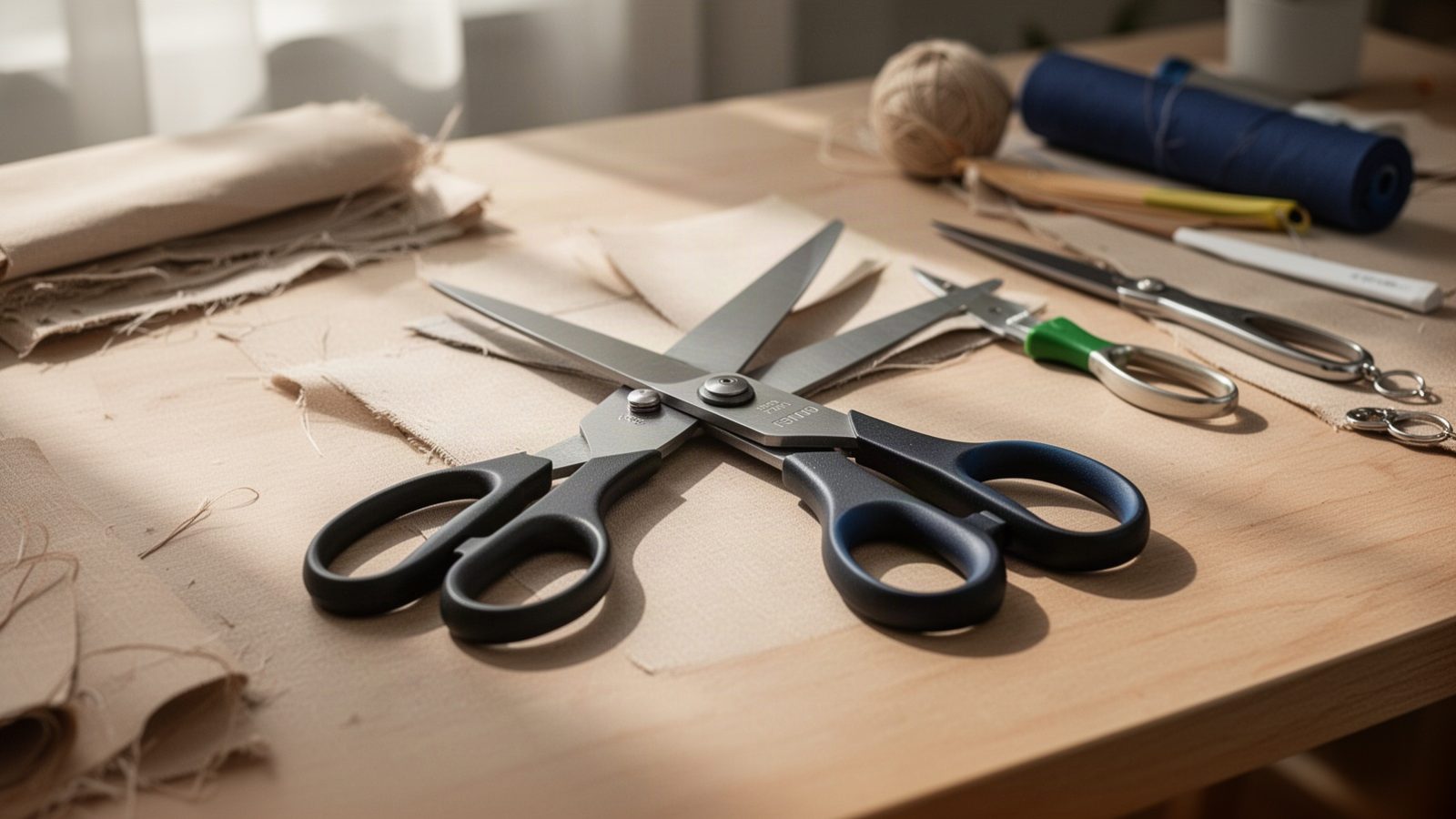
Five fabric shears compared — classic knife-edge dressmaker's shears, Japanese long-blade shears, a thick-fabric pick and pinking shears.
As an Amazon Associate I earn from qualifying purchases. When you buy through links on this page, we may earn a commission at no extra cost to you. Learn more
Good fabric shears are one of the few sewing tools that make an immediate difference. A sharp, well-set pair cuts cleanly along the pattern line all the way to the tips, without chewing the edge or pushing slippery fabric around. A dull or loose pair forces you to hack at the cloth, which distorts pieces before you even reach the sewing machine.
Shears differ in blade length, edge type, handle design and weight. Bent-handle dressmaker's shears keep the lower blade flat on the table so fabric barely lifts while you cut. Longer blades cover pattern lines in fewer strokes, while shorter ones offer more control around curves. Pinking shears cut a zigzag edge that limits fraying on woven seams. We compared long-running shears from Gingher, Kai and Fiskars on blade length, steel and edge type, handle design, left-handed availability and warranty, and matched each to a type of sewist and fabric.
Our top picks
-
1
 Illustration
Best overall
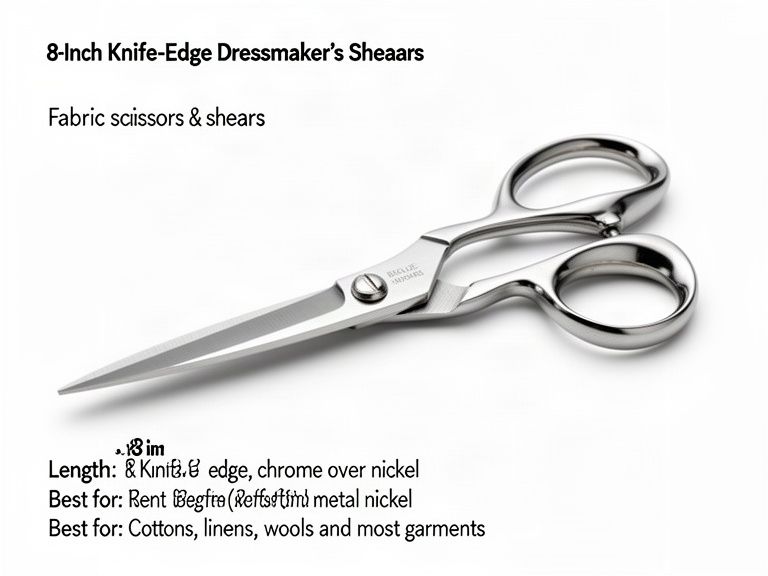
Gingher 8-Inch Knife-Edge Dressmaker's Shears
Garment sewing and general fabric cutting
Length8 inBladeKnife edge, chrome over nickelBest forCottons, linens, wools and most garments -
2
 Illustration
Best long-blade shears
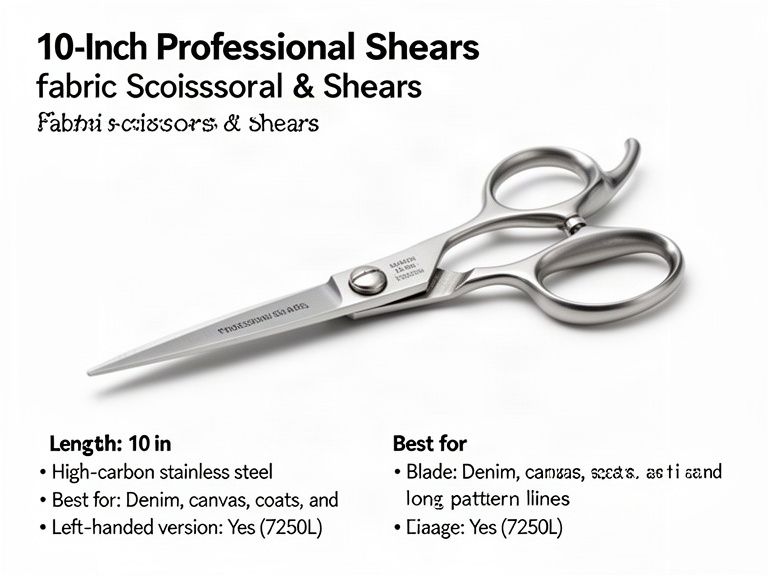
Kai 7250 10-Inch Professional Shears
Large projects and heavier fabrics
Length10 inBladeHigh-carbon stainless steelBest forDenim, canvas, coats and long pattern lines -
3
 Illustration
Best for thick fabrics
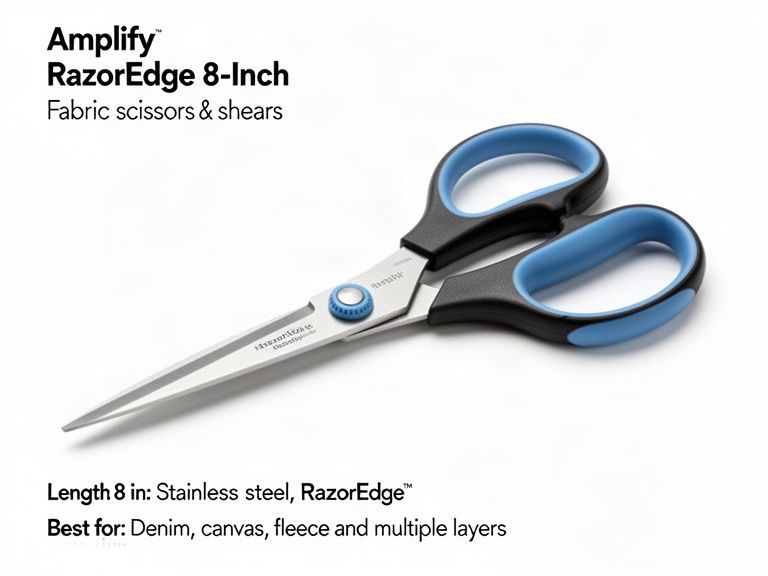
Fiskars Amplify RazorEdge 8-Inch Fabric Shears
Heavy fabrics like denim, canvas and fleece
Length8 inBladeStainless steel, RazorEdgeBest forDenim, canvas, fleece and multiple layers -
4
 Illustration
Best value
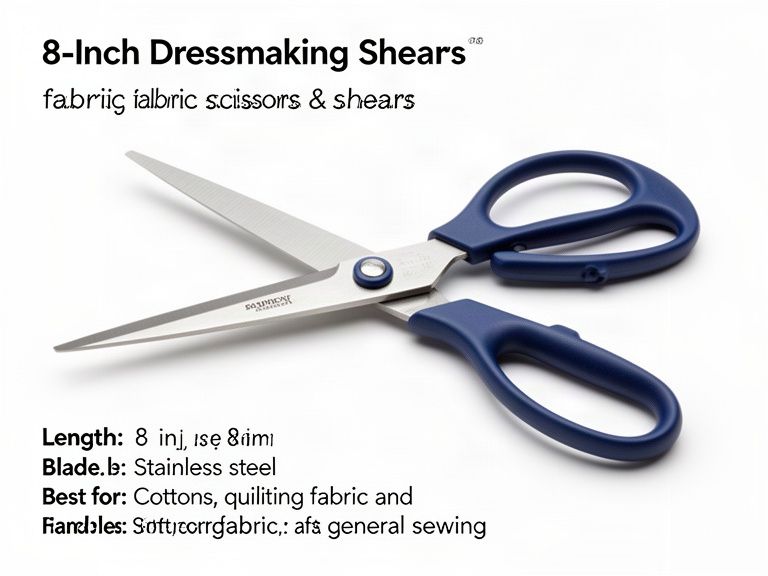
Kai N5210 8-Inch Dressmaking Shears
Beginners and quilters wanting quality on a budget
Length8 inBladeStainless steelBest forCottons, quilting fabric and general sewing -
5
 Illustration
Best pinking shears
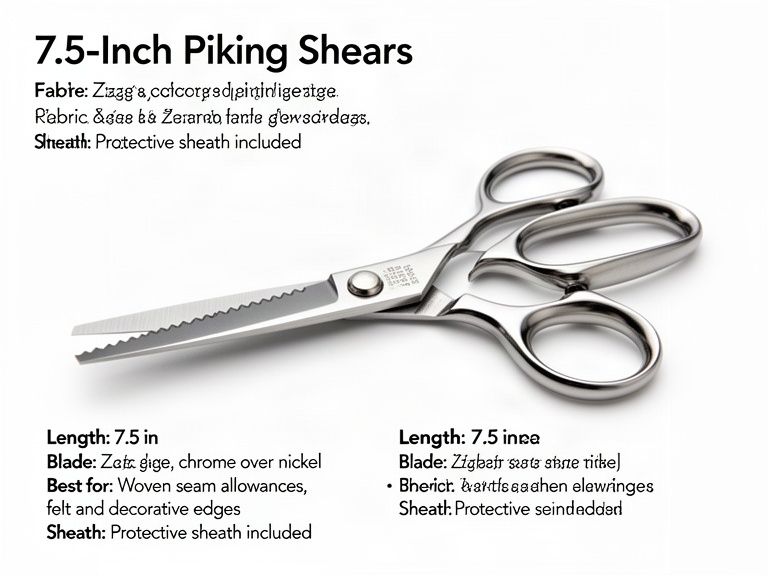
Gingher 7.5-Inch Pinking Shears
Finishing seam allowances on woven fabrics
Length7.5 inBladeZigzag pinking edge, chrome over nickelBest forWoven seam allowances, felt and decorative edges
Gingher 8-Inch Knife-Edge Dressmaker's Shears
Illustration
The classic dressmaker's shear: forged steel, a knife edge to the points and a bent handle.
Best for: Garment sewing and general fabric cutting- Length
- 8 in
- Blade
- Knife edge, chrome over nickel
- Best for
- Cottons, linens, wools and most garments
- Handle
- Bent (offset) metal handle
What we like
- Very sharp knife edge that cuts all the way to the points
- Bent handle keeps fabric flat on the table
- Rigid forged-steel build holds alignment
- Left-handed and serrated versions sold separately
Keep in mind
- Heavier than plastic-handled shears
- Metal handles can feel hard in long sessions
- Knife edge can let very slippery fabric slide
Gingher's 8-inch dressmaker's shears are the pair many sewing teachers tell students to save for. The blades are precision ground with a knife edge that runs right to the points, so you can snip into notches and corners as cleanly as you cut long seams. The double-plated chrome-over-nickel finish resists corrosion, and the bent handle keeps the lower blade flat on the table for accurate cutting.
The forged construction is rigid and heavy, which helps the blades stay aligned through thick wools and multiple layers of cotton. That weight is also the main drawback: during long cutting sessions, the metal handles are firmer on the hand than cushioned grips.
Gingher sells a left-handed version and a micro-serrated version for silks and other slippery fabrics, and retailers list a lifetime warranty against defects in the US. Kept for fabric only and resharpened occasionally, they can last decades.
Bottom line: The benchmark all-round fabric shear for serious garment sewists.
Kai 7250 10-Inch Professional Shears
Illustration
Lightweight Japanese shears with high-carbon stainless blades for long cuts and thick fabrics.
Best for: Large projects and heavier fabrics- Length
- 10 in
- Blade
- High-carbon stainless steel
- Best for
- Denim, canvas, coats and long pattern lines
- Left-handed version
- Yes (7250L)
What we like
- Long blades cover pattern lines quickly
- Lighter than forged-steel shears of similar length
- High-carbon stainless blades take a keen edge
- Left-handed and serrated versions available
Keep in mind
- Too long for small hands or tight curves
- Plastic handles feel less substantial than forged steel
- Premium cost for scissors
Kai is a Japanese blade maker, and its 7000-series shears are widely used by quilters, tailors and upholsterers. The 7250 is the 10-inch model, designed for thicker and harder-to-cut fabrics. The blades are high-carbon stainless steel, which takes a sharp, durable edge, and the lightweight handles keep a long shear from feeling like a tool you have to wrestle with.
That combination of length and lightness is the appeal. Long blades cover a pattern line in fewer strokes, so cuts stay smoother, and you can work through denim, canvas or a stack of quilting cotton without tiring quickly. Retailers note that the extra inch over Kai's 9-inch model is in the handle rather than the blade, giving more leverage.
For small hands or intricate curves, an 8-inch shear is more nimble. A left-handed version (7250L) and a serrated version are also sold.
Bottom line: The best pick for big cutting jobs and heavier fabrics without a heavy shear.
Fiskars Amplify RazorEdge 8-Inch Fabric Shears
Illustration
Fabric shears with a blade-alignment design that pushes the blades together through thick material.
Best for: Heavy fabrics like denim, canvas and fleece- Length
- 8 in
- Blade
- Stainless steel, RazorEdge
- Best for
- Denim, canvas, fleece and multiple layers
- Handle
- Sculpted loops with Softgrip touchpoints
What we like
- Blade design keeps edges together in thick material
- Comfortable sculpted grips
- Sheath included for storage
- Full lifetime warranty listed
Keep in mind
- Bulkier handles than classic shears
- Less precise on fine, delicate fabrics
Thick fabrics tend to push shear blades apart, which leaves ragged edges and forces you to squeeze harder. Fiskars' Amplify design addresses that: the blades sense separation and are forced back together as you cut, so heavy materials like denim, canvas, fleece and several layers of cotton are sliced cleanly instead of folded.
The RazorEdge blades are ultra-sharp, and the sculpted finger and thumb loops have Softgrip touchpoints for comfort during long sessions. A blade sheath comes in the box, and retailers list a full lifetime warranty.
The trade-off is finesse. The handles are bulkier than a classic dressmaker's shear, and for delicate silks or detailed garment cutting, the Gingher or Kai picks offer more precision. For bag making, outerwear, home décor and anyone who finds standard shears tiring on thick material, the Amplify is a smart choice.
Bottom line: A comfortable, powerful shear for heavy fabrics and stacked layers.
Kai N5210 8-Inch Dressmaking Shears
Illustration
Budget-friendly 8-inch Japanese shears with stainless steel blades and soft, comfortable handles.
Best for: Beginners and quilters wanting quality on a budget- Length
- 8 in
- Blade
- Stainless steel
- Best for
- Cottons, quilting fabric and general sewing
- Handle
- Soft, ergonomic
What we like
- Sharp Japanese blades at a budget-friendly level
- Lightweight with soft, comfortable handles
- Cuts layered cottons and light denim
- Good first quality shear
Keep in mind
- Less rigid than forged-steel shears
- Not ideal for very heavy fabrics
- Several similar Kai 5000-series variants exist
Kai's N5210 brings the brand's Japanese blades down to a budget-friendly level, making it one of the easiest recommendations for a first serious pair of fabric shears. The 8-inch size is versatile for garments and quilting, and retailers describe it as able to cut multiple layers of denim and trim cottons without the fabric slipping.
The soft, ergonomic handles are light and comfortable over long cutting sessions, which many sewists prefer to heavy metal handles. The stainless steel blades are sharp out of the box and can be resharpened.
The lighter build is less rigid than forged-steel shears like the Gingher, so it isn't the best choice for very heavy canvas or upholstery. Kai also sells colorway variants in its 5000 series, so check the model number when ordering. For quilters, beginners and anyone who wants a sharp, comfortable pair without a big outlay, it is excellent value.
Bottom line: Sharp, comfortable and budget-friendly — a great first pair of good shears.
Gingher 7.5-Inch Pinking Shears
Illustration
Zigzag-edge shears with a chrome-over-nickel finish for limiting fraying on woven seams and decorative edges.
Best for: Finishing seam allowances on woven fabrics- Length
- 7.5 in
- Blade
- Zigzag pinking edge, chrome over nickel
- Best for
- Woven seam allowances, felt and decorative edges
- Sheath
- Protective sheath included
What we like
- Clean zigzag cut limits fraying on woven fabrics
- Durable plated finish
- Useful for felt crafts and decorative edges
- Protective sheath included
Keep in mind
- Cuts only one layer at a time
- Not a substitute for regular shears
- Not effective on knits or very loose weaves
Pinking shears are the simplest way to finish seam allowances when you don't have a serger. The zigzag edge they cut interrupts the fabric's weave, which limits fraying on stable woven fabrics like quilting cotton, poplin and lining. They are also handy for felt crafts, fabric swatches and decorative edges.
Gingher's 7.5-inch pinking shears are a long-running favorite, with forged-steel blades and a double-plated chrome-over-nickel finish. Retailers list a protective sheath in the box and a lifetime warranty on materials and craftsmanship.
Gingher recommends cutting only one layer at a time with pinking shears, because the blades are set delicately. They won't help much on knits, which don't fray in the same way, or on very loose weaves that need a full seam finish. Think of them as a finishing tool that works alongside your main pair of dressmaker's shears.
Bottom line: A dependable pinking shear for finishing woven seams without a serger.
Side-by-side comparison
| Product | Length | Blade | Best for | Handle | Score |
|---|---|---|---|---|---|
| Gingher 8-Inch Knife-Edge Dressmaker's ShearsBest overall | 8 in | Knife edge, chrome over nickel | Cottons, linens, wools and most garments | Bent (offset) metal handle | 9.2 |
| Kai 7250 10-Inch Professional ShearsBest long-blade shears | 10 in | High-carbon stainless steel | Denim, canvas, coats and long pattern lines | — | 8.9 |
| Fiskars Amplify RazorEdge 8-Inch Fabric ShearsBest for thick fabrics | 8 in | Stainless steel, RazorEdge | Denim, canvas, fleece and multiple layers | Sculpted loops with Softgrip touchpoints | 8.7 |
| Kai N5210 8-Inch Dressmaking ShearsBest value | 8 in | Stainless steel | Cottons, quilting fabric and general sewing | Soft, ergonomic | 8.5 |
| Gingher 7.5-Inch Pinking ShearsBest pinking shears | 7.5 in | Zigzag pinking edge, chrome over nickel | Woven seam allowances, felt and decorative edges | — | 8.3 |
Specifications are from manufacturer listings at the time of writing and can change between production runs.
Shears or scissors?
Technically, shears have blades longer than about 6 inches and handles of different sizes — a small loop for the thumb and a larger one for several fingers. Scissors are shorter with matching handle loops. For cutting garment and quilt pieces, shears are the main tool; small scissors and thread snips handle trimming and clipping at the machine.
Blade length
- 8 inches is the most versatile size for garment sewing and fits most hands.
- 9–10 inches cut long, straight pattern lines faster and suit large projects and heavier fabrics, but they are heavier and less nimble around tight curves.
- 7–7.5 inches suit smaller hands and detailed cutting.
Edge types and steel
Knife-edge blades are ground very sharp and cut cleanly through most fabrics. Micro-serrated blades have fine teeth that grip slippery silks, satins and knits so they don't slide away from the blade. Carbon and high-carbon stainless steels take a keen edge; stainless-plated or chrome-plated finishes resist rust. Forged steel shears are heavier but very rigid; lighter shears with plastic handles reduce hand fatigue during long cutting sessions.
Handle design
A bent or offset handle lets the lower blade rest flat on the cutting table so fabric isn't lifted as you cut, which improves accuracy. Soft or cushioned grips add comfort. If you are left-handed, buy true left-handed shears — the blades are reversed so you can see the cutting line, not just the handles.
Pinking shears
Pinking shears cut a zigzag edge that limits fraying on stable woven fabrics. They are useful for seam allowances on cotton, felt crafts and decorative edges. They cut best through a single layer and are not a substitute for regular shears.
Keep fabric shears sharp
- Use them only on fabric. Paper, plastic and tape dull blades quickly; label your fabric shears and keep a separate pair for paper.
- Avoid pins. Cutting over pins can nick the edge.
- Wipe and oil occasionally, putting a drop of sewing machine oil at the pivot screw.
- Store them in a sheath or case and don't drop them; a fall can knock the blades out of alignment.
- Have them professionally sharpened when they start to fold fabric instead of cutting it.
Frequently asked questions
Why shouldn't I cut paper with fabric shears?
Paper contains fibers and fillers that dull blades much faster than cloth. A dull edge then folds or chews fabric instead of slicing it cleanly. Keep a separate, labeled pair of scissors for paper patterns.
What length of fabric shears should I buy first?
An 8-inch pair is the most versatile first shear for garments and quilting. Add a longer 9- or 10-inch pair for big projects and a small pair of thread snips for the sewing machine.
Are serrated shears better than knife-edge shears?
Neither is better overall. Micro-serrated blades grip slippery fabrics like silk and satin; knife-edge blades give the cleanest cut on most cottons, linens and wools and are easier to resharpen.
Can fabric shears be sharpened?
Yes. Quality shears are made to be resharpened. A professional sharpening service restores the edge and the blade alignment; home sharpeners can damage the factory bevel if used incorrectly.
Do left-handed sewists need special shears?
Yes, for comfort and accuracy. Left-handed shears have reversed blades so the cutting line stays visible and the blades press together naturally when squeezed in the left hand.
How we picked
We compared manufacturer and retailer information on blade length, steel, edge type, handle design, left-handed versions and warranty terms for long-running fabric shears and pinking shears sold online, and weighed how each suits garment sewing, quilting and heavy fabrics. Our picks and scores are based on this research — we have not tested these products hands-on. Brands cannot pay to be included. Read our full method.