






















The best hearing protection earmuffs
Five hearing protection earmuffs compared, from slim NRR 27 muffs to NRR 31 for very loud work, plus Bluetooth and electronic hear-through models and how to read NRR labels.
As an Amazon Associate I earn from qualifying purchases. When you buy through links on this page, we may earn a commission at no extra cost to you. Learn more
Noise-induced hearing loss builds up slowly and painlessly, which is exactly why it is so easy to ignore. Chainsaws, table saws, grinders, mowers, compressors and many factory floors are loud enough to damage hearing over time, and the damage is permanent. Earmuffs are the simplest protection to put on and take off: no rolling, no fitting deep into the ear canal and easy to check at a glance.
Choosing a pair means balancing protection against comfort and the need to hear what is going on around you. Too little reduction is risky in loud work, while too much can make it hard to hear coworkers and warning signals. We compared popular earmuffs from 3M Peltor and Howard Leight on their labeled Noise Reduction Rating (NRR), weight and profile, headband design, and electronic or Bluetooth features. Follow your employer's hearing conservation program and the manufacturer's fitting instructions, since real-world protection depends on a good seal.
Our top picks
-
1
 Illustration
Best overall
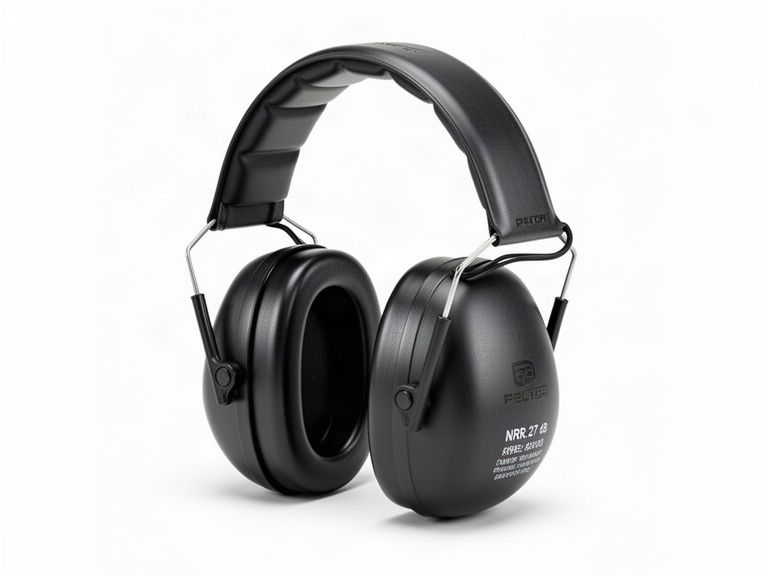
3M Peltor X4A Over-the-Head Earmuffs
Everyday shop, yard and jobsite noise
NRR27 dBTypePassiveHeadbandOver-the-head -
2
 Illustration
Best maximum protection
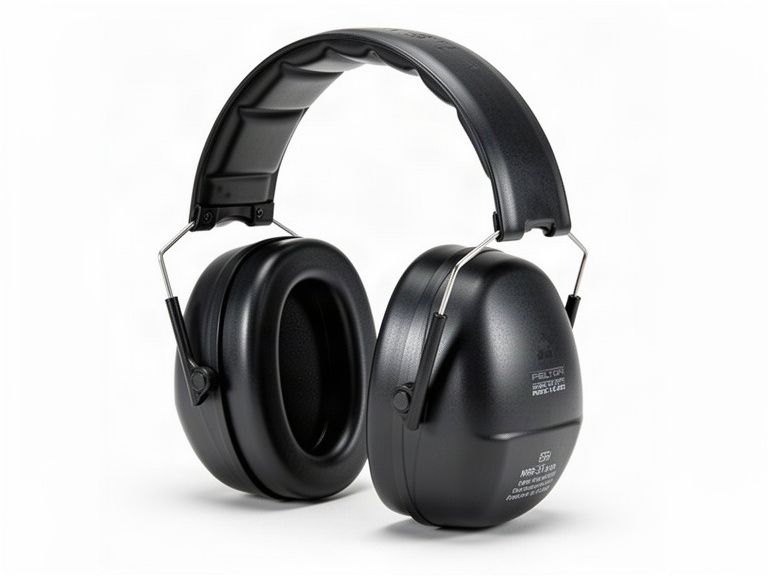
3M Peltor X5A Over-the-Head Earmuffs
Very loud work such as chainsaws and heavy machinery
NRR31 dBTypePassiveHeadbandOver-the-head -
3
 Illustration
Best for long shifts
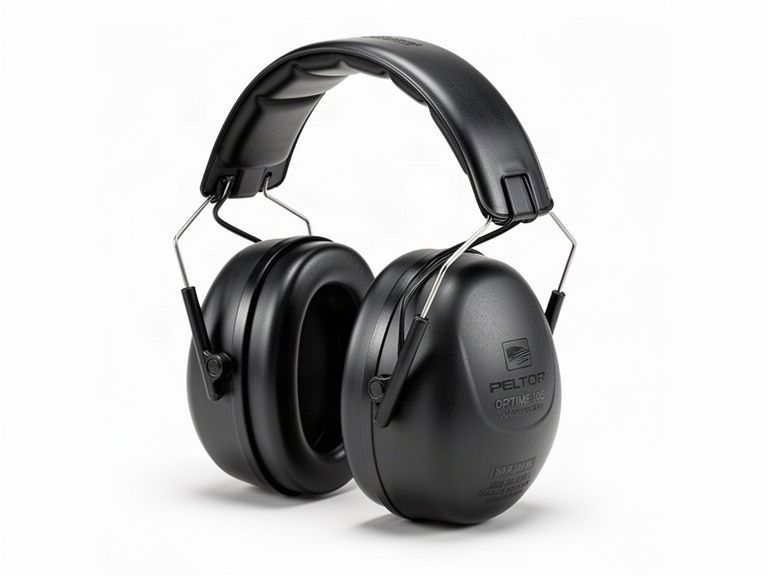
3M Peltor Optime 105 Over-the-Head Earmuffs
Loud industrial settings and all-day wear
NRR30 dBTypePassiveHeadbandOver-the-head, twin wire -
4
 Illustration
Best Bluetooth
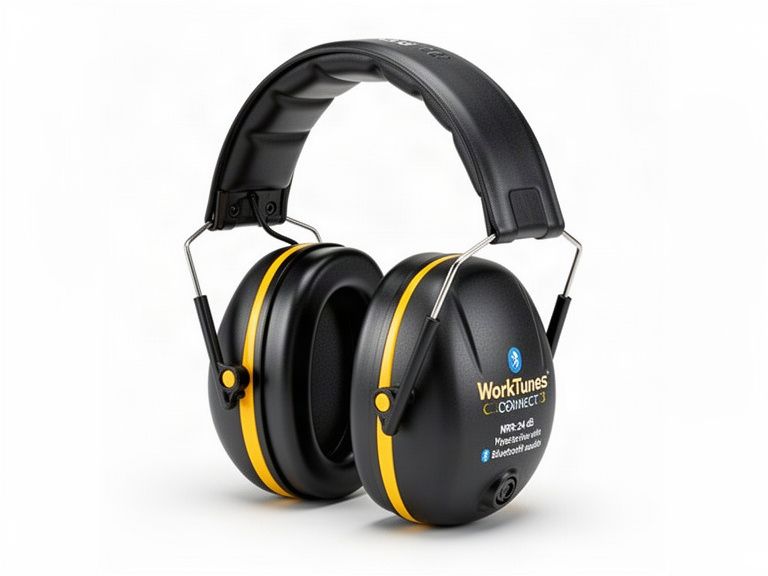
3M WorkTunes Connect Hearing Protector
Long, monotonous yard and shop jobs
NRR24 dBTypePassive with Bluetooth audioHeadbandOver-the-head -
5
 Illustration
Best electronic hear-through
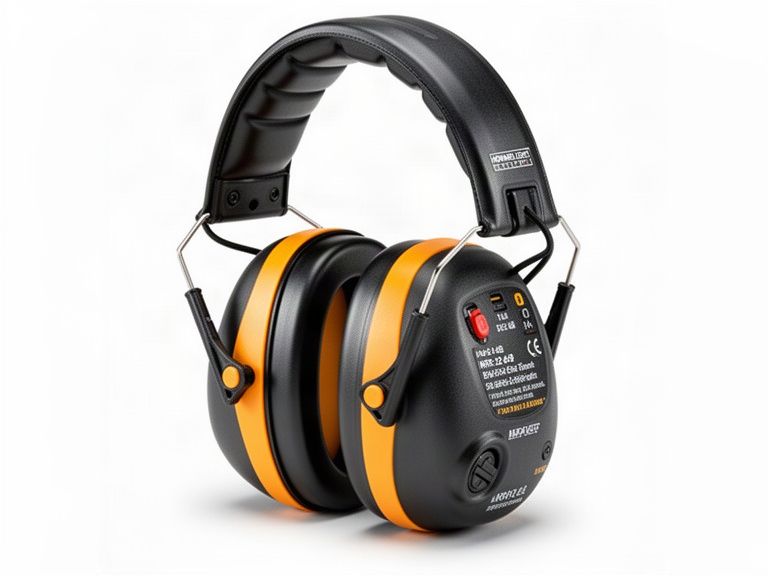
Howard Leight Impact Sport Electronic Earmuffs
Shooting ranges and jobs where you need to hear voices
NRR22 dBTypeElectronic sound amplificationHeadbandOver-the-head, folding
3M Peltor X4A Over-the-Head Earmuffs
Illustration
Slim, light passive earmuffs with a strong NRR for their size.
Best for: Everyday shop, yard and jobsite noise- NRR
- 27 dB
- Type
- Passive
- Headband
- Over-the-head
- Profile
- Slim cups
What we like
- High protection for such a slim muff
- Light enough for long wear
- Slim cups fit in tighter spaces and under face shields
- Replacement hygiene kits widely available
Keep in mind
- Not enough for the very loudest equipment on its own
- Warm in hot weather, like all earmuffs
- No electronic or audio features
The Peltor X4A strikes the best balance between protection and comfort in 3M's X series. Its NRR of 27 dB is close to much bulkier muffs, yet the slim, low-profile cups weigh less and fit more easily next to a face shield or in a cramped workspace.
That makes it a good default for woodworking, grinding, mowing, leaf blowers and general jobsite noise, where you wear protection for hours at a time and comfort decides whether you keep it on. The headband holds firmly without excessive pressure, and replacement cushions and foam are easy to find.
For the loudest equipment, such as chainsaws or heavy machinery for extended periods, step up to the X5A or add earplugs underneath.
Bottom line: The best all-round passive earmuff for most noisy work.
3M Peltor X5A Over-the-Head Earmuffs
Illustration
Deep-cup passive earmuffs with one of the highest NRRs available in a muff.
Best for: Very loud work such as chainsaws and heavy machinery- NRR
- 31 dB
- Type
- Passive
- Headband
- Over-the-head
- Profile
- Large, deep cups
What we like
- Very high labeled NRR for an earmuff
- Deep cups fit larger ears comfortably
- No batteries or electronics to maintain
- Hard-hat-mounted versions available
Keep in mind
- Bulky and heavier than slim muffs
- Can be too much reduction for moderate noise
- Warm in summer
When the noise is extreme, the X5A is one of the most protective earmuffs you can buy, with an NRR of 31 dB. Its large, deep cups surround the ear completely, which also suits people with larger ears who find slim muffs press on them.
It is a strong choice for chainsaws, demolition hammers, heavy equipment, firing ranges and loud industrial settings. For prolonged exposure at very high levels, combining it with properly inserted earplugs adds a little more margin.
The trade-off is bulk. The cups stick out further, add weight and can bump into face shields and collars. In moderate noise, that much reduction can isolate you from coworkers and warning signals; the X4A is the better everyday choice there.
Bottom line: The pick when your work is truly loud and protection comes first.
3M Peltor Optime 105 Over-the-Head Earmuffs
Illustration
A long-running high-attenuation earmuff with wide cushions and a twin-wire headband.
Best for: Loud industrial settings and all-day wear- NRR
- 30 dB
- Type
- Passive
- Headband
- Over-the-head, twin wire
- Profile
- Large cups
What we like
- High NRR for loud environments
- Wide cushions spread pressure around the ear
- Twin-wire headband helps keep even clamping force
- Widely used in industry, with parts easy to find
Keep in mind
- Large and conspicuous
- Heavier than slim muffs
- Warm during summer work
The Optime 105 has been a fixture in factories and on airport ramps for years. Its NRR of 30 dB puts it near the top of passive earmuffs, and its wide, soft cushions spread pressure around the ear, which many wearers find comfortable over a long shift.
The twin-wire headband is designed to keep the clamping force even on both sides, helping the cushions seal consistently. Because it is so widely used, replacement hygiene kits are easy to buy, and 3M offers versions for hard hats.
It is large and noticeably heavier than slim models, and like all big muffs it gets warm. If your environment is loud enough to need NRR 30 for hours at a time, it is a proven option.
Bottom line: A proven high-protection earmuff for loud, all-day industrial work.
3M WorkTunes Connect Hearing Protector
Illustration
Bluetooth earmuffs for streaming audio while blocking noise.
Best for: Long, monotonous yard and shop jobs- NRR
- 24 dB
- Type
- Passive with Bluetooth audio
- Headband
- Over-the-head
What we like
- Streams music and podcasts from a phone
- Makes long mowing or sanding sessions more bearable
- Also has a wired audio input
- Easy controls on the cup
Keep in mind
- Lower NRR than the best passive muffs
- Needs batteries
- Streaming may not be allowed on some jobsites
For long, repetitive jobs such as mowing, edging or sanding, many people end up wearing earbuds under earmuffs or skipping protection entirely. WorkTunes Connect solves that by building Bluetooth audio into the earmuff, so you can listen to music or podcasts with your hearing protection on.
Its NRR of 24 dB is suitable for many yard and shop tasks but lower than the high-protection passive muffs above. Keep the volume modest; turning it up to drown out a loud engine adds to your noise exposure instead of reducing it.
It runs on batteries, so keep spares handy. On commercial jobsites, check your employer's rules first, since many restrict audio that could mask alarms and instructions.
Bottom line: The best way to enjoy audio while protecting your hearing on long home and yard jobs.
Howard Leight Impact Sport Electronic Earmuffs
Illustration
Slim folding earmuffs that amplify quiet sounds and cut amplification when noise gets loud.
Best for: Shooting ranges and jobs where you need to hear voices- NRR
- 22 dB
- Type
- Electronic sound amplification
- Headband
- Over-the-head, folding
- Power
- 2 AAA batteries
What we like
- Lets conversation and quiet sounds through
- Amplification shuts off when noise gets loud
- Slim cups and folding design
- Auto shut-off saves batteries
Keep in mind
- Lower NRR than passive muffs
- Electronics need batteries and care in wet weather
- Not ideal for continuous very loud machinery
The Impact Sport is one of the most popular electronic earmuffs, especially at shooting ranges. Built-in microphones pass through and amplify quieter sounds such as range commands and conversation, then stop amplifying when noise rises above a set level, so you can talk normally between loud bursts.
Slim cups make it easier to shoulder a rifle or wear with a cap, and the headband folds for storage. Two AAA batteries power it, and an automatic shut-off after a few hours saves them if you forget to switch it off.
Its NRR of 22 dB is modest, so it suits intermittent noise better than hours of continuous heavy machinery. For very loud gunfire, many shooters wear earplugs under it.
Bottom line: The best pick when you need to hear people around you between bursts of noise.
Side-by-side comparison
| Product | NRR | Type | Headband | Profile | Score |
|---|---|---|---|---|---|
| 3M Peltor X4A Over-the-Head EarmuffsBest overall | 27 dB | Passive | Over-the-head | Slim cups | 9.1 |
| 3M Peltor X5A Over-the-Head EarmuffsBest maximum protection | 31 dB | Passive | Over-the-head | Large, deep cups | 8.9 |
| 3M Peltor Optime 105 Over-the-Head EarmuffsBest for long shifts | 30 dB | Passive | Over-the-head, twin wire | Large cups | 8.6 |
| 3M WorkTunes Connect Hearing ProtectorBest Bluetooth | 24 dB | Passive with Bluetooth audio | Over-the-head | — | 8.4 |
| Howard Leight Impact Sport Electronic EarmuffsBest electronic hear-through | 22 dB | Electronic sound amplification | Over-the-head, folding | — | 8.3 |
Specifications are from manufacturer listings at the time of writing and can change between production runs.
Understanding NRR
Every hearing protector sold in the US carries a Noise Reduction Rating (NRR) in decibels, measured in a lab under EPA labeling rules using the ANSI S3.19 test method. Higher numbers mean more reduction in the lab, but real-world results are usually lower because fit is rarely perfect.
OSHA's method for estimating field performance subtracts 7 from the NRR and then halves the result. By that estimate, an NRR 27 earmuff might give about 10 dB of real-world reduction. Use the label to compare products, not as a precise promise.
As a rough guide, the louder and longer the exposure, the higher the NRR you want. OSHA requires a hearing conservation program when workers are exposed at or above 85 dBA averaged over an 8-hour day.
Earmuffs or earplugs?
Earmuffs are easy to fit correctly, quick to put on and take off, and hard to lose. They are warmer in summer and can be bulky in tight spaces. Earplugs are cooler and work well with respirators and glasses, but they must be inserted properly to reach their rating. For very loud work, wearing both is common. OSHA's guidance is that double protection adds only about 5 dB to the higher-rated protector, not the two ratings combined.
Passive, electronic or Bluetooth?
- Passive earmuffs simply block sound. They are light, inexpensive and need no batteries.
- Electronic (level-dependent) earmuffs use microphones to let quiet sounds such as voices through while limiting loud noise. They suit shooting ranges and jobs where you need to talk between bursts of noise.
- Bluetooth earmuffs stream music or podcasts. They can make long, monotonous jobs more bearable, but keep the volume low so you are not adding noise exposure, and check whether your workplace allows them.
Fit, comfort and compatibility
The seal around the ear is everything. Hair, hats and the temples of safety glasses all create small gaps that reduce protection; thin-temple glasses help. Check that the cups cover your ears fully, the headband holds firmly without pressing too hard, and the muffs work with your hard hat. Many models, including 3M's X series, come in hard-hat-mounted versions.
Care and workplace rules
- Wipe cushions with mild soap and water, and let them dry before storing.
- Replace ear cushions and foam inserts when they harden, crack or flatten; many manufacturers suggest about every six months with regular use.
- Do not stretch or bend headbands to loosen them, as that reduces clamping force.
- On the job, follow your employer's noise assessment and hearing conservation program and any fit-testing or audiometric testing it requires.
Frequently asked questions
What NRR do I need?
It depends on how loud your environment is and for how long. Moderate shop and yard noise is often well served by NRR 22 to 27 earmuffs, while very loud work such as chainsaws or heavy machinery may call for NRR 30 or more, or earplugs plus earmuffs. Your employer’s noise assessment is the best guide at work.
Can I wear earmuffs with safety glasses?
Yes, but glasses temples break the cushion seal and reduce protection somewhat. Choose glasses with thin, flat temples and position the cushions over them as smoothly as possible.
Is it safe to listen to music in hearing protection earmuffs?
Bluetooth earmuffs can be used safely if you keep the volume low, since loud audio adds to your exposure. You also need to hear alarms, vehicles and coworkers, so check your workplace rules before streaming audio on the job.
Should I wear earplugs and earmuffs together?
For very loud environments, double protection is a common approach. Under OSHA’s guidance it adds roughly 5 dB to the protection of the higher-rated device, so pick the best-fitting earplug and muff you can and insert plugs correctly.
How often should I replace ear cushions?
Replace them when they stiffen, crack, flatten or no longer seal well. Many manufacturers suggest roughly every six months for regular use, and sooner in hot, dirty or oily conditions. Most popular models have replacement hygiene kits.
How we picked
We compared manufacturer specifications, labeled Noise Reduction Ratings, weight and profile, headband designs, electronic and Bluetooth features, hard hat compatibility and replacement parts for widely available hearing protection earmuffs, alongside OSHA guidance on noise exposure and NRR derating. Our picks and scores are based on this research — we have not tested these products hands-on. Brands cannot pay to be included. Read our full method.