






















The best bouldering crash pads
Four bouldering crash pads compared — from mid-size all-rounders to a huge highball pad — with plain advice on foam, fold styles, carrying and pad placement.
As an Amazon Associate I earn from qualifying purchases. When you buy through links on this page, we may earn a commission at no extra cost to you. Learn more
Outdoor bouldering means climbing short, hard problems close to the ground without a rope, and falling is part of the game. A crash pad is a thick foam mat you place under the problem to cushion landings and cover rocks and roots. Pads reduce the impact of falls, but they cannot remove the risk of injury, especially on tall problems or uneven ground, so good spotting and careful pad placement matter just as much as the pad itself.
Pads differ in size, thickness, foam layering, fold design and how comfortable they are to carry to the boulders. A mid-size pad is the typical first purchase; serious boulderers add larger pads for tall problems and smaller pads to fill gaps. We compared popular pads from Black Diamond, Metolius and Mad Rock on size class, intended use and carry design, and picked the best for first-time buyers, regular boulderers and highball specialists.
Our top picks
-
1
 Illustration
Best overall
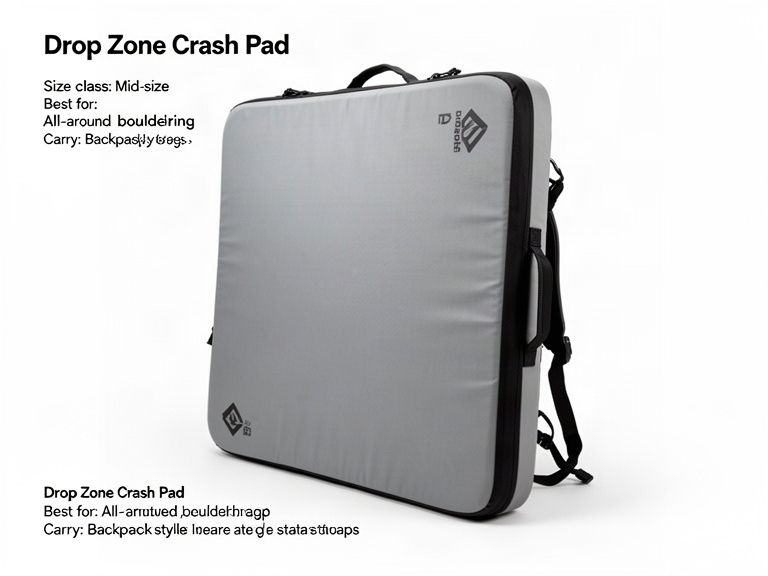
Black Diamond Drop Zone Crash Pad
Boulderers buying their first or main pad
Size classMid-sizeBest forAll-around boulderingCarryBackpack-style straps -
2
 Illustration
Best value
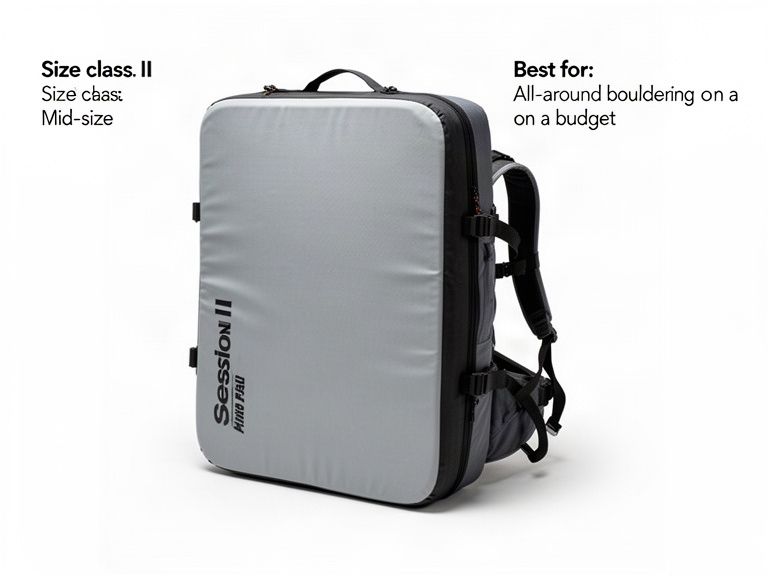
Metolius Session II Crash Pad
Budget-conscious boulderers
Size classMid-sizeBest forAll-around bouldering on a budgetCarryBackpack-style straps -
3
 Illustration
Best for highballs
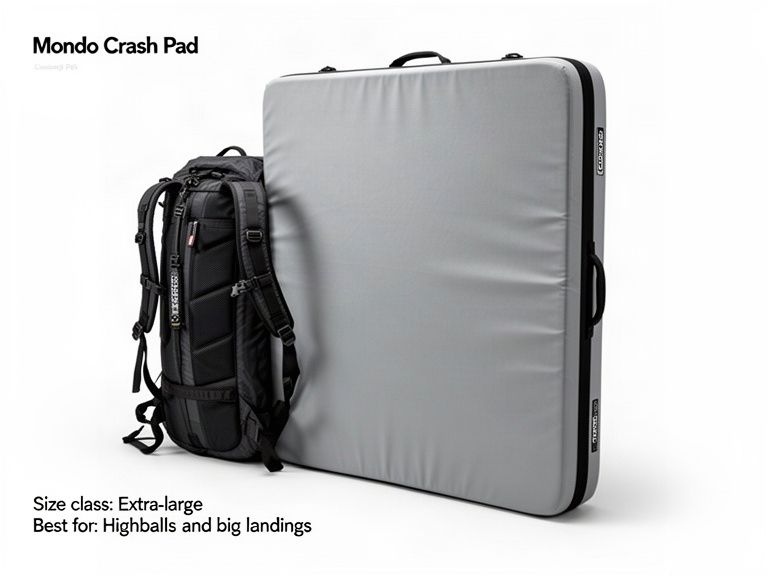
Black Diamond Mondo Crash Pad
Tall problems and large landing zones
Size classExtra-largeBest forHighballs and big landingsCarryBackpack-style straps -
4
 Illustration
Best for beginners
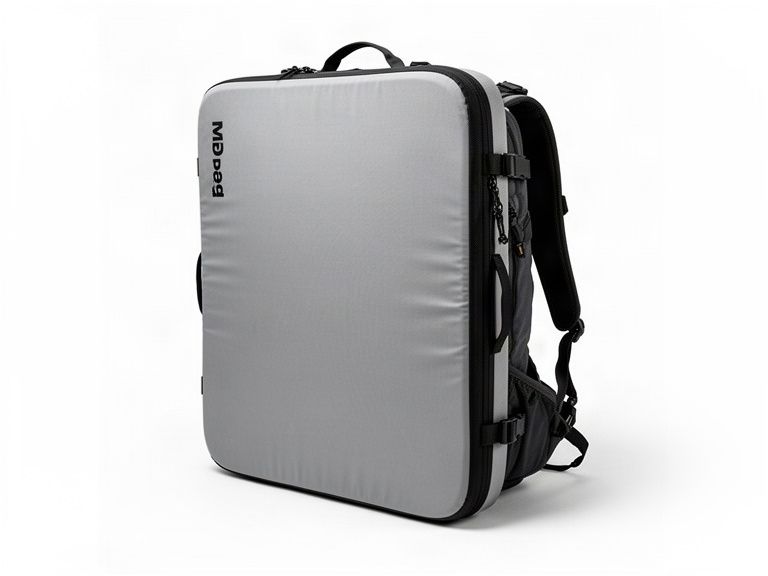
Mad Rock Mad Pad
New boulderers trying outdoor climbing
Size classMid-sizeBest forGetting started outdoorsCarryBackpack-style straps
Black Diamond Drop Zone Crash Pad
Illustration
A mid-size pad from Black Diamond that balances landing area, weight and carrying comfort.
Best for: Boulderers buying their first or main pad- Size class
- Mid-size
- Best for
- All-around bouldering
- Carry
- Backpack-style straps
What we like
- Versatile mid-size landing area
- Manageable on approaches
- From an established climbing brand
- Good choice as a first pad
Keep in mind
- Not enough coverage for tall highballs on its own
- Heavier than small supplemental pads
The Drop Zone is Black Diamond's mid-size crash pad, and it suits boulderers looking for one main pad that does most things well. Its size gives a reasonable landing area for typical problems while staying manageable to carry on approaches.
For new outdoor boulderers, a mid-size pad from an established brand is a sensible first purchase. It can later be combined with a larger pad for tall problems or a smaller one to fill gaps.
On its own, a mid-size pad does not provide enough coverage for tall highballs or sprawling landings. Always use a spotter, place the pad carefully and follow Black Diamond's instructions for use and care.
Bottom line: A well-balanced first or main pad for most outdoor boulderers.
Metolius Session II Crash Pad
Illustration
A popular mid-size pad from Metolius at a budget-friendly price.
Best for: Budget-conscious boulderers- Size class
- Mid-size
- Best for
- All-around bouldering on a budget
- Carry
- Backpack-style straps
What we like
- Budget-friendly
- Useful mid-size landing area
- From a long-established climbing brand
- Good second pad to extend coverage
Keep in mind
- Less coverage than large pads
- Foam will eventually need replacing with heavy use
Metolius has made climbing gear for decades, and the Session II is one of its most popular crash pads. It offers a mid-size landing area at a budget-friendly price, which makes it a common first pad and a useful second pad for climbers extending their coverage.
For new boulderers on a budget, it provides a practical way to start climbing outside without spending heavily.
Like any mid-size pad, it does not offer enough coverage for tall problems on its own, and its foam will eventually break down with heavy use. Use it with a spotter and careful placement, and follow Metolius's instructions for care.
Bottom line: A budget-friendly mid-size pad for first-time and budget-conscious boulderers.
Black Diamond Mondo Crash Pad
Illustration
Black Diamond's largest crash pad, designed to cover big landing zones on tall problems.
Best for: Tall problems and large landing zones- Size class
- Extra-large
- Best for
- Highballs and big landings
- Carry
- Backpack-style straps
What we like
- Very large landing area
- Thick design suits taller problems
- Reduces gaps between pads
- Anchors a multi-pad setup
Keep in mind
- Heavy and bulky to carry
- Needs a large vehicle and storage space
- Premium-priced
The Mondo is Black Diamond's largest crash pad, designed for boulderers tackling tall problems and broad landing zones. Its big footprint covers more ground with fewer gaps, and its thickness is aimed at bigger falls.
It is usually used as the centerpiece of a multi-pad setup, with smaller pads around it to cover rocks and edges.
All that size comes at a cost: it is heavy and bulky on approaches, needs a large vehicle and plenty of storage space, and is premium-priced. Even a large pad cannot remove the risks of highball bouldering, so use experienced spotters, plan your landing zone and follow Black Diamond's instructions.
Bottom line: The pad for boulderers who regularly climb tall problems and need maximum coverage.
Mad Rock Mad Pad
Illustration
A straightforward mid-size pad from Mad Rock, a common choice for climbers heading outside for the first time.
Best for: New boulderers trying outdoor climbing- Size class
- Mid-size
- Best for
- Getting started outdoors
- Carry
- Backpack-style straps
What we like
- Simple, no-frills design
- Mid-size landing area
- From an established climbing brand
- Sensible first pad
Keep in mind
- Fewer premium features than higher-end pads
- Not enough coverage for tall problems alone
Mad Rock is well known for climbing shoes and gear, and the Mad Pad is its straightforward mid-size crash pad. It focuses on the basics, offering a reasonable landing area and a carry system for getting to the boulders.
For climbers moving from the gym to outdoor bouldering, a simple mid-size pad is a sensible first step, and the Mad Pad fits that role.
It has fewer premium features than higher-end pads, and like any mid-size pad, it is not enough for tall problems on its own. Boulder with experienced partners, use a spotter and follow Mad Rock's instructions for use and care.
Bottom line: A simple, sensible first pad for climbers heading outside.
Side-by-side comparison
| Product | Size class | Best for | Carry | Score |
|---|---|---|---|---|
| Black Diamond Drop Zone Crash PadBest overall | Mid-size | All-around bouldering | Backpack-style straps | 9.0 |
| Metolius Session II Crash PadBest value | Mid-size | All-around bouldering on a budget | Backpack-style straps | 8.8 |
| Black Diamond Mondo Crash PadBest for highballs | Extra-large | Highballs and big landings | Backpack-style straps | 8.7 |
| Mad Rock Mad PadBest for beginners | Mid-size | Getting started outdoors | Backpack-style straps | 8.4 |
Specifications are from manufacturer listings at the time of writing and can change between production runs.
Pad sizes
- Standard (mid-size) pads, often around 3 by 4 feet, are the most common first pad. They cover a reasonable landing zone and are manageable to carry.
- Large and highball pads cover more ground and are usually thicker, which helps on taller problems and uneven landings. They are heavier and bulkier on the approach.
- Small or sit-start pads fill gaps between bigger pads and cushion sit starts.
Most regular boulderers end up with more than one pad, or boulder with friends and share.
Foam layers
Most pads combine a firm closed-cell foam top layer, which spreads the force of a landing, with one or more softer open-cell layers below that absorb impact. Thicker pads generally handle bigger falls better but weigh more. Over time foam breaks down, especially in the softer layers; if you can feel the ground through the pad, it is time to replace it.
Fold styles
- Hinge pads fold in half along a seam. They pack flat but can have a soft spot at the hinge.
- Taco pads bend in the middle with continuous foam, avoiding a seam but taking more effort to store flat.
- Hybrid designs try to combine the benefits of both.
Carrying and features
Check the shoulder straps, hip belt and how the pad closes for carrying, especially if your boulders involve a long approach. A durable bottom fabric resists abrasion on rough ground, and a carpet or brush pad on top helps you clean your shoes before stepping on the rock. Flaps that close the pad can also hold shoes and gear on the walk in. Think about your car too: a large pad that does not fit in your trunk or back seat with the seats up will quickly become a hassle, so check the folded size before you buy. Weight matters on long, steep approaches, where a lighter mid-size pad may be more practical than a big one.
Using a pad well
Place pads to cover the likely fall zone and any rocks, roots or edges. Close gaps between pads, which can catch an ankle. Use a spotter whose job is to guide your fall toward the pads and protect your head, and learn spotting from experienced climbers or a qualified instructor. Move pads as you progress up a problem. Store pads dry and out of direct sun, since moisture and UV shorten their life.
Frequently asked questions
What size crash pad should I buy first?
A mid-size pad is the usual first choice. It covers a reasonable landing zone, fits in most cars and is manageable on an approach. Add a larger or smaller pad later as you find what you need.
Do I need a spotter if I have a crash pad?
A spotter is strongly recommended. Pads cushion landings, but a spotter can guide your fall toward the pad and help protect your head and back, especially on overhangs and uneven ground.
How long does a crash pad last?
It depends on how often you use it and how it is stored. Foam gradually breaks down, so replace or refoam a pad if you can feel the ground through it or it no longer recovers its shape.
Is a taco or hinge pad better?
Neither is better overall. Hinge pads pack flat and are easy to store, while taco pads avoid a seam in the landing area. Hybrid designs try to combine both benefits.
How we picked
We compared manufacturer information on size, foam layering, fold design, carry systems and intended use for popular bouldering crash pads sold online, and considered how each pad is positioned in its brand's range. Our picks and scores are based on this research — we have not tested these pads hands-on, and no crash pad can remove the risk of injury. Brands cannot pay to be included. Read our full method.