






















The best upright freezers
Four upright freezers compared, from a full-size 20 cu ft frost-free model to mid-size and compact units for garages, basements and small homes.
As an Amazon Associate I earn from qualifying purchases. When you buy through links on this page, we may earn a commission at no extra cost to you. Learn more
An upright freezer works like the freezer half of a refrigerator, scaled up. Shelves and door bins keep food visible and easy to reach, so you spend less time digging and less food gets forgotten at the bottom. It also takes up far less floor space than a chest freezer of similar capacity, which matters in a crowded garage, basement or utility room.
You pay for that convenience. Upright freezers usually cost more per cubic foot than chest models, lose a little more cold air when the door opens, and the most convenient frost-free models use more electricity than manual-defrost ones. We compared widely available uprights on capacity, defrost type, footprint, garage suitability and storage layout, and picked the best options for different households, from a full-size frost-free freezer for big families to compact and mid-size units for smaller spaces.
Our top picks
-
1
 Illustration
Best overall
Frigidaire 20 Cu Ft Frost-Free Upright Freezer
Large families who want easy, organized bulk storage
Capacity20 cu ftGood forHouseholds of 5 or moreSize classFull-size -
2
 Illustration
Best mid-size
Midea 7.0 Cu Ft Upright Freezer
Couples and small families who want shelves, not a chest
Capacity7.0 cu ftGood forHouseholds of 3–4Size classMid-size -
3
 Illustration
Best for garages
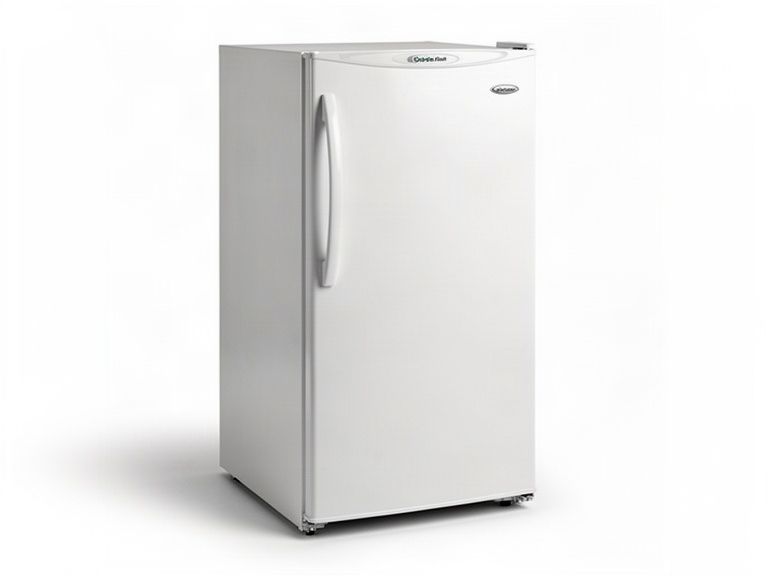
Frigidaire 7.0 Cu Ft Garage-Ready Upright Freezer
Garages, porches and unheated basements
Capacity7.0 cu ftGood forHouseholds of 3–4Size classMid-size -
4
 Illustration
Best compact
Midea 3.0 Cu Ft Compact Upright Freezer
Apartments, dorms and offices
Capacity3.0 cu ftGood forHouseholds of 1–2Size classCompact
Frigidaire 20 Cu Ft Frost-Free Upright Freezer
Illustration
A full-size, frost-free upright with refrigerator-style shelves and door bins.
Best for: Large families who want easy, organized bulk storage- Capacity
- 20 cu ft
- Good for
- Households of 5 or more
- Size class
- Full-size
- Defrost
- Frost-free
What we like
- Frost-free, so no manual defrosting
- Large capacity for bulk shopping
- Shelves and door bins keep food visible
- From a major appliance brand with wide service coverage
Keep in mind
- Uses more energy than a manual-defrost model
- Tall and heavy, so measure the delivery path
- Premium-priced compared with chest freezers
For a big household, a full-size frost-free upright is the most convenient way to store a lot of frozen food. Frigidaire's 20 cu ft model offers roughly the space of a large chest freezer, but with shelves and door bins that keep everything visible, so the bag of peas from last spring doesn't vanish at the bottom.
Frost-free operation means you never have to empty it to chip away ice, which is a real advantage at this size. The trade-off is energy use: the defrost cycle and fans use more electricity than a manual-defrost freezer, and frost-free air can dry out food that isn't wrapped well.
Measure the height and the delivery route before ordering, and check the exact model's garage rating if it will live outside the house.
Bottom line: The easiest way to store a lot of frozen food without ever defrosting.
Midea 7.0 Cu Ft Upright Freezer
Illustration
A 22-inch-wide upright that offers chest-freezer capacity in a much smaller footprint.
Best for: Couples and small families who want shelves, not a chest- Capacity
- 7.0 cu ft
- Good for
- Households of 3–4
- Size class
- Mid-size
- Width
- About 22 inches
What we like
- Narrow 22-inch width fits beside a fridge or washer
- Shelves keep food organized and visible
- Budget-friendly for its capacity
- Mid-size capacity suits most small families
Keep in mind
- Check the defrost type of the exact model
- Not as roomy as a full-size upright
- Door shelves limit tall items
Midea's 7.0 cu ft upright is a good fit for households that have outgrown the freezer in their fridge but don't have room for a chest. At about 22 inches wide it slides into the gap beside a refrigerator, washer or pantry shelving, and its shelves make it much easier to organize than a chest freezer of similar capacity.
The 7 cu ft size suits a family of three or four, or a couple who batch-cooks and buys in bulk. It is budget-friendly, which makes it one of the more affordable ways to get upright convenience.
Mid-size uprights at this level are often manual defrost, so check the exact model's details and plan for occasional defrosting. If you need much more space, a full-size frost-free model is worth the extra cost.
Bottom line: A space-saving, budget-friendly upright for small families.
Frigidaire 7.0 Cu Ft Garage-Ready Upright Freezer
Illustration
A mid-size upright built for the temperature swings of a garage or unheated space.
Best for: Garages, porches and unheated basements- Capacity
- 7.0 cu ft
- Good for
- Households of 3–4
- Size class
- Mid-size
- Garage use
- Garage Ready rated
What we like
- Garage Ready rating for unheated spaces
- Upright layout is easy to organize
- Compact footprint for garage corners
- From a major appliance brand
Keep in mind
- Mid-size capacity, not for bulk buyers
- Check the rated temperature range in the manual
- No fridge mode
Garages are where many second freezers end up, and they are also where many freezers struggle. Very cold winters can stop a standard freezer from running often enough, and summer heat makes it work much harder. Frigidaire's 7.0 cu ft Garage Ready upright is designed for those swings.
The upright layout keeps food on shelves rather than piled in a chest, which is handy when you're grabbing something on the way in from the car. Its mid-size capacity suits a family of three or four, or overflow from a kitchen fridge.
Check the manual for the exact temperature range it is rated for, and make sure the garage outlet meets local code. If you need more space, pair it with a chest freezer for bulk storage.
Bottom line: A sensible mid-size upright for a garage or unheated space.
Midea 3.0 Cu Ft Compact Upright Freezer
Illustration
A small, popular upright freezer with a reversible door that fits under counters and in closets.
Best for: Apartments, dorms and offices- Capacity
- 3.0 cu ft
- Good for
- Households of 1–2
- Size class
- Compact
- Defrost
- Manual
- Door
- Reversible
What we like
- Small footprint fits almost anywhere
- Reversible door
- Shelves make small items easy to find
- Budget-friendly
Keep in mind
- Manual defrost
- Limited space for large roasts or turkeys
Midea's 3.0 cu ft upright is the compact option in this group, and one of the most popular small freezers around. It is about the size of a mini fridge, so it fits in a closet, under a counter, in a dorm or next to a desk, and the reversible door lets you choose which side it opens from.
Shelves keep frozen meals, ice packs and small packages organized in a way a tiny chest freezer can't match. It suits one or two people who need overflow space beyond a fridge freezer.
It is manual defrost, so expect to clear ice occasionally, and large items such as a whole turkey or big roasts won't fit. If you need more room, the 7.0 cu ft models above make more sense.
Bottom line: A compact, budget-friendly upright for small spaces.
Side-by-side comparison
| Product | Capacity | Good for | Size class | Defrost | Score |
|---|---|---|---|---|---|
| Frigidaire 20 Cu Ft Frost-Free Upright FreezerBest overall | 20 cu ft | Households of 5 or more | Full-size | Frost-free | 9.0 |
| Midea 7.0 Cu Ft Upright FreezerBest mid-size | 7.0 cu ft | Households of 3–4 | Mid-size | — | 8.6 |
| Frigidaire 7.0 Cu Ft Garage-Ready Upright FreezerBest for garages | 7.0 cu ft | Households of 3–4 | Mid-size | — | 8.5 |
| Midea 3.0 Cu Ft Compact Upright FreezerBest compact | 3.0 cu ft | Households of 1–2 | Compact | Manual | 8.3 |
Specifications are from manufacturer listings at the time of writing and can change between production runs.
Upright or chest?
Choose an upright if you value organization and floor space: shelves make it easy to see what you have, and the footprint is roughly that of a refrigerator. Choose a chest if you want the most storage for the money, the best efficiency and the longest hold time during a power outage. Many households that freeze a lot end up happiest with an upright for everyday items and a chest for bulk storage.
Frost-free or manual defrost?
Frost-free uprights run a periodic heating cycle to stop ice from building up, so you never have to empty the freezer to defrost it. They cost more and use somewhat more energy, and the air movement can dry out poorly wrapped food faster.
Manual-defrost uprights are cheaper and more efficient, but ice builds up on the shelves and walls and you will need to defrost a few times a year. Compact and mid-size uprights are usually manual defrost; frost-free is most common in full-size models.
How much space do you need?
Allow about 1.5 cubic feet per person as a starting point, more if you buy in bulk. Then measure carefully:
- Height and width, plus the clearance the manual asks for at the top, sides and back.
- Door swing. Check that the door can open past 90 degrees so shelves and bins can slide out, and whether the door is reversible.
- The delivery path, including doorways and stairs.
Features worth paying for
- Adjustable shelves and deep door bins for flexible storage.
- A garage rating if the freezer will live in an unheated space.
- A temperature alarm or door-ajar alert to warn you before food thaws.
- A lock if the freezer is in a shared space or garage.
- Interior lighting so you can see the back shelves.
Setup and care
If the freezer was transported lying down, follow the manual's guidance on how long to let it stand upright before plugging it in. Use a properly grounded outlet rather than an extension cord, and ask a licensed electrician about local code requirements for garage or basement outlets. Keep it at 0°F or below, leave space for air to circulate, and vacuum dust from the back or bottom grille once or twice a year so it runs efficiently.
Frequently asked questions
Do upright freezers use more electricity than chest freezers?
Usually somewhat more, especially frost-free models, because cold air spills out when the door opens and the defrost heater runs periodically. Compare the yearly energy figures on the EnergyGuide labels of the models you are considering.
How often do I need to defrost a manual upright freezer?
Typically every few months to twice a year, depending on how often you open it and how humid the room is. Defrost when frost reaches about a quarter inch thick.
Can I put an upright freezer in my garage?
Only if the manufacturer rates it for garage use and the temperatures your garage reaches. A freezer without a garage rating may not keep food frozen properly in very cold or very hot conditions.
What temperature should an upright freezer be?
USDA guidance is to keep freezers at 0°F or below. Use a freezer thermometer to check, especially after the freezer is first set up or after a power cut.
Why does my frost-free freezer make clicking or hissing sounds?
Those sounds are usually the defrost heater, fans and refrigerant moving through the system, and are normal. If you hear loud grinding or the freezer stops cooling, contact the manufacturer for service.
How we picked
We compared manufacturer and retailer specifications for capacity, defrost type, dimensions, garage ratings and storage layout for upright freezers widely sold in the US, and weighed how each suits different households and spaces. Our picks and scores are based on this research — we have not tested these products hands-on. Brands cannot pay to be included. Read our full method.