






















The best rollator walkers
Four rollator walkers compared — European-style, value, storage-focused and three-wheel designs — plus how to get the fit right.
As an Amazon Associate I earn from qualifying purchases. When you buy through links on this page, we may earn a commission at no extra cost to you. Learn more
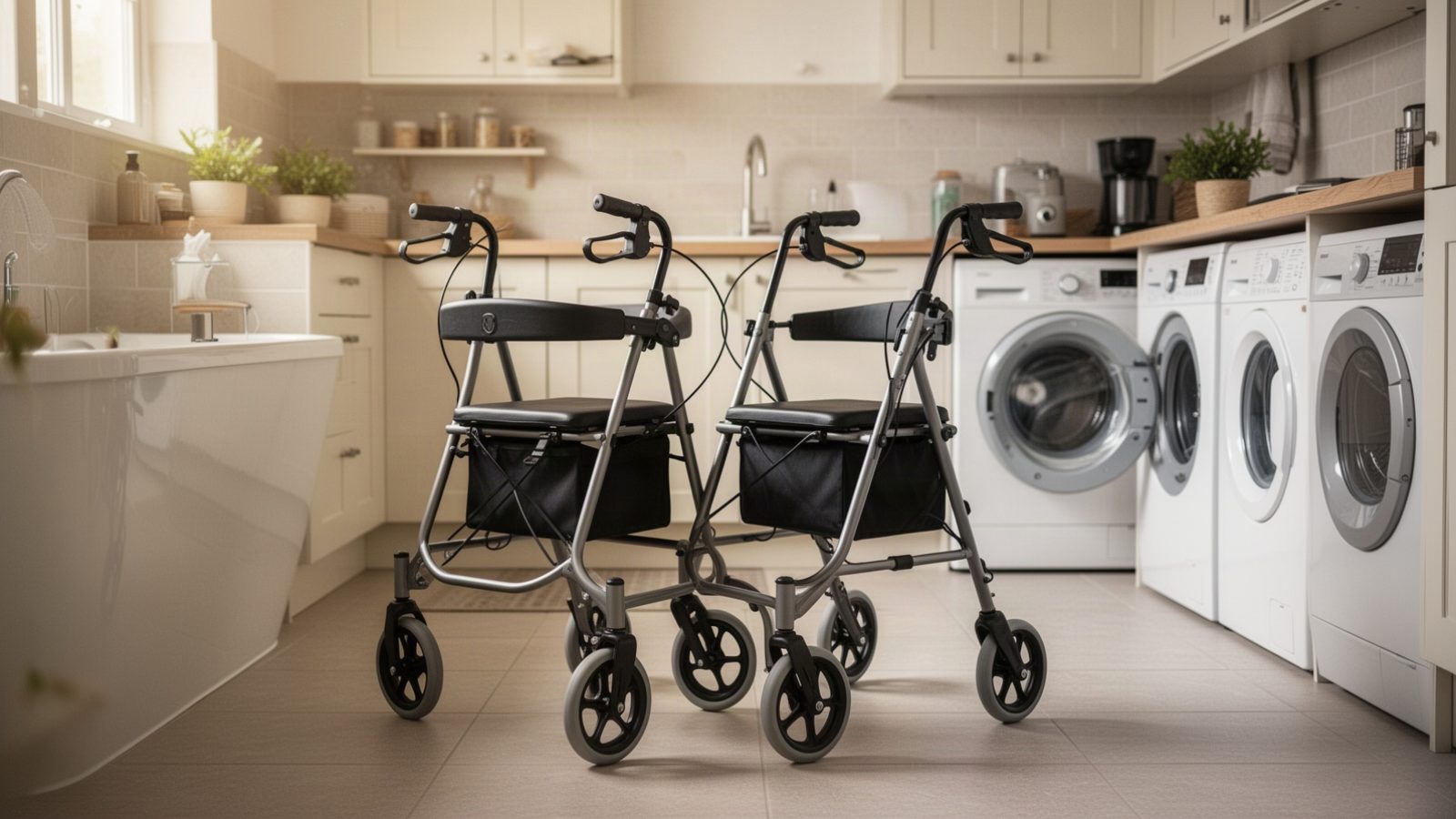
A rollator is a walker with wheels on every leg, hand brakes and usually a seat. Instead of lifting a frame with each step, you push it along, and when you need a break you lock the brakes and sit down. For many people that means longer walks, easier shopping trips and less worry about where the next bench is.
Rollators vary more than they first appear: wheel size decides how well one handles sidewalks and grass, the fold decides whether it fits in your car, and the seat height has to suit your body. We compared four widely available rollators from Drive Medical, Hugo and Medline on wheels, seat, storage, folding design and adjustability. Because fit and suitability depend on your height, strength and balance, ask your doctor or a physical therapist to help you choose and adjust a rollator, and always follow the manufacturer’s instructions and weight limits.
Our top picks
-
1
 Illustration
Best overall
Drive Medical Nitro Euro Style Rollator
Active users who walk outdoors
Wheels4SeatPadded seat with back supportStorageRemovable under-seat bag -
2
 Illustration
Best value
Hugo Elite Rollator Walker with Seat
Everyday use around town on a budget
Wheels4SeatPadded seat with backrestStorageZippered under-seat bag -
3
 Illustration
Best for storage
Medline Empower Rollator Walker
Shopping trips and carrying items around the home
Wheels4SeatPadded seat with backrestStorageLarge bag, tray and cup holder -
4
 Illustration
Best for tight spaces
Drive Medical Three-Wheel Rollator
Small homes and narrow store aisles
Wheels3SeatNoneStorageBasket, tray and pouch
Drive Medical Nitro Euro Style Rollator
Illustration
A European-style rollator with large front casters, a stroller-like fold and a padded seat.
Best for: Active users who walk outdoors- Wheels
- 4
- Seat
- Padded seat with back support
- Storage
- Removable under-seat bag
- Front casters
- 10 in.
- Fold
- Folds side to side, stroller-style
What we like
- Large front casters handle sidewalks and uneven ground
- Folds narrow like a stroller and stands upright
- Height-adjustable handles
- Removable storage bag under the seat
Keep in mind
- Larger and heavier than basic rollators
- Check the right size version for your height
- Premium-priced compared with steel models
Drive Medical’s Nitro is one of the most recognizable rollators in the US, and its design explains why. Large 10-inch front casters roll over sidewalk cracks, curb cuts and grass more easily than the small wheels on basic models, and the frame folds side to side like a stroller, so it’s narrow enough to tuck into a closet or car.
The padded seat and back support make rest breaks comfortable, and a removable bag under the seat holds a purse or shopping.
It’s bigger and costs more than a simple steel rollator, and it comes in different size versions, so ask your physical therapist which height range fits you before ordering.
Bottom line: The best all-round rollator for people who spend real time walking outdoors.
Hugo Elite Rollator Walker with Seat
Illustration
A well-equipped four-wheel rollator with a padded seat, backrest and under-seat storage.
Best for: Everyday use around town on a budget- Wheels
- 4
- Seat
- Padded seat with backrest
- Storage
- Zippered under-seat bag
What we like
- Strong feature list for the price
- Padded seat and backrest for rest breaks
- Under-seat bag for errands
- Height-adjustable handles
Keep in mind
- Wheels are smaller than the Nitro’s
- Heavier to lift than lightweight models
- Fewer refinements than premium rollators
Hugo’s Elite rollator covers everything most people need for errands and neighborhood walks without a premium price. You get a padded seat and backrest for rest breaks, a zippered storage bag under the seat and handles that adjust for height.
Its wheels are smaller than the Nitro’s big front casters, so it’s happiest on sidewalks, store floors and paved paths rather than rough ground.
Check the weight before buying if you’ll be lifting it into a car yourself. For a dependable, well-equipped everyday rollator, it’s strong value.
Bottom line: A well-equipped everyday rollator that covers the essentials without a premium price.
Medline Empower Rollator Walker
Illustration
A rollator built around storage, with a large under-seat bag, a tray and a cup holder.
Best for: Shopping trips and carrying items around the home- Wheels
- 4
- Seat
- Padded seat with backrest
- Storage
- Large bag, tray and cup holder
What we like
- Generous storage for groceries and personal items
- Tray and cup holder help carry things around the house
- Padded seat and backrest
- From a major medical supplier
Keep in mind
- Accessories add bulk and weight
- Check the folded size against your car trunk
Carrying a cup of coffee or a plate across the room is surprisingly hard when both hands are on a walker. Medline’s Empower rollator addresses that with a removable tray and cup holder on top and a large storage bag under the seat.
That makes it a practical choice for people who use their rollator indoors as much as out — moving dishes, laundry or mail around the house — and for shopping trips.
The extras do add bulk, so compare the folded size with your car trunk before buying. Have a physical therapist check the handle and seat height for you, and follow Medline’s instructions for weight limits.
Bottom line: The most practical rollator if carrying things is as important as walking support.
Drive Medical Three-Wheel Rollator
Illustration
A narrow three-wheel rollator that turns tightly, with a basket, tray and pouch included.
Best for: Small homes and narrow store aisles- Wheels
- 3
- Seat
- None
- Storage
- Basket, tray and pouch
What we like
- Narrow frame turns tightly in small spaces
- Lighter and simpler than four-wheel models
- Comes with a basket, tray and pouch
- Folds compactly
Keep in mind
- No seat for rest breaks
- Smaller base is less stable than four wheels
- Not suitable for everyone — ask a physical therapist
A three-wheel rollator gives up the seat to gain maneuverability. Drive Medical’s version is narrow and turns tightly, which helps in small apartments, narrow hallways and crowded store aisles where a four-wheel rollator feels wide.
It still includes storage — a basket, tray and pouch — and folds down compactly for the car.
With only three wheels and no seat, it’s best for people who walk fairly steadily and don’t need to stop and sit. A physical therapist can confirm whether the design is appropriate for your balance, and follow Drive Medical’s instructions for brake adjustment and weight limits.
Bottom line: A nimble, compact choice for steady walkers who don’t need a seat.
Side-by-side comparison
| Product | Wheels | Seat | Storage | Front casters | Score |
|---|---|---|---|---|---|
| Drive Medical Nitro Euro Style RollatorBest overall | 4 | Padded seat with back support | Removable under-seat bag | 10 in. | 9.2 |
| Hugo Elite Rollator Walker with SeatBest value | 4 | Padded seat with backrest | Zippered under-seat bag | — | 8.8 |
| Medline Empower Rollator WalkerBest for storage | 4 | Padded seat with backrest | Large bag, tray and cup holder | — | 8.6 |
| Drive Medical Three-Wheel RollatorBest for tight spaces | 3 | None | Basket, tray and pouch | — | 8.1 |
Specifications are from manufacturer listings at the time of writing and can change between production runs.
Rollator or standard walker?
A standard walker has no wheels or two front wheels and gives the most stable support, because you lift or slide it with each step. A rollator rolls freely and relies on hand brakes, so it suits people who can walk at a steady pace but want support, balance assistance and a place to rest. A physical therapist can tell you which type matches your needs — the wrong one can be less safe, not more.
Four wheels or three?
- Four-wheel rollators are the most common. They usually include a seat and a backrest, and they stand steady when parked.
- Three-wheel rollators are narrower and lighter, and they turn tightly in small homes and store aisles. They don’t have a seat, so they aren’t for people who need to stop and sit.
Getting the fit right
Handle height is the most important adjustment. A common starting point is setting the handles at about wrist height when you stand upright with your arms relaxed, so your elbows bend slightly as you hold them — but have a physical therapist confirm it. Seat height matters if you plan to sit: your feet should rest flat on the floor. Many models come in standard, petite and tall versions, and every rollator has a maximum user weight listed by the manufacturer. Check it before you buy.
Wheels, brakes and folding
- Larger wheels roll more easily over cracks, curbs, gravel and grass. Smaller wheels are fine indoors and on smooth floors.
- Loop hand brakes slow you down when squeezed and usually lock when pushed down. Always lock both brakes before sitting.
- Folding style varies: some fold side to side like a stroller, others front to back. Check the folded dimensions against your car trunk and the rollator’s weight against what you can lift.
Features worth having
A padded seat and backrest, a removable storage bag under the seat, height-adjustable handles that change without tools and a cane holder or tray are all genuinely useful. Reflectors help if you walk at dusk.
Safety reminders
Never let someone push you while you sit on a rollator — it isn’t designed to be a wheelchair. Lock the brakes before sitting or standing, check brake adjustment and tire wear regularly, and follow the manufacturer’s instructions for use and maintenance.
Frequently asked questions
How do I know what size rollator I need?
Handle height, seat height and user weight capacity are the key measurements. Ask a doctor or physical therapist to help you choose and adjust the rollator, and compare your height and weight with the manufacturer’s published ranges.
Can someone push me while I sit on a rollator?
No. Rollators are not designed to be pushed with someone seated and can tip or roll unexpectedly. If you need to be pushed, look at a transport wheelchair or a combination model designed for that use.
Are three-wheel rollators less stable?
They have a smaller base and no seat, so they suit people who walk fairly steadily and want maneuverability. A physical therapist can advise whether a three-wheel design is appropriate for you.
Will a rollator fit in my car?
Most fold, but folded size and weight vary. Compare the manufacturer’s folded dimensions with your trunk and make sure you or a companion can lift it comfortably.
Does insurance or Medicare cover rollators?
Coverage depends on your plan and usually requires a prescription and a supplier that accepts your insurance. Check with your doctor and your insurer before buying.
How we picked
We compared wheel count and size, seat and backrest design, storage, brake style, folding design, adjustability and manufacturer guidance for widely available rollator walkers, and weighed which users and settings each suits. Our picks and scores are based on this research — we have not tested these products hands-on. Brands cannot pay to be included. Read our full method.