






















The best random orbital sanders
Five random orbital sanders compared for furniture, cabinets and DIY woodworking, with advice on pad size, dust collection, speed control and sandpaper grits.
As an Amazon Associate I earn from qualifying purchases. When you buy through links on this page, we may earn a commission at no extra cost to you. Learn more
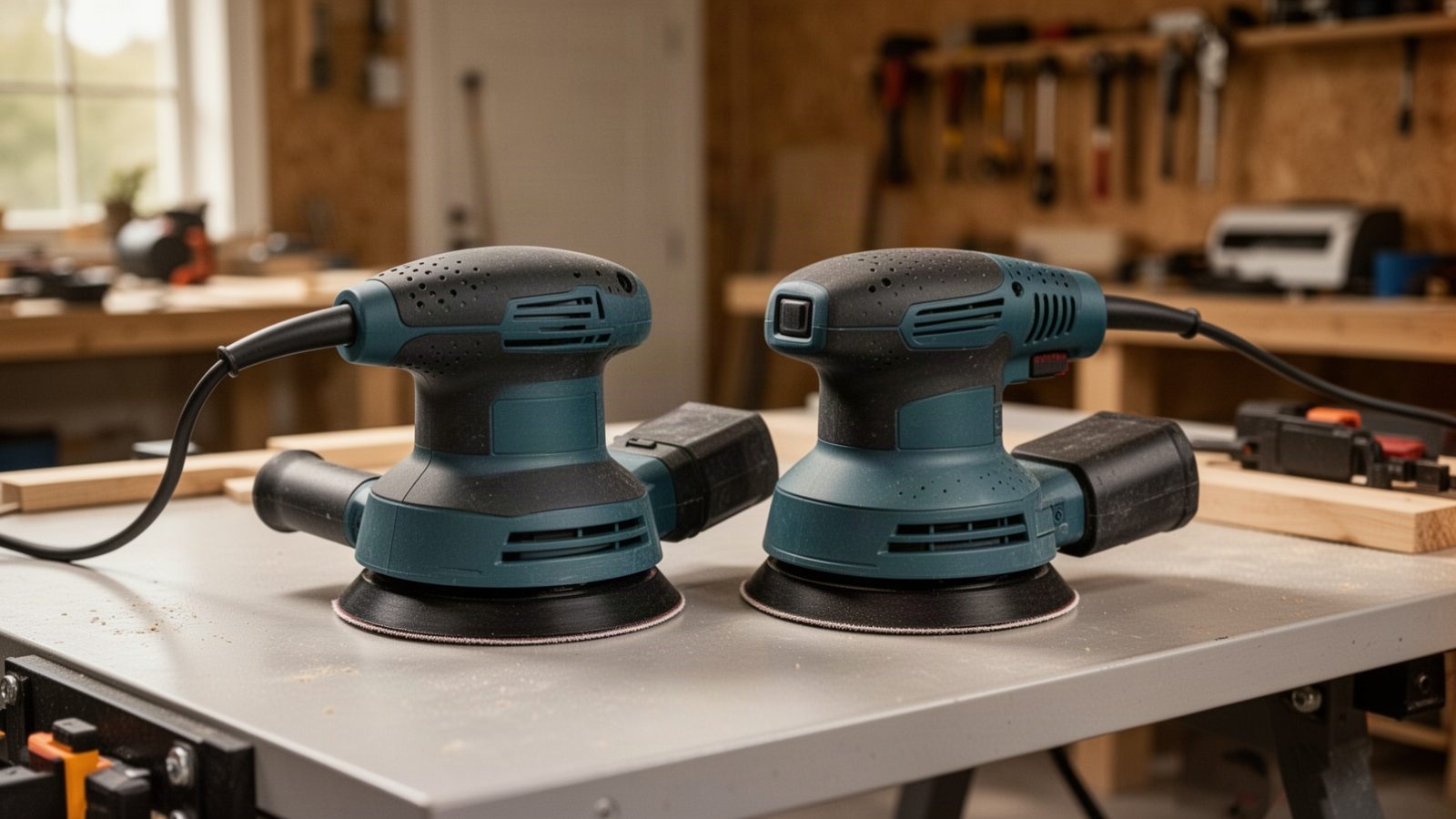
A random orbital sander is the most useful sander for most people. Its pad spins and moves in small, offset circles at the same time, so the abrasive never follows the same path twice. That pattern removes material quickly while leaving far fewer swirl marks than an older sheet sander, which is why it is the go-to tool for refinishing a tabletop, smoothing cabinet doors or prepping trim for paint.
Most models look alike, so the differences that matter are easy to miss: how well the dust collection works, how much the tool vibrates, whether speed can be adjusted and how comfortable it is to hold for an hour. We compared the most popular 5-inch sanders from established brands on power, speed range, dust collection, pad design and handle style, and picked the best option for different projects and budgets.
Our top picks
-
1
 Illustration
Best overall
Bosch 5-Inch Palm Random Orbit Sander (ROS20VSC)
Furniture refinishing and general DIY sanding
Pad size5 inchesPower sourceCorded, 2.5 ampsSpeed controlVariable (7,500–12,000 OPM) -
2
 Illustration
Best premium
Festool ETS 125 REQ 5-Inch Random Orbital Sander
Serious woodworkers with a dust extractor
Pad size5 inchesPower sourceCordedSpeed controlVariable -
3
 Illustration
Best for large surfaces
Makita 5-Inch Random Orbit Sander (BO5041K)
Tabletops, doors and two-handed control
Pad size5 inchesPower sourceCorded, 3 ampsSpeed controlVariable (4,000–12,000 OPM) -
4
 Illustration
Best cordless
DeWalt 20V MAX XR 5-Inch Random Orbit Sander (DCW210)
Quick jobs and work away from outlets
Pad size5 inchesPower sourceCordless, DeWalt 20V MAXSpeed controlVariable -
5
 Illustration
Best budget
Black+Decker 5-Inch Random Orbit Sander (BDERO100)
Occasional small projects and first-time sanders
Pad size5 inchesPower sourceCorded, 2 ampsSpeed controlSingle speed (12,000 OPM)
Bosch 5-Inch Palm Random Orbit Sander (ROS20VSC)
Illustration
A long-running, variable-speed palm sander with a microfilter dust canister and carrying bag.
Best for: Furniture refinishing and general DIY sanding- Pad size
- 5 inches
- Power source
- Corded, 2.5 amps
- Speed control
- Variable (7,500–12,000 OPM)
- Dust collection
- Microfilter canister, vacuum-ready
- Pad attachment
- Hook-and-loop
What we like
- Variable speed for delicate finishes
- Microfilter canister catches fine dust
- Compact palm grip is easy to control
- Includes a soft carrying bag
Keep in mind
- Canister fills quickly on big jobs
- Vibration builds up over long sessions
The Bosch ROS20VSC has been a popular choice for years because it gets the basics right. A 2.5-amp motor drives the 5-inch pad, and a variable-speed dial lets you slow down for veneers, paint and delicate finishes or speed up for fast stock removal.
Its microfilter dust canister twists on and catches much of the fine dust, and the port also accepts a vacuum hose for better collection. The palm grip is compact, and a pad-dampening system helps prevent gouging when you set the sander down on the work.
The canister fills quickly on big projects, so a shop vacuum connection is worth using whenever possible. For refinishing furniture, building shelves or prepping cabinets for paint, it is a reliable first sander.
Bottom line: A dependable, well-rounded sander for almost any home woodworking project.
Festool ETS 125 REQ 5-Inch Random Orbital Sander
Illustration
A light, low-vibration sander designed to work with Festool dust extraction.
Best for: Serious woodworkers with a dust extractor- Pad size
- 5 inches
- Power source
- Corded
- Speed control
- Variable
What we like
- Light and low-vibration for long sessions
- Excellent dust extraction with a compatible extractor
- Refined finish quality
- Fits the wider Festool system
Keep in mind
- Premium-priced for a 5-inch sander
- Best results need a dust extractor, an added cost
- Discs and accessories cost more
Festool's ETS 125 REQ is the brand's entry into its sander lineup, and it shows why many furniture makers pay more for the name. It is light and well balanced, with low vibration that makes long sanding sessions less tiring, and it is designed to connect to a Festool dust extractor for very effective dust collection.
That pairing is the point. Used with an extractor, it keeps the surface and the air much cleaner, which helps you see scratches and get a better finish. Without one, it loses much of its advantage over less costly sanders.
It is premium-priced, and Festool's abrasives and extractors add to the cost. For hobbyists who sand for hours at a time, the comfort and cleaner shop are what you are paying for.
Bottom line: A refined, comfortable sander that shines for serious woodworkers using dust extraction.
Makita 5-Inch Random Orbit Sander (BO5041K)
Illustration
A 3-amp sander with a removable front handle and a wide speed range.
Best for: Tabletops, doors and two-handed control- Pad size
- 5 inches
- Power source
- Corded, 3 amps
- Speed control
- Variable (4,000–12,000 OPM)
- Handle
- Removable front handle
- Pad attachment
- Hook-and-loop
What we like
- Front handle allows two-handed control
- Wide speed range down to slow settings
- 3-amp motor for steady removal
- Includes a tool case
Keep in mind
- Taller and heavier than palm sanders
- Dust bag is less effective than vacuum collection
The Makita BO5041K stands out for its removable front handle. With two hands on the tool, it is easier to keep the pad flat on big surfaces like tabletops and doors, and less tiring over a long session. Remove the handle and it works like a regular palm sander.
Its variable speed reaches unusually low settings, which helps on veneers, finishes and paint where high speed can clog paper or burn through. The 3-amp motor gives steady removal on hardwood.
It is taller and heavier than compact palm sanders, so it is less nimble on small parts and edges, and the dust bag is only fair; connect a vacuum where you can. For larger projects, it is a comfortable workhorse.
Bottom line: A great choice for big, flat projects where two-handed control makes the work easier.
DeWalt 20V MAX XR 5-Inch Random Orbit Sander (DCW210)
Illustration
A brushless cordless sander with variable speed on DeWalt's 20V MAX platform.
Best for: Quick jobs and work away from outlets- Pad size
- 5 inches
- Power source
- Cordless, DeWalt 20V MAX
- Speed control
- Variable
- Motor
- Brushless
What we like
- No cord to drag across the work
- Brushless motor for better runtime
- Variable speed
- Shares batteries with DeWalt drills and saws
Keep in mind
- Heavier than corded palm sanders with a battery attached
- Runtime limits long sessions
- Battery and charger sold separately with the bare tool
A cordless sander is surprisingly freeing. With the DCW210 there is no cord to catch on table edges or drag through fresh dust, and you can sand a deck railing, a door still on its hinges or a project on the driveway without hunting for an outlet.
The brushless motor and variable speed make it a capable sander, and it shares batteries with DeWalt's 20V MAX drills, saws and lights. Check the listing for the dust-collection setup included with the version you buy.
The battery adds weight on top of the tool, which you will feel over long sessions, and runtime limits all-day sanding. For quick touch-ups, small furniture and outdoor work, it is the most convenient choice here.
Bottom line: The handiest sander for DeWalt owners who want to sand anywhere without a cord.
Black+Decker 5-Inch Random Orbit Sander (BDERO100)
Illustration
A simple, single-speed corded sander for light DIY jobs.
Best for: Occasional small projects and first-time sanders- Pad size
- 5 inches
- Power source
- Corded, 2 amps
- Speed control
- Single speed (12,000 OPM)
- Dust collection
- Dust bag
What we like
- Budget-friendly
- Light and compact
- Uses standard 5-inch hook-and-loop discs
Keep in mind
- Single speed only
- Weaker motor and dust collection than pricier models
- More vibration on long sessions
For a sander that will see occasional use, such as freshening up a side table, smoothing a birdhouse or sanding a few patched spots before painting, the Black+Decker BDERO100 is an easy, budget-friendly choice. It is light, takes standard 5-inch hook-and-loop discs and comes with a dust bag.
The trade-offs show up on bigger jobs. There is no variable speed, the 2-amp motor removes material more slowly than 2.5- and 3-amp models, and dust collection and vibration control are basic.
If you expect to refinish furniture regularly or sand for long stretches, spend more on the Bosch or Makita. For a few small projects a year, this is enough.
Bottom line: A basic, budget-friendly sander for light and occasional sanding.
Side-by-side comparison
| Product | Pad size | Power source | Speed control | Dust collection | Score |
|---|---|---|---|---|---|
| Bosch 5-Inch Palm Random Orbit Sander (ROS20VSC)Best overall | 5 inches | Corded, 2.5 amps | Variable (7,500–12,000 OPM) | Microfilter canister, vacuum-ready | 9.1 |
| Festool ETS 125 REQ 5-Inch Random Orbital SanderBest premium | 5 inches | Corded | Variable | — | 9.0 |
| Makita 5-Inch Random Orbit Sander (BO5041K)Best for large surfaces | 5 inches | Corded, 3 amps | Variable (4,000–12,000 OPM) | — | 8.8 |
| DeWalt 20V MAX XR 5-Inch Random Orbit Sander (DCW210)Best cordless | 5 inches | Cordless, DeWalt 20V MAX | Variable | — | 8.6 |
| Black+Decker 5-Inch Random Orbit Sander (BDERO100)Best budget | 5 inches | Corded, 2 amps | Single speed (12,000 OPM) | Dust bag | 7.8 |
Specifications are from manufacturer listings at the time of writing and can change between production runs.
Pad size: 5 or 6 inches?
5-inch sanders are the standard for DIY and furniture work. Hook-and-loop discs are sold everywhere, and the smaller pad is easier to control on edges and narrow parts. 6-inch sanders cover large flat surfaces such as tabletops and doors faster, but they are heavier and the discs are less common in stores. Start with 5 inches unless you sand big panels often.
Palm grip or front handle?
Palm sanders are compact and controlled with one hand on top, which suits most furniture and cabinet work. Models with a removable front handle let you use two hands for more control and less fatigue on big surfaces. Low-profile designs keep your hand closer to the work, which helps on vertical surfaces. For cabinet sides, stair spindles or doors still on their hinges, a lighter sander is much easier to hold steady.
Features worth paying for
- Variable speed lets you slow down for veneers, paint removal or delicate finishes, where full speed can clog paper or burn through.
- Good dust collection. A canister or bag catches some dust, but connecting the sander to a shop vacuum or dust extractor makes a large difference in finish quality and cleanup.
- Pad brake or pad control stops the pad from spinning up uncontrollably when you lift the sander off the work, which helps prevent gouges.
- Low vibration matters for long sessions; your hands will notice the difference.
Sandpaper and technique
Work through the grits rather than skipping: 80 for heavy removal, 120 for general smoothing and 180 to 220 before finishing. Let the sander's weight do the work, move slowly in overlapping passes and keep the pad flat; pressing hard or tilting the sander creates swirls and dips. Change discs as soon as they stop cutting, since worn paper polishes and heats the wood instead of sanding it.
Dust and safety
Wood dust is a respiratory irritant, and old paint may contain lead. Wear a well-fitting dust mask or respirator suitable for the job and safety glasses, and connect a vacuum whenever you can. If you are sanding paint in a home built before 1978, test for lead first and follow EPA lead-safe practices or hire a certified contractor. Empty dust canisters outdoors and follow the manufacturer's instructions for your model.
Frequently asked questions
What is the difference between a random orbital sander and a palm sander?
A traditional palm or sheet sander uses a square pad that vibrates in small orbits and takes a quarter sheet of sandpaper. A random orbital sander uses a round pad that both spins and orbits, removing material faster with fewer visible swirl marks. Sheet sanders reach into square corners better.
Can a random orbital sander strip paint?
It can, but paint clogs discs quickly, so use coarse grits and change discs often. For thick layers, a chemical stripper or scraper first may be faster. Test older paint for lead before sanding.
Why am I getting swirl marks?
Common causes are moving too fast, pressing too hard, skipping grits or leaving coarse grit dust on the surface. Slow down, let the sander do the work, clean the surface between grits and finish with a fine grit.
Do hook-and-loop discs fit any brand?
Most 5-inch hook-and-loop discs fit most 5-inch sanders, but the dust-hole pattern varies. Eight-hole discs are the most common; matching the holes to your pad improves dust collection.
Is a cordless sander worth it?
For quick jobs, touch-ups and work away from outlets, yes. For long sessions connected to a dust extractor, a corded sander is lighter and never runs out of battery.
How we picked
We compared manufacturer specifications for pad size, motor power, speed range, dust collection and handle design, along with weight, accessories and warranty terms, for random orbital sanders from established brands that are widely available online. Our picks and scores are based on this research — we have not tested these products hands-on. Brands cannot pay to be included. Read our full method.