






















The best raised garden beds for vegetables and herbs
Five raised beds compared — modular metal and galvanized steel kits, a tool-free cedar bed, and waist-high planters for patios and easier reach.
As an Amazon Associate I earn from qualifying purchases. When you buy through links on this page, we may earn a commission at no extra cost to you. Learn more
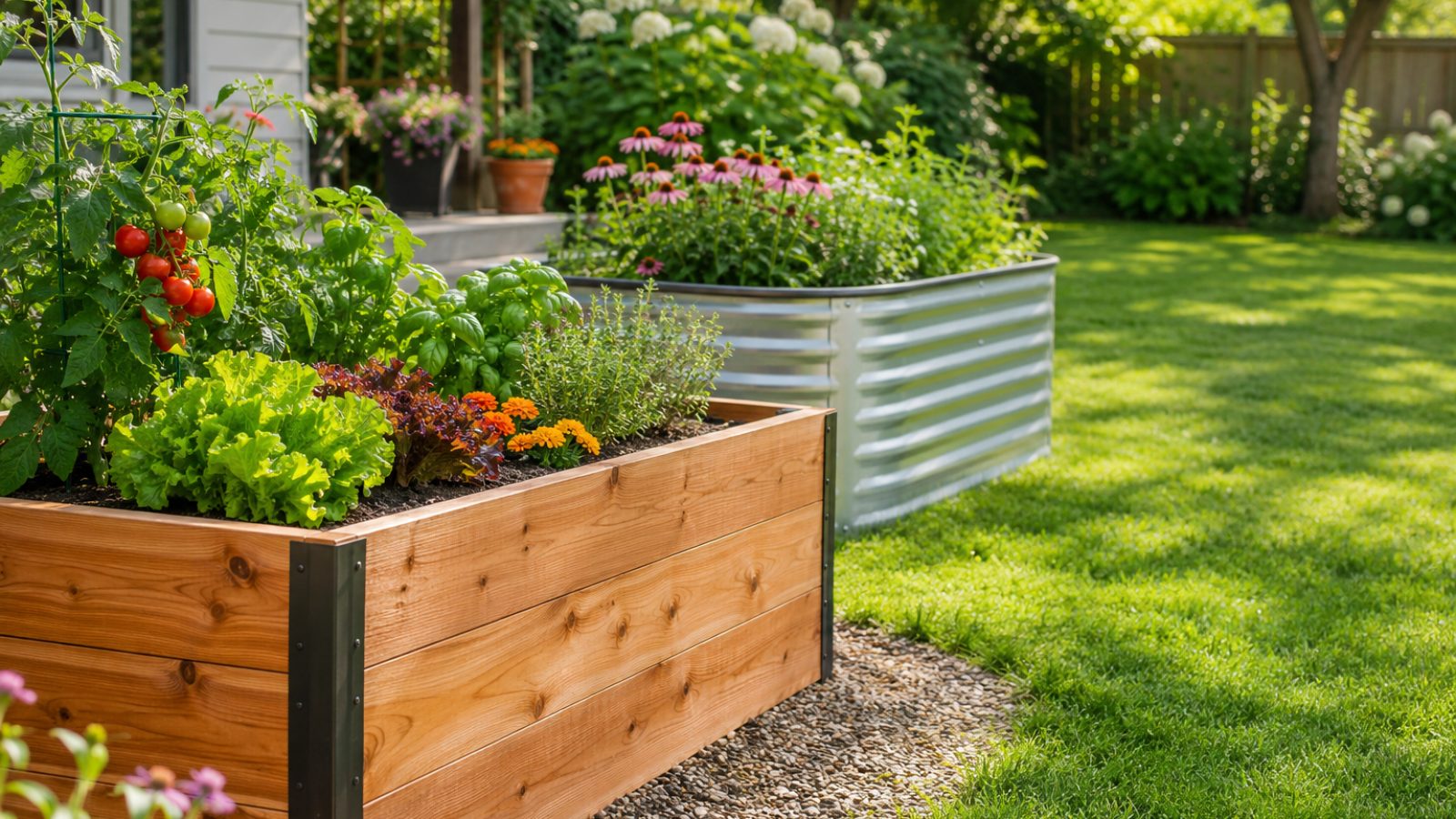
A raised garden bed is one of the easiest ways to grow vegetables and herbs, even if your native soil is heavy clay, rocky or compacted. Filling a contained bed with good soil gives roots loose, rich ground from day one, the soil warms earlier in spring, and the edges keep paths tidy and help with weeds. Taller beds also mean less bending and kneeling.
Raised beds come in galvanized or coated metal, cedar and other woods, and plastic resin, in heights from a few inches to waist-high. The right choice depends on what you want to grow, how long you want the bed to last, and how much soil you are willing to buy to fill it. We compared the most popular raised beds sold online and picked the best options for vegetable gardens, small patios and gardeners who want to avoid bending.
Our top picks
-
1
 Illustration
Best overall
Vego Garden 17-Inch Tall 9-in-1 Modular Metal Raised Bed
Vegetable gardeners who want a long-lasting, flexible bed
MaterialCoated steelHeight17 inchesConfigurationModular — several shapes from one kit -
2
 Illustration
Best cedar
Greenes Fence Original Cedar Raised Garden Bed
A natural wood look with easy assembly
MaterialCedarHeightAbout 10.5 inches per tierConfigurationTool-free joints; stackable tiers -
3
 Illustration
Best value
Land Guard Galvanized Raised Garden Bed
Large vegetable beds on a budget
MaterialGalvanized steelHeightVaries by size (commonly about 1 foot)ConfigurationFixed sizes; oval and rectangular -
4
 Illustration
Best elevated
Best Choice Products Elevated Wood Garden Bed
Gardeners who want to avoid bending
MaterialWoodHeightWaist height, on legsConfigurationFixed planter box with drainage -
5
 Illustration
Best for balconies
Keter Urban Bloomer Elevated Planter
Small balconies and patios
MaterialResin (plastic)HeightElevated on legsConfigurationSelf-watering reservoir; about 12.7-gallon soil capacity
Vego Garden 17-Inch Tall 9-in-1 Modular Metal Raised Bed
Illustration
A sturdy coated-steel bed whose panels can be arranged in several shapes and sizes.
Best for: Vegetable gardeners who want a long-lasting, flexible bed- Material
- Coated steel
- Height
- 17 inches
- Configuration
- Modular — several shapes from one kit
- Edge trim
- Rubber safety edging
What we like
- Deep enough for tomatoes and root crops
- Modular panels let you choose the shape and size
- Coated steel is built for many seasons outdoors
- Rubber edging covers the panel tops
Keep in mind
- Takes a lot of soil to fill
- Assembly involves many bolts
- Premium-priced compared with simple galvanized beds
Vego Garden helped popularize the modern metal raised bed, and its 17-inch modular kit is the one many gardeners start with. The same set of corrugated, coated-steel panels can be bolted into several shapes and sizes — long and narrow along a fence, square in the middle of a yard, or L-shaped to fit a corner — so the bed adapts to your space.
At 17 inches tall, it is deep enough for tomatoes, peppers, potatoes and carrots, and high enough to reduce bending. Rubber trim covers the top edges, and the panels come in several colors.
The trade-offs are soil and effort. A deep bed takes a lot of soil to fill, which adds significant cost, and assembly involves plenty of bolts. It also costs more than basic galvanized beds, though the modular design and coating are a big part of the appeal.
Bottom line: The most versatile, durable raised bed for serious vegetable gardens.
Greenes Fence Original Cedar Raised Garden Bed
Illustration
A cedar raised bed with tool-free sliding joints that can be stacked for extra depth.
Best for: A natural wood look with easy assembly- Material
- Cedar
- Height
- About 10.5 inches per tier
- Configuration
- Tool-free joints; stackable tiers
What we like
- Natural cedar resists rot and looks at home in a garden
- Slide-together joints need no tools
- Stack two tiers for deeper beds
- Available in many sizes
Keep in mind
- Wood weathers and will eventually need replacing
- Single tier is shallow for root crops
- Boards can warp or split over time
Greenes Fence has been making cedar garden beds for years, and its Original Cedar bed is a straightforward way to add a natural-looking bed to your yard. Boards slide into notched corner posts, so assembly takes minutes and no tools.
Cedar is naturally rot-resistant, and the beds come in many sizes. A single tier is about 10.5 inches tall, which suits lettuce, herbs, beans and most annual flowers; stacking two tiers gives enough depth for tomatoes and root crops.
Wood does have a lifespan. Cedar weathers to a silver-gray, and boards in contact with damp soil will eventually soften, warp or split, especially in wet climates. Owners often point out that thinner boards bow outward on larger beds unless they add support. Expect to replace it sooner than a metal bed.
Bottom line: An easy, attractive cedar bed for gardeners who prefer natural wood.
Land Guard Galvanized Raised Garden Bed
Illustration
A budget-friendly galvanized steel bed sold in several fixed sizes, including large oval beds.
Best for: Large vegetable beds on a budget- Material
- Galvanized steel
- Height
- Varies by size (commonly about 1 foot)
- Configuration
- Fixed sizes; oval and rectangular
What we like
- Affordable for its size
- Galvanized steel resists rot and pests
- Large sizes give plenty of growing space
- Rounded oval ends look neat
Keep in mind
- Thinner panels than premium beds
- Not modular once you pick a size
- Sharp edges until trim is fitted — wear gloves
Land Guard’s galvanized beds are a popular way to get a large metal raised bed without paying premium prices. They come in a range of fixed sizes, including long oval beds with rounded ends that look tidy in a backyard vegetable garden.
Galvanized steel will not rot like wood, and the corrugated panels add stiffness. For many gardeners, a single large bed provides enough room for a summer of tomatoes, peppers, squash and herbs.
The panels are thinner than Vego’s, so long sides can bulge slightly once filled unless properly assembled, and you cannot reconfigure the shape later. Wear gloves while assembling; raw panel edges can be sharp before the trim is in place.
Bottom line: An affordable way to get a big, durable metal bed.
Best Choice Products Elevated Wood Garden Bed
Illustration
A waist-high wooden planter on legs for herbs, greens and flowers on a patio or deck.
Best for: Gardeners who want to avoid bending- Material
- Wood
- Height
- Waist height, on legs
- Configuration
- Fixed planter box with drainage
What we like
- Waist-high growing reduces bending and kneeling
- Fits on patios and decks
- Keeps plants away from rabbits and some pests
- Budget-friendly
Keep in mind
- Shallow soil limits crop choices
- Dries out quickly in summer
- Wood needs care to last several seasons
For gardeners with back or knee trouble, or anyone gardening on a patio, an elevated planter brings the garden up to waist height. Best Choice Products’ wooden elevated bed is a popular, budget-friendly version: a planter box on legs with drainage, sized for a few herbs, salad greens, strawberries or flowers.
Raising plants off the ground also keeps them away from rabbits and makes harvesting easy. The box is light enough to place on a deck or patio, though a full planter is heavy, so set it in its final spot before filling.
Elevated planters have shallower soil than ground-level beds, so stick to shallow-rooted crops and expect to water often in hot weather. The wood will weather; a liner and occasional sealing with a product rated for planters can help it last longer.
Bottom line: An affordable, back-friendly planter for herbs and greens on a patio.
Keter Urban Bloomer Elevated Planter
Illustration
A compact resin planter on legs with a built-in water reservoir and drainage plug.
Best for: Small balconies and patios- Material
- Resin (plastic)
- Height
- Elevated on legs
- Configuration
- Self-watering reservoir; about 12.7-gallon soil capacity
What we like
- Light and easy to move
- Resin will not rot or rust
- Reservoir reduces watering frequency
- Compact footprint for balconies
Keep in mind
- Small soil volume
- Plastic look is less natural than wood or metal
- Suited only to herbs, greens and flowers
Keter’s Urban Bloomer is designed for small spaces such as balconies, small patios and decks. It is a compact resin planter on legs, so it raises plants to a comfortable working height without the weight of a wooden or metal elevated bed.
Its standout feature is a water reservoir in the base: excess water collects below the soil, where roots can draw on it, reducing how often you need to water in summer. A drainage plug lets you empty it, and resin will not rot, rust or need sealing.
The small soil capacity limits what you can grow — think herbs, salad greens, strawberries and flowers rather than tomatoes or squash. The plastic look is also more utilitarian than cedar or metal. Check building rules on weight and water drainage before using any planter on a balcony.
Bottom line: A light, low-maintenance planter for herbs and greens in tight spaces.
Side-by-side comparison
| Product | Material | Height | Configuration | Edge trim | Score |
|---|---|---|---|---|---|
| Vego Garden 17-Inch Tall 9-in-1 Modular Metal Raised BedBest overall | Coated steel | 17 inches | Modular — several shapes from one kit | Rubber safety edging | 9.2 |
| Greenes Fence Original Cedar Raised Garden BedBest cedar | Cedar | About 10.5 inches per tier | Tool-free joints; stackable tiers | — | 8.7 |
| Land Guard Galvanized Raised Garden BedBest value | Galvanized steel | Varies by size (commonly about 1 foot) | Fixed sizes; oval and rectangular | — | 8.5 |
| Best Choice Products Elevated Wood Garden BedBest elevated | Wood | Waist height, on legs | Fixed planter box with drainage | — | 8.2 |
| Keter Urban Bloomer Elevated PlanterBest for balconies | Resin (plastic) | Elevated on legs | Self-watering reservoir; about 12.7-gallon soil capacity | — | 7.9 |
Specifications are from manufacturer listings at the time of writing and can change between production runs.
How tall and deep should it be?
- 6–12 inches: lettuce, herbs, radishes and other shallow-rooted crops, especially over decent native soil.
- 12–18 inches: tomatoes, peppers, carrots and most vegetables. This is the most versatile range.
- 24 inches and up, or elevated on legs: easier on backs and knees and handy for wheelchair users, but uses much more soil, or in the case of elevated planters, offers a shallower growing depth.
Choosing a material
Coated or galvanized metal beds are long-lasting and look modern; they can warm up in strong sun, which many gardeners like in cooler climates. Cedar is naturally rot-resistant and blends into a garden, but eventually weathers and will need replacing after many seasons. Resin planters are light, easy to clean and suit patios and balconies. If you have questions about any material for growing food, check the manufacturer’s information on coatings and treatments.
Size and layout
Keep beds no wider than about 4 feet if you can reach from both sides, or about 2–3 feet if one side is against a fence, so you never need to step on the soil. Leave paths of at least 18–24 inches between beds for a wheelbarrow or kneeling. Most vegetables want six or more hours of direct sun a day, so pick the sunniest spot you have.
Filling a raised bed
Soil is often the biggest expense. Multiply length × width × depth in feet to get cubic feet — a 4 × 8-foot bed filled 1 foot deep needs about 32 cubic feet. A mix of quality topsoil and compost, or a bagged raised-bed blend, works well. In very deep beds, some gardeners fill the bottom with logs, branches or leaves to reduce the amount of soil needed. Top up with compost each year as the soil settles.
Setup tips
- Level the ground first so water drains evenly.
- Lay hardware cloth under the bed if gophers or moles are a problem.
- Add drip irrigation or a soaker hose — raised beds dry out faster than in-ground gardens, and a simple hose timer keeps watering consistent while you are away.
- Wear gloves during assembly; metal panel edges can be sharp until the trim is fitted.
Frequently asked questions
How much soil do I need to fill a raised bed?
Multiply length × width × depth in feet. A 4 × 8-foot bed that is 1 foot deep holds about 32 cubic feet, or a little over one cubic yard. Buy slightly more, as soil settles after watering.
Do I need to line the bottom of a raised bed?
Usually not. An open bottom lets roots reach the soil below and helps drainage. Cardboard can smother grass underneath, and hardware cloth keeps out burrowing animals. Elevated planters have their own built-in bottoms.
Do metal raised beds get too hot?
The metal walls warm in direct sun, but a well-filled bed holds a large mass of soil that buffers temperature. In very hot climates, lighter colors, mulch and consistent watering help.
How long do raised beds last?
Coated and galvanized metal beds can last many years. Cedar commonly lasts several to many seasons depending on climate and thickness. Resin planters resist rot but can become brittle after long sun exposure.
What should I plant first in a new raised bed?
Easy, fast crops such as lettuce, radishes, bush beans, herbs and cherry tomatoes are good starters. Check your local planting calendar for the right timing in your area.
How we picked
We compared manufacturer specifications for material and coatings, height and soil depth, size options, assembly method, drainage and expected durability for popular raised garden beds consistently available online, and considered how each suits different gardens and gardeners. Our picks and scores are based on this research — we have not tested these products hands-on. Brands cannot pay to be included. Read our full method.