






















The best outdoor doormats for heavy foot traffic
Rubber-backed, polypropylene and coir doormats compared — which scrape best, which hold water, which survive snow shovels and which simply look good on the porch.
As an Amazon Associate I earn from qualifying purchases. When you buy through links on this page, we may earn a commission at no extra cost to you. Learn more
A good outdoor doormat catches most of the grit, mud and snowmelt that would otherwise end up on your floors. That makes it one of the most budget-friendly ways to protect hardwood and carpet — but only if the mat actually scrapes, holds the debris and stays put. Many decorative mats look great in photos and then flatten, shed or slide around within a season.
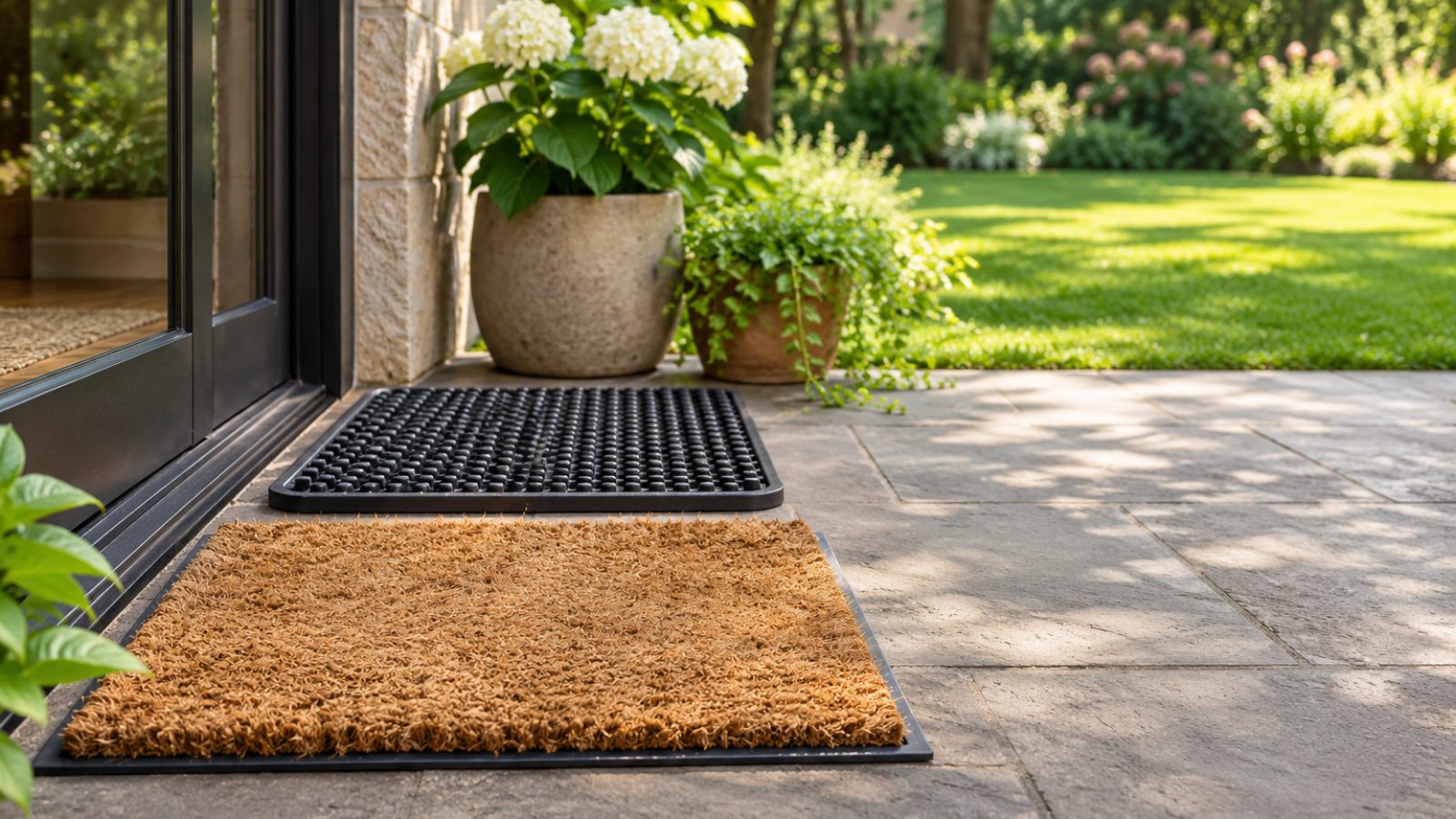
Outdoor mats fall into three groups. Rubber scraper mats are the toughest and handle snow and mud best. Polypropylene mats with rubber backing, such as WaterHog, both scrape and soak up water. Natural coir mats look the most traditional and are great at brushing off dry dirt, but they shed and wear faster, especially in the rain. We compared well-known mats from each group on scraping power, water handling, durability and how easy they are to clean, so you can match a mat to your entry and climate.
Our top picks
-
1
 Illustration
Best overall
WaterHog Classic Indoor-Outdoor Mat
Busy entries in wet and snowy climates
SurfacePolypropylene fiberBackingRubber with raised borderUseIndoor and outdoor -
2
 Illustration
Best rubber scraper
Gorilla Grip Heavy-Duty Rubber Door Mat
Uncovered steps and rough conditions
SurfaceTextured scraper surfaceBackingHeavy rubberUseOutdoor and indoor -
3
 Illustration
Best decorative coir
Calloway Mills Printed Coir Doormat
Covered front porches where looks matter
SurfaceNatural coirBackingVinylUseCovered outdoor entries -
4
 Illustration
Best value coir
DII Natural Coir Doormat
Affordable seasonal swaps
SurfaceNatural coirBackingVinyl (PVC)UseCovered outdoor entries
WaterHog Classic Indoor-Outdoor Mat
Illustration
A commercial-grade polypropylene mat with rubber backing and a raised border that scrapes and traps water.
Best for: Busy entries in wet and snowy climates- Surface
- Polypropylene fiber
- Backing
- Rubber with raised border
- Use
- Indoor and outdoor
- Made in
- USA
What we like
- Scrapes and absorbs in one mat
- Raised border helps keep water on the mat
- Hoses clean and dries quickly
- Many sizes and colors
- Commercial-grade durability
Keep in mind
- Premium-priced for a doormat
- Plain, commercial look
WaterHog mats from M+A Matting are the kind you see in the entrances of offices and stores, and the Classic is the version most homeowners buy. It pairs a polypropylene fiber surface that scrapes and traps dirt with a rubber backing and a raised border that helps hold water on the mat instead of letting it spill onto the floor.
That combination makes it unusually versatile: it works as an outdoor mat on a covered porch, as an indoor mat just inside the door, or as both in a mudroom. It hoses clean, dries quickly and comes in many sizes, from standard door mats to large runners.
The trade-offs are price and looks. It costs more than a typical doormat and has a practical, commercial appearance. If you want one mat that genuinely keeps mud and snowmelt off your floors for years, it’s the one to buy.
Bottom line: The most effective all-round doormat for mud, rain and snow.
Gorilla Grip Heavy-Duty Rubber Door Mat
Illustration
A heavy rubber-backed scraper mat built to stay flat and take mud, snow and grit.
Best for: Uncovered steps and rough conditions- Surface
- Textured scraper surface
- Backing
- Heavy rubber
- Use
- Outdoor and indoor
- Profile
- Low profile
What we like
- Heavy rubber stays put
- Low profile clears most doors
- Hoses clean
- Handles rain and snow without breaking down
- Affordable
Keep in mind
- Less absorbent than polypropylene mats
- Utilitarian appearance
Gorilla Grip built its name on mats and liners that stay where you put them, and its heavy-duty rubber doormat follows the same idea. A weighty rubber base keeps it flat and in place on concrete and wood steps, while the textured surface scrapes mud, grit and snow off boots.
Because it’s mostly rubber, it shrugs off rain and snow, doesn’t rot and can be hosed clean in seconds. The low profile means it’s unlikely to catch the bottom of a door.
It’s a scraper first, so it won’t soak up water the way WaterHog-style fiber mats do — pair it with an absorbent mat inside for the best results. If you need a tough, affordable mat for an exposed entrance, it’s a strong choice.
Bottom line: A tough, budget-friendly scraper mat for exposed entrances.
Calloway Mills Printed Coir Doormat
Illustration
Natural coir doormats with vinyl backing and a wide range of printed and seasonal designs.
Best for: Covered front porches where looks matter- Surface
- Natural coir
- Backing
- Vinyl
- Use
- Covered outdoor entries
- Designs
- Many printed and seasonal
What we like
- Classic natural-fiber look
- Stiff bristles brush off dry dirt well
- Huge range of designs
- Backing helps it stay in place
Keep in mind
- Sheds, especially when new
- Holds water and wears faster in the rain
- Prints fade with sun exposure
Calloway Mills is one of the better-known makers of decorative coir doormats, with a large catalog of printed designs — monograms, seasonal themes, welcome messages and simple borders. The stiff coir bristles are good at brushing dry dirt and grass off shoes, and a vinyl backing helps keep the mat in place.
Coir is at its best under a covered porch. Owners often point out that the mats shed fibers at first, and constant rain makes coir soggy and shortens its life. The printed designs can also fade in strong direct sun.
Treat it as the welcoming face of the front door rather than a mud-stopper for the back entrance, and it does that job well. Shake it out regularly rather than hosing it.
Bottom line: A good-looking coir mat for a covered front porch.
DII Natural Coir Doormat
Illustration
Budget-friendly coir mats with a non-slip backing, sold in plain and printed styles.
Best for: Affordable seasonal swaps- Surface
- Natural coir
- Backing
- Vinyl (PVC)
- Use
- Covered outdoor entries
What we like
- Affordable enough to swap with the seasons
- Plain and printed styles
- Brushes off dry dirt
- Non-slip backing
Keep in mind
- Sheds and flattens with heavy use
- Not suited to wet, uncovered entrances
DII (Design Imports) sells a broad range of home textiles, and its coir doormats are a budget-friendly way to get the natural-fiber look. They come in plain natural coir and many printed designs, with a vinyl backing that helps them stay put on the porch.
The low cost makes them practical for swapping with the seasons or for a secondary door. Like all coir, the bristles scrape dry dirt and grass effectively but shed fibers and flatten over time, and they don’t like being soaked.
Keep one under cover, shake it out often and expect to replace it more often than a rubber or polypropylene mat. For an inexpensive, classic-looking front-door mat, it covers the basics.
Bottom line: An affordable classic coir mat for covered entries and seasonal swaps.
Side-by-side comparison
| Product | Surface | Backing | Use | Made in | Score |
|---|---|---|---|---|---|
| WaterHog Classic Indoor-Outdoor MatBest overall | Polypropylene fiber | Rubber with raised border | Indoor and outdoor | USA | 9.3 |
| Gorilla Grip Heavy-Duty Rubber Door MatBest rubber scraper | Textured scraper surface | Heavy rubber | Outdoor and indoor | — | 8.8 |
| Calloway Mills Printed Coir DoormatBest decorative coir | Natural coir | Vinyl | Covered outdoor entries | — | 8.3 |
| DII Natural Coir DoormatBest value coir | Natural coir | Vinyl (PVC) | Covered outdoor entries | — | 8.0 |
Specifications are from manufacturer listings at the time of writing and can change between production runs.
Scrape first, then absorb
The best entry setup uses two mats: a tough scraper mat outside to knock off mud, gravel and snow, and an absorbent mat just inside to catch moisture. If you only have room for one outdoor mat, a polypropylene mat with a rubber border is the best compromise, because it scrapes reasonably well and holds water rather than spreading it.
Materials compared
- Rubber is nearly indestructible, doesn’t absorb water and can be hosed clean. Open or ridged designs let snow and mud fall through. It looks utilitarian.
- Polypropylene on rubber backing dries quickly, scrapes and traps dirt in its fibers, and resists fading. A raised rubber border can hold water so it doesn’t spill onto the floor.
- Coir (coconut husk fiber) has stiff bristles that are excellent at brushing off dry dirt. It sheds, holds water and breaks down faster in constant rain, so it’s best under a covered porch.
Size and placement
A mat should be at least as wide as the door — ideally a little wider — so both feet land on it. Standard mats are around 18 by 30 inches; 2-by-3-foot and 3-by-5-foot sizes cover double doors and busy entrances better. Low-profile mats (about half an inch or less) are less likely to catch the bottom of a door.
Avoiding slips and trips
A mat that slides or curls is a trip hazard. Look for a heavy rubber backing or a non-slip underside, keep edges flat, and replace mats that have started to curl. In icy climates, choose open rubber mats that let meltwater drain rather than refreeze on a solid surface. No mat removes the need to treat icy steps.
Cleaning and replacing
Shake or beat the mat weekly. Rubber and polypropylene mats can be hosed off and dried in the sun; coir mats should be shaken and brushed, not soaked. In winter, sweep snow off rather than scraping a metal shovel across the surface, and keep ice melt off coir, where it can stay trapped in the fibers. Replace a mat when its fibers are crushed flat — at that point it’s just decoration.
Frequently asked questions
What is the best material for an outdoor doormat?
For uncovered entries and snowy climates, rubber or polypropylene with rubber backing lasts longest. Coir looks classic and scrapes dry dirt well but is best kept under cover.
Why does my coir doormat shed?
Coir fibers naturally loosen and break off, especially when new and when wet. Shedding slows over time; keeping the mat dry and shaking it outdoors helps.
How do I clean an outdoor doormat?
Shake it out often. Rubber and polypropylene mats can be hosed down with mild soap and air-dried. Brush coir mats instead of soaking them.
How do I stop my doormat from sliding?
Choose a mat with a heavy rubber backing or add a non-slip pad underneath. Replace mats with curled edges, which are a trip hazard.
Can a doormat stay outside in snow?
Rubber and polypropylene mats handle snow well. Brush snow off rather than shoveling hard across a coir mat, which tears fibers out.
How we picked
We compared materials, backing, sizes, water handling, cleaning instructions and patterns in owner feedback for outdoor doormats widely sold online in the US. Our picks and scores are based on this research — we have not tested these products hands-on. Brands cannot pay to be included. Read our full method.