






















The best LED road flares for roadside emergencies
Three reusable LED flares compared — a crush-resistant beacon, linked sequential flares and a Coast Guard-approved distress light — plus placement and battery tips.
As an Amazon Associate I earn from qualifying purchases. When you buy through links on this page, we may earn a commission at no extra cost to you. Learn more
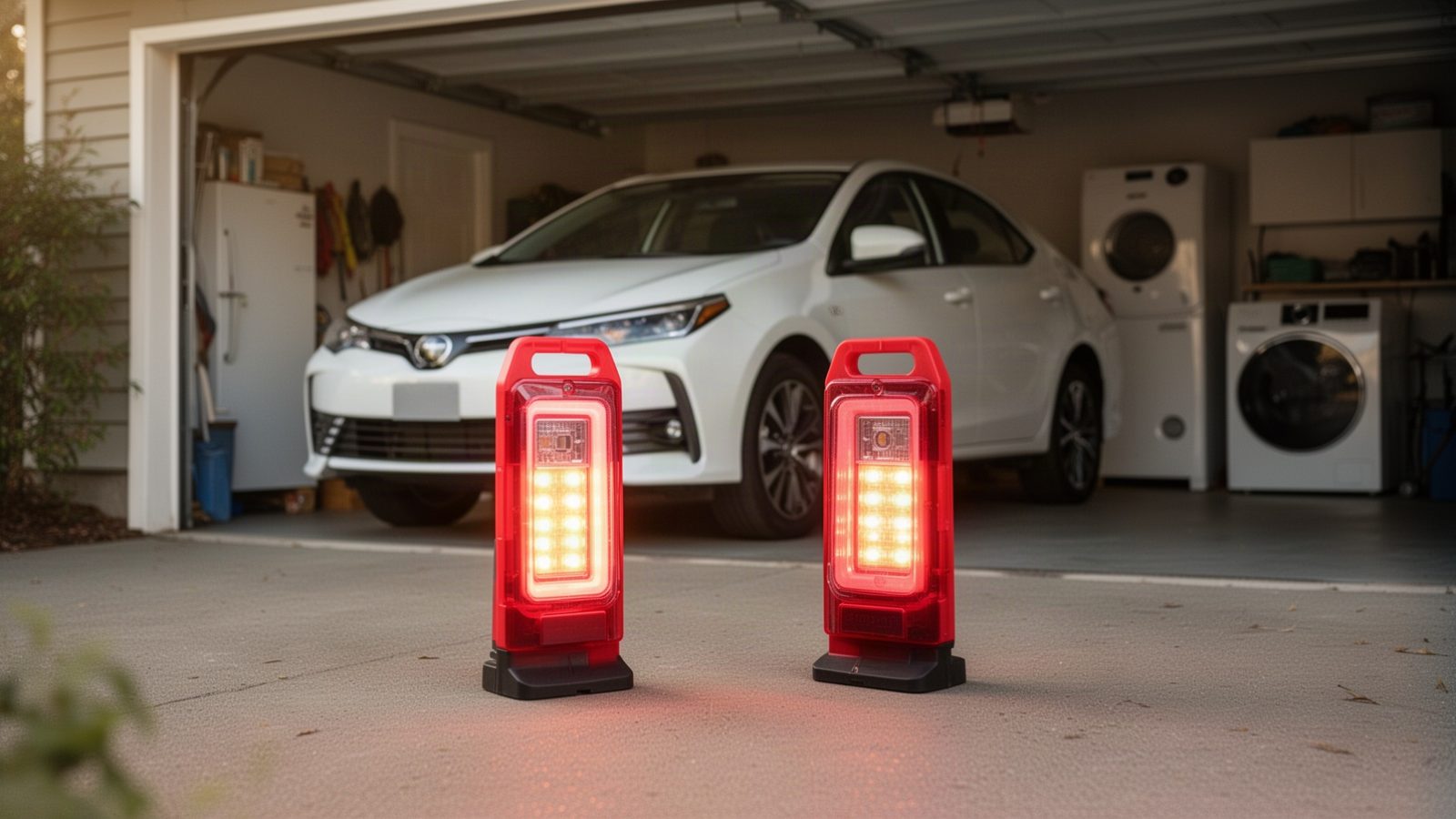
A breakdown or flat tire on a dark road is stressful enough without wondering whether approaching drivers can see you. LED road flares are battery-powered warning lights you can set behind a disabled vehicle to give traffic earlier notice. Unlike traditional burning flares, they have no flame, can be switched off and reused, and don’t expire after a few years in the trunk.
The products in this category vary more than you might expect. Some are rugged puck-style beacons built to survive being run over, some link together and flash in sequence to lead traffic around a stopped car, and some are marine distress lights that double as roadside beacons. Battery type matters too, because a flare with dead batteries is useless. We compared LED flares from established safety-lighting makers on light pattern, power source, durability claims and what comes in the kit, and picked the best option for different drivers.
Our top picks
-
1
 Illustration
Best overall
FlareAlert LED Beacon Road Flare
Everyday drivers who want a rugged, simple beacon
Light patternFlashing and steady modesPower source4 AA batteriesBest useEveryday roadside kits -
2
 Illustration
Best sequential flares
Pi-Lit Smart Sequential LED Road Flares
Drivers who want to guide traffic around a stopped vehicle
Light patternLinked sequential flashingPower sourceRechargeable or alkaline versionsBest useGuiding traffic around a stopped vehicle -
3
 Illustration
Best for boat and car
Sirius Signal SOS Electronic Distress Light Kit
Boat owners who also want a roadside light
Light patternSOS flashingPower sourceReplaceable batteriesBest useBoats and roadside
FlareAlert LED Beacon Road Flare
Illustration
A crush-resistant LED beacon powered by AA batteries, with flashing and steady modes.
Best for: Everyday drivers who want a rugged, simple beacon- Light pattern
- Flashing and steady modes
- Power source
- 4 AA batteries
- Best use
- Everyday roadside kits
- Lens colors
- Red or yellow
- Crush rating
- Up to 20,000 lb (maker claim)
What we like
- Maker rates it crush-resistant up to 20,000 lb
- Runs on common AA batteries that are easy to replace
- Flashing and steady modes
- Sold individually and in kits
Keep in mind
- Batteries need checking in storage
- No linked sequential mode
FlareAlert makes LED warning lights for roadside and emergency use, and its Beacon is a straightforward, tough design. It runs on four AA batteries, offers flashing and steady modes, and comes with red or yellow lenses. FlareAlert rates the Beacon as crush-resistant up to 20,000 pounds, which matters for a light that sits in a traffic lane and could be driven over.
For most drivers, that combination of simplicity and durability is exactly what a trunk emergency kit needs: switch it on, set it down and move away from traffic.
The main upkeep is batteries. Check them every few months, consider lithium AAs for cold climates and long storage, and keep spares in the kit. Place the lights only where you can do so without walking into traffic.
Bottom line: A rugged, simple LED beacon that suits almost any vehicle emergency kit.
Pi-Lit Smart Sequential LED Road Flares
Illustration
LED flares that link to each other and flash in sequence, in rechargeable or alkaline versions.
Best for: Drivers who want to guide traffic around a stopped vehicle- Light pattern
- Linked sequential flashing
- Power source
- Rechargeable or alkaline versions
- Best use
- Guiding traffic around a stopped vehicle
What we like
- Flares link and flash in sequence to show traffic which way to move
- Used by emergency responders
- Rechargeable or alkaline versions
- Reusable with no flame
Keep in mind
- Premium-priced compared with basic beacons
- Rechargeable versions need regular charging
Pi-Lit is known for sequential LED flares used by first responders. Its Smart Sequential Road Flares link to one another and flash in order, creating a moving line of light that shows approaching drivers which way to steer around a stopped vehicle or incident.
That sequential pattern is the reason to choose them. A row of synchronized lights communicates direction more clearly than several independent flashing beacons, which helps on fast roads and at night.
They cost more than basic beacons, and you need to choose between rechargeable and alkaline versions — rechargeables must be kept charged, while alkaline versions need fresh batteries. As with any flare, only place them if you can do so without stepping into traffic.
Bottom line: The pick for drivers who want responder-style sequential lighting in their kit.
Sirius Signal SOS Electronic Distress Light Kit
Illustration
An electronic SOS distress light approved by the US Coast Guard for carriage, sold in kits with a distress flag.
Best for: Boat owners who also want a roadside light- Light pattern
- SOS flashing
- Power source
- Replaceable batteries
- Best use
- Boats and roadside
- Approval
- USCG approved for carriage (maker)
What we like
- USCG approved for carriage as a night distress signal, per the maker
- Kits include a daytime distress flag, and some a whistle
- Reusable, flame-free alternative to pyrotechnic flares
- Useful on the water and at the roadside
Keep in mind
- Designed first as a marine distress light
- Premium-priced for a single light
Sirius Signal is best known on the water. Its electronic SOS distress lights are approved by the US Coast Guard for carriage, and the company says they meet the Coast Guard’s night carriage requirement for visual distress signals. Kits pair the light with a daytime distress flag, and some add a whistle or mounts.
For people who own a boat and a car, that versatility is appealing: the same flame-free, reusable light can sit in the boat’s safety kit or mark a stopped vehicle at the roadside.
It is primarily a marine product, so it lacks features like linked sequencing, and a single light costs more than a basic beacon. Boat owners should check current Coast Guard requirements for their vessel and the specific kit’s approval details.
Bottom line: A flame-free distress light that serves double duty for boaters and drivers.
Side-by-side comparison
| Product | Light pattern | Power source | Best use | Lens colors | Score |
|---|---|---|---|---|---|
| FlareAlert LED Beacon Road FlareBest overall | Flashing and steady modes | 4 AA batteries | Everyday roadside kits | Red or yellow | 8.9 |
| Pi-Lit Smart Sequential LED Road FlaresBest sequential flares | Linked sequential flashing | Rechargeable or alkaline versions | Guiding traffic around a stopped vehicle | — | 8.7 |
| Sirius Signal SOS Electronic Distress Light KitBest for boat and car | SOS flashing | Replaceable batteries | Boats and roadside | — | 8.4 |
Specifications are from manufacturer listings at the time of writing and can change between production runs.
Why choose LED flares?
- No flame: useful near leaking fuel, dry grass or in enclosed areas where burning flares are a concern.
- Reusable: switch them off and put them back in the case when help arrives.
- Long shelf life: no expiration date, as long as you keep the batteries fresh.
- Multiple modes: many offer flashing and steady modes, and some can link into a sequence.
Traditional flares still have their place for first responders, but for most drivers a few LED flares are easier to store and use.
What to look for
- Visibility: bright LEDs, a clear flash pattern and a lens visible from multiple directions.
- Power source: replaceable batteries are easy to swap but must be checked; rechargeable versions need regular charging. Lithium AA batteries hold up better in cold weather and long storage than alkaline.
- Durability: look for crush-resistant and weather-resistant designs, since flares can be run over or left in rain.
- Placement features: magnetic bases or stands help keep lights where you put them.
- Storage: a case that keeps the set together and fits in your trunk or under a seat.
Placement basics
Place warning lights behind your vehicle so approaching drivers have time to react — farther back on highways, before curves and hills, and wherever visibility is poor. Only place flares if you can do so without walking into traffic; on a busy highway, it may be better to stay in the vehicle with your seat belt on or move well away from traffic and call for help. Follow your state’s rules and any instructions from law enforcement.
Commercial drivers have specific federal requirements for warning devices. Check those rules before relying on LED flares in place of the required devices.
Everyday roadside habits
Turn on your hazard lights, pull as far off the road as you can, and keep a phone charger and reflective vest in the car. Warning lights help, but they don’t guarantee that other drivers will see or avoid you.
Battery care and storage
Check flares every few months and test them before long trips. For battery-powered models, remove batteries during long storage if the maker recommends it to avoid leaks, and keep spares in the case. Store the kit somewhere you can reach quickly, not under a pile of cargo.
Boat owners
Some LED distress lights are approved by the US Coast Guard for carriage as night visual distress signals. If you plan to use one on a boat, check current Coast Guard requirements for your vessel and the product’s approval details.
Frequently asked questions
Are LED road flares as visible as traditional flares?
Good LED flares are designed to be bright and visible at night, but visibility varies by product, weather and placement. Using several lights, spaced out behind the vehicle, and switching on your hazard lights gives approaching drivers the most warning.
How many LED flares should I carry?
Many drivers carry three or more, enough to mark a stopped vehicle from a distance and around a curve. Kits often come in sets for this reason.
Are rechargeable or battery-powered flares better?
Replaceable batteries are simple and easy to swap on the roadside, but they can drain or leak in storage. Rechargeable flares avoid buying batteries, but you need to keep them charged. Either way, test them regularly.
Can commercial drivers use LED flares instead of warning triangles?
Commercial vehicles have specific federal requirements for warning devices. Check current FMCSA rules and your company’s policy before relying on LED flares in place of required devices.
Can I use LED flares near spilled fuel?
LED flares have no open flame, which is one reason they are often preferred where fuel may have leaked. Even so, keep your distance from any spill, don’t smoke, and follow instructions from emergency responders.
How we picked
We compared light patterns and modes, power sources, durability and crush-resistance claims, kit contents and approvals for LED flares and beacons from established safety-lighting manufacturers, using manufacturer information. Our picks and scores are based on this research — we have not tested these products hands-on. Brands cannot pay to be included. Read our full method.