






















The best hose-end lawn sprinklers
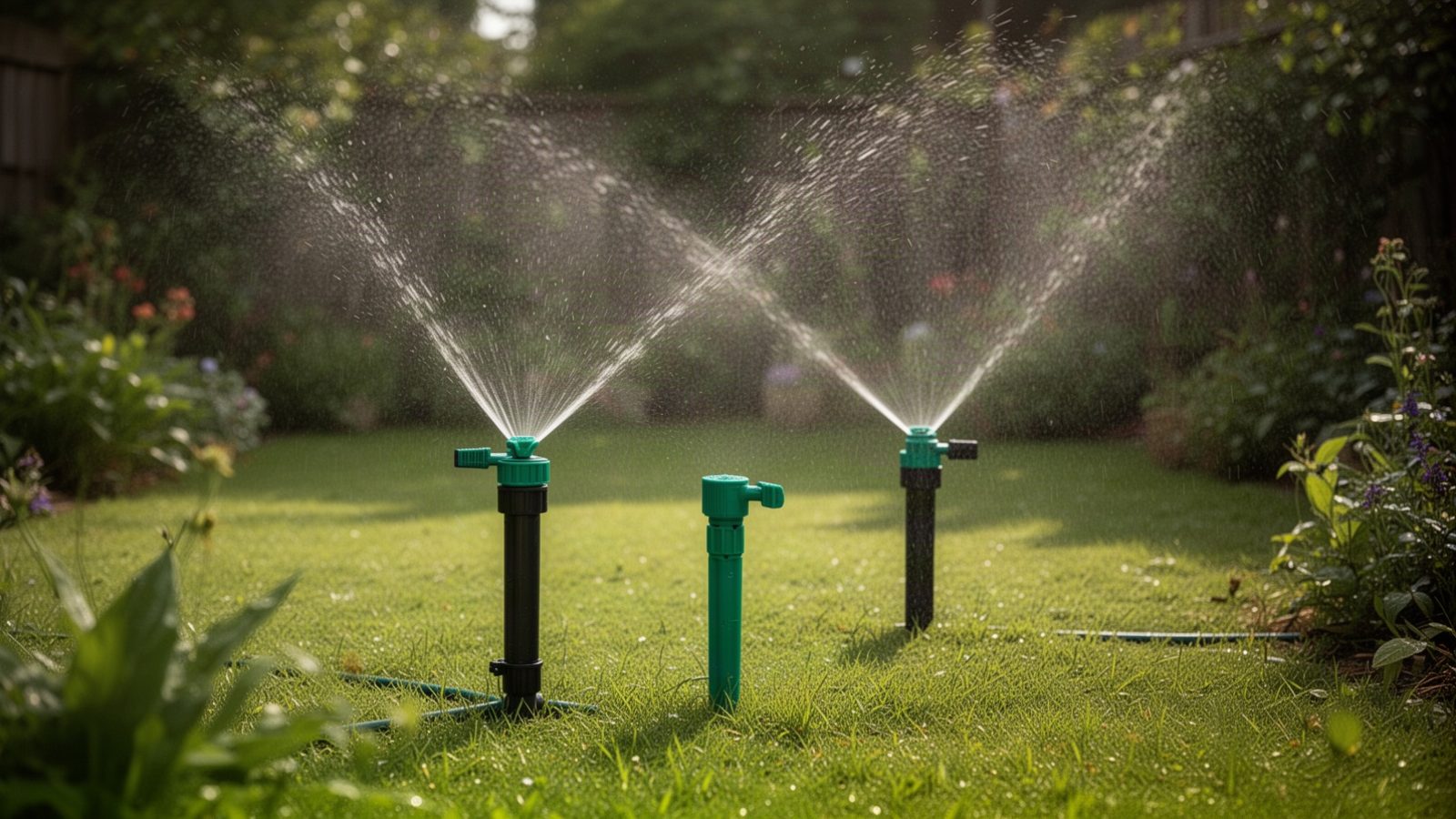
Four hose-end lawn sprinklers compared — an adjustable oscillating sprinkler, two impact sprinklers for big circles and a traveling sprinkler for long lawns.
As an Amazon Associate I earn from qualifying purchases. When you buy through links on this page, we may earn a commission at no extra cost to you. Learn more
A hose-end sprinkler is the low-tech way to water a lawn, and when it is matched to the shape of your yard, it works remarkably well. The wrong one wastes water on the driveway, leaves dry corners and puddles near the head, and has you dragging the hose around every half hour.
The key decision is the spray pattern. Oscillating sprinklers paint rectangles, impact sprinklers throw water in big circles or wedges, and traveling sprinklers crawl along a hose to water long strips on their own. After that, it comes down to how well you can adjust the coverage, how sturdy the build is and how much water pressure you have to work with. We compared long-running sprinklers from established watering brands and picked the best for different lawn shapes and sizes, plus the watering habits that make any sprinkler more effective.
Our top picks
-
1
 Illustration
Best overall
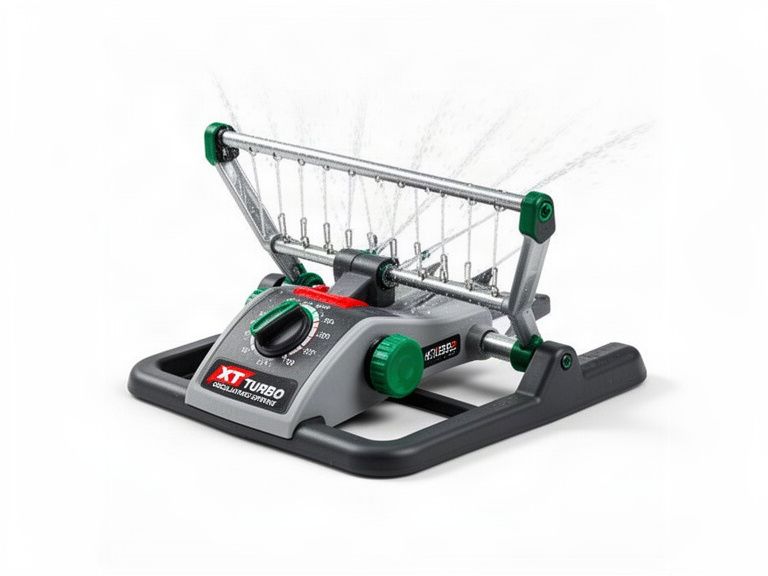
Melnor XT Turbo Oscillating Sprinkler
Rectangular front and back lawns
TypeOscillatingPatternRectangleAdjustabilityRange and width controls -
2
 Illustration
Best impact sprinkler
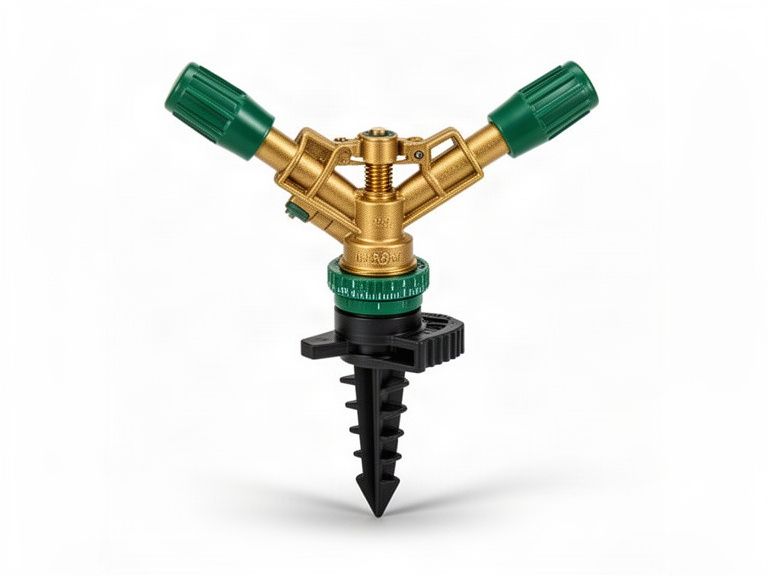
Rain Bird Maxi-Paw Impact Sprinkler (2045A)
Large or irregular lawns and windy spots
TypeImpactPatternFull or partial circleAdjustabilityAdjustable arc and distance -
3
 Illustration
Best metal build
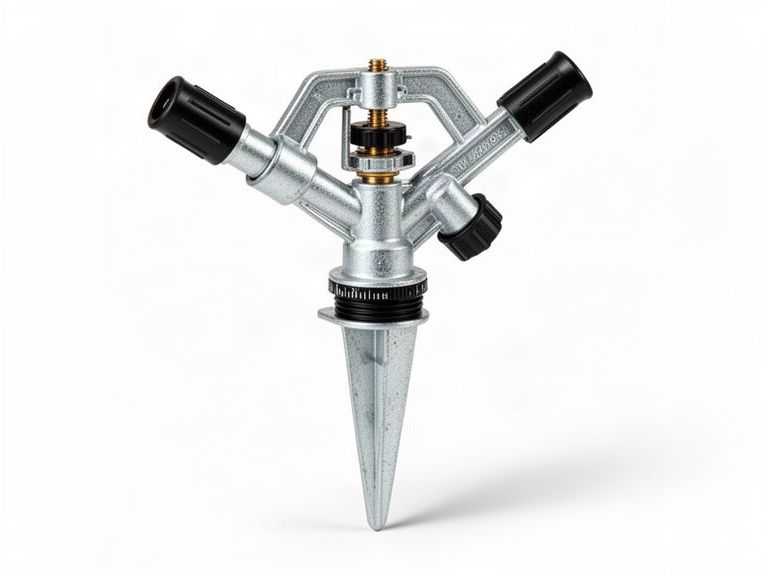
Orbit Zinc Impact Sprinkler on Spike
Gardeners who want a sprinkler that lasts
TypeImpactPatternFull or partial circleAdjustabilityAdjustable arc and distance -
4
 Illustration
Best for long lawns
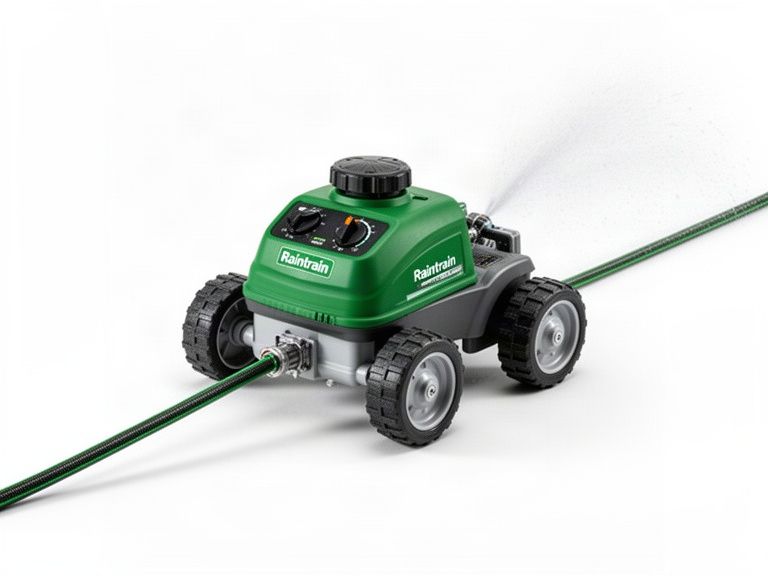
Nelson Raintrain Traveling Sprinkler
Large or narrow lawns you don’t want to keep re-watering
TypeTravelingPatternStrip along the hose pathAdjustabilitySpeed settings
Melnor XT Turbo Oscillating Sprinkler
Illustration
An oscillating sprinkler with range and width controls that let you fit the rectangle to your lawn.
Best for: Rectangular front and back lawns- Type
- Oscillating
- Pattern
- Rectangle
- Adjustability
- Range and width controls
- Base
- Sled base that sits on the lawn
What we like
- Width and range controls cut overspray onto paths
- Even, gentle rectangular coverage
- From a long-running watering brand
- Easy to move between zones
Keep in mind
- Oscillating heads are more sensitive to grit than impact heads
- Wind distorts the fine spray
- Coverage shrinks with low water pressure
Melnor has been making lawn sprinklers for decades, and its XT oscillating line adds the adjustment that cheap oscillators lack. Range and width controls let you trim the rectangle to fit your lawn, so you can water a narrow side yard or a front lawn without soaking the sidewalk and driveway.
Oscillating sprinklers produce a relatively gentle, even pattern, which suits established lawns and newly seeded areas alike. The sled base sits flat on the grass and is easy to drag to the next zone.
The usual oscillator caveats apply. Fine jets can clog if your water carries grit, so flush the hose first and clean the nozzles occasionally; wind can blow the spray off course; and coverage depends on water pressure.
Bottom line: The best choice for most rectangular lawns.
Rain Bird Maxi-Paw Impact Sprinkler (2045A)
Illustration
A classic impact sprinkler from a major irrigation brand, with adjustable arc and distance on a step spike.
Best for: Large or irregular lawns and windy spots- Type
- Impact
- Pattern
- Full or partial circle
- Adjustability
- Adjustable arc and distance
- Base
- Step spike
What we like
- Throws water a long way, even in some wind
- Adjustable from a narrow wedge to a full circle
- From a major irrigation manufacturer
- Works well at moderate water pressure
Keep in mind
- Plastic body is less durable than metal impact heads
- The ticking sound isn’t for everyone
- Circles leave dry corners on square lawns
Rain Bird is one of the biggest names in irrigation, and the Maxi-Paw is its long-running hose-end impact sprinkler. Like all impact designs, it fires a strong stream that a spring-loaded arm breaks up as it ticks around, throwing water a long way in a full circle or any partial arc you set.
That long, heavy stream is less affected by wind than fine oscillating jets, and it covers big, open or oddly shaped areas well. The step spike pushes into the lawn with your foot so it stays put, and the distance can be shortened with the diffuser adjustment.
The body is mostly plastic, so it is lighter and less rugged than all-metal heads. Circular patterns also leave corners dry on square lawns unless you overlap positions.
Bottom line: A dependable impact sprinkler for large or irregular lawns.
Orbit Zinc Impact Sprinkler on Spike
Illustration
A traditional metal-headed impact sprinkler on a spike, built to withstand years of being dragged around the yard.
Best for: Gardeners who want a sprinkler that lasts- Type
- Impact
- Pattern
- Full or partial circle
- Adjustability
- Adjustable arc and distance
- Base
- Spike
What we like
- Zinc metal head is more durable than plastic
- Classic, easily adjusted impact design
- Covers large areas
- Affordable for a metal sprinkler
Keep in mind
- Spike can tip in soft or sandy soil
- Heavier than plastic models
- Circular pattern needs overlap on square lawns
Orbit’s zinc impact sprinkler is the old-school metal design that many people remember from their parents’ yard. The head is cast from zinc rather than plastic, which makes it noticeably more durable if it gets kicked, dropped or run over, and it uses the same simple, serviceable impact mechanism that has worked for generations.
You set the arc with friction collars and adjust the distance with the diffuser, so you can water anything from a narrow wedge along a fence to a full circle in the middle of the lawn.
The spike base is simple but can lean or tip in soft soil, so push it in firmly or use a sled or tripod base for loose ground. It is heavier than plastic models, and as with any circular pattern, square lawns need some overlap.
Bottom line: A tough, affordable metal impact sprinkler built to last for years.
Nelson Raintrain Traveling Sprinkler
Illustration
A cast-iron tractor sprinkler that follows a hose laid across the lawn, watering a long path on its own.
Best for: Large or narrow lawns you don’t want to keep re-watering- Type
- Traveling
- Pattern
- Strip along the hose path
- Adjustability
- Speed settings
- Base
- Self-propelled tractor
What we like
- Waters a long path without moving it by hand
- Follows curves you lay out with the hose
- Heavy cast-iron build
- A long-running classic design
Keep in mind
- Needs good water pressure to travel reliably
- Takes time to lay out the hose path
- Heavy and premium-priced
The Nelson Raintrain has been crawling across American lawns for generations. It is a small, heavy cast-iron tractor: you lay a hose across the lawn in the path you want, and water pressure drives the wheels so the sprinkler follows the hose, spraying as it goes. Its speed settings let you choose a light or heavier soak.
For large or long, narrow lawns, that saves a lot of trips to move a sprinkler, and you can lay curves to follow beds and paths. The heavy build is part of its appeal; these are made to last.
The catch is setup and pressure. Laying out the path takes a few minutes each time, and low water pressure can stall it. It is also heavy and premium-priced compared with a simple oscillating or impact sprinkler.
Bottom line: A classic, hands-off way to water big or narrow lawns.
Side-by-side comparison
| Product | Type | Pattern | Adjustability | Base | Score |
|---|---|---|---|---|---|
| Melnor XT Turbo Oscillating SprinklerBest overall | Oscillating | Rectangle | Range and width controls | Sled base that sits on the lawn | 8.9 |
| Rain Bird Maxi-Paw Impact Sprinkler (2045A)Best impact sprinkler | Impact | Full or partial circle | Adjustable arc and distance | Step spike | 8.7 |
| Orbit Zinc Impact Sprinkler on SpikeBest metal build | Impact | Full or partial circle | Adjustable arc and distance | Spike | 8.4 |
| Nelson Raintrain Traveling SprinklerBest for long lawns | Traveling | Strip along the hose path | Speed settings | Self-propelled tractor | 8.1 |
Specifications are from manufacturer listings at the time of writing and can change between production runs.
Match the sprinkler to your lawn
- Oscillating sprinklers sweep a bar of jets back and forth to water a rectangle. They are ideal for typical square or rectangular front and back lawns, and better models let you trim the width and range.
- Impact sprinklers (the classic “chk-chk-chk” design) throw a long stream in a full or partial circle. They cover large areas, cope with wind better and handle lower water pressure well.
- Traveling sprinklers follow a hose you lay across the lawn, watering a long path unattended — useful for large or narrow lawns.
- Stationary spot sprinklers suit small patches and garden beds.
Water pressure and coverage
Coverage ratings assume good water pressure. Long, narrow hoses and running two sprinklers at once both reduce pressure and shrink the pattern. If your coverage seems short, try a shorter or wider hose and run one sprinkler at a time. When you move a sprinkler between positions, overlap the edges of each pattern slightly; the outer edge of most patterns gets less water than the middle, and overlapping avoids dry stripes and rings.
How much to water
Many lawns need roughly an inch of water a week, including rainfall, though grass type, soil and climate change that. To see how long your sprinkler takes to deliver an inch, set a few straight-sided cans across its pattern and time how long they take to fill. Water deeply and less often rather than a little every day, and water early in the morning, when less is lost to evaporation and wind. Follow any local watering restrictions.
Avoiding waste
Adjust the pattern so you aren’t watering the street, sidewalk or driveway. On slopes or clay soil, water in two shorter sessions with a break in between so the water soaks in rather than running off. A hose faucet timer makes it easy to shut off on time even if you forget.
Care and storage
Grit in the water can clog nozzles, so flush the hose before connecting the sprinkler and clean clogged jets with a pin or the tool some models include. Check the hose washer when connections drip. Before freezing weather, drain sprinklers and store them indoors.
Frequently asked questions
Which sprinkler is best for a rectangular lawn?
An oscillating sprinkler with width and range controls, because it waters in a rectangle and can be trimmed to fit without soaking the sidewalk.
How long should I run my sprinkler?
Long enough to deliver the water your lawn needs, which for many lawns is about an inch a week including rain. Measure with a few cans in the spray pattern to see how long your sprinkler takes.
What time of day is best to water?
Early morning is usually best: there is less evaporation and wind, and the grass dries during the day, which can reduce disease problems compared with evening watering.
Why is my sprinkler coverage smaller than advertised?
Usually low water pressure — from a long or narrow hose, other taps running or a second sprinkler on the same line. Coverage ratings assume good pressure.
Are impact sprinklers better than oscillating ones?
They suit large, open or irregular areas and windy spots better, while oscillating sprinklers are better for neat rectangles. It depends on your lawn’s shape.
How we picked
We compared manufacturer specifications for popular hose-end sprinklers — spray pattern, coverage adjustments, base design and materials — alongside university extension guidance on lawn watering and common owner feedback about durability and coverage. Our picks and scores are based on this research — we have not tested these products hands-on. Brands cannot pay to be included. Read our full method.