






















The best kids' headphones
Five volume-limited kids’ headphones compared — wireless and wired-capable models from Puro, JLab, BuddyPhones and LilGadgets, with tips for setting sensible listening limits.
As an Amazon Associate I earn from qualifying purchases. When you buy through links on this page, we may earn a commission at no extra cost to you. Learn more
Kids’ headphones differ from adult models in three ways: they are sized for smaller heads, they are built to survive being dropped, sat on and stuffed into backpacks, and most include volume limiting that caps how loud they can play. Many are rated at about 85 decibels, and some let parents choose between several levels.
Volume limiting is a useful tool, but it isn’t a guarantee. Real-world output can vary with the device, the content and whether the headphones are used wirelessly or with a cable, so it works best combined with volume limits on the tablet or phone and sensible listening time. We compared popular kids’ headphones from established brands — Puro Sound Labs, JLab, BuddyPhones and LilGadgets — looking at the volume-limit options each maker lists, battery life, comfort, durability and sharing features. Here are our picks for different ages, budgets and uses, from school days to long-haul flights.
Our top picks
-
1
 Illustration
Best overall
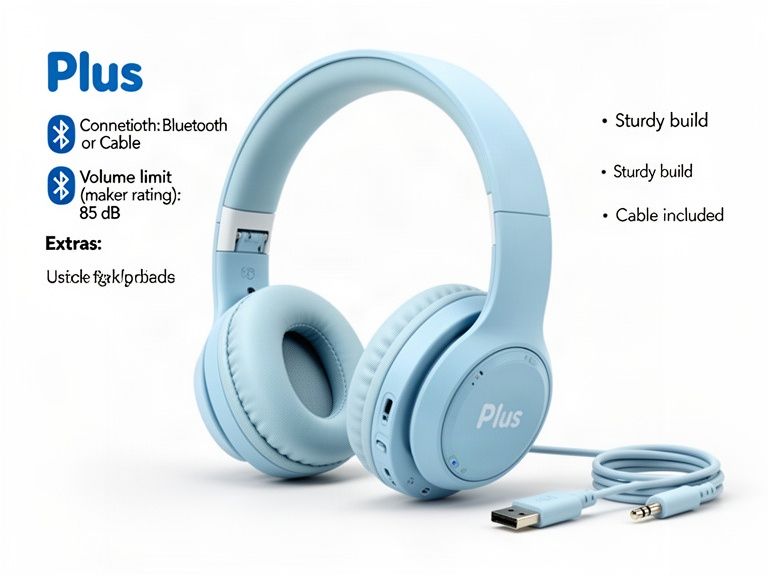
Puro Sound Labs BT2200 Plus
Parents who want premium sound and build quality
ConnectionBluetooth or cableVolume limit (maker rating)85 dBExtrasSturdy build, cable included -
2
 Illustration
Best value
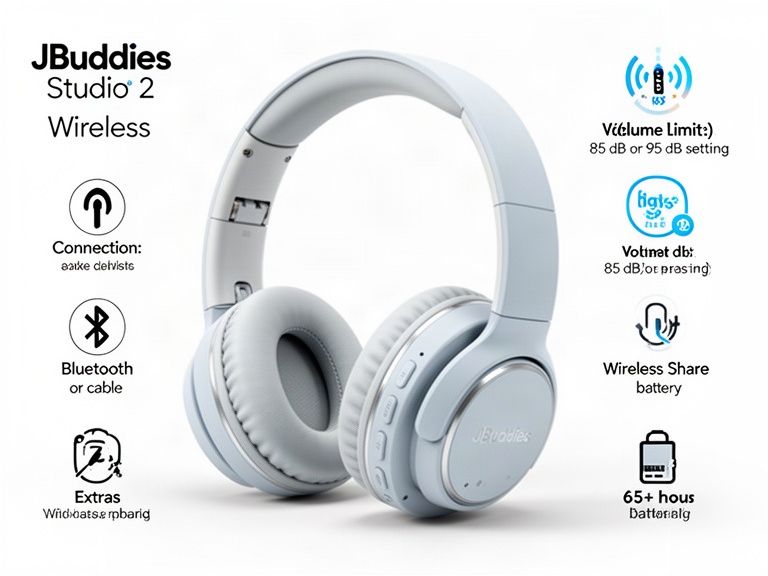
JLab JBuddies Studio 2 Wireless
School-age kids and long road trips
ConnectionBluetooth or cableVolume limit (maker rating)85 dB or 95 dB settingExtrasWireless Share, 65+ hour battery -
3
 Illustration
Best for younger kids
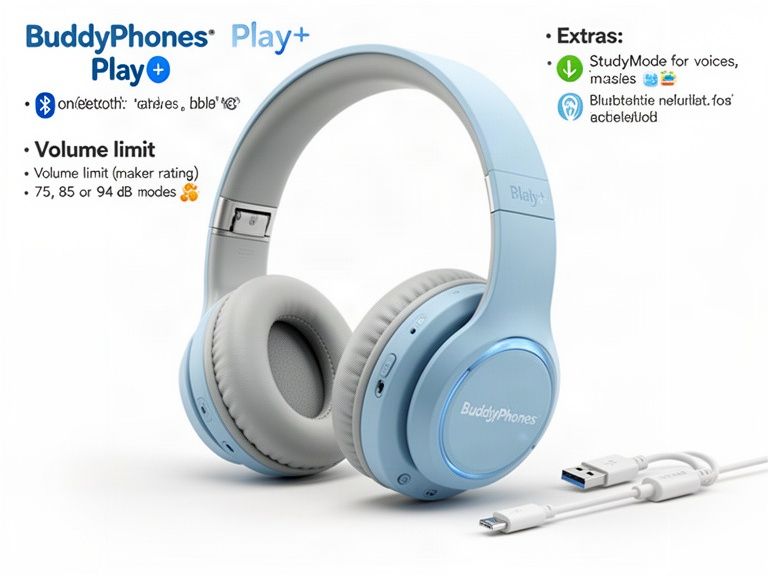
BuddyPhones Play+
Preschool and early elementary kids
ConnectionBluetooth or cableVolume limit (maker rating)75, 85 or 94 dB modesExtrasStudyMode for voices, cable included -
4
 Illustration
Best for travel
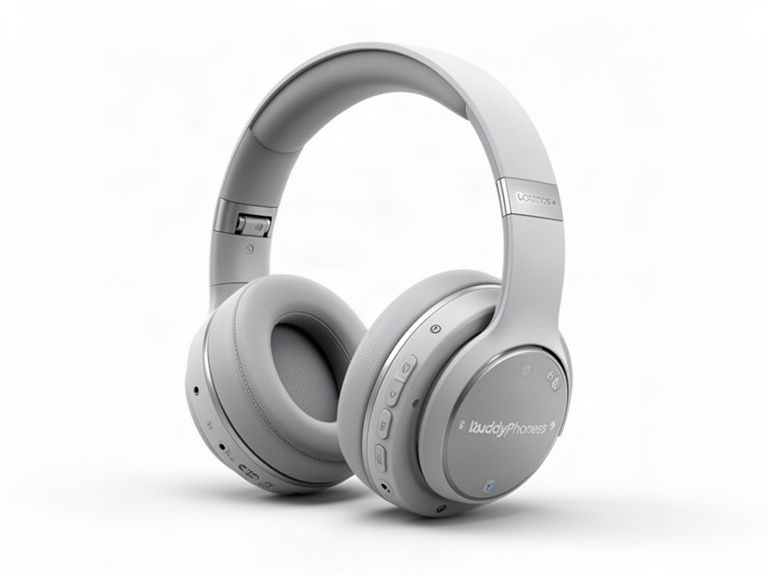
BuddyPhones Cosmos+
Flights, trains and noisy car rides
ConnectionBluetooth or cableVolume limit (maker rating)75, 85 or 94 dB modes (wireless)ExtrasActive noise cancelling, cable included -
5
 Illustration
Best for sharing
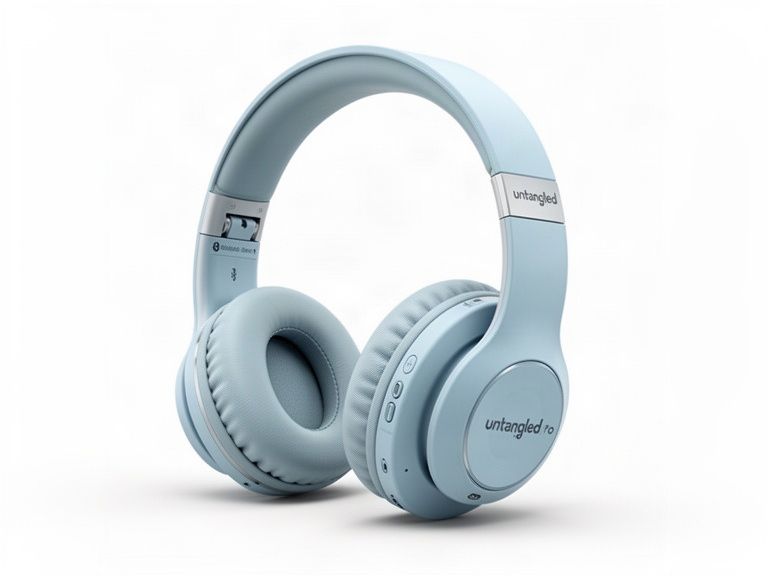
LilGadgets Untangled Pro
Siblings who want to watch together
ConnectionBluetooth or cableVolume limit (maker rating)93 dB (see review)ExtrasSharePort for a second headphone
Puro Sound Labs BT2200 Plus
Illustration
Well-built Bluetooth kids’ headphones with an 85 dB rated limit and sound quality reviewers rate well above typical kids’ models.
Best for: Parents who want premium sound and build quality- Connection
- Bluetooth or cable
- Volume limit (maker rating)
- 85 dB
- Extras
- Sturdy build, cable included
What we like
- Sturdier, more premium build than most kids’ models
- Sound quality reviewers praise as unusually good for kids
- Cable included for wired listening
- Comfortable cushions
Keep in mind
- Premium-priced for kids’ headphones
- No water resistance
- Independent measurements suggest checking volume in Bluetooth mode
Puro Sound Labs specializes in volume-limited headphones, and the BT2200 Plus is its popular wireless model for kids. It stands out for build quality, with a sturdier, more premium feel than most kids’ headphones, and for sound that reviewers consistently describe as far better than children’s headphones need to be — useful for older kids into music.
Puro rates the headphones at an 85 dB limit, and a cable is included for wired listening on planes or when the battery runs low. One independent review measured higher levels in Bluetooth mode than the rated limit, so it is worth pairing these with device volume limits — good practice with any kids’ headphones.
They are premium-priced and not water-resistant, so keep them away from drinks and bath time. For families who want one durable, great-sounding pair that lasts for years, they are our top choice.
Bottom line: The best-built, best-sounding kids’ headphones for families willing to invest.
JLab JBuddies Studio 2 Wireless
Illustration
Budget-friendly wireless kids’ headphones with very long rated battery life, two volume settings and wireless sharing.
Best for: School-age kids and long road trips- Connection
- Bluetooth or cable
- Volume limit (maker rating)
- 85 dB or 95 dB setting
- Extras
- Wireless Share, 65+ hour battery
What we like
- Very long rated battery life
- Choice of 85 dB or 95 dB limit
- Wireless Share links two compatible headphones
- Budget-friendly
Keep in mind
- Mostly plastic build
- The 95 dB setting is loud — use it only when needed
- Sound is fine rather than impressive
JLab’s JBuddies Studio 2 Wireless hits a sweet spot of price and practicality. JLab rates the battery at more than 65 hours of wireless playtime, so many families will only charge it occasionally, and a wired mode keeps it working with a cable when the battery does run out.
Parents can choose between JLab’s Volume Safe settings of 85 dB and 95 dB. The lower setting is the sensible default; the higher one is intended for noisy places such as planes and should be used sparingly. JLab’s Wireless Share feature lets two compatible headphones listen to one device, which is ideal for siblings watching the same show.
The build is plastic and the sound is good rather than remarkable, but for everyday school use and long trips, it delivers a lot for a budget-friendly price.
Bottom line: The most practical budget-friendly choice, especially for long trips and siblings.
BuddyPhones Play+
Illustration
Foldable wireless headphones with three selectable volume modes and a StudyMode that brings voices forward.
Best for: Preschool and early elementary kids- Connection
- Bluetooth or cable
- Volume limit (maker rating)
- 75, 85 or 94 dB modes
- Extras
- StudyMode for voices, cable included
What we like
- Three volume modes, including a lower 75 dB option
- StudyMode emphasizes voices for lessons and audiobooks
- Foldable for backpacks
- Cable for wired use when the battery runs low
Keep in mind
- Shorter battery life than JLab’s model
- On-ear fit may feel snug on older kids
- Only light sound isolation
BuddyPhones, from Onanoff, design specifically for children, and the Play+ is aimed at younger kids. Its standout feature is choice: three volume modes rated at 75, 85 and 94 dB, so you can start with the lowest setting for a preschooler and use the higher mode only for noisy environments like flights.
StudyMode adjusts the sound to bring voices forward, which suits audiobooks, educational apps and online lessons. The headphones fold to fit in a backpack, and a cable lets kids keep listening when the battery is empty.
Battery life is shorter than the JLab Studio 2’s, and older kids may outgrow the on-ear fit. For little ones and early school years, though, the lower volume option and voice-focused mode make it a thoughtful pick.
Bottom line: A thoughtful choice for younger children, thanks to its lower volume mode and StudyMode.
BuddyPhones Cosmos+
Illustration
Kids’ headphones with active noise cancelling and selectable volume modes in wireless use.
Best for: Flights, trains and noisy car rides- Connection
- Bluetooth or cable
- Volume limit (maker rating)
- 75, 85 or 94 dB modes (wireless)
- Extras
- Active noise cancelling, cable included
What we like
- Active noise cancelling reduces cabin and road noise
- Three volume modes in wireless use
- Long battery life for trips
- Cable for plane entertainment systems
Keep in mind
- Volume modes apply to wireless use; wired use has a fixed limit
- Pricier than basic kids’ headphones
- Bulkier to pack
On a plane, kids often turn up the volume simply to hear over engine noise. The BuddyPhones Cosmos+ tackles that with active noise cancelling, which reduces low rumble so content is easier to hear at moderate volume.
In wireless mode, parents can choose between three volume modes rated at 75, 85 and 94 dB. With the cable connected — needed for seat-back entertainment — reviewers note the limit is fixed rather than selectable, so check the manual and keep device volume moderate. Battery life is long enough for most flights.
They are pricier and bulkier than everyday kids’ headphones, so they make most sense for families who travel often. For flights and long drives, the combination of noise cancelling and volume modes is hard to match.
Bottom line: The best kids’ headphones for frequent travelers.
LilGadgets Untangled Pro
Illustration
Wireless kids’ headphones with a SharePort that lets a second headphone plug in and listen along.
Best for: Siblings who want to watch together- Connection
- Bluetooth or cable
- Volume limit (maker rating)
- 93 dB (see review)
- Extras
- SharePort for a second headphone
What we like
- SharePort lets a second headphone listen along
- Works wirelessly or with a cable
- Lightweight on-ear design
- Many color options
Keep in mind
- Highest rated limit among our picks
- Manual notes the limiter may only apply in wired mode
- Shorter battery life than some rivals
LilGadgets built the Untangled Pro around sharing. Its SharePort lets a second pair of headphones plug into the first, so two children can listen to one tablet without a splitter — a simple fix for backseat arguments over a single screen.
The headphones are light on-ear models with soft cushions and come in many colors. LilGadgets lists a 93 dB limit, higher than most picks here, and its instruction manual notes that volume limiting may only apply in wired mode. That makes device-level volume limits especially important if your kids use these over Bluetooth.
Choose these if sharing is the priority and you are comfortable managing volume on the device. If built-in limiting is your top concern, the Puro, JLab and BuddyPhones models are better fits.
Bottom line: A handy pick for siblings who share a screen, best paired with device volume limits.
Side-by-side comparison
| Product | Connection | Volume limit (maker rating) | Extras | Score |
|---|---|---|---|---|
| Puro Sound Labs BT2200 PlusBest overall | Bluetooth or cable | 85 dB | Sturdy build, cable included | 9.0 |
| JLab JBuddies Studio 2 WirelessBest value | Bluetooth or cable | 85 dB or 95 dB setting | Wireless Share, 65+ hour battery | 8.8 |
| BuddyPhones Play+Best for younger kids | Bluetooth or cable | 75, 85 or 94 dB modes | StudyMode for voices, cable included | 8.6 |
| BuddyPhones Cosmos+Best for travel | Bluetooth or cable | 75, 85 or 94 dB modes (wireless) | Active noise cancelling, cable included | 8.4 |
| LilGadgets Untangled ProBest for sharing | Bluetooth or cable | 93 dB (see review) | SharePort for a second headphone | 8.0 |
Specifications are from manufacturer listings at the time of writing and can change between production runs.
How volume limiting works
Volume-limited headphones use circuitry to cap the maximum output, usually expressed in decibels (dB). The most common rating is 85 dB; some models offer selectable modes such as 75, 85 and 94 dB so you can pick a lower limit for young children or a higher one for noisy places like planes.
Limits are measured under the maker’s test conditions, and independent reviewers have sometimes measured different results, particularly when switching between Bluetooth and a cable. Treat the rating as a helpful cap rather than a promise, and check how the limit behaves in each mode in the manual.
Wireless, wired or both?
Bluetooth headphones mean no cable to snag or chew, which suits younger kids and car trips. A cable option is still valuable: it lets kids keep listening when the battery runs out and connects to airplane seat systems and older devices. All of our picks can be used wirelessly or with a cable.
Fit and durability
Look for a headband that adjusts small enough for your child, soft cushions and a flexible band that survives being twisted. Folding designs pack more easily into school bags. Removable or easily wiped cushions help with hygiene, especially if siblings share. On-ear designs are lighter; over-ear cushions block more background noise, which can help kids keep the volume down.
Features worth paying for
- Selectable volume modes let the headphones grow with your child.
- A built-in microphone is handy for video calls and online classes.
- Sharing ports or wireless sharing let two kids watch the same movie.
- Long battery life reduces the chance of a dead battery mid-trip.
- Active noise cancelling can make loud cabins quieter, so kids may not feel the need to turn the volume up.
What to skip
Bright colors and cartoon designs are fine, but don’t choose on looks alone. Skip unbranded “kids” headphones with no stated volume limit or warranty, and avoid adult earbuds for young children — they are easy to lose and harder to fit.
Setting up sensible listening
Use the volume and headphone-audio settings on the child’s tablet or phone as a second limit, and keep the device volume around the middle. Agree on listening breaks, especially on long trips, and supervise listening time. Follow each maker’s age guidance and instructions, and if you have concerns about your child’s hearing, talk to your pediatrician.
Frequently asked questions
What volume limit should kids’ headphones have?
Most kids’ headphones are rated at around 85 dB, and some offer a lower 75 dB mode for younger children. Choose a model with a stated limit, set device volume limits too, and follow your pediatrician’s advice if you have specific concerns.
Do volume-limited headphones guarantee safe listening?
No. They cap the maximum output, but actual levels depend on the device, content and connection. Combine them with device volume limits, regular breaks and supervision of how long and how loud your child listens.
Can kids use wireless headphones on a plane?
Yes, with their own tablet or phone in airplane mode with Bluetooth turned on, where the airline permits it. To use the seat-back entertainment system, you’ll need headphones with a cable and possibly an airline adapter.
What age are kids’ headphones designed for?
Most target roughly preschool through the tween years, but headband size and features vary. Check each maker’s stated age range and whether the headband adjusts small enough for your child.
Can two children share one device?
Some models make this easy. JLab’s Wireless Share links two compatible headphones, and LilGadgets’ SharePort lets a second headphone plug into the first. Otherwise, a simple headphone splitter works with wired models.
How we picked
We compared each maker’s stated volume-limit ratings and modes, wired and wireless options, battery life claims, sharing features, adjustability and durability notes, along with published independent reviews and measurements of kids’ headphones from established brands. Our picks and scores are based on this research — we have not tested these products hands-on. Volume ratings are the manufacturers’ own figures. Brands cannot pay to be included. Read our full method.