






















The best kettlebells
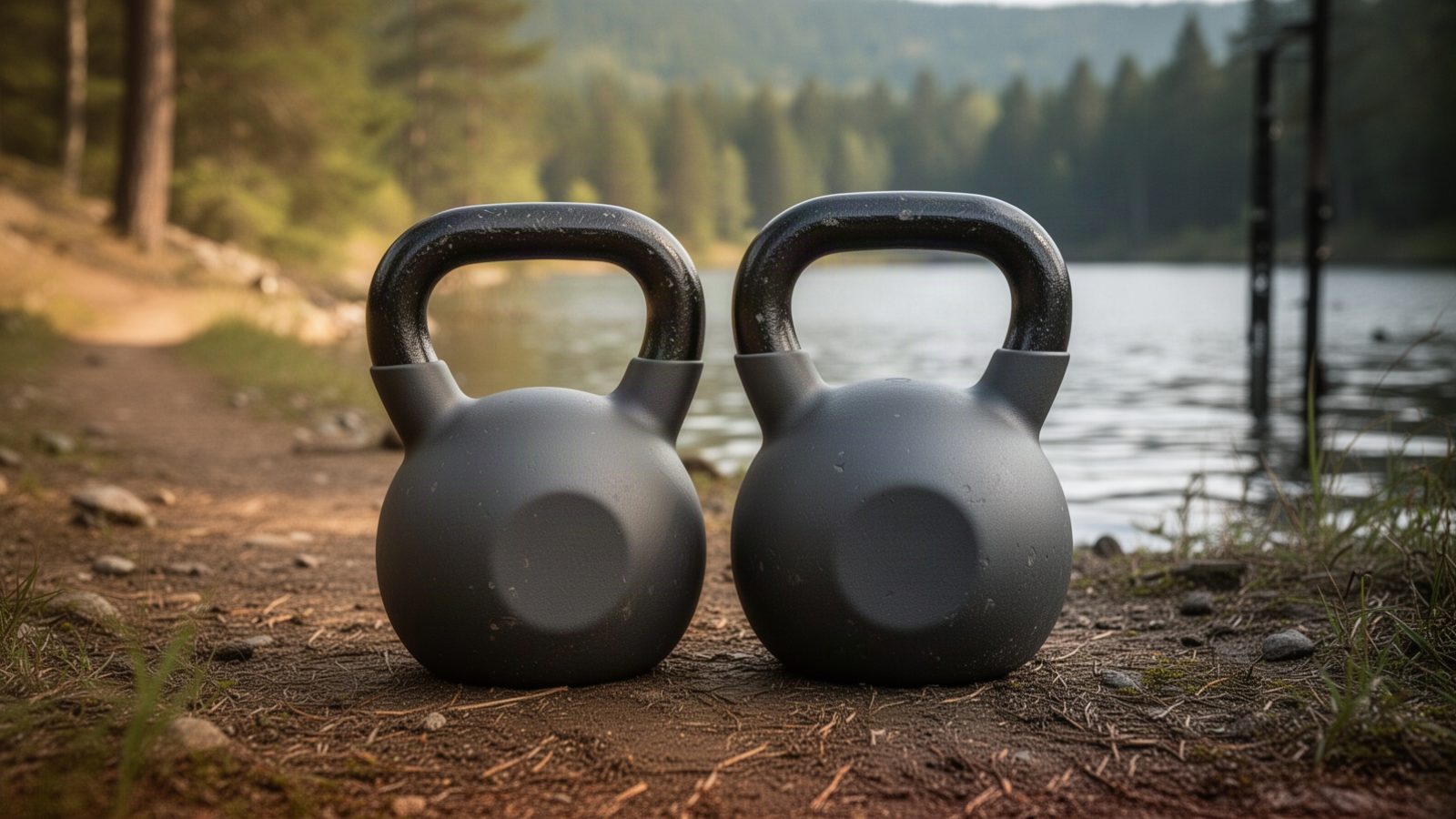
Four kettlebells compared — a powder-coated cast-iron bell, a budget enamel bell, a dial-adjustable kettlebell and a floor-friendly vinyl option for beginners.
As an Amazon Associate I earn from qualifying purchases. When you buy through links on this page, we may earn a commission at no extra cost to you. Learn more
A single kettlebell can cover a surprising amount of training: swings, goblet squats, presses, rows, carries and Turkish get-ups. Because the weight hangs below the handle, it moves differently from a dumbbell and suits flowing, full-body exercises. It also takes up less space than almost any other piece of strength equipment.
Kettlebells look alike, but small details decide how they feel in your hands. The handle's thickness and finish affect grip during high-rep swings, the window under the handle determines whether two hands fit comfortably, and the coating affects chalk, sweat and your floors. Adjustable kettlebells save space at the cost of a bulkier shape. We compared the most established options and explain who each one suits — and what weight to start with.
Our top picks
-
1
 Illustration
Best overall
Kettlebell Kings Powder Coat Kettlebell
Swings, cleans and high-rep home training
TypeFixed weight, cast ironWeightsWide range of kg and lb sizesSurfaceTextured powder coat -
2
 Illustration
Best value
CAP Barbell Enamel Coated Cast Iron Kettlebell
Building a set of bells on a budget
TypeFixed weight, cast ironWeightsAbout 5–80 lbSurfaceSmooth enamel paint -
3
 Illustration
Best adjustable
Bowflex SelectTech 840 Adjustable Kettlebell
Small spaces that cannot fit several bells
TypeAdjustable (dial)Weights8, 12, 20, 25, 35 and 40 lbSurfaceMolded housing -
4
 Illustration
Best for beginners
Yes4All Vinyl Coated Kettlebell
New lifters training on hard floors
TypeFixed weight, vinyl-coated cast ironWeightsLight to moderate sizesSurfaceVinyl coating
Kettlebell Kings Powder Coat Kettlebell
Illustration
A one-piece cast-iron kettlebell with a grippy powder-coat finish and a wide range of sizes.
Best for: Swings, cleans and high-rep home training- Type
- Fixed weight, cast iron
- Weights
- Wide range of kg and lb sizes
- Surface
- Textured powder coat
- Base
- Flat
What we like
- Single-piece casting with no welds
- Powder coat grips well and holds chalk
- Smooth handle suits high-rep swings
- Many sizes in both kilograms and pounds
Keep in mind
- Some owners report chips in the coating over time
- Size availability can be patchy
- Pricier than basic cast-iron bells
Kettlebell Kings has built a strong following among home lifters, and its powder-coat line is the reason. Each bell is cast from a single piece of iron with no welded handle, and the textured powder coat gives a secure grip that holds chalk well — exactly what you want for long sets of swings, cleans and snatches.
The handles are smooth and evenly finished, and the line covers a wide range of sizes in both kilograms and pounds, so you can build a set that progresses in sensible jumps.
There are two caveats. Some owners report the coating chipping after heavy use, which is cosmetic but disappointing, and not every size is always in stock. Even so, for anyone who will swing a kettlebell several times a week, the better handle and finish are worth paying for.
Bottom line: The best everyday kettlebell for people who train with swings and high-rep work.
CAP Barbell Enamel Coated Cast Iron Kettlebell
Illustration
A budget-friendly cast-iron kettlebell with an enamel finish, sold in a wide range of sizes.
Best for: Building a set of bells on a budget- Type
- Fixed weight, cast iron
- Weights
- About 5–80 lb
- Surface
- Smooth enamel paint
- Base
- Flat
What we like
- Budget-friendly, so buying two or three is realistic
- Wide range of sizes in pounds
- Solid cast-iron construction
- Widely available
Keep in mind
- Glossy finish can feel slippery with sweat
- Occasional casting burrs on handles need sanding
- Handle may feel narrow for large hands
CAP Barbell’s enamel-coated kettlebells are a practical way to build a small set without spending heavily. They are solid cast iron, come in a wide range of pound sizes, and are easy to find, so adding a heavier bell later is simple.
The quality is decent rather than refined. The glossy enamel finish looks smart but can feel slick when your hands sweat, which matters most during long sets of swings, and owners occasionally report small casting burrs on the handle that need a light sanding.
For goblet squats, presses, rows and carries, none of that matters much. If you are just starting, or you want one lighter and one heavier bell for a modest budget, CAP is a sensible place to start.
Bottom line: A budget-friendly, no-frills cast-iron bell that makes buying a pair realistic.
Bowflex SelectTech 840 Adjustable Kettlebell
Illustration
A dial-adjustable kettlebell that replaces six bells from 8 to 40 pounds.
Best for: Small spaces that cannot fit several bells- Type
- Adjustable (dial)
- Weights
- 8, 12, 20, 25, 35 and 40 lb
- Surface
- Molded housing
- Size
- About 8.8 × 7 × 12.5 inches
What we like
- Six weights in one unit
- Dial changes the weight in seconds
- Saves a lot of floor space
- Good range for beginners and intermediates
Keep in mind
- Bulkier than a fixed bell of the same weight
- Must not be dropped or slammed
- Not suited to heavy, high-rep swings
The SelectTech 840 brings Bowflex’s dial system to kettlebells. Set it in its base, turn the dial and lift out anything from 8 to 40 pounds in six steps — the equivalent of six separate kettlebells in a space the size of one.
That makes it a smart buy for apartments and small home gyms, especially for goblet squats, presses, rows and moderate swings. The range covers most beginners and many intermediate users.
The compromises are typical of adjustable bells. It is bulkier than a cast-iron bell at lighter settings, the shape does not rest on your forearm as naturally during cleans and presses, and it must never be dropped. People who train hard, fast kettlebell movements will be happier with a fixed bell or two.
Bottom line: A clever space-saver for general kettlebell work in small homes.
Yes4All Vinyl Coated Kettlebell
Illustration
A cast-iron kettlebell with a protective vinyl coating in light-to-moderate, color-coded sizes.
Best for: New lifters training on hard floors- Type
- Fixed weight, vinyl-coated cast iron
- Weights
- Light to moderate sizes
- Surface
- Vinyl coating
- Base
- Flat
What we like
- Vinyl coating is kinder to floors
- Quieter when set down
- Color-coded sizes are easy to tell apart
- Budget-friendly
Keep in mind
- Vinyl makes the bell bulkier than bare cast iron
- Coating can tear with rough use
- Not offered in heavy sizes
For beginners working out in a living room or bedroom, a vinyl-coated kettlebell is a sensible first purchase. The coating over the cast-iron core softens contact with hardwood or tile floors, reduces noise when the bell is set down and gives each size a distinct color.
Yes4All’s version keeps the essentials right: a flat base so it sits steady, a handle shaped for one- and two-handed exercises, and a budget-friendly price that makes buying two sizes realistic.
The coating has drawbacks. It makes the bell bulkier than bare iron, it can tear if the bell is dragged across rough surfaces, and the range is limited to lighter and moderate weights. As you get stronger, you will likely move to cast-iron bells for heavier work.
Bottom line: A floor-friendly first kettlebell for beginners training at home.
Side-by-side comparison
| Product | Type | Weights | Surface | Base | Score |
|---|---|---|---|---|---|
| Kettlebell Kings Powder Coat KettlebellBest overall | Fixed weight, cast iron | Wide range of kg and lb sizes | Textured powder coat | Flat | 9.0 |
| CAP Barbell Enamel Coated Cast Iron KettlebellBest value | Fixed weight, cast iron | About 5–80 lb | Smooth enamel paint | Flat | 8.5 |
| Bowflex SelectTech 840 Adjustable KettlebellBest adjustable | Adjustable (dial) | 8, 12, 20, 25, 35 and 40 lb | Molded housing | — | 8.4 |
| Yes4All Vinyl Coated KettlebellBest for beginners | Fixed weight, vinyl-coated cast iron | Light to moderate sizes | Vinyl coating | Flat | 8.0 |
Specifications are from manufacturer listings at the time of writing and can change between production runs.
Fixed or adjustable?
Fixed cast-iron kettlebells are a single solid piece. They are durable, compact and feel the way kettlebells are meant to feel, but you need several to progress. Adjustable kettlebells use a dial or pin to change weight and replace several bells, which saves space. They tend to be larger than a fixed bell of the same weight and must not be dropped or slammed.
Cast iron versus competition style
Traditional cast-iron bells grow in size as the weight increases. Competition kettlebells are steel and stay the same size at every weight, so your technique does not change as you move up. For general home training, a well-made cast-iron bell is fine.
Handle and finish
- A smooth, even handle without casting seams or burrs is the most important quality sign — rough spots tear at your hands during swings.
- Powder coat has a slightly textured, grippy surface and holds chalk well.
- Enamel or glossy paint looks smart but can feel slippery with sweat.
- Vinyl coating protects floors and reduces noise, but it is bulkier and usually only offered in lighter weights.
- Check the window under the handle if you plan two-handed swings and goblet squats.
What weight to start with
Kettlebell exercises use a lot of hip power, so most people swing heavier than they press. As a rough guide, many beginners start with 8–12 kg (about 18–26 lb) for presses and lighter work and 12–16 kg (about 26–35 lb) for swings, with stronger or more experienced lifters going heavier. Two bells — one lighter, one heavier — cover far more exercises than one.
Watch the jumps between sizes, too. Kettlebell programs traditionally move up in 4 kg steps, and a jump from 12 to 16 kg is a big leap for presses. Brands that also sell in-between sizes, or in 5 lb steps, make progress smoother, especially for upper-body work.
Floors, storage and care
Train on a rubber mat or outdoors to protect floors, and set the bell down rather than dropping it. Store kettlebells on the floor or a low rack, not on shelves where they could fall. Wipe sweat off after use; a little light oil on bare spots prevents rust. Learn the swing from a qualified coach or reliable instruction and follow the manufacturer's guidance for adjustable models.
Frequently asked questions
What size kettlebell should a beginner buy?
Many beginners start with about 8–12 kg (18–26 lb) for presses and lighter work and 12–16 kg (26–35 lb) for swings. Choose a weight you can control with good form for every repetition.
Are adjustable kettlebells worth it?
They are worth it if space is tight and you want several weights in one unit. They are bulkier than fixed bells of the same weight and should not be dropped, so fixed bells are better for high-rep swings and rough use.
What is the difference between kg and lb kettlebells?
Only the labeling and the size steps. Traditional kettlebell programs use kilograms, often in 4 kg jumps, while many US brands sell bells in 5 or 10 lb steps. Either works as long as the jumps suit your progress.
Can I use kettlebells on hardwood floors?
Yes, with a rubber mat underneath and by setting the bell down under control. Vinyl-coated bells reduce the risk of marking floors.
What is a competition kettlebell?
A steel kettlebell that keeps the same outer size and handle shape at every weight, used in kettlebell sport. It makes technique consistent as you move up in weight.
How we picked
We compared materials, coatings, handle design, available sizes, adjustability and warranty terms published by the manufacturers, along with independent reviews and owner feedback on finish quality and durability, for kettlebells consistently available online. Our picks and scores are based on this research — we have not tested these products hands-on. Brands cannot pay to be included. Read our full method.