






















The best hunting trail cameras
Four proven trail cameras compared — fast SD-card cameras and cellular models that send photos to your phone — with advice on flash type, batteries and placement.
As an Amazon Associate I earn from qualifying purchases. When you buy through links on this page, we may earn a commission at no extra cost to you. Learn more
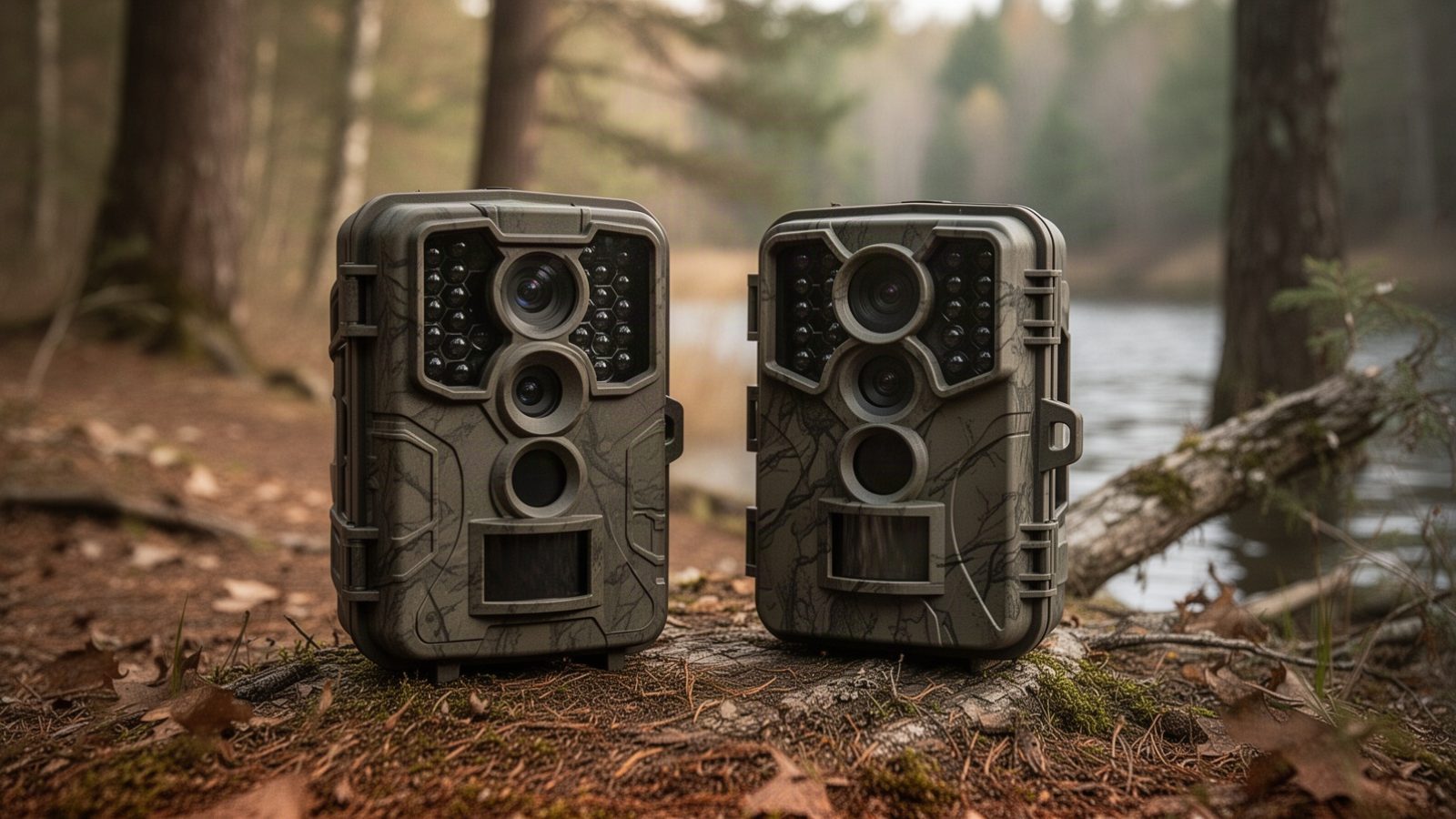
A trail camera is a weatherproof, motion-triggered camera you strap to a tree to see what moves through an area when you're not there. For hunters, it answers the big scouting questions: which deer are using a food plot or trail, when they move, and whether they show up in daylight. Wildlife watchers and landowners use the same cameras to monitor property.
There are two broad types. Standard cameras save photos and video to an SD card that you collect in person; they are budget-friendly and have no monthly fees. Cellular cameras send images to an app on your phone, which means fewer trips into the woods but a data plan to pay for. We compared well-known models from Browning, Bushnell, Tactacam and Spypoint and picked the best choices for most hunters, stealthy night shots and remote monitoring.
Our top picks
-
1
 Illustration
Best overall
Browning Recon Force Elite HP5 Trail Camera
Hunters who check cards regularly and want fast, sharp captures
TypeStandard (SD card)Power8 AANight flashInfrared -
2
 Illustration
Best no-glow
Bushnell Core DS-4K No Glow Trail Camera
Stand sites, bedding areas and theft-prone spots
TypeStandard (SD card)Power6 AANight flashNo-glow infrared -
3
 Illustration
Best cellular
Tactacam Reveal X Gen 2.0 Cellular Trail Camera
Remote properties and hunters who want photos on their phone
TypeCellular (AT&T or Verizon)Power12 AA or external 12VNight flashInfrared -
4
 Illustration
Best dual-SIM cellular
Spypoint Flex Cellular Trail Camera
Areas with patchy signal
TypeCellular, dual-SIMPower8 AANight flashInfrared
Browning Recon Force Elite HP5 Trail Camera
Illustration
A fast-triggering SD-card camera with long-range infrared illumination and a built-in viewing screen.
Best for: Hunters who check cards regularly and want fast, sharp captures- Type
- Standard (SD card)
- Power
- 8 AA
- Night flash
- Infrared
- Trigger speed
- Adjustable, 0.1 to 0.7 sec
- Detection range
- Up to 100 ft
- Viewing screen
- 2-inch color
What we like
- Very fast, adjustable trigger catches moving deer
- Long-range night illumination
- Built-in screen for checking images in the field
- No monthly fees
Keep in mind
- You have to walk in to collect images
- Needs 8 AA batteries
- Not the most discreet flash type
Browning's Elite HP5 cameras are built around speed and night performance. The Recon Force version has an adjustable trigger from 0.1 to 0.7 seconds, so it can catch a buck trotting through the frame instead of just his tail, and Browning rates the detection range at up to 100 feet.
Its infrared illumination is designed for long-range night shots on food plots and field edges, and the built-in 2-inch color screen lets you review images on the spot without swapping cards into a phone.
It is a standard camera, so you still have to walk in to collect images, and it runs on 8 AA batteries — use lithiums for long deployments. If no-glow stealth matters more than night range, the Bushnell below is the better fit.
Bottom line: A fast, capable SD-card camera that suits most scouting.
Bushnell Core DS-4K No Glow Trail Camera
Illustration
A no-glow camera with dual image sensors — one tuned for daylight and one for night.
Best for: Stand sites, bedding areas and theft-prone spots- Type
- Standard (SD card)
- Power
- 6 AA
- Night flash
- No-glow infrared
- Sensors
- Dual: separate day and night
What we like
- No-glow flash is hard for game and people to notice
- Dual sensors improve day and night image quality
- No monthly fees
- Runs on fewer batteries than many rivals
Keep in mind
- No-glow night photos have shorter reach than low-glow
- Not cellular
- Image specs vary between listings, so check the exact model
The Core DS-4K's main idea is in its name: DS stands for dual sensor. Instead of one sensor that compromises between day and night, it uses one optimized for daylight and another for night, which helps produce sharper color photos by day and cleaner black-and-white shots after dark.
The No Glow version uses invisible infrared, so it does not emit the red glow that can catch the eye of a mature deer or a passer-by. That makes it a good choice near bedding areas, over stand sites and on public land.
The trade-off of no-glow is shorter night illumination reach than low-glow cameras. Bushnell offers more than one Core 4K model, so check the listing to make sure you're buying the dual-sensor no-glow version.
Bottom line: The best choice when staying unseen matters most.
Tactacam Reveal X Gen 2.0 Cellular Trail Camera
Illustration
A popular cellular camera that runs on AT&T or Verizon and sends images to the Reveal app.
Best for: Remote properties and hunters who want photos on their phone- Type
- Cellular (AT&T or Verizon)
- Power
- 12 AA or external 12V
- Night flash
- Infrared
- Trigger speed
- Under 0.5 sec
- App
- Tactacam Reveal app
What we like
- Photos arrive on your phone without visiting the camera
- Works on major US carriers
- External power jack for long deployments
- Well-regarded, easy-to-use app
Keep in mind
- Requires a data plan
- Carrier switching requires a SIM change
- Uses a lot of batteries
Tactacam's Reveal cameras helped make cellular scouting mainstream, and the Reveal X Gen 2.0 is the brand's popular all-rounder. It runs on AT&T or Verizon networks and sends photos to the Reveal app, where you can browse, sort and adjust camera settings remotely. That means fewer trips into the woods and less human scent around your best spots.
It takes 12 AA batteries and has a jack for an external 12V battery or solar panel, which matters because cellular transmission uses more power than standard cameras. Trigger speed is under half a second.
You will need a data plan, and the camera works on whichever carrier its SIM is set up for, so confirm good signal at your spot before buying.
Bottom line: An easy, popular way to get trail camera photos on your phone.
Spypoint Flex Cellular Trail Camera
Illustration
A cellular camera with dual-SIM connectivity that picks the stronger network, plus video with sound.
Best for: Areas with patchy signal- Type
- Cellular, dual-SIM
- Power
- 8 AA
- Night flash
- Infrared
- Video
- 1080p with sound
- App
- Spypoint app
What we like
- Dual-SIM design helps where one carrier is weak
- Video with sound
- App manages photos and settings remotely
- Compatible with Spypoint solar and battery accessories
Keep in mind
- Requires a data plan
- Flash is not no-glow on the standard version
- Several Flex variants make shopping confusing
Spypoint's Flex tackles the biggest problem with cellular cameras: weak signal. Its dual-SIM design can connect to the stronger of two networks, which helps in rural areas where coverage varies between carriers. Photos and settings are managed through the Spypoint app.
It records 1080p video with sound, runs on 8 AA batteries and works with Spypoint's external solar and battery accessories for longer deployments.
Spypoint sells several Flex variants — including a solar version, a no-glow Dark version and the budget Flex-M — so make sure the listing matches the features you want. Like any cellular camera, it needs a data plan to send images.
Bottom line: A smart cellular choice for spots where one carrier isn't enough.
Side-by-side comparison
| Product | Type | Power | Night flash | Trigger speed | Score |
|---|---|---|---|---|---|
| Browning Recon Force Elite HP5 Trail CameraBest overall | Standard (SD card) | 8 AA | Infrared | Adjustable, 0.1 to 0.7 sec | 9.2 |
| Bushnell Core DS-4K No Glow Trail CameraBest no-glow | Standard (SD card) | 6 AA | No-glow infrared | — | 8.9 |
| Tactacam Reveal X Gen 2.0 Cellular Trail CameraBest cellular | Cellular (AT&T or Verizon) | 12 AA or external 12V | Infrared | Under 0.5 sec | 8.8 |
| Spypoint Flex Cellular Trail CameraBest dual-SIM cellular | Cellular, dual-SIM | 8 AA | Infrared | — | 8.5 |
Specifications are from manufacturer listings at the time of writing and can change between production runs.
Standard or cellular?
Standard (SD card) cameras are the better value if you can check them every week or two without disturbing the area. There is no subscription, and image quality per dollar is usually higher.
Cellular cameras suit remote properties, public land you can't visit often and anyone who wants to see activity in near real time. Check coverage for the carrier the camera uses at your exact spot, and factor in the ongoing plan cost. Some models are locked to one carrier; others are multi-carrier or dual-SIM.
Flash type
- No-glow infrared is invisible to people and much less likely to spook game or attract attention from passers-by. Night photos are black and white and can be slightly darker.
- Low-glow infrared shows a faint red glow when firing but usually lights the scene farther and brighter.
- White flash gives color night photos but is highly visible; it is rare on hunting cameras today.
Trigger speed, recovery and detection
Trigger speed is how fast the camera fires after detecting motion. Under half a second is good for trails; faster models catch animals that are walking quickly through the frame. Recovery time (how soon it can fire again) matters on busy food plots. Detection range in the specs is a best case — realistic range depends on temperature and animal size.
Power and memory
Most cameras run on AA batteries. Lithium AAs cost more but last far longer and perform much better in cold weather than alkaline. Many models accept an external battery or solar panel for long deployments. Use a quality SD card in the capacity range the manufacturer recommends, and format it in the camera.
Placement tips
Mount the camera about waist high, angled slightly down along a trail rather than straight across it, and facing north or south to avoid sunrise and sunset glare. Clear swaying branches that cause false triggers. Use a lock box or cable lock on public land.
Good early-season spots include field edges, creek crossings, pinch points between cover and well-used trails into food sources. Later in the fall, scrapes and rub lines can show which bucks are working an area. Check cameras around midday, when deer are least likely to be moving, and keep visits short to limit the scent you leave behind.
Know the rules
Some states restrict trail cameras — particularly cellular cameras — on public land or during hunting seasons. Check your state wildlife agency's current regulations and land-manager rules before you set one up.
Frequently asked questions
Are cellular trail cameras worth it?
They are if you hunt remote land, can't visit often or want to avoid leaving scent in the area. Remember the ongoing data plan cost and confirm coverage at the exact spot before buying.
Do deer notice trail camera flashes?
Deer can sometimes notice the faint red glow of low-glow cameras, especially at close range. No-glow cameras are much less noticeable, which is why many hunters prefer them near bedding areas and stand sites.
What batteries should I use in a trail camera?
Lithium AA batteries last longest and handle cold weather best. Alkaline batteries work in mild weather but drain faster, and rechargeable NiMH cells may not be supported by every model — check the manual.
How high should I mount a trail camera?
Around waist to chest height for deer, angled slightly down and aimed along a trail rather than across it. Mounting higher and angling down reduces theft and spooking but requires careful aiming.
Are trail cameras legal everywhere?
No. Rules vary by state and land type, and some states limit or ban cellular trail cameras for hunting or on public land. Check current regulations with your state wildlife agency before setting one up.
How we picked
We compared manufacturer specifications for camera type, flash, power requirements, trigger speed, detection range, connectivity and app features for well-known trail cameras from established hunting brands, and weighed which uses each suits. Our picks and scores are based on this research — we have not tested these products hands-on. Brands cannot pay to be included. Read our full method.