






















The best hitch cargo carriers for trailer hitch receivers
Three hitch-mounted cargo carriers compared — steel baskets from CURT and MaxxHaul and Thule’s Arcos platform — plus how hitch class and tongue weight limit what you can carry.
As an Amazon Associate I earn from qualifying purchases. When you buy through links on this page, we may earn a commission at no extra cost to you. Learn more
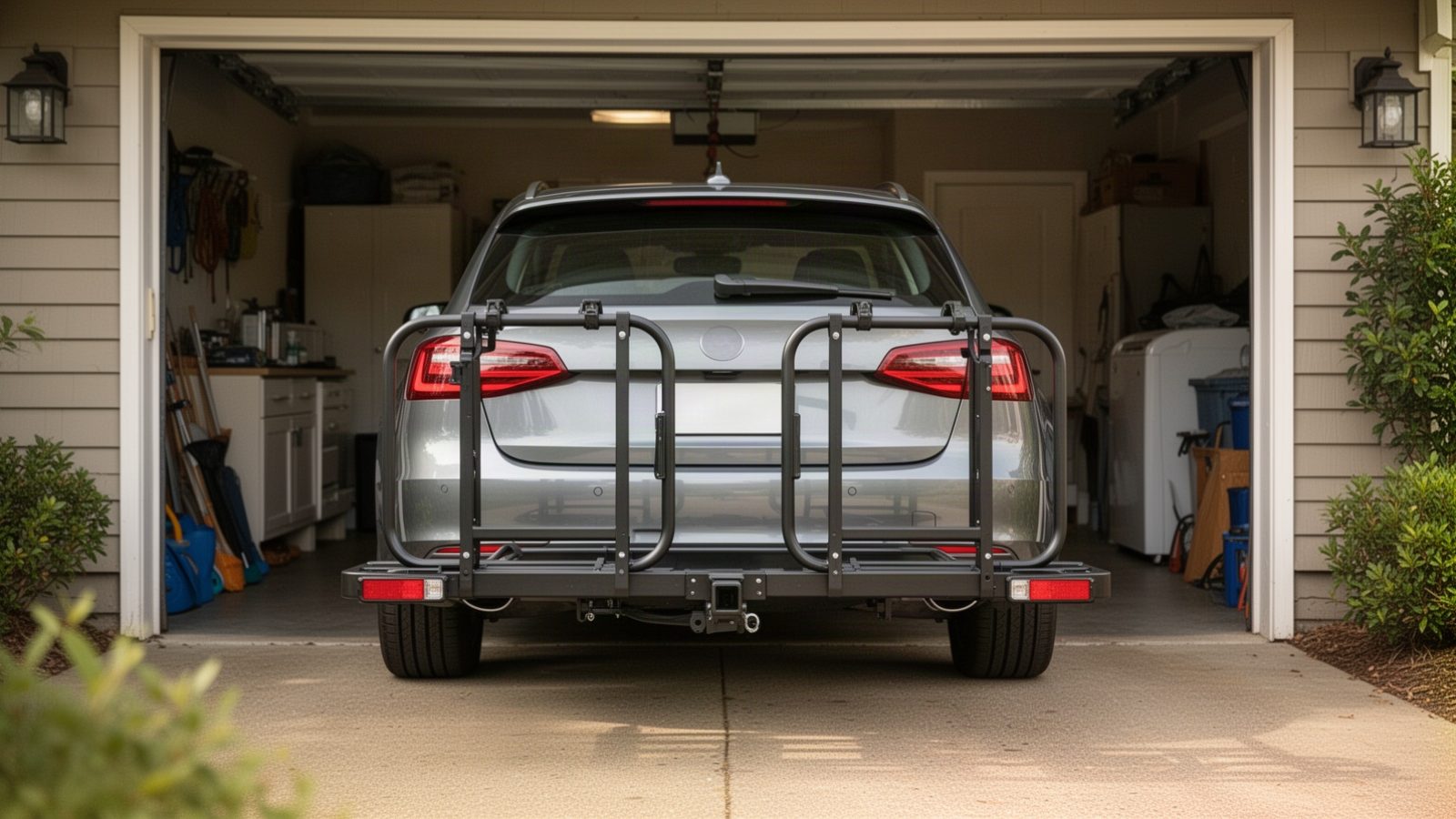
A hitch cargo carrier turns the trailer hitch on the back of your vehicle into extra storage. It slides into the receiver like a ball mount and gives you an open tray or platform for coolers, fuel cans, firewood, camping bins or a weatherproof cargo bag — gear you would rather not have inside the cabin or up on the roof.
Compared with a roof box, a hitch carrier is easier to load and doesn’t add height, but it comes with its own rules. What you can carry is limited by your hitch’s tongue-weight rating, the carrier’s own rating and your vehicle, and a loaded carrier can hide your lights and license plate. We compared popular carriers on design, construction and how they pair with cargo bags or boxes, and picked the best for different needs.
Our top picks
-
1
 Illustration
Best overall
CURT Basket-Style Hitch Cargo Carrier
Most drivers with a 2-inch receiver
TypeSteel basket with raised railsPairs withCargo bag or netReceiver2-inch is most common; check listing -
2
 Illustration
Best value
MaxxHaul Steel Hitch Cargo Carrier
Occasional camping and holiday trips on a budget
TypeSteel basket with raised railsPairs withCargo bag or netReceiver2-inch -
3
 Illustration
Best premium system
Thule Arcos Hitch Platform
Enclosed, lockable storage behind the vehicle
TypePlatform for Thule Arcos boxes or gearPairs withThule Arcos cargo box (sold separately)ReceiverCheck listing for compatible sizes
CURT Basket-Style Hitch Cargo Carrier
Illustration
A welded steel basket with raised rails and a mesh floor from a major hitch manufacturer.
Best for: Most drivers with a 2-inch receiver- Type
- Steel basket with raised rails
- Pairs with
- Cargo bag or net
- Receiver
- 2-inch is most common; check listing
What we like
- From one of the biggest names in hitches and towing
- Raised side rails help contain cargo
- Open mesh floor drains water and dirt
- Powder-coated steel resists rust
Keep in mind
- Heavy to lift on and off
- Open basket needs a cargo bag or net for loose items
- Capacity is limited by your hitch’s tongue-weight rating
CURT is one of the largest hitch and towing manufacturers in North America, and its basket-style cargo carriers come from the same engineering background. The basket is welded steel with raised side rails, an open mesh floor that lets water and dirt fall through, and a black powder-coat finish to resist rust.
It is a straightforward, durable design that suits coolers, camping bins, firewood or a cargo bag. As with any steel carrier, it is heavy to lift into the receiver, and the open basket needs straps or a net to keep things in place. Check the carrier’s weight rating against your hitch’s tongue-weight rating and your owner’s manual — the lowest figure wins — and confirm your receiver size and hitch fitment for your make, model and year.
Bottom line: A tough, well-built basket from a hitch specialist and the sensible default for most drivers.
MaxxHaul Steel Hitch Cargo Carrier
Illustration
A budget-friendly steel basket with raised rails for standard 2-inch receivers.
Best for: Occasional camping and holiday trips on a budget- Type
- Steel basket with raised rails
- Pairs with
- Cargo bag or net
- Receiver
- 2-inch
What we like
- Budget-friendly
- Raised rails help contain cargo
- Roomy tray suits coolers and storage bins
- Powder-coated steel finish
Keep in mind
- Requires assembly
- Finish needs touching up if it chips, to keep rust away
- Heavy to lift into the receiver
MaxxHaul is a popular name for budget-friendly towing and cargo accessories, and its steel hitch cargo carrier offers a roomy basket with raised rails at a lower price than the big hitch brands. It slides into a standard 2-inch receiver and gives you a platform for coolers, bins, luggage or a cargo bag.
On paper it covers the essentials. The trade-offs are typical of budget steel carriers: it needs assembly, and the powder coat should be touched up if it chips to keep rust at bay. Add an anti-rattle hitch pin or clamp to reduce noise and wobble. Check the carrier’s weight rating against your hitch’s tongue-weight limit and your owner’s manual, and confirm your receiver size and hitch fitment for your make, model and year.
Bottom line: A capable, budget-friendly carrier for occasional trips.
Thule Arcos Hitch Platform
Illustration
A hitch-mounted platform designed to carry Thule’s Arcos cargo boxes or gear on its own.
Best for: Enclosed, lockable storage behind the vehicle- Type
- Platform for Thule Arcos boxes or gear
- Pairs with
- Thule Arcos cargo box (sold separately)
- Receiver
- Check listing for compatible sizes
What we like
- Designed to carry Thule’s lockable Arcos cargo boxes
- Keeps luggage behind the vehicle rather than on the roof
- Premium build from a major rack brand
- Can also carry gear on its own
Keep in mind
- Premium-priced, and the cargo box is sold separately
- A loaded platform can limit access to the rear hatch
Thule’s Arcos system takes a more premium approach than an open basket. The Arcos Platform mounts in the hitch receiver and is designed to carry Thule’s Arcos hitch cargo boxes, giving you lockable, weather-resistant storage behind the vehicle. It can also carry gear on its own.
The appeal is the system: a box on the platform keeps luggage dry and secure without adding roof height or wind noise, and it is easier to load than a roof box. A loaded carrier sits right behind the tailgate, so check how the setup affects rear-hatch access on your vehicle. It is premium-priced, and the box is a separate purchase. Confirm hitch class, receiver size and fitment for your make, model and year, and keep the total under your hitch’s tongue-weight rating.
Bottom line: The premium choice if you want enclosed, lockable storage on the hitch.
Side-by-side comparison
| Product | Type | Pairs with | Receiver | Score |
|---|---|---|---|---|
| CURT Basket-Style Hitch Cargo CarrierBest overall | Steel basket with raised rails | Cargo bag or net | 2-inch is most common; check listing | 9.0 |
| MaxxHaul Steel Hitch Cargo CarrierBest value | Steel basket with raised rails | Cargo bag or net | 2-inch | 8.4 |
| Thule Arcos Hitch PlatformBest premium system | Platform for Thule Arcos boxes or gear | Thule Arcos cargo box (sold separately) | Check listing for compatible sizes | 8.7 |
Specifications are from manufacturer listings at the time of writing and can change between production runs.
Start with your hitch
Hitch receivers come in two common sizes. 1¼-inch receivers are typical of lighter-duty Class I and II hitches on cars and small crossovers; 2-inch receivers are typical of Class III and IV hitches on SUVs and trucks. Most full-size cargo carriers are made for 2-inch receivers. Every hitch has a tongue-weight rating on its label, and your owner’s manual lists the vehicle’s limits. Use the lowest of the hitch, vehicle and carrier ratings — and count the weight of the carrier itself. If you don’t have a hitch yet, confirm hitch fitment for your make, model and year with the hitch maker’s fit guide or the seller’s fitment checker.
Basket or platform?
Basket carriers have raised side rails and an open mesh floor, which keeps cargo from sliding off and lets water drain. They are budget-friendly and versatile. Platform carriers have a flatter deck; some are designed to carry a matching lockable cargo box, turning the hitch into enclosed storage.
Lights, plates and visibility
A loaded carrier can block your tail lights and license plate. Rules vary by state, so check what applies where you drive; auxiliary light kits and plate relocation brackets are available. Keep loads low enough not to block your rear view, and remember the extra length when parking and backing up.
Features worth paying for
- An anti-rattle hitch pin or clamp to reduce wobble and noise.
- A tough finish, such as powder coat, to resist rust; touch up chips promptly.
- Plenty of tie-down points for straps and nets.
- A weatherproof cargo bag or box if you carry luggage rather than coolers and bins.
Loading and driving
Put the heaviest items closest to the vehicle and centered, and strap everything down with ratchet straps or a cargo net. Use a waterproof bag for anything that shouldn’t get wet or dirty from road spray. Watch your departure angle on steep driveways and ramps, where a loaded carrier can scrape. Avoid hitch extenders unless the carrier maker approves them, because they reduce how much the setup can safely carry, and follow the manufacturer’s installation instructions.
Frequently asked questions
How much weight can a hitch cargo carrier hold?
Use the lowest of three numbers: the carrier’s rating, your hitch’s tongue-weight rating and your vehicle’s limit from the owner’s manual. The weight of the carrier itself counts toward the total.
Will a hitch cargo carrier fit my vehicle?
You need a hitch receiver of the right size, usually 2 inches for full-size carriers. If you are adding a hitch, confirm fitment for your make, model and year with the hitch maker’s fit guide or the seller’s fitment checker.
Do I need lights on a hitch cargo carrier?
If the loaded carrier blocks your tail lights or license plate, you may need a light kit or plate relocation. Requirements vary by state, so check the rules where you drive.
How do I stop a hitch carrier from rattling?
Use an anti-rattle hitch pin or a hitch tightener clamp, which takes up the small gap between the carrier shank and the receiver.
Can I use a hitch extender with a cargo carrier?
Only if the carrier and hitch makers allow it. Extenders increase leverage on the hitch and reduce how much weight the setup can carry.
How we picked
We compared manufacturer information on design, construction, receiver compatibility and accessories for popular hitch-mounted cargo carriers sold in the US, and weighed which suit different vehicles, loads and budgets. Our picks and scores are based on this research — we have not tested these products hands-on. Brands cannot pay to be included. Read our full method.