






















The best hammers
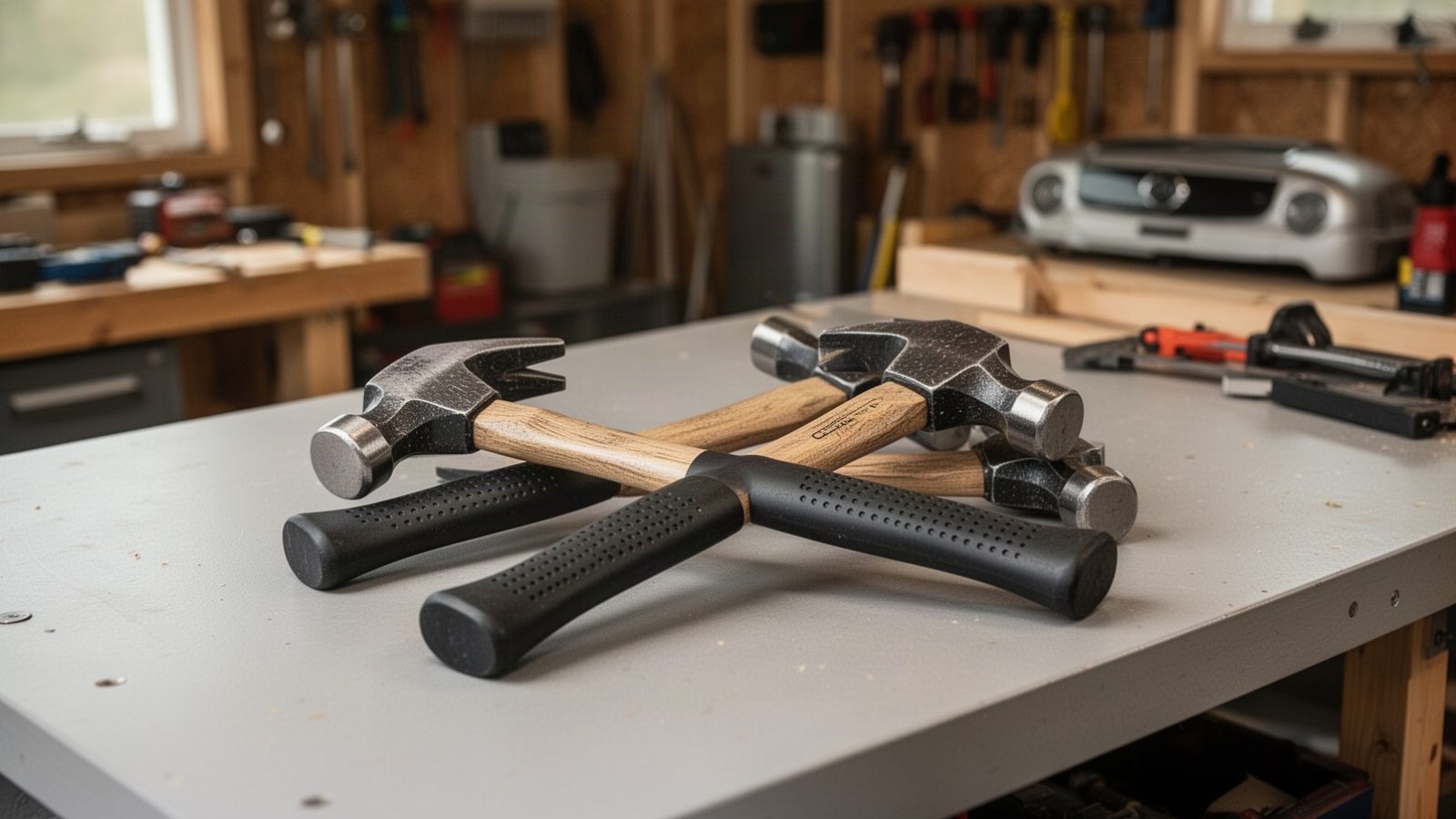
Five claw and framing hammers compared, from a classic 16-ounce steel hammer for the house to a 22-ounce framer and a lightweight titanium pro pick.
As an Amazon Associate I earn from qualifying purchases. When you buy through links on this page, we may earn a commission at no extra cost to you. Learn more
Every home needs a hammer, and most homes need just one good one. A well-balanced claw hammer drives picture hooks and finish nails, pulls old nails and staples, taps furniture joints together and handles light demolition. People who frame walls, build decks or do a lot of carpentry benefit from a heavier hammer with a longer handle and a textured face.
The differences between hammers come down to head weight, claw shape, face texture and handle material, and each one changes how the tool feels and what it is good at. We compared head weights, overall lengths, handle construction, vibration-reduction claims and warranties for long-running hammers that are widely available, and picked the best choice for different jobs, from hanging artwork to framing. If you only buy one, start with a 16-ounce smooth-face claw hammer and add a heavier framer later if your projects grow.
Our top picks
-
1
 Illustration
Best overall
Estwing 16 oz Curved Claw Hammer (E3-16C)
Most households and general carpentry
Head weight16 ozHandleForged steel with shock reduction gripFaceSmooth -
2
 Illustration
Best for less vibration
Fiskars IsoCore 16 oz Finishing Hammer
Anyone with sore wrists or elbows
Head weight16 ozHandleComposite with IsoCore shock controlFaceSmooth -
3
 Illustration
Best framing hammer
Estwing 22 oz Milled Face Framing Hammer (E3-22SM)
Framing, decks and rough carpentry
Head weight22 ozHandleForged steel with shock reduction gripFaceMilled -
4
 Illustration
Best premium
Stiletto TI14MC 14 oz Titanium Milled Face Hammer
Professionals and serious builders
Head weight14 oz (titanium)Handle18-in curved hickoryFaceMilled -
5
 Illustration
Best value
TEKTON 16 oz Jacketed Fiberglass Claw Hammer (30123)
Budget-minded households and second toolboxes
Head weight16 ozHandleFiberglass with poly jacketFaceSmooth
Estwing 16 oz Curved Claw Hammer (E3-16C)
Illustration
A one-piece forged steel claw hammer with a shock-reducing grip and a smooth face.
Best for: Most households and general carpentry- Head weight
- 16 oz
- Handle
- Forged steel with shock reduction grip
- Face
- Smooth
- Claw
- Curved
- Overall length
- 13 in
What we like
- Head and handle forged in one piece, so it never loosens
- Shock reduction grip cuts down vibration
- Smooth face is safe for trim and visible work
- Made in the USA by a long-running brand
Keep in mind
- Steel handle transmits more vibration than wood
- Heavier feel than fiberglass hammers of the same head weight
Estwing's E3-16C is the hammer many carpenters picture when they think of a claw hammer. The head and handle are forged from a single piece of steel, so there is no joint to loosen, crack or fly apart, which is the most common way cheaper hammers fail.
At 16 ounces with a 13-inch overall length, it has enough mass to drive common nails confidently but is still controlled enough for trim, picture hooks and furniture repairs. The smooth face leaves fewer marks on wood, and the curved claw gives good leverage for pulling nails. Estwing's blue shock reduction grip is molded onto the handle to soften the sting of each blow.
A one-piece steel hammer still passes a little more vibration than a good wood handle, and it feels solid in the hand. For a hammer that will likely outlast its owner, that is a fair trade.
Bottom line: The best single hammer for most homes: durable, balanced and made to last decades.
Fiskars IsoCore 16 oz Finishing Hammer
Illustration
A 16-ounce hammer with Fiskars' IsoCore shock-control system and a 13.5-inch handle.
Best for: Anyone with sore wrists or elbows- Head weight
- 16 oz
- Handle
- Composite with IsoCore shock control
- Face
- Smooth
- Overall length
- 13.5 in
What we like
- IsoCore system is designed to reduce shock reaching your hand
- Slightly longer handle adds reach and swing
- Smooth face suits trim and household work
- Comfortable, textured grip
Keep in mind
- Bulkier handle than a steel hammer
- Not as indestructible as a one-piece forged hammer
- Model names and part numbers vary between listings
Fiskars built its IsoCore hammers around one idea: keep as much shock as possible away from your hand. The head is isolated from the handle by a shock-control system that Fiskars says reduces shock and vibration substantially compared with conventional handles, which matters if you have tender elbows or wrists, or simply hammer for long stretches.
This 16-ounce version is sized for household and finish work, with a smooth face that is kind to trim and a 13.5-inch handle that gives a little extra reach for overhead work. The grip is textured and cushioned for control.
The handle is bulkier than a slim steel hammer, and a composite design is not quite as bombproof as a one-piece forging. Fiskars sells several IsoCore hammers in similar weights, including general-use and framing models, so check the head weight and face before buying.
Bottom line: The best choice if comfort and reduced vibration matter more to you than a classic feel.
Estwing 22 oz Milled Face Framing Hammer (E3-22SM)
Illustration
A heavy one-piece steel framer with a milled face, rip claw and 16-inch length.
Best for: Framing, decks and rough carpentry- Head weight
- 22 oz
- Handle
- Forged steel with shock reduction grip
- Face
- Milled
- Claw
- Straight (rip)
- Overall length
- 16 in
What we like
- 22-ounce head drives large framing nails quickly
- Milled face grips nail heads and reduces glancing blows
- Straight rip claw doubles as a pry and demolition tool
- One-piece forged construction
Keep in mind
- Heavy and tiring for overhead or all-day work
- Milled face marks wood, so it is wrong for trim
- Too much hammer for picture hanging
For framing walls, building a deck or other rough carpentry, a heavier hammer pays off. Estwing's E3-22SM has a 22-ounce head on a 16-inch one-piece steel body, which gives a long, powerful swing that sinks 16d framing nails in fewer blows.
The milled face has a waffle texture that bites into the nail head, so the hammer is less likely to glance off and bend the nail. The straight rip claw is better than a curved claw for prying apart boards, splitting off blocking and demolition. Estwing's shock reduction grip helps take the edge off a heavy steel hammer.
That weight is the trade-off: it tires your arm faster than a titanium hammer, and the milled face leaves marks, so it does not belong on trim or furniture. Keep a 16-ounce smooth-face hammer for finish work and use this one for building.
Bottom line: A durable, powerful framing hammer for DIYers taking on decks, sheds and wall framing.
Stiletto TI14MC 14 oz Titanium Milled Face Hammer
Illustration
A lightweight titanium framing hammer with an 18-inch curved hickory handle and magnetic nail starter.
Best for: Professionals and serious builders- Head weight
- 14 oz (titanium)
- Handle
- 18-in curved hickory
- Face
- Milled
- Claw
- Straight
- Nail starter
- Magnetic
What we like
- Titanium head strikes hard for its light weight
- Hickory handle absorbs recoil well
- Magnetic nail starter allows one-handed nail setting
- Long handle delivers a powerful swing
Keep in mind
- Very premium-priced
- Wood handle can eventually need replacing
- Milled face is unsuitable for finish work
Titanium hammers exist for people who swing all day. Stiletto, now part of Milwaukee Tool, makes the best-known examples, and the TI14MC is a framing hammer with a 14-ounce titanium head on an 18-inch curved hickory handle. Stiletto claims it hits like a much heavier steel hammer while weighing far less and producing much less recoil.
In practice that means less fatigue across a long day of framing, especially for overhead and repetitive work. The hickory handle adds natural shock absorption, the milled face grips nail heads, and the magnetic nail starter holds a nail in the head so you can set it with one hand while holding a board with the other.
It is very premium-priced, and a wooden handle can eventually crack and need replacement. For occasional DIY it is hard to justify, but for professionals and serious builders it is a well-regarded investment in comfort.
Bottom line: The pick for pros who want a powerful, lighter framing hammer and are willing to pay for it.
TEKTON 16 oz Jacketed Fiberglass Claw Hammer (30123)
Illustration
A budget-friendly 16-ounce claw hammer with a protected fiberglass handle.
Best for: Budget-minded households and second toolboxes- Head weight
- 16 oz
- Handle
- Fiberglass with poly jacket
- Face
- Smooth
- Claw
- Curved
What we like
- Budget-friendly price for a solid household hammer
- Fiberglass handle is lighter than steel
- Poly jacket protects the handle from missed strikes
- Curved claw pulls nails easily
Keep in mind
- Less refined balance than an Estwing
- Grip and jacket can wear over years of heavy use
Not everyone needs a premium hammer. TEKTON's 16-ounce claw hammer is a straightforward, budget-friendly tool for hanging pictures, assembling furniture and small carpentry projects, and it is a sensible choice for a second toolbox in the garage, car or vacation home.
The handle is fiberglass, which is lighter than steel and absorbs some vibration, and it is wrapped in an impact-resistant poly jacket that protects it when a swing misses the nail and the handle hits the work instead. The curved claw is sharpened to grip nails for pulling, and the 16-ounce head is the most versatile weight for household jobs.
It does not have the polished balance or lifetime-heirloom feel of a forged Estwing, and the jacket and grip may show wear after years of hard use. For most homeowners, though, it covers every common hammer job at a fraction of premium prices.
Bottom line: A dependable, budget-friendly household hammer that covers everyday jobs.
Side-by-side comparison
| Product | Head weight | Handle | Face | Claw | Score |
|---|---|---|---|---|---|
| Estwing 16 oz Curved Claw Hammer (E3-16C)Best overall | 16 oz | Forged steel with shock reduction grip | Smooth | Curved | 9.3 |
| Fiskars IsoCore 16 oz Finishing HammerBest for less vibration | 16 oz | Composite with IsoCore shock control | Smooth | — | 8.9 |
| Estwing 22 oz Milled Face Framing Hammer (E3-22SM)Best framing hammer | 22 oz | Forged steel with shock reduction grip | Milled | Straight (rip) | 8.8 |
| Stiletto TI14MC 14 oz Titanium Milled Face HammerBest premium | 14 oz (titanium) | 18-in curved hickory | Milled | Straight | 8.9 |
| TEKTON 16 oz Jacketed Fiberglass Claw Hammer (30123)Best value | 16 oz | Fiberglass with poly jacket | Smooth | Curved | 8.3 |
Specifications are from manufacturer listings at the time of writing and can change between production runs.
Pick the right head weight
- 12 to 16 ounces suits household jobs: picture hooks, trim and finish nails, furniture repairs and light carpentry. A 16-ounce hammer is the best single choice for most homes.
- 20 to 22 ounces is the classic framing range. The extra mass drives large nails in fewer blows, but it tires your arm faster and is clumsy for delicate work.
- Titanium hammers use a lighter head that delivers the striking force of a heavier steel hammer, with less weight to swing all day.
Curved claw or straight claw?
Curved claws give more leverage for pulling nails, which is why they are the usual choice for household hammers. Straight (rip) claws are better for prying boards apart, splitting wood and demolition, and they are common on framing hammers.
Smooth face or milled face?
A smooth face leaves fewer marks on wood and is the right choice for trim, furniture and anything visible. A milled (waffle) face grips the nail head and reduces glancing blows when framing, but it leaves a textured mark on the wood, so keep it for rough work.
Handle materials
- Steel handles, often forged in one piece with the head, are extremely durable and will not loosen over time. Good ones add a grip designed to reduce shock.
- Fiberglass handles are lighter and absorb some vibration; they are typically more budget-friendly.
- Wood (hickory) handles feel natural and dampen vibration well but can crack or loosen and eventually need replacing.
- Composite or isolated cores separate the head from the handle to cut down the shock reaching your hand.
Handle length matters too: 13 to 14 inches is comfortable for household work, while 16 inches or more gives framers more swing and power.
What you can skip
Most households do not need a hammer collection. Skip novelty multi-tool hammers with built-in screwdrivers or pry bars in the handle, which tend to be poorly balanced and weak at both jobs. Very light tack hammers are only worth it for upholstery or crafts, and heavy sledges are for demolition and landscaping. A rubber mallet is a useful, inexpensive second hammer for flat-pack furniture, tile and anything you do not want to dent.
Safety tips
Wear safety glasses whenever you hammer, because nails, chips and fragments can fly. Start nails with light taps and keep your fingers clear, or hold small nails with needle-nose pliers. Never strike hardened steel, such as another hammer or a cold chisel, with a claw hammer, since the face can chip. Retire any hammer with a loose head, cracked handle or chipped face, and follow the manufacturer's instructions for use.
Frequently asked questions
What size hammer is best for home use?
A 16-ounce claw hammer with a smooth face is the most versatile choice for hanging pictures, light carpentry and general repairs. Smaller 12- to 13-ounce hammers suit people who mainly hang pictures and do small jobs.
Is a framing hammer good for general household use?
Usually not. Framing hammers are heavier, longer and often have milled faces that mark wood. They are excellent for building walls and decks but overkill for hanging pictures or trim.
Are titanium hammers worth the money?
For professionals who swing a hammer all day, the lighter head and reduced recoil can make a real difference to fatigue. For occasional household use, a quality steel or fiberglass hammer is more sensible.
Why does my hammer bend nails?
Common causes are glancing blows, a hammer that is too light for the nail size, or hitting too hard before the nail is set. Start with light taps, swing from the elbow and keep the face square to the nail head.
When should I replace a hammer?
Replace it if the head is loose, the handle is cracked or splintered, or the face is chipped or mushroomed. Damaged hammers can glance off nails or break during use.
How we picked
We compared manufacturer specifications for head weight, overall length, face texture, claw style, handle construction, vibration-reduction claims and warranty terms for hammers consistently available online, and weighed how each suits household repairs, finish work and framing. Our picks and scores are based on this research — we have not tested these products hands-on. Brands cannot pay to be included. Read our full method.