






















The best guitar practice amps for home playing
Five well-regarded practice amps compared — from app-driven smart amps to straightforward analog combos that sound good at bedroom volume.
As an Amazon Associate I earn from qualifying purchases. When you buy through links on this page, we may earn a commission at no extra cost to you. Learn more
A practice amp has a tricky job. It has to sound good at the low volumes you can get away with in an apartment, give you enough tones to keep practice interesting, and still be simple enough that you spend your time playing rather than scrolling through menus. The best ones also double as a recording tool or a headphone amp for late nights.
Modern practice amps split into two camps. Modeling amps use digital processing to imitate dozens of classic amps and effects, often with an app for editing. Analog combos keep things simple with a couple of channels and a few knobs. We compared the most popular, long-running models on power, speaker size, features, low-volume behavior and ease of use, and picked the best choice for different players and homes.
Our top picks
-
1
 Illustration
Best overall
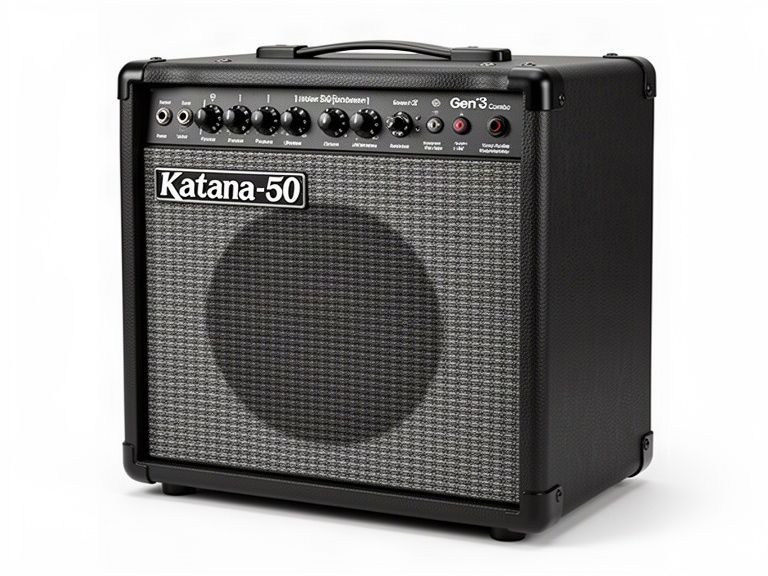
Boss Katana-50 Gen 3 Combo Amp
Players who want one amp for home, rehearsal and small gigs
Power50 watts, with lower power settingsSpeaker1 × 12"Amp typeDigital modeling -
2
 Illustration
Best for beginners
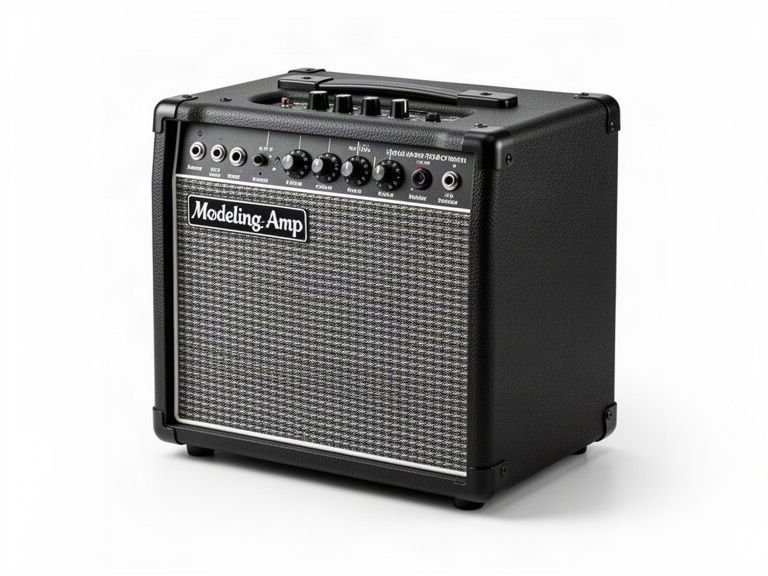
Fender Mustang LT25 Modeling Amp
New players who want simple controls and lots of sounds
Power25 wattsSpeaker1 × 8"Amp typeDigital modeling -
3
 Illustration
Best smart amp
Positive Grid Spark 40 Amp
Players who learn songs with an app and stream music
Power40 wattsSpeaker2 × 4"Amp typeDigital modeling -
4
 Illustration
Best for apartments
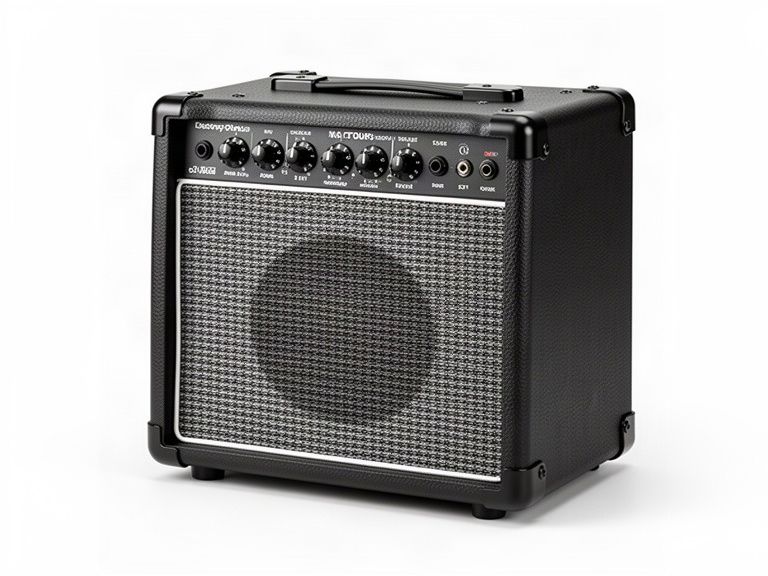
Yamaha THR10II Desktop Guitar Amp
Quiet practice and home recording in shared spaces
Power20 watts (stereo)Speaker2 × 3.15"Amp typeDigital modeling -
5
 Illustration
Best analog amp
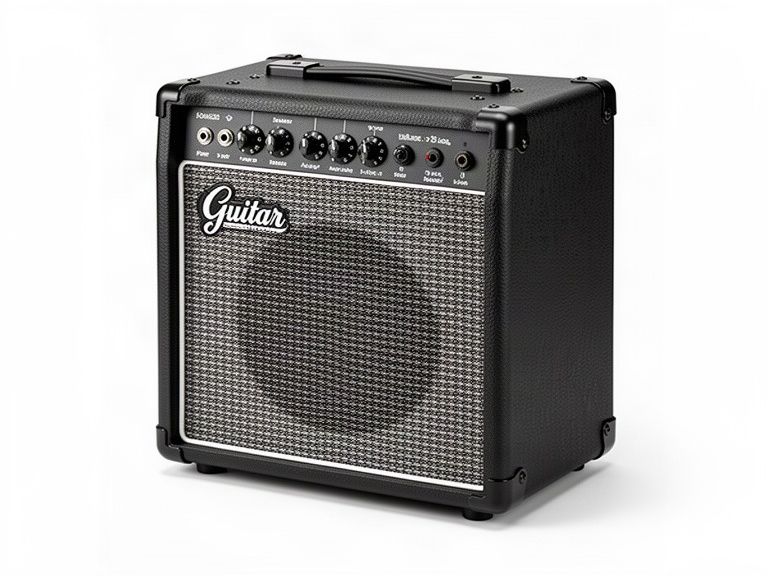
Orange Crush 20 Guitar Combo
Rock players who want simple knobs and no menus
Power20 wattsSpeaker1 × 8"Amp typeAnalog solid-state
Boss Katana-50 Gen 3 Combo Amp
Illustration
A 50-watt modeling combo with a 12-inch speaker and power scaling that sounds full at both whisper and band volume.
Best for: Players who want one amp for home, rehearsal and small gigs- Power
- 50 watts, with lower power settings
- Speaker
- 1 × 12"
- Amp type
- Digital modeling
- Headphone out
- Yes
- Recording
- USB audio
What we like
- 12-inch speaker gives a fuller sound than most practice amps
- Power control lets it go quiet without losing tone
- Five amp characters and Boss effects on the front panel
- USB audio output for recording
Keep in mind
- Heavier and larger than desktop practice amps
- Deep editing is easiest through the Boss Tone Studio software
The Katana line became the default recommendation for a reason: it behaves like a real amp at every volume. The Gen 3 Katana-50 keeps the formula that made the series popular — a 12-inch speaker, five amp characters with variations, and Boss effects you can reach from the front panel — and adds refinements to the amp voicings.
The key feature for home players is power control. Dropping the output lets you push the amp into a crunchy, compressed sound at a level that won't rattle the walls, and the larger speaker keeps that sound from turning thin. When you need more, the full 50 watts can keep up with a drummer at a rehearsal or a small gig.
It is bigger and heavier than a desktop amp, so it suits a dedicated corner rather than a shelf.
Bottom line: The most versatile pick if you want one amp that covers practice, recording and the occasional gig.
Fender Mustang LT25 Modeling Amp
Illustration
A light 25-watt modeling amp with an 8-inch speaker and a simple preset system designed around beginners.
Best for: New players who want simple controls and lots of sounds- Power
- 25 watts
- Speaker
- 1 × 8"
- Amp type
- Digital modeling
- Headphone out
- Yes
- Recording
- USB audio
What we like
- Easy preset browsing with a small display
- Wide range of Fender and other amp models plus effects
- Light and compact for a bedroom
- USB connection for recording and the Fender Tone app
Keep in mind
- 8-inch speaker is thin compared with 10–12-inch models
- Not loud enough to play with a drummer
The Mustang LT25 is built for someone who has just bought a guitar and wants to sound good quickly. Instead of a wall of knobs, you scroll through presets on a small screen, find one that suits the song, and adjust gain, volume and a couple of tone controls.
Underneath, there is a broad library of amp models and effects, from Fender cleans to high-gain sounds, and the Fender Tone software makes deeper editing possible once you know what you want. The USB connection also lets you record into a computer.
The compromise is the 8-inch speaker. It is fine for solo practice but lacks the depth of larger amps, and 25 watts won't compete with a band.
Bottom line: The easiest modeling amp for a beginner to pick up and get good sounds from right away.
Positive Grid Spark 40 Amp
Illustration
A 40-watt desktop-style amp with stereo speakers, Bluetooth streaming and an app built around learning songs.
Best for: Players who learn songs with an app and stream music- Power
- 40 watts
- Speaker
- 2 × 4"
- Amp type
- Digital modeling
- Headphone out
- Yes
- Recording
- USB audio
What we like
- Bluetooth speaker doubles as a music player
- App features help you play along with backing tracks and songs
- Large library of amp models and effects
- Compact and easy to move around the house
Keep in mind
- Many features depend on the phone app
- Small speakers don't feel like a traditional amp in the room
The Spark 40 is as much a practice tool as an amp. Pair a phone and you can stream songs through its stereo speakers, play along, and use the companion app's learning features, such as chord display and generated backing tracks, to practice with something more musical than a metronome.
The amp side covers a wide range of models and effects, and you can download tones shared by other players. Its small stereo speakers sound wide and clear for both guitar and music playback, which makes it a good all-round speaker for a bedroom or office.
The flip side is that it feels most at home with the app open. Players who prefer to set a few knobs and forget the phone will find it less direct than a Katana or an analog combo.
Bottom line: A great practice companion if you like learning songs with an app and want a speaker for music too.
Yamaha THR10II Desktop Guitar Amp
Illustration
A stylish stereo desktop amp that sounds detailed at low volume and doubles as a Bluetooth speaker.
Best for: Quiet practice and home recording in shared spaces- Power
- 20 watts (stereo)
- Speaker
- 2 × 3.15"
- Amp type
- Digital modeling
- Headphone out
- Yes
- Recording
- USB audio
What we like
- Designed to sound good at very low volume
- Stereo sound for effects and music playback
- Attractive design that fits a living room
- USB audio interface for recording
Keep in mind
- Not loud enough for rehearsals
- Premium-priced for its output
Yamaha's THR series was designed from the start for living rooms rather than stages. The THR10II is small enough for a desk or bookshelf, looks more like a vintage radio than a piece of music gear, and focuses on sounding rich at the kind of volume that won't disturb anyone in the next room.
It offers a selection of amp models plus modulation, delay and reverb effects, and its stereo speakers give those effects a sense of space that mono practice amps can't match. It also works as a Bluetooth speaker and a USB audio interface, so it can be the center of a small home-recording setup.
Its limit is volume. Twenty watts across two small speakers is ideal for practice but not for playing with a drummer.
Bottom line: The best choice when sounding good at low volume matters more than being loud.
Orange Crush 20 Guitar Combo
Illustration
A straightforward two-channel analog combo with an 8-inch speaker and a thick, classic-rock overdrive.
Best for: Rock players who want simple knobs and no menus- Power
- 20 watts
- Speaker
- 1 × 8"
- Amp type
- Analog solid-state
- Headphone out
- Yes
- Channels
- 2 (clean and dirty)
What we like
- Instantly understandable controls
- Bold overdrive tone with a three-band EQ
- Takes pedals well
- Distinctive look
Keep in mind
- No built-in effects on the base model
- Small speaker limits low end
Not everyone wants a screen on their amp. The Orange Crush 20 has a clean channel, a dirty channel with gain and a three-band EQ, and a headphone output — and that's about it. That simplicity is the point: you plug in, turn the gain up and play.
The dirty channel is the star, with a thick midrange voice that suits classic rock, punk and grunge. The clean channel stays clean at practice volume, which makes it a good platform if you already own or plan to buy pedals.
You do give up the flexibility of a modeling amp. There are no built-in effects on this base model and the 8-inch speaker is best for solo practice. But for players who find menus distracting, it is refreshingly direct.
Bottom line: A no-fuss analog practice amp for players who prefer knobs to apps.
Side-by-side comparison
| Product | Power | Speaker | Amp type | Headphone out | Score |
|---|---|---|---|---|---|
| Boss Katana-50 Gen 3 Combo AmpBest overall | 50 watts, with lower power settings | 1 × 12" | Digital modeling | Yes | 9.3 |
| Fender Mustang LT25 Modeling AmpBest for beginners | 25 watts | 1 × 8" | Digital modeling | Yes | 8.9 |
| Positive Grid Spark 40 AmpBest smart amp | 40 watts | 2 × 4" | Digital modeling | Yes | 8.8 |
| Yamaha THR10II Desktop Guitar AmpBest for apartments | 20 watts (stereo) | 2 × 3.15" | Digital modeling | Yes | 8.7 |
| Orange Crush 20 Guitar ComboBest analog amp | 20 watts | 1 × 8" | Analog solid-state | Yes | 8.4 |
Specifications are from manufacturer listings at the time of writing and can change between production runs.
How much power do you actually need?
For home practice, wattage matters far less than you might think. Anything from 10 to 25 watts is plenty loud for a bedroom, and even a 50-watt modeling amp spends most of its life turned way down. More power mostly buys you headroom — the ability to play clean at volume — which matters if you might jam with a drummer.
Look for an amp with a power-scaling or attenuator setting. It lets you get a cranked-amp sound at a quiet volume instead of a thin, fizzy one.
Speaker size and sound
- 6–8 inch speakers: compact and light, fine for solo practice, but thinner in the low end.
- 10–12 inch speakers: fuller, more "real amp" sound and better for playing with others.
- Small stereo speakers (as in desktop amps) sound wide and work well for music playback, but don't feel like a traditional amp in the room.
Modeling or analog?
Modeling amps give you a library of amp types and effects in one box, which is great for learning songs in different styles. Analog amps have fewer sounds but are instantly understandable — turn the gain up and play. If you already own pedals, a clean-sounding analog amp is often the better partner.
Features worth paying for
- A headphone output with a speaker-mute, so you can play silently at night.
- An aux input or Bluetooth audio to play along with songs.
- USB audio for recording straight into a computer without an interface.
- A built-in tuner saves one more gadget.
What you can skip
Huge preset libraries are less useful than they look. Most players settle on three or four sounds. A clear, fast way to save and recall those few sounds matters more than hundreds of factory presets. Likewise, don't buy a bigger amp "to grow into" if you only play at home — a 100-watt combo is heavier, harder to place and rarely sounds better at bedroom volume than a well-designed small one.
Placement tips
Small combos sound boomy on the floor and thin on a desk. Tilting the amp back or raising it toward ear level makes it easier to hear yourself without turning up — which your neighbors will appreciate.
Frequently asked questions
Is a modeling amp good for a beginner?
Yes. A modeling amp lets a beginner explore clean, crunch and high-gain sounds and built-in effects without buying pedals, which makes it easier to learn songs in different styles. Pick one with simple front-panel controls so you are not forced into an app for every change.
Can I use a practice amp for gigs?
A 50-watt combo with a 12-inch speaker can handle small gigs and rehearsals, especially if the venue mics or line-outs the amp. Amps under about 25 watts with small speakers are best kept for home use.
Do practice amps work with headphones?
Most current models have a headphone jack that mutes the speaker, and many modeling amps simulate a miked speaker cabinet in the headphone feed so it sounds natural rather than harsh.
Can I play bass through a guitar practice amp?
At low volume it usually works, but the small speakers are not designed for low frequencies and can distort or be damaged at higher volume. A dedicated bass amp is the better choice for regular bass practice.
What is power scaling?
Power scaling lowers an amp’s output while keeping its tone character, so you can hear a driven, full sound at a volume suitable for a bedroom. Some amps offer it as selectable wattage settings.
How we picked
We compared manufacturer specifications, output power, speaker size, amp and effect options, headphone and recording features, and software support for the most popular practice amps that have been consistently available online, and weighed how each suits different players and living situations. Our picks and scores are based on this research — we have not tested these products hands-on. Brands cannot pay to be included. Read our full method.