






















The best green teas
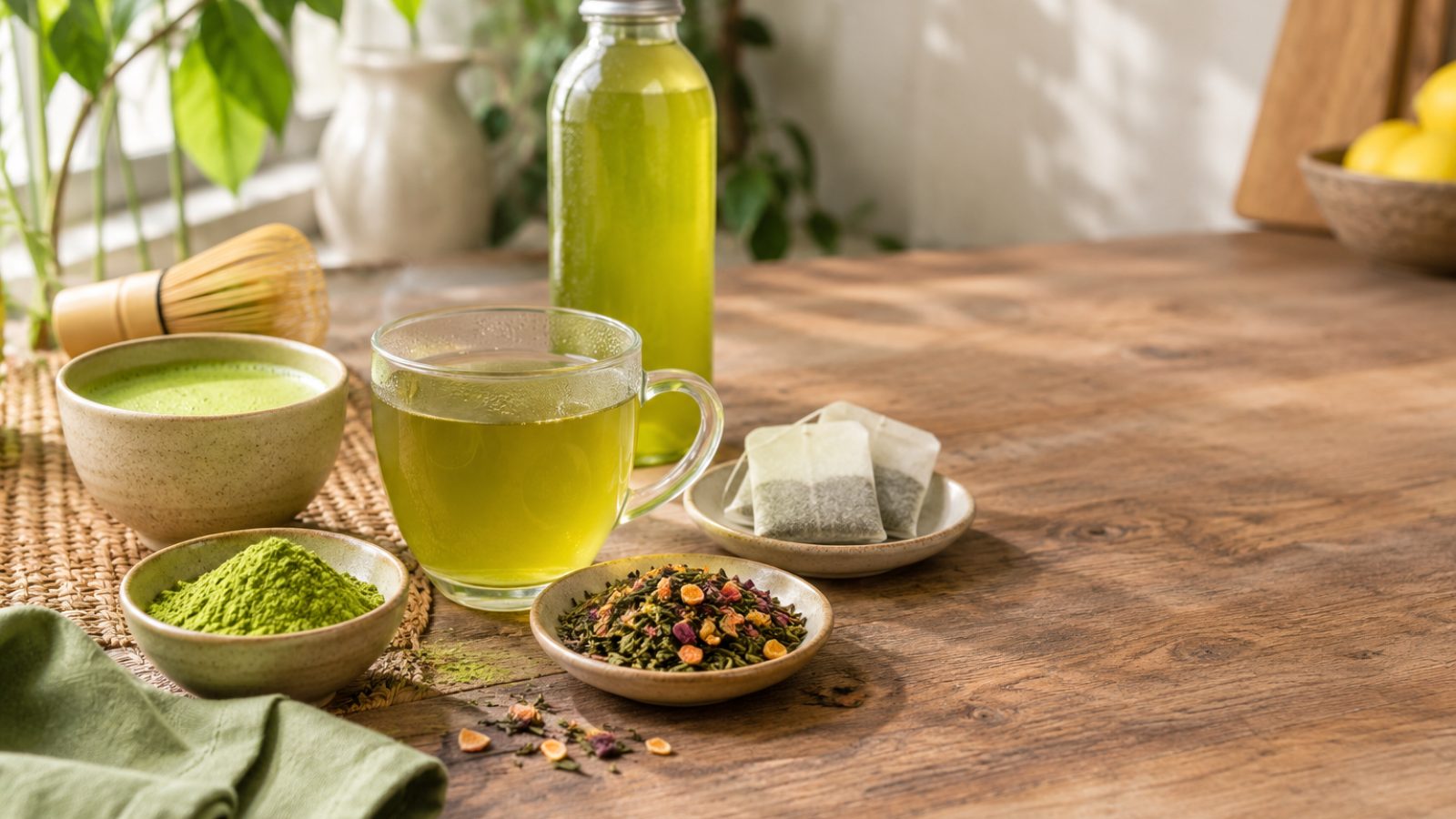
Five green teas compared — everyday tea bags, a flavored blend, loose-style gunpowder tea, matcha powder and a bottled unsweetened option.
As an Amazon Associate I earn from qualifying purchases. When you buy through links on this page, we may earn a commission at no extra cost to you. Learn more
Green tea has a reputation for tasting grassy or bitter, but most of that comes from how it is brewed rather than the tea itself. Pour boiling water over green tea and leave it for five minutes and you will get a harsh, astringent cup; use cooler water and a shorter steep and the same tea turns mellow, sweet and fresh. The format matters as well — whisked matcha powder, a quick tea bag and a bottle from the fridge are very different experiences.
We compared popular, consistently available green teas in the US by style, flavorings, format, brewing requirements and how each one fits a daily routine. Below you will find how to choose between the main types, how to brew green tea so it tastes good, and five picks — from a simple tea bag for the office to matcha for lattes.
Our top picks
-
1
 Illustration
Best overall
Bigelow Classic Green Tea
An easy, mild daily green tea
StyleClassic bagged green teaFormatIndividually wrapped tea bagsCaffeineCaffeinated (decaf version sold) -
2
 Illustration
Best matcha
Jade Leaf Organic Matcha Powder
Matcha lattes and whisked matcha at home
StyleMatcha powderFormatPowder in pouches or tinsCaffeineCaffeinated -
3
 Illustration
Best flavored
Tazo Zen Green Tea
People who find plain green tea too grassy
StyleFlavored green tea (spearmint, lemongrass)FormatTea bagsCaffeineCaffeinated -
4
 Illustration
Best toasty green tea
Numi Organic Gunpowder Green Tea
A fuller, toastier green tea
StyleGunpowder green teaFormatTea bagsCaffeineCaffeinated -
5
 Illustration
Best ready-to-drink
ITO EN Oi Ocha Unsweetened Green Tea
Grab-and-go unsweetened green tea
StyleJapanese green tea, ready to drinkFormatBottlesCaffeineCaffeinated
Bigelow Classic Green Tea
Illustration
A mild, approachable green tea in individually wrapped bags.
Best for: An easy, mild daily green tea- Style
- Classic bagged green tea
- Format
- Individually wrapped tea bags
- Caffeine
- Caffeinated (decaf version sold)
- Flavor
- Mild, lightly toasty
What we like
- Mild flavor suits green-tea newcomers
- Individually wrapped bags stay fresh in a desk drawer or bag
- Easy to find in large multipacks
- Decaf version available
Keep in mind
- Lacks the depth of loose-leaf Japanese teas
- Can still turn bitter with boiling water
Bigelow’s Classic Green is the kind of tea that quietly becomes a habit. It is mild and slightly toasty, without the strong grassy notes that put some people off green tea, and each bag is sealed in its own foil-lined pouch, so the tea stays fresh in an office drawer, a car or a travel bag.
It is an American family-owned brand with wide distribution, so multipacks are easy to buy, and a decaffeinated version is available. Like any green tea, it tastes best with water just off the boil and a short steep — two minutes is often enough.
Tea enthusiasts will find it simple compared with a good sencha. As a reliable, inexpensive daily cup, it is excellent.
Bottom line: The easiest everyday green tea for most people.
Jade Leaf Organic Matcha Powder
Illustration
Organic Japanese matcha sold in culinary and ceremonial-style grades.
Best for: Matcha lattes and whisked matcha at home- Style
- Matcha powder
- Format
- Powder in pouches or tins
- Caffeine
- Caffeinated
- Dietary notes
- USDA Organic
What we like
- Offered in grades for drinking and for lattes or baking
- Organic and sourced from Japan
- Versatile — lattes, smoothies, baking
- Small amount per serving goes a long way
Keep in mind
- Needs a whisk or frother for a smooth drink
- Culinary grade is too bitter to drink plain with water
Jade Leaf has become one of the most recognizable matcha brands in the US, largely because it explains its grades clearly. The culinary grade is made for lattes, smoothies and baking, where a stronger flavor holds up to milk and sugar, while the ceremonial-style grade is smoother for drinking with water alone.
The matcha is organic and sourced from Japan, and it is packed in sizes from small tins to large pouches. Because you whisk the whole powdered leaf into your drink, a little goes a long way, and the flavor is far richer than a green tea bag.
You will need a bamboo whisk or a handheld frother to avoid clumps. If you mainly make lattes, start with the culinary grade.
Bottom line: An approachable, well-graded matcha for lattes and home whisking.
Tazo Zen Green Tea
Illustration
Green tea blended with spearmint and lemongrass for a bright, minty cup.
Best for: People who find plain green tea too grassy- Style
- Flavored green tea (spearmint, lemongrass)
- Format
- Tea bags
- Caffeine
- Caffeinated
- Flavor
- Minty, citrusy
What we like
- Mint and lemongrass soften the green-tea grassiness
- Refreshing hot or iced
- Long-running, easy-to-find blend
- Good after meals
Keep in mind
- The mint can overpower the tea itself
- Not for green-tea purists
Tazo Zen is a long-running blend that takes a different route into green tea: it adds spearmint and lemongrass, which give a fresh, cooling aroma and a gentle citrus note. For people who find plain green tea grassy, this is often the version they end up drinking regularly.
It works well as an after-dinner tea and is particularly good iced, where the mint shines. Because the flavorings carry much of the taste, it is also a little more forgiving of hot water than an unflavored green tea, though a shorter steep still gives the smoothest cup.
If you want to taste the tea itself, choose a plain green or a sencha instead. If you want a refreshing everyday cup, it is a great pick.
Bottom line: A refreshing mint-and-lemongrass green tea for people new to green tea.
Numi Organic Gunpowder Green Tea
Illustration
Organic Chinese-style gunpowder green tea with a toasty, slightly smoky flavor.
Best for: A fuller, toastier green tea- Style
- Gunpowder green tea
- Format
- Tea bags
- Caffeine
- Caffeinated
- Dietary notes
- USDA Organic
What we like
- Toasty, fuller flavor than most bagged green teas
- Organic leaves
- Pairs well with fresh mint for Moroccan-style tea
- Widely available
Keep in mind
- Smoky edge isn’t for everyone
- Bitter if steeped too long or too hot
Gunpowder tea is a Chinese-style green tea rolled into tight pellets, and it tastes toastier and fuller than the mild bagged green teas most people know. Numi’s organic version makes this style easy to try in a convenient bag.
The flavor has a light smokiness that pairs well with food, and it is the traditional base for Moroccan-style mint tea: brew it with fresh spearmint and a little sugar. On its own, it is a good choice for coffee drinkers who want a green tea with more presence.
Like all green tea, it gets bitter quickly with boiling water. Let the kettle cool for a few minutes and keep the steep to around two or three minutes.
Bottom line: A fuller, toastier green tea for people who find standard bags too thin.
ITO EN Oi Ocha Unsweetened Green Tea
Illustration
Bottled Japanese green tea with no sugar or sweeteners added.
Best for: Grab-and-go unsweetened green tea- Style
- Japanese green tea, ready to drink
- Format
- Bottles
- Caffeine
- Caffeinated
- Sweeteners
- None
What we like
- Tastes like brewed Japanese green tea
- No sugar or sweeteners
- No brewing needed — good for work and travel
- Pairs well with food, especially Japanese dishes
Keep in mind
- Costs more per serving than brewing your own
- Bottles take up fridge and pantry space
Most bottled green teas in US stores are sweetened, which makes ITO EN’s Oi Ocha stand out. It is a Japanese green tea brewed and bottled without sugar or sweeteners, and it tastes much closer to a freshly brewed cup than to a soft drink — clean, slightly savory and lightly bitter in a refreshing way.
That makes it a practical choice for work lunches, road trips and anyone who wants green tea without the kettle. ITO EN is one of Japan’s largest tea companies, and Oi Ocha is its signature line.
The convenience comes at a premium compared with tea bags, and bottles take up space. Keep a case for busy days and brew at home the rest of the time.
Bottom line: The best grab-and-go option if you want green tea with nothing added.
Side-by-side comparison
| Product | Style | Format | Caffeine | Flavor | Score |
|---|---|---|---|---|---|
| Bigelow Classic Green TeaBest overall | Classic bagged green tea | Individually wrapped tea bags | Caffeinated (decaf version sold) | Mild, lightly toasty | 9.0 |
| Jade Leaf Organic Matcha PowderBest matcha | Matcha powder | Powder in pouches or tins | Caffeinated | — | 8.9 |
| Tazo Zen Green TeaBest flavored | Flavored green tea (spearmint, lemongrass) | Tea bags | Caffeinated | Minty, citrusy | 8.5 |
| Numi Organic Gunpowder Green TeaBest toasty green tea | Gunpowder green tea | Tea bags | Caffeinated | — | 8.3 |
| ITO EN Oi Ocha Unsweetened Green TeaBest ready-to-drink | Japanese green tea, ready to drink | Bottles | Caffeinated | — | 8.4 |
Specifications are from manufacturer listings at the time of writing and can change between production runs.
The main types of green tea
- Everyday bagged green tea uses small, cut leaves. It is quick and consistent, with a light, toasty-grassy taste.
- Japanese-style teas such as sencha are steamed, which keeps a fresh, vegetal, sometimes savory flavor. Genmaicha adds toasted rice for a nutty taste.
- Chinese-style teas such as gunpowder are pan-fired, giving a toastier, slightly smoky taste. Gunpowder leaves are rolled into small pellets that unfurl as they brew.
- Matcha is green tea ground to a fine powder that you whisk into water or milk, so you consume the whole leaf. It has a vivid color and a rich, grassy flavor.
- Flavored green teas add mint, lemongrass, citrus or fruit, which softens the grassiness and helps newcomers.
Brew it cooler and shorter
The single most useful tip: don’t use boiling water. Let the kettle sit for a few minutes after boiling, or heat water to roughly 160–180°F if your kettle has temperature settings. Steep bags for one to three minutes, then taste. Matcha should be whisked with water that is hot but not boiling, starting with a small amount to make a smooth paste before topping up. If a green tea still tastes bitter, shorten the steep before giving up on it.
Choosing matcha
Matcha is sold in grades. Ceremonial-style grades are meant for drinking with water and taste smoother and less bitter; culinary grades are stronger and designed for lattes, smoothies and baking. Bright green color usually indicates fresher, higher-grade powder, while dull, olive-colored matcha tends to taste flat. Because matcha is the whole leaf, a small tin goes a long way.
Bottled green tea
Ready-to-drink green tea is the most convenient option, but read the label: many bottled teas are sweetened. Unsweetened versions taste close to brewed tea and are handy for work or travel. They cost more per serving than brewing your own.
Caffeine and storage
Green tea contains caffeine, typically less than coffee, and matcha usually contains more than a green tea bag because you consume the whole leaf. Green tea is more delicate than black tea, so store it airtight, away from light, heat and strong smells, and try to finish an opened pack within a few months. Matcha keeps its color and flavor best in the fridge once opened — reseal it tightly so it doesn’t absorb odors.
Frequently asked questions
Why does my green tea taste bitter?
Water that is too hot and steeping too long are the usual causes. Use water below boiling — around 160–180°F — and steep for one to three minutes. Remove the bag or leaves promptly.
Does green tea have caffeine?
Yes. A cup of green tea typically has less caffeine than a cup of coffee, while matcha usually has more than a standard green tea bag because you consume the powdered leaf. Amounts vary by product and serving size.
What is the difference between ceremonial and culinary matcha?
Ceremonial-style matcha is made for drinking with water and tastes smoother. Culinary matcha has a stronger, more bitter flavor that holds up in lattes, smoothies and baking. Grading is not standardized, so compare color and the brand’s intended use.
Can I cold brew green tea?
Yes. Steep tea bags or leaves in cold water in the fridge for several hours. Cold brewing gives a smooth, sweet, low-bitterness tea and is a good way to enjoy a tea you find harsh when brewed hot.
How should I store matcha?
Keep it sealed tightly, away from light and heat. Many people store opened matcha in the fridge to keep its color and flavor longer. Let the tin come to room temperature before opening to avoid moisture.
How we picked
We compared tea styles, flavorings, formats, brewing guidance from each brand, ingredient lists for bottled teas and availability in the US for widely sold green teas, and weighed how each suits different routines. Our picks and scores are based on this research — we have not tested these products hands-on. Brands cannot pay to be included. Read our full method.