






















The best filtered water bottles for hiking and travel
Four filtered water bottles compared — Grayl press purifiers, a LifeStraw backcountry bottle and a Brita bottle for tap water — with what each maker says it is rated to remove.
As an Amazon Associate I earn from qualifying purchases. When you buy through links on this page, we may earn a commission at no extra cost to you. Learn more
A filtered water bottle combines a bottle and a water treatment device in one. Fill it, drink or press, and you are done — no separate filter, pouch or hoses. That makes these bottles popular for day hikes, international travel and anyone who wants better-tasting water from the tap.
The catch is that “filtered water bottle” covers very different products. Some are true purifiers that their makers rate for viruses as well as bacteria and protozoa. Others are backcountry filters rated for bacteria and parasites but not viruses. And tap-water bottles only improve the taste and odor of already-treated water. We compared popular, long-running filtered bottles from Grayl, LifeStraw and Brita, and for each one we report only what the manufacturer says it is rated to remove.
Our top picks
-
1
 Illustration
Best overall
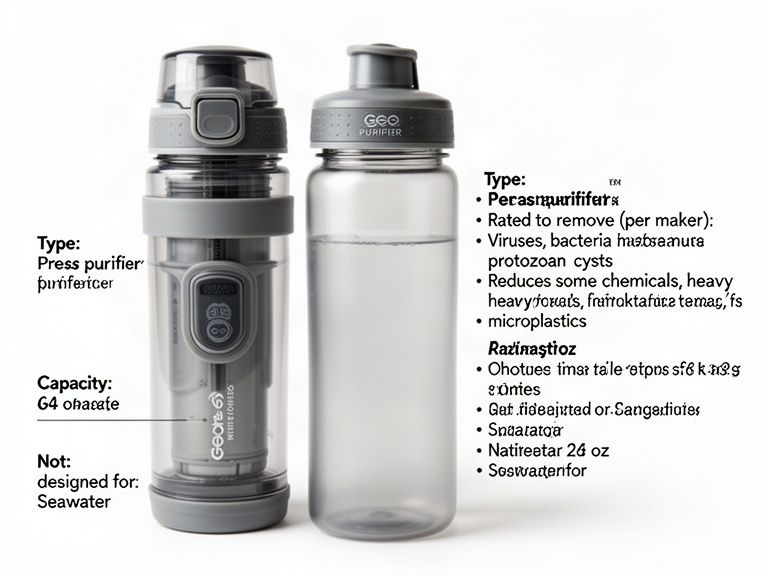
Grayl GeoPress Water Purifier Bottle 24 oz
International travel and backcountry trips
TypePress purifierRated to remove (per maker)Viruses, bacteria, protozoan cysts; reduces some chemicals, heavy metals, microplasticsCapacity24 oz -
2
 Illustration
Best lightweight purifier
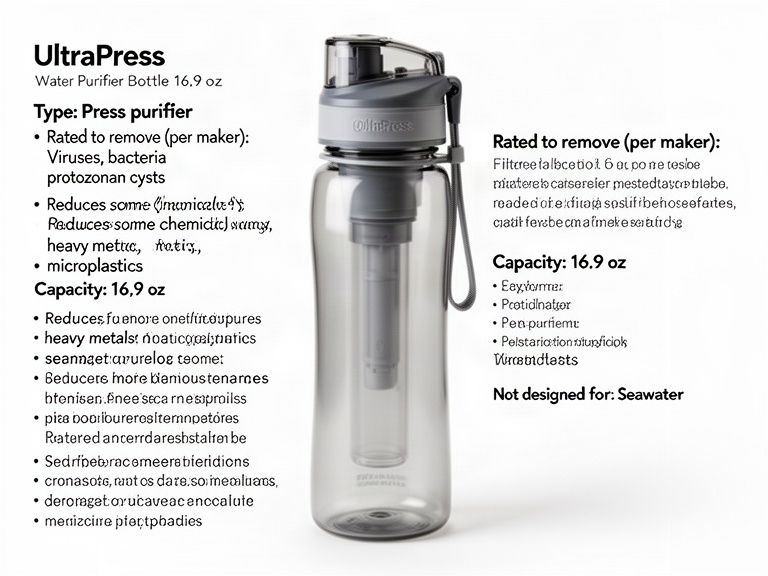
Grayl UltraPress Water Purifier Bottle 16.9 oz
Day hikers and travelers who want a smaller purifier
TypePress purifierRated to remove (per maker)Viruses, bacteria, protozoan cysts; reduces some chemicals, heavy metals, microplasticsCapacity16.9 oz -
3
 Illustration
Best for hiking
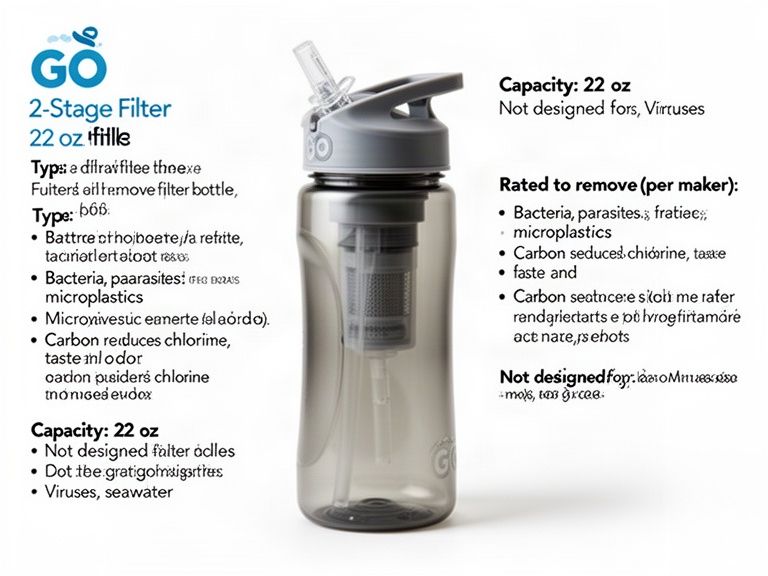
LifeStraw Go 2-Stage Filter Bottle 22 oz
Day hikers using clear streams and lakes
TypeStraw filter bottleRated to remove (per maker)Bacteria, parasites, microplastics; carbon reduces chlorine, taste and odorCapacity22 oz -
4
 Illustration
Best for tap water
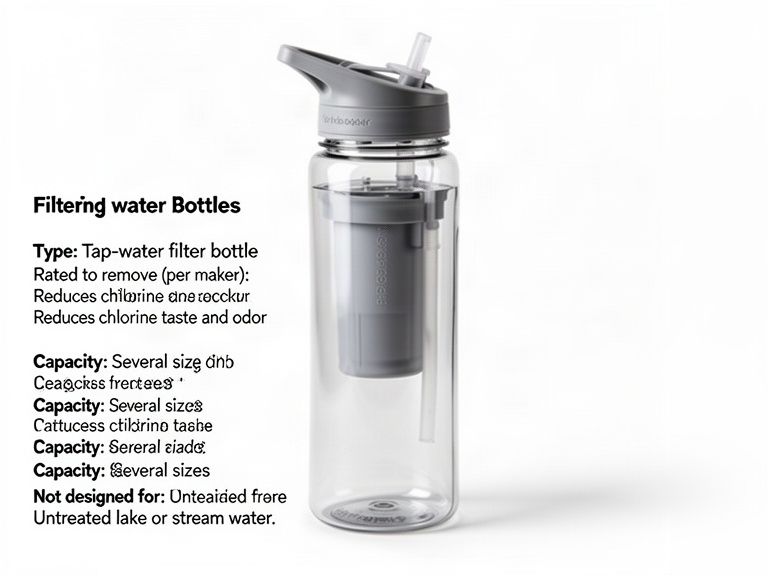
Brita Filtering Water Bottle
Commuters, gyms and campgrounds with treated taps
TypeTap-water filter bottleRated to remove (per maker)Reduces chlorine taste and odorCapacitySeveral sizes
Grayl GeoPress Water Purifier Bottle 24 oz
Illustration
A 24-ounce press-style purifier that Grayl rates to remove viruses, bacteria and protozoan cysts.
Best for: International travel and backcountry trips- Type
- Press purifier
- Rated to remove (per maker)
- Viruses, bacteria, protozoan cysts; reduces some chemicals, heavy metals, microplastics
- Capacity
- 24 oz
- Not designed for
- Seawater
What we like
- Broadest removal rating in this guide, per Grayl
- Fast, simple press-and-drink operation
- Good capacity for a purifier bottle
- Useful for travel and backcountry
Keep in mind
- Heavier and bulkier than filter bottles
- Cartridges need replacing fairly often
- Premium-priced
The GeoPress is the purifier bottle most travelers and hikers reach for when they want the widest protection in one container. It works like a French press: fill the outer cup, push the inner cartridge down through the water, and drink from the cartridge.
Grayl rates it to remove viruses, bacteria and protozoan cysts, and to reduce some chemicals, heavy metals and microplastics. That broader rating makes it a common choice for international travel and water sources near heavy human use. It is not designed for seawater.
The trade-offs are bulk, weight and running costs. It is heavier than a straw-style bottle, and cartridges need replacing after the rated number of presses. Follow Grayl’s instructions for use, storage and cartridge replacement.
Bottom line: The best filtered bottle when you want a maker-rated purifier for travel and backcountry use.
Grayl UltraPress Water Purifier Bottle 16.9 oz
Illustration
A smaller, lighter Grayl press purifier with the same type of maker-rated virus, bacteria and cyst removal.
Best for: Day hikers and travelers who want a smaller purifier- Type
- Press purifier
- Rated to remove (per maker)
- Viruses, bacteria, protozoan cysts; reduces some chemicals, heavy metals, microplastics
- Capacity
- 16.9 oz
- Not designed for
- Seawater
What we like
- Lighter and more compact than the GeoPress
- Same press-and-drink simplicity
- Fits more easily in packs and bags
- Broad maker-rated removal
Keep in mind
- Smaller capacity means more frequent refills
- Still heavier than filter-only bottles
- Replacement cartridges add cost
The UltraPress takes the GeoPress formula and shrinks it to 16.9 ounces. It is lighter and slimmer, so it fits more easily into a daypack side pocket or carry-on, while keeping the same simple press-and-drink operation.
Grayl rates it to remove viruses, bacteria and protozoan cysts and to reduce some chemicals, heavy metals and microplastics, making it a compact option for travelers. It is not designed for seawater.
The smaller capacity means more refills, and it is still heavier than straw-style filter bottles. Choose it over the GeoPress if size and weight matter more than volume. Follow Grayl’s instructions for use and cartridge replacement.
Bottom line: A compact purifier bottle for travelers and day hikers who value portability.
LifeStraw Go 2-Stage Filter Bottle 22 oz
Illustration
A sip-through bottle with a hollow-fiber membrane and carbon stage, rated for bacteria, parasites and microplastics.
Best for: Day hikers using clear streams and lakes- Type
- Straw filter bottle
- Rated to remove (per maker)
- Bacteria, parasites, microplastics; carbon reduces chlorine, taste and odor
- Capacity
- 22 oz
- Not designed for
- Viruses, seawater
What we like
- Long-lasting membrane filter, per LifeStraw
- Carbon stage improves taste and odor
- Lighter than purifier bottles
- Budget-friendly
Keep in mind
- Not rated for viruses
- Sipping through the filter takes effort
- Carbon capsule needs more frequent replacement
The LifeStraw Go puts LifeStraw’s well-known hollow-fiber membrane inside a 22-ounce bottle, adding a carbon capsule as a second stage. You fill it from a stream and sip through the straw, and water passes through both stages as you drink.
LifeStraw rates the membrane to remove bacteria, parasites and microplastics, and says the carbon stage reduces chlorine, bad taste and odor. It is not rated for viruses, so it is best suited to clear wilderness water rather than international travel.
Sipping through a filter takes more effort than drinking from an open bottle, and the carbon capsule needs replacing far more often than the membrane. For day hikers, it is a light, affordable way to drink from streams. Follow LifeStraw’s instructions for use and replacement.
Bottom line: A light, affordable filter bottle for hikers drinking from clear wilderness sources.
Brita Filtering Water Bottle
Illustration
An everyday bottle with a replaceable filter designed to reduce chlorine taste and odor in treated tap water.
Best for: Commuters, gyms and campgrounds with treated taps- Type
- Tap-water filter bottle
- Rated to remove (per maker)
- Reduces chlorine taste and odor
- Capacity
- Several sizes
- Not designed for
- Untreated lake or stream water
What we like
- Makes treated tap water taste better
- Easy, inexpensive filter replacement
- Several sizes and styles
- Good for campground taps and travel within the US
Keep in mind
- Not for untreated outdoor water
- Filters need regular replacement
- Squeeze or straw flow is slower than an open bottle
Brita’s filtering bottle is not a backcountry tool, and that is exactly why it belongs here: many people buy a “filtered water bottle” when what they really want is better-tasting tap water. The Brita bottle uses a replaceable filter that Brita says reduces chlorine taste and odor in water that has already been treated.
That makes it a good choice for campground spigots, road trips, offices and gyms, where the water is safe but tastes of chlorine. It comes in several sizes and styles, and filters are inexpensive and easy to swap.
It is not designed for untreated lake or stream water, so pair it with a proper filter or purifier for the backcountry. Replace the filter on the schedule Brita recommends.
Bottom line: The right pick for better-tasting treated tap water, not for wilderness sources.
Side-by-side comparison
| Product | Type | Rated to remove (per maker) | Capacity | Not designed for | Score |
|---|---|---|---|---|---|
| Grayl GeoPress Water Purifier Bottle 24 ozBest overall | Press purifier | Viruses, bacteria, protozoan cysts; reduces some chemicals, heavy metals, microplastics | 24 oz | Seawater | 9.2 |
| Grayl UltraPress Water Purifier Bottle 16.9 ozBest lightweight purifier | Press purifier | Viruses, bacteria, protozoan cysts; reduces some chemicals, heavy metals, microplastics | 16.9 oz | Seawater | 8.9 |
| LifeStraw Go 2-Stage Filter Bottle 22 ozBest for hiking | Straw filter bottle | Bacteria, parasites, microplastics; carbon reduces chlorine, taste and odor | 22 oz | Viruses, seawater | 8.7 |
| Brita Filtering Water BottleBest for tap water | Tap-water filter bottle | Reduces chlorine taste and odor | Several sizes | Untreated lake or stream water | 8.0 |
Specifications are from manufacturer listings at the time of writing and can change between production runs.
Purifier, filter or taste filter?
- Purifier bottles, such as Grayl’s press models, are rated by their maker to remove viruses as well as bacteria and protozoan cysts, and to reduce some chemicals and heavy metals. They suit international travel and water sources with heavy human use.
- Backcountry filter bottles, such as the LifeStraw Go, are rated to remove bacteria and parasites but not viruses. They suit clear streams and lakes in wilderness areas.
- Tap-water bottles, such as Brita’s, are designed only to improve the taste and odor of water that is already treated. They are not for untreated lake or stream water.
Match the bottle to your water source, and read each maker’s ratings carefully.
Press, squeeze or straw?
Press-style purifiers work like a French press: you fill an outer cup, press the inner cartridge down and drink. Straw-style filters let you sip directly through the filter, which needs more suction. Squeeze bottles push water through the filter as you drink.
Capacity, weight and flow
Filtered bottles usually hold less than a regular bottle of the same size, because the filter takes up space. A 16- to 24-ounce bottle is typical. Think about how often you will refill, and whether you want a second, unfiltered bottle for treated water on longer hikes. Press purifiers deliver water quickly but need a firm push, which some children find hard; straw bottles are easy to fill but slower to drink from, especially as the filter clogs. If you share water in a group, a press model that fills a cup is easier than taking turns sipping.
Cartridge life and running costs
Every cartridge has a rated lifespan, from a few dozen gallons for tap-water filters and purifiers to far more for some backcountry membranes. Note the replacement interval and the cost of new cartridges, and replace them as the manufacturer recommends — a slowing flow is often the first sign.
Using filtered bottles safely
Keep the mouthpiece and clean side of the bottle away from untreated water, protect cartridges from freezing if the maker warns about it, and do not use these bottles for seawater, which none of them are designed to treat. Avoid water near mines, farms, industrial sites or algal blooms, follow local water advisories, and follow the manufacturer’s instructions for use and replacement.
Frequently asked questions
Can I fill a filtered water bottle from any stream or lake?
Only bottles rated for untreated water should be used with streams and lakes, and even then only within their maker’s ratings. Tap-water bottles such as Brita’s are not designed for untreated water. No bottle removes salt, and none is a guarantee against every contaminant.
Do filtered water bottles remove viruses?
Only bottles rated as purifiers by their makers, such as Grayl’s press models, claim virus removal. Most straw and squeeze filter bottles are not rated for viruses.
How often should I replace the filter cartridge?
Follow the manufacturer’s rated volume or time interval. Flow that slows despite cleaning is a common sign that a cartridge is near the end of its life.
Are filtered water bottles good for international travel?
Purifier bottles rated for viruses are the usual choice for travel where tap water quality is uncertain. Check the maker’s ratings, and follow local health guidance.
Can I put hot drinks in a filtered water bottle?
Generally no. Most filtered bottles are designed for cold water only, and heat can damage filter media. Check your manufacturer’s instructions.
How we picked
We compared manufacturer specifications and published removal ratings, filter type, capacity, ease of use and cartridge replacement for filtered water bottles that have been widely available online for several seasons. We only report what each manufacturer says its bottle is rated to remove. Our picks and scores are based on this research — we have not tested these products hands-on. Brands cannot pay to be included. Read our full method.