






















The best drum practice pads for rudiments and quiet practice
Four well-known practice pads from Evans, Vic Firth, Remo and Drumeo compared on size, playing surface, rebound and placement for drummers of every level.
As an Amazon Associate I earn from qualifying purchases. When you buy through links on this page, we may earn a commission at no extra cost to you. Learn more
A practice pad is the most-used piece of gear many drummers own. It is a quiet surface for working on the hand technique behind everything you play — single strokes, doubles, paradiddles, rolls and accents — without setting up a kit or bothering the household. Students carry one to lessons, working drummers warm up on one before gigs, and marching players spend hours on them.
Pads look simple, but they differ in how much the stick bounces back, how loud they are, how big the playing area is, and whether they sit on a table, on your lap or on a snare stand. A pad with lively rebound feels like a tuned snare; a dead, low-rebound surface makes your hands do more of the work. We compared long-running pads from the major drum brands and picked options for everyday rudiments, quiet apartments, realistic drum feel and kit-style practice.
Our top picks
-
1
 Illustration
Best overall
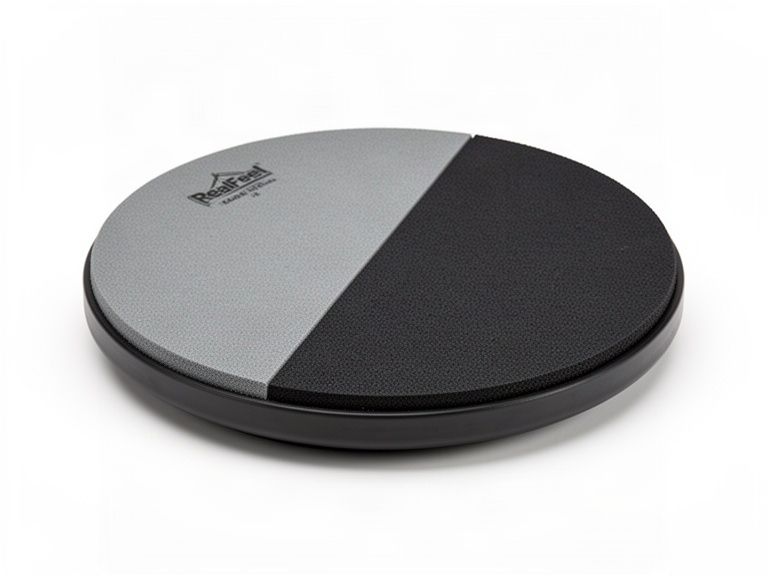
Evans RealFeel 2-Sided Practice Pad, 12-Inch
Everyday rudiment practice for students and working drummers
Size12 inchesPlaying surfacesTwo: gum rubber and a firmer rubber sidePlacementTabletop, lap or snare stand -
2
 Illustration
Best for quiet practice
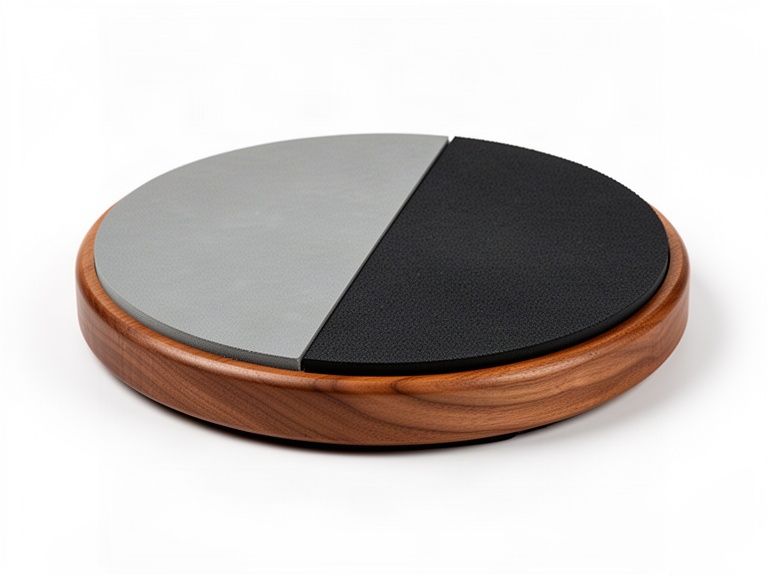
Vic Firth Double-Sided Practice Pad, 12-Inch
Apartment practice and players who want a heavy, stable pad
Size12 inchesPlaying surfacesTwo: soft low-rebound rubber and hard rubberPlacementTabletop or snare stand -
3
 Illustration
Most drum-like feel
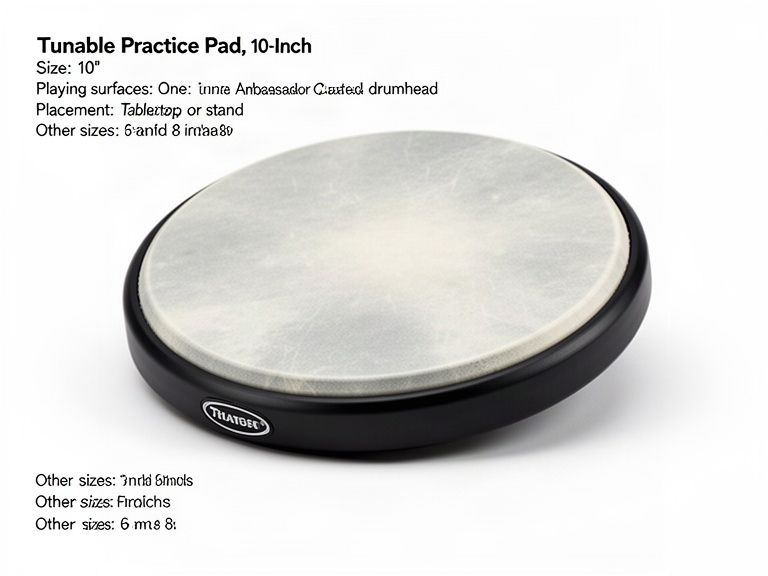
Remo Tunable Practice Pad, 10-Inch
Drummers who want the feel of a real drumhead
Size10 inchesPlaying surfacesOne: tunable Ambassador Coated drumheadPlacementTabletop or stand -
4
 Illustration
Best for kit practice
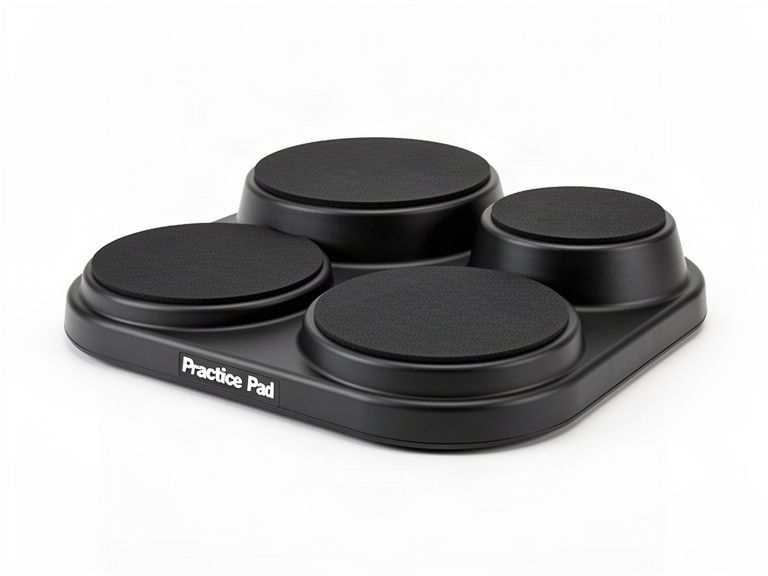
Drumeo P4 Practice Pad
Drumset players who want to practice moving around the kit
SizeLarge, multi-levelPlaying surfacesFour, with different heights and reboundPlacementTabletop or stand
Evans RealFeel 2-Sided Practice Pad, 12-Inch
Illustration
A classic two-sided 12-inch pad with a gum rubber side for natural rebound and a firmer rubber side for workouts.
Best for: Everyday rudiment practice for students and working drummers- Size
- 12 inches
- Playing surfaces
- Two: gum rubber and a firmer rubber side
- Placement
- Tabletop, lap or snare stand
- Made in
- USA
What we like
- Gum rubber side has a natural, snare-like rebound
- Second side adds resistance for building strength
- Standard 12-inch size fits most snare stands
- Long-running design many teachers recommend
Keep in mind
- Gum rubber side isn’t the quietest option
- Rubber can slide on smooth tables
The Evans RealFeel 2-Sided pad has been a drum-teacher favorite for years. One side is gum rubber, which gives the natural, even rebound most drummers want for daily rudiments; flip it over and the other rubber side offers a firmer, less forgiving surface for building strength and control.
At 12 inches, it gives a generous playing area and sits in most snare stands, which makes it easy to practice at the same height as a real drum. Evans’ parent company also sells a dedicated Apprentice stand that the pad fits.
The gum side produces a noticeable tapping sound, so for the quietest late-night practice the Vic Firth’s soft side is a better choice. And on slick tabletops, owners often recommend a non-slip mat underneath.
Bottom line: The most dependable all-round pick for anyone who wants one practice pad for everything.
Vic Firth Double-Sided Practice Pad, 12-Inch
Illustration
A 12-inch pad with a soft, low-noise rubber side and a hard rubber side on a dense wooden base.
Best for: Apartment practice and players who want a heavy, stable pad- Size
- 12 inches
- Playing surfaces
- Two: soft low-rebound rubber and hard rubber
- Placement
- Tabletop or snare stand
- Base
- Heavy wooden base
- Made in
- USA
What we like
- Soft side is low-noise for late-night practice
- Hard side offers realistic stick bounce
- Heavy wooden base stays put on a table
- Fits most snare stands
Keep in mind
- Heavier than all-rubber pads to carry
- Soft side’s low rebound can feel dead for speed work
Vic Firth’s Double-Sided pad gives you two very different practice surfaces. The soft rubber side has low rebound and low noise, which makes it the better choice for practicing when others are sleeping and for forcing your hands to do the lifting. The hard rubber side offers a livelier, more audible bounce closer to a snare drum.
Both surfaces sit on a dense wooden base that adds weight, so the pad stays put on a table or in a snare stand rather than skating around. Vic Firth says it is made in the USA.
The extra weight makes it a little less convenient to carry to lessons, and some players find the soft side too dead for speed work. If quiet practice is a priority, it is the stronger pick.
Bottom line: The best pad for quiet practice, with a livelier side when you need it.
Remo Tunable Practice Pad, 10-Inch
Illustration
A tunable pad with a replaceable Ambassador Coated drumhead for the feel of a real snare.
Best for: Drummers who want the feel of a real drumhead- Size
- 10 inches
- Playing surfaces
- One: tunable Ambassador Coated drumhead
- Placement
- Tabletop or stand
- Other sizes
- 6 and 8 inches
What we like
- Real coated drumhead feels like a snare
- Tension is adjustable for more or less bounce
- Head is replaceable when worn
- Works well with brushes as well as sticks
Keep in mind
- Louder than rubber pads
- Smaller playing area than 12-inch pads
- Only one surface
Rubber pads approximate a drum; Remo’s Tunable Practice Pad uses a real one. It has an Ambassador Coated drumhead, the same type of head found on countless snare drums, stretched over a compact body, and you can tighten or loosen it to change how much the stick bounces.
That makes it the pick for drummers who want their practice to feel as close as possible to their snare, and the coated surface also works with brushes, which rubber pads can’t do well. When the head wears out, it can be replaced rather than throwing the pad away. Remo also offers 6- and 8-inch sizes and versions bundled with a stand.
The downside of a real drumhead is volume: it is noticeably louder than rubber. The 10-inch playing area is also a bit smaller than the standard 12 inches.
Bottom line: The most realistic pad feel, for players who can live with a bit more noise.
Drumeo P4 Practice Pad
Illustration
A multi-level pad with four surfaces at different heights for practicing fills and orchestration.
Best for: Drumset players who want to practice moving around the kit- Size
- Large, multi-level
- Playing surfaces
- Four, with different heights and rebound
- Placement
- Tabletop or stand
What we like
- Four surfaces let you practice fills across the kit
- Different rebound and pitch on each surface
- Good for drumset-style coordination drills
- From a large online drum-lesson company
Keep in mind
- Bulkier than a flat pad
- Less useful for pure rudiment work than a classic pad
- Harder to find than the big drum brands
Most practice pads are flat circles, which is ideal for rudiments but doesn’t help with moving between drums. The Drumeo P4 stacks four playing surfaces at different heights and with different rebound, so you can practice fills, accent patterns and orchestration ideas as if you were moving around a kit.
It comes from Drumeo, one of the best-known online drum-lesson companies, and is designed to pair with that style of lesson content. The different surfaces also produce different tones, which makes practice less monotonous.
It is bulkier than a flat pad, and for pure rudiment work a classic 12-inch pad is simpler. Think of it as a second pad for kit players rather than a replacement for the basics.
Bottom line: A clever second pad for drumset players who want to practice movement, not just sticking.
Side-by-side comparison
| Product | Size | Playing surfaces | Placement | Made in | Score |
|---|---|---|---|---|---|
| Evans RealFeel 2-Sided Practice Pad, 12-InchBest overall | 12 inches | Two: gum rubber and a firmer rubber side | Tabletop, lap or snare stand | USA | 9.1 |
| Vic Firth Double-Sided Practice Pad, 12-InchBest for quiet practice | 12 inches | Two: soft low-rebound rubber and hard rubber | Tabletop or snare stand | USA | 8.9 |
| Remo Tunable Practice Pad, 10-InchMost drum-like feel | 10 inches | One: tunable Ambassador Coated drumhead | Tabletop or stand | — | 8.7 |
| Drumeo P4 Practice PadBest for kit practice | Large, multi-level | Four, with different heights and rebound | Tabletop or stand | — | 8.4 |
Specifications are from manufacturer listings at the time of writing and can change between production runs.
Size and playing surface
12-inch pads are the standard. They give a generous target, fit on most snare stands, and are big enough for two sticks without crowding. Smaller pads (6 to 10 inches) are easier to carry and fine for warm-ups, but they demand more accuracy.
Common playing surfaces:
- Gum rubber — natural rebound that feels close to a snare drum, with moderate noise.
- Soft or neoprene-style rubber — quieter and less bouncy, good for late-night practice and building strength.
- Real drumheads — tunable, most like a drum, but louder.
Two-sided pads give you both a lively and a quieter or harder-working surface for little extra cost.
Rebound: easy or workout?
High-rebound surfaces help you play fast and relaxed by letting the stick bounce back. Low-rebound surfaces make your wrists and fingers lift every stroke, which builds control and endurance. Most teachers suggest practicing on a surface close to your real snare most of the time and using a low-rebound side in shorter sessions. If you play in a marching band, practice on a firmer, livelier surface that matches tight marching snares.
Where you’ll play
A pad on a table is often too low or too high, which encourages bad posture. Aim to have the pad at about the height of your snare drum, with your forearms angled slightly down. A snare stand is the most adjustable option; many 12-inch pads sit securely in one. Some pads have a threaded insert for a dedicated pad stand, and some come in bundles with one. Playing on your lap is fine for short sessions.
Make practice count
- Use a metronome and start slower than you think you need to.
- Practice the standard rudiments and record yourself occasionally to check evenness.
- Use the same sticks you play on the kit, so the feel transfers.
- Take breaks, and stop if you feel pain in your hands, wrists or forearms.
Care
Wipe pads with a dry or slightly damp cloth, and keep rubber surfaces out of direct sunlight and hot cars, which can harden or crack them. On drumhead pads, check tension occasionally and replace the head when it is worn through or dented. Store pads flat so the base doesn’t warp.
Frequently asked questions
Is a practice pad really worth it if I have a drum kit?
Yes. Most hand technique is built on a pad, because it is quiet enough for daily practice and lets you focus on evenness and control. Many professional drummers warm up on a pad before every show.
What size practice pad should I buy?
A 12-inch pad is the most versatile choice and fits most snare stands. Choose a smaller pad if you mainly want something to carry in a stick bag.
How quiet are practice pads?
Much quieter than a drum, but not silent. Soft rubber surfaces are the quietest; gum rubber and real drumheads make more of a tapping sound. A thick base or towel underneath reduces noise transmitted through tables.
What should I practice on a pad?
Start with single strokes, double strokes, paradiddles and flams at slow tempos with a metronome. Many method books and online lesson programs are built around pad practice.
Can kids use these practice pads?
Yes. Children can use the same pads as adults; just match the stick size to their hands, often a lighter 7A, and keep sessions short at first.
How we picked
We compared manufacturer information on size, playing surfaces, rebound, mounting options and replaceable parts across long-running practice pads from Evans, Vic Firth, Remo and Drumeo, and weighed how each suits rudiment work, quiet practice and kit-style drills. Our picks and scores are based on this research — we have not tested these products hands-on. Brands cannot pay to be included. Read our full method.