






















The best digital thermometers for home use
Five home thermometers compared — ear, forehead, no-touch and classic stick models — and which type suits babies, kids and adults.
As an Amazon Associate I earn from qualifying purchases. When you buy through links on this page, we may earn a commission at no extra cost to you. Learn more
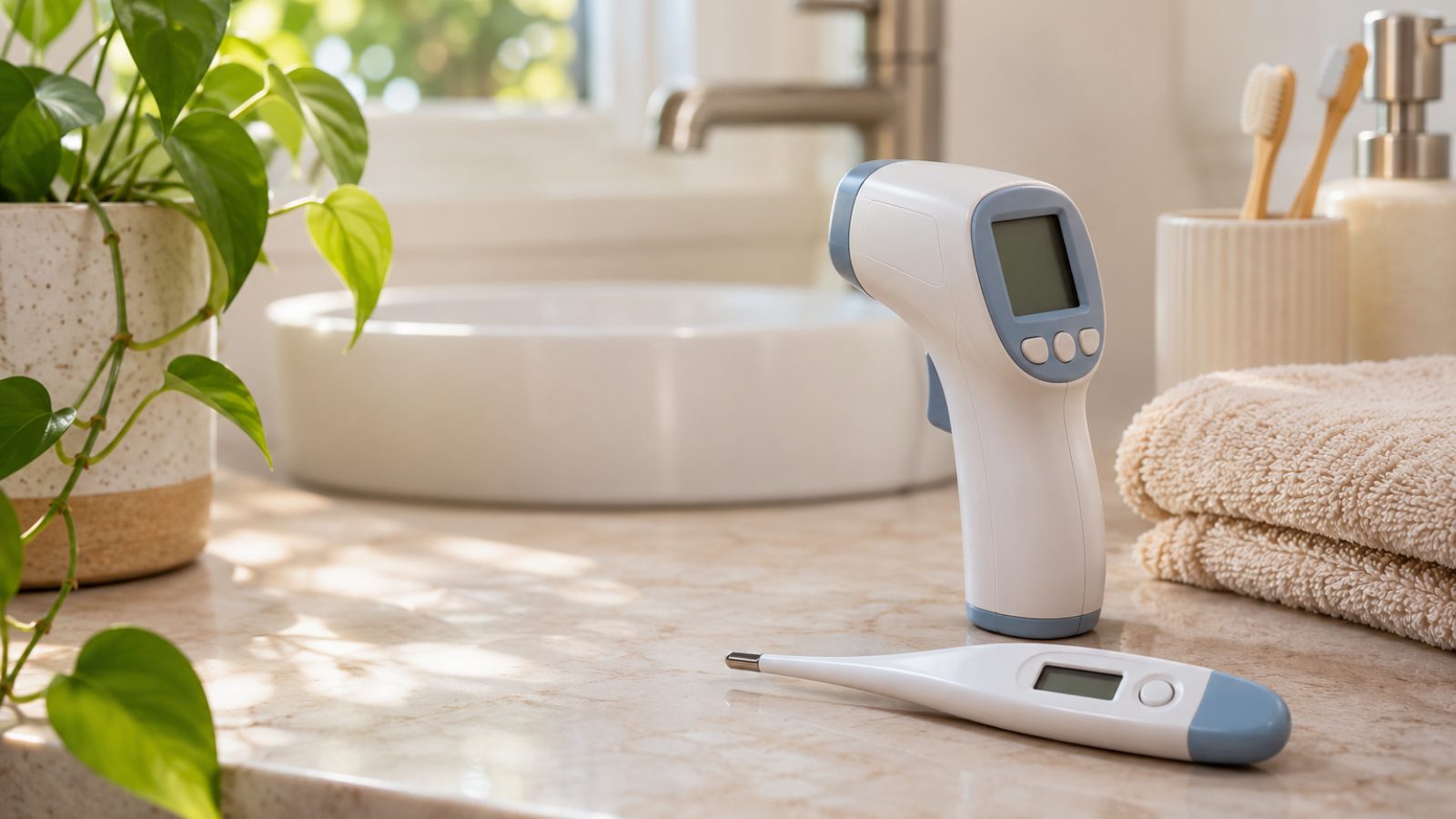
A good thermometer is one of those things you only think about at 2 a.m., when someone feels warm and you can’t find the one from the junk drawer. The type matters more than the brand: stick thermometers are inexpensive and versatile, ear thermometers read in seconds, and forehead models are the easiest to use on a sleeping child.
Each type has its quirks, too. Ear readings depend on aiming the probe correctly, forehead scanners react to sweat and drafts, and stick thermometers need a little patience. We compared five well-established models from Braun, Exergen, Vicks, Kinsa and iHealth on measuring method, display, ease of cleaning and how clearly each one guides you. Keep in mind that a thermometer is a measuring tool, not a diagnosis — if you’re worried about a temperature, especially in a baby, call your doctor or pediatrician rather than relying on a number alone.
Our top picks
-
1
 Illustration
Best overall
Braun ThermoScan 7 Ear Thermometer
Families with toddlers and older kids
TypeInfrared earWhere it readsEar canalDisplayColor-coded by age setting -
2
 Illustration
Best forehead scanner
Exergen TemporalScanner Thermometer
Checking sleeping kids without waking them
TypeTemporal arteryWhere it readsSwiped across the foreheadDisplayDigital readout -
3
 Illustration
Best no-touch
iHealth No-Touch Forehead Thermometer PT3
Quick, contact-free checks for adults and kids
TypeInfrared, no contactWhere it readsHeld near the foreheadDisplayLarge digital readout -
4
 Illustration
Best value
Vicks SpeedRead Digital Thermometer
A dependable backup thermometer for every home
TypeDigital stickWhere it readsMouth, underarm or rectumDisplayColor-coded Fever InSight -
5
 Illustration
Best smart thermometer
Kinsa QuickCare Smart Thermometer
Parents who want a temperature log on their phone
TypeDigital stick, BluetoothWhere it readsMouth, underarm or rectumDisplayDigital readout plus app
Braun ThermoScan 7 Ear Thermometer
Illustration
A fast ear thermometer with a pre-warmed tip, positioning feedback and an age-based color display.
Best for: Families with toddlers and older kids- Type
- Infrared ear
- Where it reads
- Ear canal
- Display
- Color-coded by age setting
- Extras
- Pre-warmed tip, ExacTemp positioning guide
- Hygiene
- Disposable lens filters
What we like
- Reads in seconds, which helps with wriggly kids
- Pre-warmed tip is designed to reduce cold-probe errors
- ExacTemp feedback confirms correct placement
- Age Precision setting adjusts the color guidance by age
Keep in mind
- Needs a steady supply of lens filters
- Ear technique takes a little practice
- Some pediatricians prefer other methods for young infants
The ThermoScan 7 has been a pediatric-office favorite for years, and the home version carries over the details that make ear readings dependable. The tip is pre-warmed so a cold probe doesn’t skew the result, and the ExacTemp system beeps and lights to confirm the probe is positioned correctly — the most common source of bad ear readings.
Braun’s Age Precision feature lets you choose an age group, and the display then shows a color that reflects what the reading means for that age. It’s a helpful nudge, not a diagnosis, so call your doctor if anything worries you.
The ongoing cost is lens filters: you need a fresh one for every reading, so buy a refill pack along with it.
Bottom line: The quickest, most foolproof ear thermometer for a household with kids past the infant stage.
Exergen TemporalScanner Thermometer
Illustration
A temporal-artery thermometer you swipe across the forehead — no probe covers, no fuss.
Best for: Checking sleeping kids without waking them- Type
- Temporal artery
- Where it reads
- Swiped across the forehead
- Display
- Digital readout
- Power
- 9-volt battery
- Made in
- USA (per Exergen)
What we like
- Gentle enough to use on a sleeping child
- No lens filters or covers to buy
- Suits all ages per the manufacturer
- Simple one-button operation
Keep in mind
- Swiping technique matters for consistent results
- Sweat or a recent bath can affect readings
- Uses a less common 9-volt battery
Exergen’s TemporalScanner works differently from a no-touch thermometer: you press the button, glide the probe across the forehead toward the hairline and release. It takes a moment to learn, but once you have the motion down it’s quick and calm — ideal for checking a child who has finally fallen asleep.
There are no lens filters or covers to buy; you simply wipe the probe clean. The manual explains how to handle a sweaty forehead, which is the main cause of odd readings.
It’s not as instant as an ear thermometer, and the 9-volt battery is easy to forget about, but for gentle, low-drama checks it’s hard to beat.
Bottom line: The most comfortable way to take a child’s temperature without waking or upsetting them.
iHealth No-Touch Forehead Thermometer PT3
Illustration
A simple infrared thermometer you hold near the forehead and read in about a second.
Best for: Quick, contact-free checks for adults and kids- Type
- Infrared, no contact
- Where it reads
- Held near the forehead
- Display
- Large digital readout
- Power
- AAA batteries
What we like
- No contact, so nothing to clean between people
- Very fast readings
- One-button operation anyone can manage
- Good for checking several family members in a row
Keep in mind
- Most sensitive to room temperature and sweat
- No app or extended reading history
- Distance and angle affect results
The iHealth PT3 is about as simple as a thermometer gets: point it at the middle of the forehead from a short distance, press the button and read the number. Because it never touches anyone, it’s handy when you’re checking several people in a row.
That convenience comes with the usual no-touch caveats. Readings depend on the room, the distance and a dry forehead, so take a second reading if anything looks unusual and follow the manual’s guidance on positioning.
As a fast first check it works well; for a young baby, or when a number matters, back it up with the method your pediatrician prefers.
Bottom line: A convenient contact-free thermometer for quick checks, best paired with a stick model for confirmation.
Vicks SpeedRead Digital Thermometer
Illustration
A classic digital stick for oral, underarm or rectal use with a color-coded display.
Best for: A dependable backup thermometer for every home- Type
- Digital stick
- Where it reads
- Mouth, underarm or rectum
- Display
- Color-coded Fever InSight
- Reading time
- About 8 seconds (per brand)
What we like
- Budget-friendly and widely available
- Works for every age and all three stick methods
- Color-coded display is easy to read at a glance
- Remembers the last reading
Keep in mind
- Slower than ear or forehead models
- Requires cooperation from older kids
- Keep a separate one for rectal use
Every medicine cabinet should have a plain digital stick thermometer, and the Vicks SpeedRead is a sensible one. It reads in a few seconds, works orally, under the arm or rectally, and its Fever InSight display glows a different color depending on the reading.
It’s also the type many pediatricians suggest for babies, since rectal readings are widely used as the reference. If you go that route, buy two and label one for rectal use only.
It lacks the speed of an ear model and the convenience of a forehead scanner, but it’s inexpensive, easy to clean and reliable as a primary or backup thermometer.
Bottom line: An inexpensive, versatile stick thermometer that belongs in every first-aid drawer.
Kinsa QuickCare Smart Thermometer
Illustration
A Bluetooth stick thermometer that saves readings to an app with a profile for each family member.
Best for: Parents who want a temperature log on their phone- Type
- Digital stick, Bluetooth
- Where it reads
- Mouth, underarm or rectum
- Display
- Digital readout plus app
- App
- Kinsa app for iOS and Android
What we like
- Logs readings automatically for each family member
- Works on its own if your phone isn’t nearby
- Flexible tip for oral, underarm or rectal use
- Helpful when you need to share a history with a doctor
Keep in mind
- App features need a smartphone and account
- Not faster than a basic stick
- The app is the main reason to choose it
When a child is sick for a few days, it’s easy to lose track of what the temperature was and when. Kinsa’s QuickCare solves that by syncing each reading to an app, where you can keep a profile for every family member and add notes about symptoms or medicine given.
The thermometer itself is a conventional flexible-tip stick that works without the phone, so it won’t leave you stuck if the app isn’t open.
If you don’t care about a log, a plain stick thermometer does the same job. But for parents who like records — or need to answer a nurse’s questions accurately — it’s a genuinely useful upgrade.
Bottom line: Worth choosing if an automatic, per-person temperature history on your phone would help you.
Side-by-side comparison
| Product | Type | Where it reads | Display | Extras | Score |
|---|---|---|---|---|---|
| Braun ThermoScan 7 Ear ThermometerBest overall | Infrared ear | Ear canal | Color-coded by age setting | Pre-warmed tip, ExacTemp positioning guide | 9.3 |
| Exergen TemporalScanner ThermometerBest forehead scanner | Temporal artery | Swiped across the forehead | Digital readout | — | 8.9 |
| iHealth No-Touch Forehead Thermometer PT3Best no-touch | Infrared, no contact | Held near the forehead | Large digital readout | — | 8.5 |
| Vicks SpeedRead Digital ThermometerBest value | Digital stick | Mouth, underarm or rectum | Color-coded Fever InSight | — | 8.4 |
| Kinsa QuickCare Smart ThermometerBest smart thermometer | Digital stick, Bluetooth | Mouth, underarm or rectum | Digital readout plus app | — | 8.2 |
Specifications are from manufacturer listings at the time of writing and can change between production runs.
Which type of thermometer?
- Digital stick: reads in the mouth, under the arm or rectally. Inexpensive, simple and works for every age, but takes a few seconds longer and needs cooperation from kids. Many pediatricians prefer rectal readings for young babies — ask yours what they recommend.
- Ear (infrared): reads the eardrum’s heat in a second or two. Fast and comfortable for toddlers and adults, but the probe has to be aimed correctly, and some pediatricians don’t recommend ear readings for young infants.
- Temporal artery: you swipe the probe across the forehead. Very easy on squirmy or sleeping kids, with a short learning curve.
- No-touch infrared: held near the forehead without contact. The most convenient and hygienic, but the most affected by the room, sweat and distance.
Technique matters more than price
Even a well-made thermometer gives odd numbers when used carelessly. Follow the manual’s positioning instructions, let the thermometer sit in the room for a while if it was somewhere cold, and wait a little after eating, drinking or a bath before taking an oral or forehead reading. If a number looks surprising, take a second reading. Readings also differ by site — an underarm reading usually runs lower than a rectal one — so stick to one method when tracking a temperature over a day.
Features worth having
- A clear, backlit or color-coded display makes nighttime checks easier.
- Memory for the last reading (or several) helps you see whether a temperature is rising or falling.
- Positioning guidance, such as a beep or light that confirms correct placement, takes some of the guesswork out of ear thermometers.
- App logging is handy for families who want a record to share with a doctor.
What to skip
Old glass mercury thermometers are a breakage hazard and are no longer sold in most places — recycle them properly. Be wary of unbranded no-touch “guns” with vague instructions and no clear accuracy information from the maker. And don’t pay extra for app features if you’ll never open the app.
Cleaning and care
Wipe the probe with rubbing alcohol or a soap-and-water dampened cloth after each use, then let it dry; don’t submerge a thermometer unless the manual says it’s waterproof. Keep a separate, labeled stick thermometer for rectal use. For ear thermometers, use a fresh lens filter every time. Replace batteries as soon as the low-battery symbol appears, since weak batteries can affect readings.
Frequently asked questions
Which type of thermometer is most accurate?
Rectal readings with a digital stick are widely treated as the reference for babies and young children, and a properly placed oral reading works well for older kids and adults. Ear and forehead models are accurate when used exactly as the manual describes, but they are more sensitive to technique.
Why do forehead readings jump around?
Forehead and no-touch thermometers measure skin heat, which changes with sweat, drafts, a hat or a recent bath. Take readings indoors, on a dry forehead, at the distance the manual specifies, and repeat if a number looks off.
Can one thermometer work for the whole family?
Usually, yes. Ear and forehead models suit most ages, and a stick thermometer covers everyone. Just keep a separate stick for rectal use, and check the manual for any age limits on your model.
Do I need probe covers or lens filters?
Ear thermometers like the Braun ThermoScan rely on disposable lens filters for accurate, hygienic readings, so keep spares on hand. Stick thermometers can use optional covers but can also simply be cleaned between uses.
When should I call a doctor about a temperature?
Thermometers measure; they don’t diagnose. Call your doctor or pediatrician whenever you’re unsure, and promptly for a raised temperature in a young baby or one that comes with worrying symptoms. Follow their guidance rather than any color code on the device.
How we picked
We compared measuring method, display, positioning aids, memory, cleaning requirements and manufacturer instructions for widely available home thermometers from established brands, and weighed how each type suits different ages. Our picks and scores are based on this research — we have not tested these products hands-on. Brands cannot pay to be included. Read our full method.