






















The best digital calipers
Five 6-inch digital calipers compared on accuracy, encoder type, build quality and dust and coolant protection, from Mitutoyo and Starrett to budget-friendly shop picks.
As an Amazon Associate I earn from qualifying purchases. When you buy through links on this page, we may earn a commission at no extra cost to you. Learn more
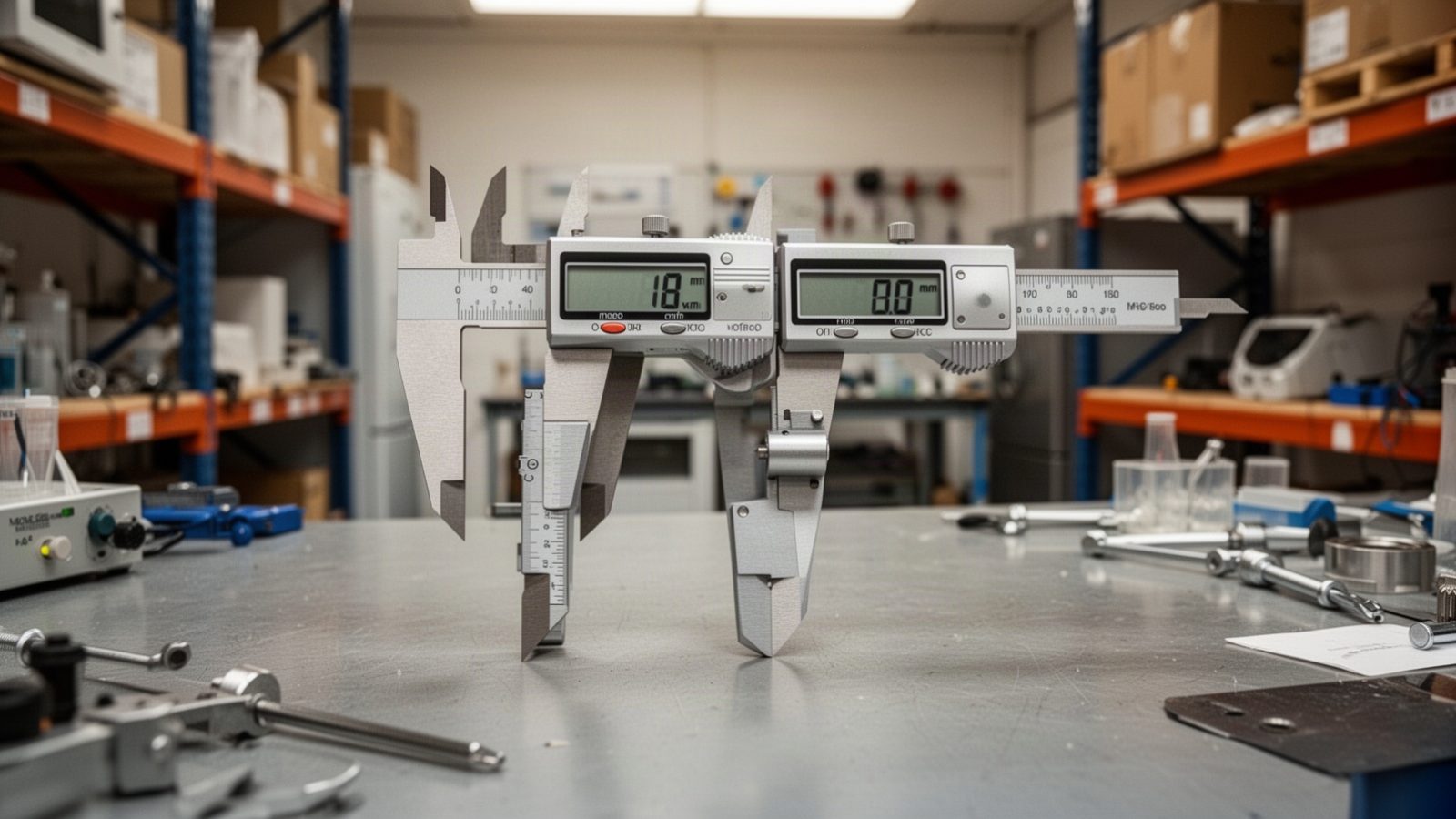
A digital caliper is the most versatile measuring tool you can put on a workbench. With one slide it measures outside dimensions, inside diameters, depths and steps, and the display shows the result in inches or millimeters to a resolution of half a thousandth of an inch. Machinists use them every day, but they are just as useful for checking 3D-printed parts, sizing bolts and drill bits, fitting woodworking joints or matching a replacement part.
Calipers that look identical can perform very differently. Cheap models may drift, lose zero, chew through batteries or have jaws that rock under pressure, while premium ones hold their accuracy for years. We compared well-established 6-inch calipers from Mitutoyo, Starrett, iGaging, Clockwise Tools and Neiko on stated accuracy, encoder type, build quality, environmental protection and features, so you can decide how much precision your projects really need.
Our top picks
-
1
 Illustration
Best overall
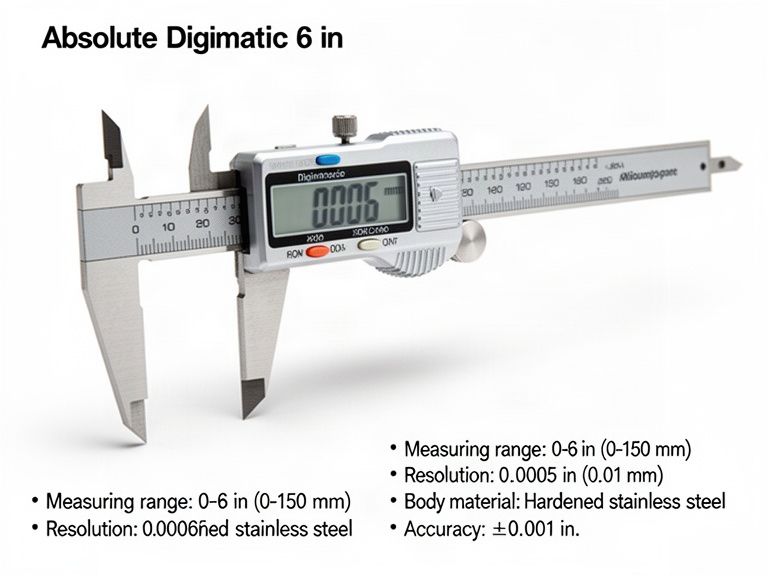
Mitutoyo 500-196-30 Absolute Digimatic Caliper, 6 in
Machinists and anyone who wants a caliper for life
Measuring range0–6 in (0–150 mm)Resolution0.0005 in (0.01 mm)Body materialHardened stainless steel -
2
 Illustration
Best for coolant and shop floors
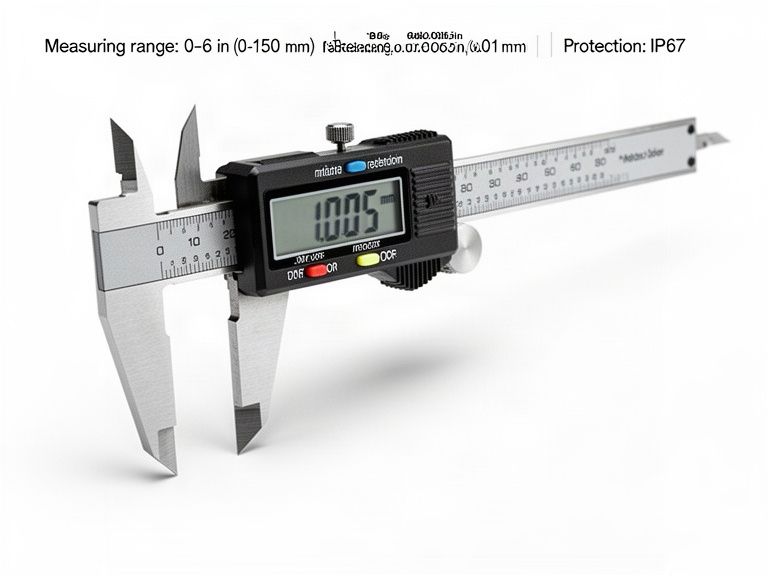
Starrett 798A-6/150 IP67 Electronic Caliper
Machine shops with coolant and chips
Measuring range0–6 in (0–150 mm)Resolution0.0005 in (0.01 mm)Body materialHardened stainless steel -
3
 Illustration
Best value
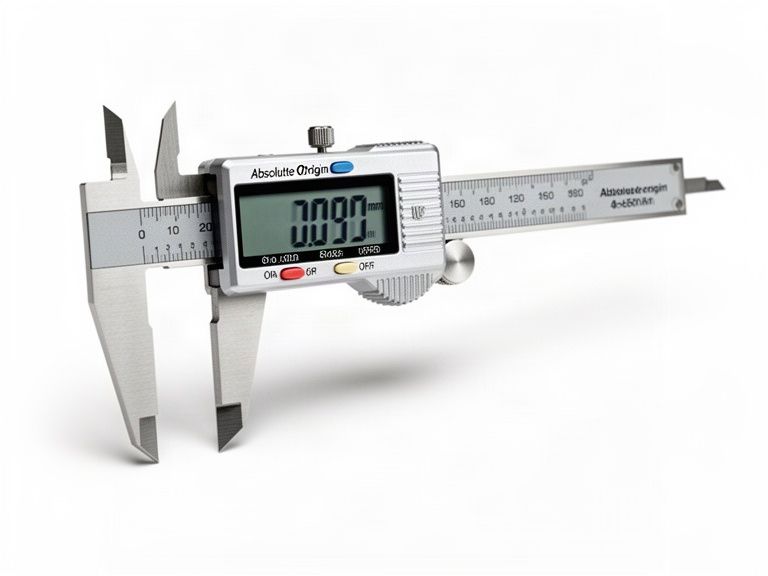
iGaging Absolute Origin Digital Caliper, 6 in
Hobby machinists, 3D printing and woodworking
Measuring range0–6 in (0–150 mm)Resolution0.0005 in (0.01 mm)Body materialStainless steel -
4
 Illustration
Best for dusty workshops
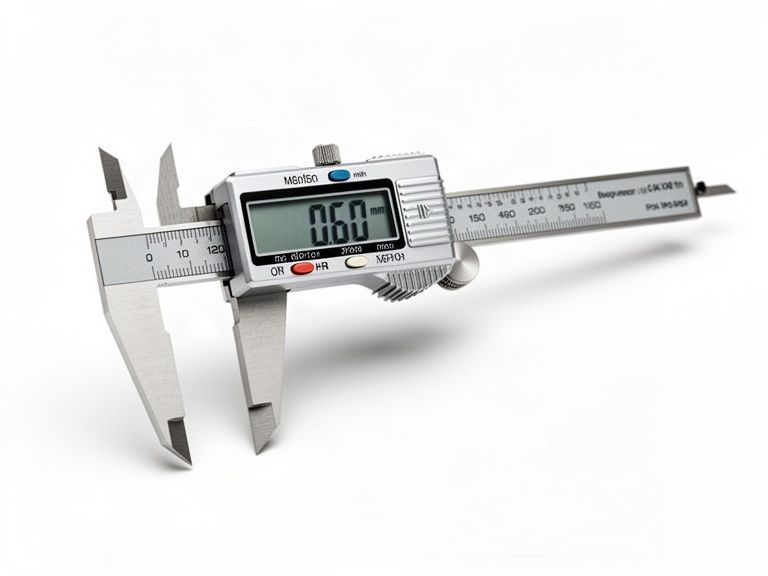
Clockwise Tools IP54 Digital Caliper (DCLR-0605)
Woodshops, garages and general DIY
Measuring range0–6 in (0–150 mm)Resolution0.0005 in (0.01 mm)Body materialStainless steel -
5
 Illustration
Best budget
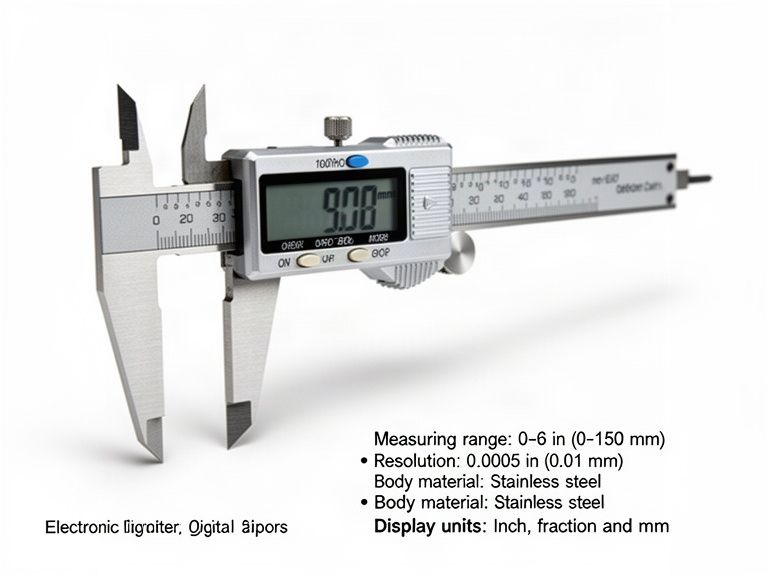
Neiko 01407A Electronic Digital Caliper, 6 in
Occasional measuring and first-time buyers
Measuring range0–6 in (0–150 mm)Resolution0.0005 in (0.01 mm)Body materialStainless steel
Mitutoyo 500-196-30 Absolute Digimatic Caliper, 6 in
Illustration
The benchmark 6-inch digital caliper, with an absolute encoder that never needs re-zeroing at power-on.
Best for: Machinists and anyone who wants a caliper for life- Measuring range
- 0–6 in (0–150 mm)
- Resolution
- 0.0005 in (0.01 mm)
- Body material
- Hardened stainless steel
- Accuracy
- ±0.001 in
- Battery
- SR44 button cell
What we like
- ABSOLUTE encoder keeps its zero when switched off
- Consistently accurate and smooth slide
- Long battery life
- Built to last for years of daily use
Keep in mind
- Premium-priced
- Not coolant-proof
- No fraction display for woodworkers
Mitutoyo's 500-196-30 is the caliper many machinists measure every other caliper against. Its ABSOLUTE sensor remembers the origin, so you can switch it on and measure immediately without closing and zeroing the jaws, and it tolerates quick slide movements without losing count.
It reads to 0.0005 inch with a stated accuracy of plus or minus 0.001 inch over its 6-inch range. The hardened stainless steel jaws are well finished, and the slide is smooth enough to apply light, repeatable pressure. Battery life from its SR44 cell is long compared with typical incremental calipers.
It is not sealed against coolant, so keep it clean and dry, and it does not show fractions. If you want one precise caliper that will last a career, this is it.
Bottom line: The benchmark digital caliper, worth the premium if accuracy and longevity matter.
Starrett 798A-6/150 IP67 Electronic Caliper
Illustration
An IP67-rated 6-inch caliper built for wet, dirty machine-shop conditions.
Best for: Machine shops with coolant and chips- Measuring range
- 0–6 in (0–150 mm)
- Resolution
- 0.0005 in (0.01 mm)
- Body material
- Hardened stainless steel
- Protection
- IP67
- Accuracy
- ±0.001 in
What we like
- IP67 protection against coolant and dust
- Made by a long-established American measuring-tool brand
- Hardened stainless steel construction
- Suited to daily use at the machine
Keep in mind
- Premium-priced
- Heavier feel than budget calipers
- More protection than a home user needs
Starrett's 798 series is built for the place most calipers struggle: next to a mill or lathe where coolant, oil and chips get everywhere. Its IP67 rating means the electronics are sealed against dust and liquid, so a splash of coolant will not scramble the display.
It covers the standard 6-inch range with 0.0005-inch resolution and a stated accuracy of plus or minus 0.001 inch, and the hardened stainless steel jaws are made for daily shop use.
For a home workshop or 3D printing, the sealing is more than you need, and the Mitutoyo or iGaging calipers offer an absolute origin for less effort. For a working machinist in a wet environment, the protection is worth paying for.
Bottom line: The caliper to choose when it will live next to coolant and chips.
iGaging Absolute Origin Digital Caliper, 6 in
Illustration
A budget-friendly 6-inch caliper that remembers its zero like premium absolute calipers.
Best for: Hobby machinists, 3D printing and woodworking- Measuring range
- 0–6 in (0–150 mm)
- Resolution
- 0.0005 in (0.01 mm)
- Body material
- Stainless steel
- Encoder
- Absolute origin
What we like
- Absolute origin means no re-zeroing after power-off
- Much less expensive than Mitutoyo
- Stainless steel jaws and body
- Well regarded among hobby machinists
Keep in mind
- Slide and finish are not as refined as premium calipers
- Unit-to-unit consistency varies more
- Not sealed against coolant
iGaging's Absolute Origin caliper brings the main convenience of a premium absolute caliper to a far friendlier price. Once you set the origin, it remembers it after power-off, so you can grab it and measure without closing and re-zeroing the jaws.
It reads to 0.0005 inch over a 6-inch range in a stainless steel body, which is more than enough precision for 3D printing, woodworking, hobby machining and general repairs. Owners of hobby lathes and mills often recommend it as a step up from no-name calipers.
The slide is not quite as silky as a Mitutoyo, and quality control is less consistent, so check zero and repeatability when it arrives. It is also not sealed, so keep it away from coolant.
Bottom line: The best balance of convenience, precision and price for home shops.
Clockwise Tools IP54 Digital Caliper (DCLR-0605)
Illustration
A budget-friendly 6-inch stainless caliper with IP54 dust and splash resistance.
Best for: Woodshops, garages and general DIY- Measuring range
- 0–6 in (0–150 mm)
- Resolution
- 0.0005 in (0.01 mm)
- Body material
- Stainless steel
- Protection
- IP54
What we like
- IP54 rating resists dust and splashes
- Stainless steel construction
- Budget-friendly
- Good choice for woodworking and garage use
Keep in mind
- Incremental sensor needs zeroing after switching on
- Not made for coolant
- Finish is a step below premium brands
Clockwise Tools has built a following with budget-friendly measuring tools, and this 6-inch caliper adds something most rivals at its price lack: an IP54 rating. That means the electronics resist dust and light splashes, which helps in a woodshop full of fine sawdust or a garage workbench.
It offers the usual 0.0005-inch resolution in a stainless steel body, with outside, inside, depth and step measurements. Like most calipers in this class, it uses an incremental sensor, so close the jaws and zero it each time you switch it on.
IP54 is not coolant-proof, so it is not a substitute for an IP67 caliper on a lathe. For woodworking, DIY and 3D printing, it is a practical, durable choice.
Bottom line: A tough, budget-friendly caliper for dusty shops and general DIY.
Neiko 01407A Electronic Digital Caliper, 6 in
Illustration
A low-cost stainless caliper that switches between inches, millimeters and fractions.
Best for: Occasional measuring and first-time buyers- Measuring range
- 0–6 in (0–150 mm)
- Resolution
- 0.0005 in (0.01 mm)
- Body material
- Stainless steel
- Display units
- Inch, fraction and mm
What we like
- Very budget-friendly
- Fraction display suits woodworkers
- Stainless steel rather than plastic
- Large, easy-to-read screen
Keep in mind
- Accuracy and consistency below premium brands
- Incremental sensor needs re-zeroing
- Battery life is shorter than absolute calipers
For occasional measuring, Neiko's 01407A is one of the most widely bought calipers around, and it covers the basics well for very little money. It has a stainless steel body rather than plastic, a large display and a button that switches between inches, millimeters and fractions.
The fraction mode is handy for woodworkers and DIYers who think in sixty-fourths, and the 0.0005-inch resolution is plenty for checking bolts, drill bits and filament. It is not built to machinist standards, though: accuracy varies more from unit to unit, and the incremental sensor needs re-zeroing every time you switch it on.
Treat it as a dependable household and hobby tool rather than a precision instrument, and it will serve you well.
Bottom line: A budget-friendly caliper that covers everyday measuring and woodworking fractions.
Side-by-side comparison
| Product | Measuring range | Resolution | Body material | Accuracy | Score |
|---|---|---|---|---|---|
| Mitutoyo 500-196-30 Absolute Digimatic Caliper, 6 inBest overall | 0–6 in (0–150 mm) | 0.0005 in (0.01 mm) | Hardened stainless steel | ±0.001 in | 9.4 |
| Starrett 798A-6/150 IP67 Electronic CaliperBest for coolant and shop floors | 0–6 in (0–150 mm) | 0.0005 in (0.01 mm) | Hardened stainless steel | ±0.001 in | 9.0 |
| iGaging Absolute Origin Digital Caliper, 6 inBest value | 0–6 in (0–150 mm) | 0.0005 in (0.01 mm) | Stainless steel | — | 8.8 |
| Clockwise Tools IP54 Digital Caliper (DCLR-0605)Best for dusty workshops | 0–6 in (0–150 mm) | 0.0005 in (0.01 mm) | Stainless steel | — | 8.4 |
| Neiko 01407A Electronic Digital Caliper, 6 inBest budget | 0–6 in (0–150 mm) | 0.0005 in (0.01 mm) | Stainless steel | — | 8.0 |
Specifications are from manufacturer listings at the time of writing and can change between production runs.
Resolution is not accuracy
Almost every digital caliper displays 0.0005 inch, or 0.01 mm. That is resolution, the smallest step on the screen. Accuracy is how close the reading is to the true size, and it is usually stated as about plus or minus 0.001 inch for a good 6-inch caliper. Budget models may claim the same figure but are less consistent from unit to unit. If you need tolerances tighter than a thousandth or two, a micrometer is the right tool.
Absolute vs. incremental encoders
Most calipers use an incremental sensor that counts movement from wherever you zeroed it, so you must close the jaws and zero after switching on. Absolute encoders, such as Mitutoyo's AOS and iGaging's Absolute Origin, remember the zero point, so you can switch on and measure immediately. They also tend to be more forgiving of fast slide movement, and many go much longer between battery changes.
Build quality that matters
- Hardened stainless steel jaws resist wear and keep their edges sharp.
- A smooth, play-free slide with a thumb roller lets you apply light, even pressure.
- Well-finished knife-edge jaws reach into grooves and small bores.
- A depth rod that slides cleanly makes step and hole-depth measurements easy.
Plastic or carbon-fiber calipers are fine for rough checks, but they flex and are not suited to precision work.
Features worth paying for, and what to skip
- Worth it: an absolute encoder if you measure often, an IP rating if you work in dust or coolant, and a fraction display if you work in sixty-fourths.
- Nice to have: data output for recording measurements to a computer, useful in production or quality-control work.
- Skip: extra-long calipers unless you measure big parts regularly, and digital calipers without a stated accuracy figure.
Dust and coolant protection
If you work around machine coolant, wood dust or metal chips, look at the IP rating. IP54 resists dust and splashes, which suits a woodshop or garage. IP67 is designed for coolant and wet conditions on a mill or lathe. Unrated calipers should stay clean and dry.
Measuring accurately and caring for your caliper
- Wipe the jaws and close them to check zero before each session.
- Measure close to the base of the jaws, not the tips, and use light, consistent pressure.
- Let parts reach room temperature before measuring precise fits.
- Store the caliper in its case with the jaws slightly open, and remove the battery if it will sit unused for months.
- Never use calipers as a scribe, wrench or clamp.
For woodworking, a model that displays fractions saves converting decimal readings.
Frequently asked questions
How accurate are digital calipers?
Good 6-inch calipers are typically rated around plus or minus 0.001 inch. Real-world results also depend on technique, cleanliness and temperature. For tighter tolerances, use a micrometer.
Why does my digital caliper lose its zero?
Incremental calipers lose their reference when switched off or when a weak battery causes glitches. Replace the battery, clean the scale and re-zero with the jaws closed. Absolute-encoder calipers avoid most of these problems.
Is a 6-inch caliper big enough?
For most home, hobby and machine-shop work, yes. Choose an 8- or 12-inch caliper only if you regularly measure larger parts, as longer calipers are heavier and less handy.
What battery do digital calipers use?
Most use a small button cell, commonly an SR44 or LR44 type. Silver-oxide SR44 cells generally hold a steadier voltage than alkaline LR44 cells, which can help prevent erratic readings.
Are expensive calipers worth it for 3D printing?
Not always. Checking filament diameter and part dimensions works well with a solid budget caliper. A premium caliper pays off if you need dependable accuracy every day or work in a machine shop.
How we picked
We compared manufacturer specifications for measuring range, resolution, stated accuracy, encoder type, materials, ingress protection, data output and battery type for 6-inch digital calipers from established measuring-tool brands, and weighed how each suits machining, 3D printing and home workshop use. Our picks and scores are based on this research — we have not tested these products hands-on. Brands cannot pay to be included. Read our full method.