






















The best built-in wine coolers
Three front-venting built-in wine coolers compared for 15-inch and 24-inch openings, from a 30-bottle slimline model to premium dual-zone units.
As an Amazon Associate I earn from qualifying purchases. When you buy through links on this page, we may earn a commission at no extra cost to you. Learn more
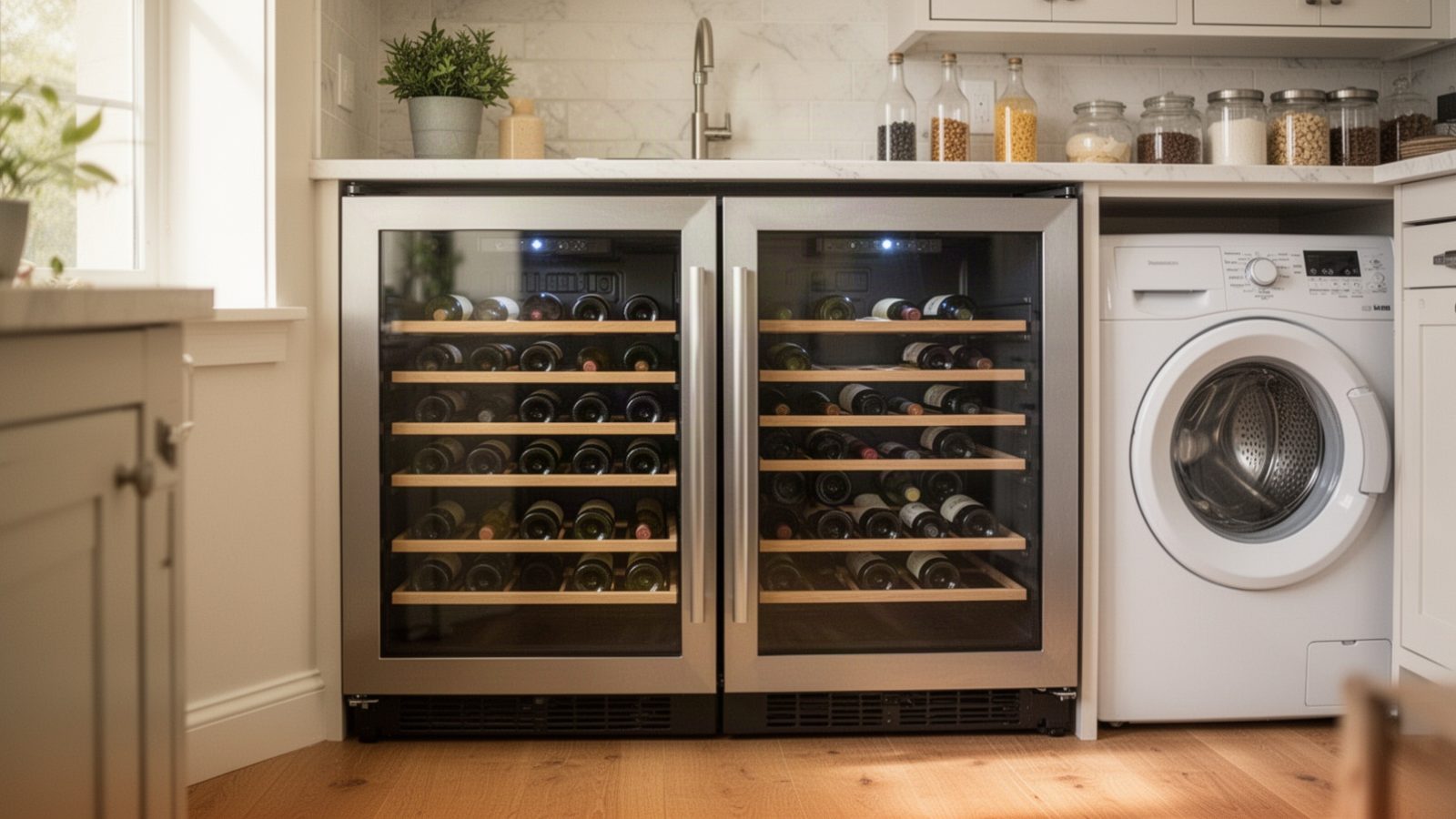
A built-in wine cooler slides into a cabinet opening under the counter, usually 15 or 24 inches wide, and sits flush with the surrounding cabinets. It looks tidy, frees up floor space and puts wine within easy reach in a kitchen, wet bar or butler's pantry.
What makes a cooler suitable for built-in use is the ventilation. Built-in models breathe through a grille at the bottom front, so they can run inside a cabinet without overheating. Freestanding coolers vent from the back or sides and will struggle, or fail early, if you box them in. We compared front-venting models from established brands on width, capacity, zones, cooling and build, and picked the best options for common opening sizes, from a slim 15-inch cooler to full 24-inch dual-zone units for kitchen remodels.
Our top picks
-
1
 Illustration
Best overall
Kalamera 24-Inch 46-Bottle Dual Zone Wine Cooler
Kitchen remodels with a 24-inch opening
Width24 inchesCoolingCompressorInstallationBuilt-in or freestanding (front vent) -
2
 Illustration
Best premium
Zephyr Presrv 24-Inch Dual Zone Wine Cooler
High-end kitchens where design matters
Width24 inchesCoolingCompressorInstallationBuilt-in or freestanding (front vent) -
3
 Illustration
Best 15-inch
Kalamera 15-Inch 30-Bottle Built-In Wine Cooler
Narrow openings next to a dishwasher or at the end of a run
Width15 inchesCoolingCompressorInstallationBuilt-in or freestanding (front vent)
Kalamera 24-Inch 46-Bottle Dual Zone Wine Cooler
Illustration
A front-venting 24-inch cooler with two zones and room for about 46 bottles.
Best for: Kitchen remodels with a 24-inch opening- Width
- 24 inches
- Cooling
- Compressor
- Installation
- Built-in or freestanding (front vent)
- Bottle capacity
- 46
- Zones
- Dual
What we like
- Front vent allows under-counter installation
- Two zones for reds and whites
- Room for about 46 bottles
- Can also be used freestanding
Keep in mind
- Needs a full 24-inch opening
- Wider bottles reduce real capacity
- Compressor hum in very quiet rooms
Kalamera's 24-inch dual-zone cooler is one of the most popular choices for kitchen remodels and wet bars, and it is easy to see why. It fits a standard 24-inch base-cabinet opening, vents through the front so it can sit under a counter, and holds about 46 standard bottles across two zones.
That means you can keep whites and sparkling wine ready to serve in one zone and reds a little warmer in the other, without pulling bottles from a rack and waiting for them to cool. Compressor cooling keeps the zones steady even in a warm kitchen.
As with any built-in, measure the opening carefully and leave the clearances listed in the manual. Collectors with lots of Burgundy or Champagne bottles should expect fewer than 46 to fit.
Bottom line: The best all-round built-in cooler for a 24-inch opening.
Zephyr Presrv 24-Inch Dual Zone Wine Cooler
Illustration
A design-focused 24-inch dual-zone wine cooler from a brand known for premium kitchen ventilation.
Best for: High-end kitchens where design matters- Width
- 24 inches
- Cooling
- Compressor
- Installation
- Built-in or freestanding (front vent)
- Zones
- Dual
What we like
- Premium styling that suits high-end kitchens
- Front vent for under-counter installation
- Two zones for reds and whites
- From an established kitchen-appliance brand
Keep in mind
- Premium-priced
- Capacity is similar to less expensive 24-inch models
- Check exact bottle capacity for your configuration
Zephyr is best known for premium range hoods, and its Presrv line brings the same design focus to wine and beverage cooling. The 24-inch dual-zone wine cooler is aimed at kitchens where the appliances are part of the look: it is built to sit flush under the counter, venting through the front, with two independently controlled zones.
You pay more for the styling and finish than for extra capacity. Bottle counts are in the same general range as other 24-inch dual-zone coolers, so check the specification sheet for the exact capacity of the version you are considering.
If you are designing a kitchen around premium appliances and want the wine cooler to match, it is a strong choice. If capacity per dollar matters most, the Kalamera does the same core job for less.
Bottom line: A stylish premium built-in for design-led kitchens.
Kalamera 15-Inch 30-Bottle Built-In Wine Cooler
Illustration
A slim front-venting cooler that fits a 15-inch opening and holds about 30 bottles.
Best for: Narrow openings next to a dishwasher or at the end of a run- Width
- 15 inches
- Cooling
- Compressor
- Installation
- Built-in or freestanding (front vent)
- Bottle capacity
- 30
What we like
- Fits a narrow 15-inch opening
- Front vent for under-counter use
- About 30 bottles in a slim footprint
- Can also be used freestanding
Keep in mind
- Smaller capacity than 24-inch models
- Check the zone layout of the version you choose
- Wider bottles reduce real capacity
Not every kitchen has a spare 24-inch opening, but many have room for a 15-inch unit beside the dishwasher, at the end of a cabinet run or in a small wet bar. Kalamera's 15-inch built-in cooler is designed for exactly that, with a front vent so it can sit under the counter and room for about 30 standard bottles.
That is a useful amount of storage for a slim footprint: enough for a rotating selection of everyday bottles plus a few special ones. Compressor cooling holds its temperature in a warm kitchen.
Check the zone layout of the exact version you buy, since narrow coolers are often single-zone, which is ideal for storage at around 55°F. Measure the opening carefully, and leave the clearances listed in the manual.
Bottom line: The best way to add wine storage to a narrow cabinet opening.
Side-by-side comparison
| Product | Width | Cooling | Installation | Bottle capacity | Score |
|---|---|---|---|---|---|
| Kalamera 24-Inch 46-Bottle Dual Zone Wine CoolerBest overall | 24 inches | Compressor | Built-in or freestanding (front vent) | 46 | 9.1 |
| Zephyr Presrv 24-Inch Dual Zone Wine CoolerBest premium | 24 inches | Compressor | Built-in or freestanding (front vent) | — | 8.9 |
| Kalamera 15-Inch 30-Bottle Built-In Wine CoolerBest 15-inch | 15 inches | Compressor | Built-in or freestanding (front vent) | 30 | 8.7 |
Specifications are from manufacturer listings at the time of writing and can change between production runs.
Front vent is non-negotiable
If the cooler will go under a counter or between cabinets, it must be designed for built-in installation, which means a front ventilation grille at the bottom. Many built-in models can also be used freestanding, but the reverse is not true. Check the manual for the required clearances; even front-vent units need a little space at the sides and top.
Measure the opening
Built-in coolers are made for standard cabinet widths:
- 15 inches: fits beside a dishwasher or at the end of a cabinet run. Typically holds about 25 to 35 bottles.
- 24 inches: replaces a standard base cabinet or sits where a dishwasher might. Typically holds about 40 to 50 bottles, often in two zones.
Measure width, height under the countertop and depth, and compare them with the cutout dimensions in the installation guide. Most models have adjustable legs to match counter height. Check the door swing and whether the door is reversible, and make sure the door can open far enough for the shelves to slide out.
Zones and capacity
A single-zone built-in holds everything at one temperature, ideal for long-term storage around 55°F or for a collection that is mostly one style. A dual-zone model lets you keep whites and reds at serving temperature at the same time. Bottle counts assume standard Bordeaux bottles, so wider bottles reduce real capacity. If you are torn between sizes, the larger opening is usually the better long-term choice, because collections tend to grow and a built-in cooler is harder to swap out later than a freestanding one.
Features worth paying for
- UV-protective, double-pane glass to protect wine from light.
- Full-extension sliding shelves so you can read labels without pulling bottles.
- Stainless-steel door trim that matches other appliances.
- A door lock for shared spaces.
- Reversible door hinges for flexible layouts.
Installation and care
Place the cooler on a level floor, follow the clearances in the manual and keep the front grille clear of kick plates or trim. Use a properly grounded outlet that the cooler can reach without an extension cord; if you need a new outlet in a cabinet, hire a licensed electrician and follow local codes. Let the cooler settle for the time the manual recommends before switching it on, and vacuum the front grille a few times a year to keep it running efficiently.
Frequently asked questions
Can I put a freestanding wine cooler under my counter?
Not unless the manual says it is suitable. Freestanding models vent heat from the back or sides, and enclosing them traps that heat, which makes them work harder, cool poorly and wear out sooner. Choose a front-venting built-in model for cabinet openings.
Can a built-in wine cooler be used freestanding?
Usually yes. Most front-venting models can stand on their own, which is useful if you want flexibility to move it later. Check the manual for any clearance requirements.
What size opening do I need?
Most built-in wine coolers are made for 15-inch or 24-inch openings with standard under-counter height. Measure your opening and compare it with the cutout dimensions in the installation guide before ordering.
What temperature should I set for long-term storage?
Around 55°F is the usual recommendation for aging wine of any color. If you want bottles ready to serve, a dual-zone cooler lets you keep one zone colder for whites and sparkling wine.
Do built-in wine coolers need a dedicated outlet?
Many manuals recommend a dedicated, properly grounded outlet, and they advise against extension cords. If there is no outlet in the cabinet space, have a licensed electrician add one to local code.
How we picked
We compared manufacturer and retailer specifications for width, ventilation design, bottle capacity, zones, cooling type, glass and shelving for built-in wine coolers from established brands sold in the US, and weighed how each suits common cabinet openings. Our picks and scores are based on this research — we have not tested these products hands-on. Brands cannot pay to be included. Read our full method.