






















The best baby bottles
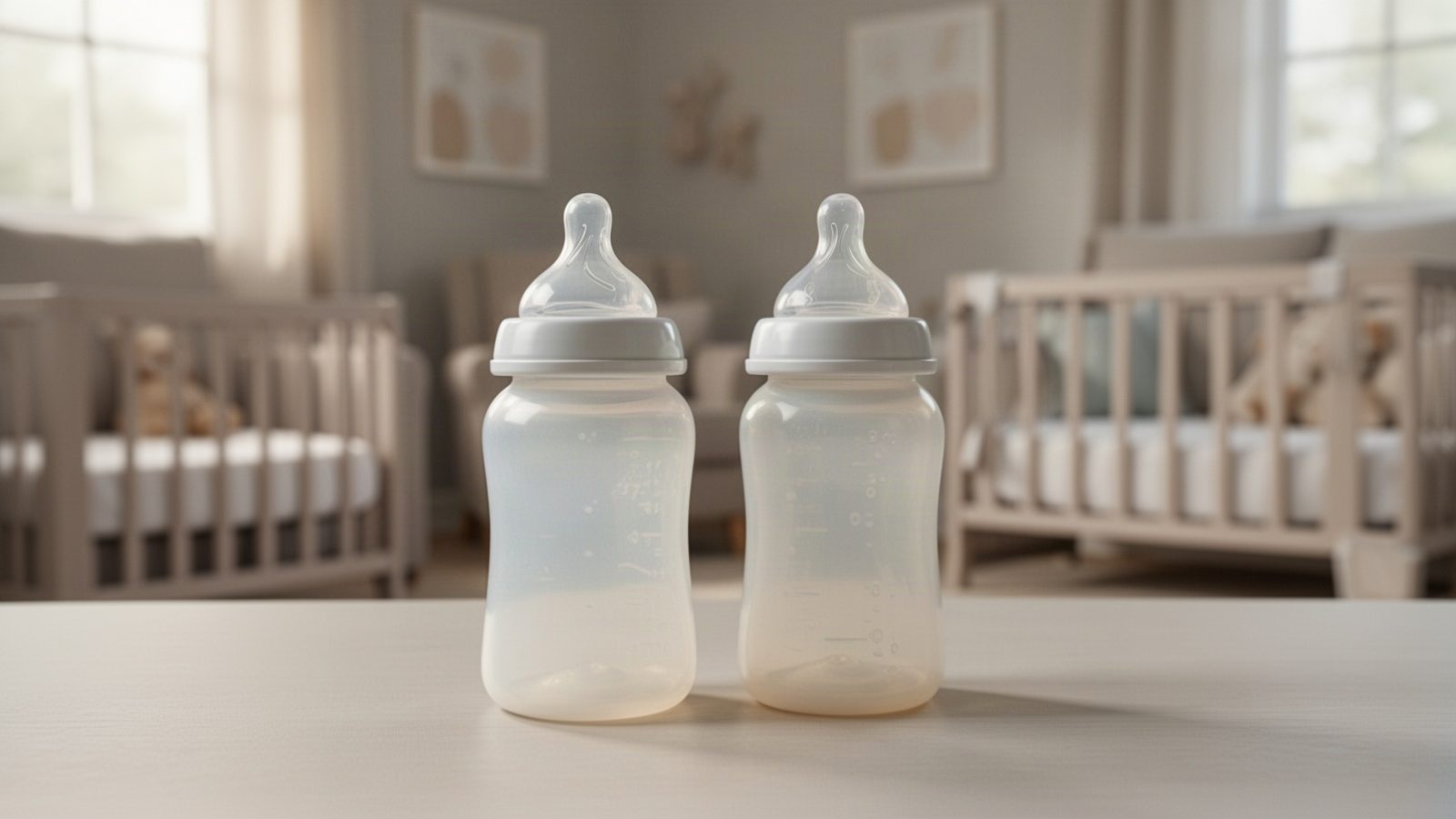
Six popular baby bottles compared by material, neck width and venting design — from vented plastic bottles to soft silicone and classic glass.
As an Amazon Associate I earn from qualifying purchases. When you buy through links on this page, we may earn a commission at no extra cost to you. Learn more
Baby bottles come in more shapes than you might expect: narrow and wide necks, internal vent systems, nipples with valves, squeezable silicone bodies and heavy glass. Babies often have opinions too, and the bottle a friend swears by may be one your baby refuses. That is why the smartest approach is to start with one or two bottles from a couple of brands instead of a giant starter set.
We compared the most popular bottles sold online by material, neck width, venting design, available sizes, number of parts to clean and sterilizing options. We describe each maker's design features factually; none of them is a fix for feeding problems. If your baby struggles with feeds, seems uncomfortable or isn't gaining weight as expected, talk to your pediatrician or a lactation consultant. Always follow the maker's instructions and current CDC guidance on cleaning and sanitizing feeding items.
Our top picks
-
1
 Illustration
Best overall
Dr. Brown's Options+ Baby Bottle
Parents who want a vented bottle with flexibility
MaterialPlastic (glass versions sold)NeckNarrow and wide-neck versionsVentingRemovable internal vent system -
2
 Illustration
Best wide-neck bottle
Philips Avent Natural Baby Bottle (Natural Response)
Combining breast and bottle feeding
MaterialPlastic (glass versions sold)NeckWideVentingValve built into the nipple -
3
 Illustration
Best silicone bottle
Comotomo Natural Feel Baby Bottle
Babies who prefer a soft, squeezable bottle
MaterialSiliconeNeckExtra-wideVentingTwo vents in the nipple base -
4
 Illustration
Best self-sterilizing
MAM Easy Start Baby Bottle
Parents who want sterilizing without extra gear
MaterialPlasticNeckWide openingVentingVented base -
5
 Illustration
Best premium
Hegen PCTO Feeding Bottle
Pumping parents who want one container system
MaterialPPSU plasticNeckExtra-wide, rounded-squareVentingValve in the nipple (maker) -
6
 Illustration
Best value glass
Evenflo Feeding Classic Glass Bottles
Families who want glass on a budget
MaterialGlassNeckStandard (narrow)VentingNo separate vent insert
Dr. Brown's Options+ Baby Bottle
Illustration
A widely used bottle with an internal vent system that can be removed as your baby gets older.
Best for: Parents who want a vented bottle with flexibility- Material
- Plastic (glass versions sold)
- Neck
- Narrow and wide-neck versions
- Venting
- Removable internal vent system
What we like
- Internal vent that the maker says keeps air away from the milk
- Vent can be removed later for fewer parts
- Narrow and wide-neck versions, plus glass
- Nipples and parts are easy to find
Keep in mind
- Vent parts add cleaning time
- Can leak if overfilled or assembled incorrectly
- More parts to lose than simple bottles
Dr. Brown's Options+ is one of the most familiar bottles in the US, built around an internal vent system: a tube and insert that let air into the bottle without passing through the milk, according to the maker. The "Options" part is that you can remove the vent once you and your baby no longer want it, which turns it into a simpler bottle with fewer parts to wash.
It comes in narrow and wide-neck versions, in plastic or glass, and nipples in several flow levels are easy to find. The maker includes a small brush for cleaning the vent.
The trade-off is maintenance. The vent pieces need cleaning after every feed, and the bottle can leak if you fill it past the line or don't seat the vent properly. Read the assembly instructions once and it becomes routine.
Bottom line: A flexible, widely available vented bottle that can simplify as your baby grows.
Philips Avent Natural Baby Bottle (Natural Response)
Illustration
A wide-neck bottle with few parts and a nipple the maker says releases milk when the baby actively drinks.
Best for: Combining breast and bottle feeding- Material
- Plastic (glass versions sold)
- Neck
- Wide
- Venting
- Valve built into the nipple
- Sizes
- 4, 9 and 11 oz
What we like
- Few parts, so it is quick to clean
- Wide neck is easy to fill
- Natural Response nipple, which the maker says releases milk as the baby actively drinks
- Glass versions available
Keep in mind
- Wide shape is harder for small hands to hold later
- Nipple flow levels can confuse at first
- Nipples don't fit other brands
The Philips Avent Natural bottle is a simple wide-neck design with very few parts: bottle, nipple, collar and cap. That makes it quick to wash and assemble, which you will appreciate at 3 a.m.
The Natural Response nipple is the key feature. Philips says it releases milk when the baby actively drinks rather than dripping freely, an approach many parents like when they are combining breastfeeding and bottles. The nipple has a valve built in for venting.
The wide, rounded body is easy to fill and clean but harder for an older baby to hold alone. Avent also sells glass versions and a separate anti-colic bottle with an extra vent, so check which one you are buying.
Bottom line: A simple, easy-to-clean bottle that suits families combining breast and bottle.
Comotomo Natural Feel Baby Bottle
Illustration
A soft silicone bottle with an extra-wide opening and two vents in the nipple base.
Best for: Babies who prefer a soft, squeezable bottle- Material
- Silicone
- Neck
- Extra-wide
- Venting
- Two vents in the nipple base
- Sizes
- 5 and 8 oz
What we like
- Soft, squeezable silicone body
- Extra-wide opening is easy to clean by hand
- Two vents built into the nipple base
- Won't shatter if dropped
Keep in mind
- Harder to read milk levels
- Silicone can pick up odors over time
- Premium-priced per bottle
Comotomo's bottle is made almost entirely of soft silicone, so it squeezes and flexes in a way plastic and glass don't. Some babies who resist hard bottles accept it more easily, though there is no guarantee.
The opening is very wide, so you can get a hand or sponge inside to clean it, and there are only a few parts. Two vents in the base of the nipple let air in as your baby drinks, per the maker.
Silicone has drawbacks. Measurement markings are harder to read than on clear plastic, and silicone can hold onto odors if bottles sit dirty. It is also premium-priced compared with plastic bottles.
Bottom line: A great second bottle to try if your baby turns down harder bottles.
MAM Easy Start Baby Bottle
Illustration
A vented-base bottle the maker designed to self-sterilize in the microwave.
Best for: Parents who want sterilizing without extra gear- Material
- Plastic
- Neck
- Wide opening
- Venting
- Vented base
- Sterilizing
- Self-sterilizes in the microwave (maker)
What we like
- Can be steam-sterilized in the microwave without a separate sterilizer, per the maker
- Vented base keeps the venting away from the nipple
- Soft silicone nipples
- Wide opening for filling
Keep in mind
- Vented base is another part to clean
- Nipples don't fit other brands
- Microwave sterilizing steps must be followed exactly
MAM's Easy Start bottle has a vent in the base rather than in the nipple or a tube. Air enters from the bottom as your baby drinks, which keeps the vent away from the nipple area.
Its standout feature is self-sterilizing: the maker designed the bottle so you add water, assemble it as directed and steam it in the microwave, no separate sterilizer needed. Follow MAM's exact steps, because getting it wrong can mean hot water or damaged parts.
The base adds a part to wash and check, and MAM nipples only fit MAM bottles. If you want one bottle system that handles sterilizing on its own, it is a practical choice.
Bottom line: A smart pick if you want to skip buying a sterilizer.
Hegen PCTO Feeding Bottle
Illustration
A premium-priced PPSU bottle with a rounded-square shape and a press-to-close, twist-to-open lid.
Best for: Pumping parents who want one container system- Material
- PPSU plastic
- Neck
- Extra-wide, rounded-square
- Venting
- Valve in the nipple (maker)
- Sizes
- 5, 8 and 11 oz
What we like
- Press-to-close, twist-to-open design
- Rounded-square shape stacks and stores neatly
- Converts to a storage container with a lid
- Durable PPSU plastic
Keep in mind
- Premium-priced
- Unusual shape won't suit every bottle warmer
- Works best inside the Hegen system
Hegen built its bottle around a whole system. The PCTO name stands for press-to-close, twist-to-open, and the bottle uses that mechanism instead of a screw collar. The rounded-square shape stands steady, stacks in the fridge and fits Hegen's storage lids, so the same container can go from pump to storage to feeding.
The body is PPSU, a durable plastic that handles heat well, and the nipple has a built-in valve, per the maker.
The catch is cost and compatibility. Hegen is premium-priced, and its shape doesn't fit every bottle warmer or sterilizer basket. It makes the most sense for pumping parents who will use the wider system.
Bottom line: A clever, well-made system for families who pump and store a lot of milk.
Evenflo Feeding Classic Glass Bottles
Illustration
Simple, budget-friendly glass bottles with a standard neck, sold in 4 and 8 oz sizes.
Best for: Families who want glass on a budget- Material
- Glass
- Neck
- Standard (narrow)
- Venting
- No separate vent insert
- Sizes
- 4 and 8 oz
What we like
- Budget-friendly glass
- Few parts to wash
- Glass doesn't scratch or hold odors
- Long-running, simple design
Keep in mind
- Heavier than plastic and can break
- No vent system
- Narrow neck is harder to clean without a brush
Evenflo's classic glass bottles are the no-frills way to switch to glass. They are simple narrow-neck bottles with a nipple, collar and cap, and they are budget-friendly, especially in multipacks.
Glass doesn't scratch or absorb odors, so these bottles can last for years with care. With few parts, they are quick to wash, though you will want a bottle brush for the narrow neck.
There is no separate vent system, and glass is heavier and breakable, so add silicone sleeves if you want better grip. If you are curious about glass but don't want to commit to a premium brand, this is the easy way to try it.
Bottom line: A simple, affordable entry into glass bottles.
Side-by-side comparison
| Product | Material | Neck | Venting | Sizes | Score |
|---|---|---|---|---|---|
| Dr. Brown's Options+ Baby BottleBest overall | Plastic (glass versions sold) | Narrow and wide-neck versions | Removable internal vent system | — | 9.2 |
| Philips Avent Natural Baby Bottle (Natural Response)Best wide-neck bottle | Plastic (glass versions sold) | Wide | Valve built into the nipple | 4, 9 and 11 oz | 9.0 |
| Comotomo Natural Feel Baby BottleBest silicone bottle | Silicone | Extra-wide | Two vents in the nipple base | 5 and 8 oz | 8.8 |
| MAM Easy Start Baby BottleBest self-sterilizing | Plastic | Wide opening | Vented base | — | 8.6 |
| Hegen PCTO Feeding BottleBest premium | PPSU plastic | Extra-wide, rounded-square | Valve in the nipple (maker) | 5, 8 and 11 oz | 8.5 |
| Evenflo Feeding Classic Glass BottlesBest value glass | Glass | Standard (narrow) | No separate vent insert | 4 and 8 oz | 8.2 |
Specifications are from manufacturer listings at the time of writing and can change between production runs.
Material: plastic, glass or silicone
- Plastic (usually polypropylene or PPSU) is light, shatter-resistant and the most common choice. Look for BPA-free bottles, and replace any that are scratched or cloudy.
- Glass doesn't stain or hold odors and lasts for years, but it is heavier and can break. Silicone sleeves help with grip.
- Silicone bottles are soft and squeezable and won't shatter, but they can be harder to see milk levels through and may pick up odors.
Neck width and nipple shape
Narrow-neck bottles are slim and easy for small hands to hold later, and they tend to be budget-friendly. Wide-neck bottles are easier to fill and clean, and their broader nipples appeal to some breastfed babies. Every brand has its own nipple shape, so nipples rarely swap between brands.
Start with the slowest flow nipple the maker offers for newborns. Move up a level when the maker's age guidance and your baby's cues suggest it, for example if feeds take a very long time or your baby seems frustrated. A lactation consultant can show you paced bottle feeding if you are combining breast and bottle.
Venting and "anti-colic" labels
Many bottles are marketed as anti-colic. In practice, that label describes a venting design: an internal tube, a valve in the nipple or a vented base that lets air into the bottle as milk flows out, so the nipple doesn't collapse. Some parents prefer vented bottles, but venting is a design feature, not a medical promise. More vent parts also mean more to clean.
How many bottles, and what sizes
Exclusively bottle-fed babies typically need six to ten bottles so you aren't washing after every feed; occasional bottle users need two or three. Start with small sizes (around 4 to 5 oz), then add larger ones as feeds grow. Buy a couple of brands in small numbers before you commit.
Cleaning, sterilizing and safe feeding
Sterilize new bottles before first use and follow the maker's cleaning instructions. Current CDC guidance recommends cleaning feeding items after every use and sanitizing them regularly, especially for young or premature babies. Inspect nipples before each use and replace any that are cracked, thin or sticky. Don't warm bottles in the microwave, because it can create hot spots; test the temperature on the inside of your wrist. Never prop a bottle and leave your baby to feed alone.
What to skip
Large starter sets with every size and accessory are a gamble until you know which bottle your baby accepts. Prep gadgets are optional, too: a bottle brush, a drying rack and a clean basin cover the basics.
Frequently asked questions
How many baby bottles do I need?
If you bottle-feed full-time, six to ten bottles is a common range so you can wash in batches. If you mainly breastfeed and use bottles occasionally, two or three is usually enough to start.
When should I move to a faster-flow nipple?
Use the maker's age guide as a starting point, then watch your baby. Very long feeds, frustration or sucking hard with little milk can be signs it is time. If you breastfeed too, ask a lactation consultant before speeding up the flow.
Do I need to sterilize baby bottles?
Sterilize new bottles before first use. After that, wash after every feed, and follow current CDC guidance on sanitizing regularly, which matters most for babies who are very young, premature or have weakened immune systems. Your pediatrician can advise for your situation.
Are glass bottles better than plastic?
Neither is automatically better. Glass doesn't scratch or hold odors but is heavier and can break; plastic is light and durable but should be replaced when scratched or cloudy. Many families use both.
Can I use one brand's nipples on another brand's bottle?
Usually not. Nipples and collars are designed for their own bottles, and mixing them can cause leaks or a poor seal. Stick with the maker's matching parts.
Will an anti-colic bottle help my fussy baby?
Anti-colic is a marketing label for venting designs, not a treatment. If your baby cries a lot, spits up often or seems uncomfortable with feeds, talk to your pediatrician.
How we picked
We compared manufacturer information on materials, neck width, venting design, available sizes, number of parts, cleaning and sterilizing instructions for popular baby bottles sold online. We describe venting features as the makers do and make no medical claims for any bottle. Our picks and scores are based on this research — we have not tested these products hands-on. Brands cannot pay to be included. Read our full method.