






















The best A-style mandolins
Four A-style mandolins compared — from an affordable starter to hand-carved, all-solid models from Eastman, Kentucky and The Loar — with advice on carved tops, f-holes and setup.
As an Amazon Associate I earn from qualifying purchases. When you buy through links on this page, we may earn a commission at no extra cost to you. Learn more
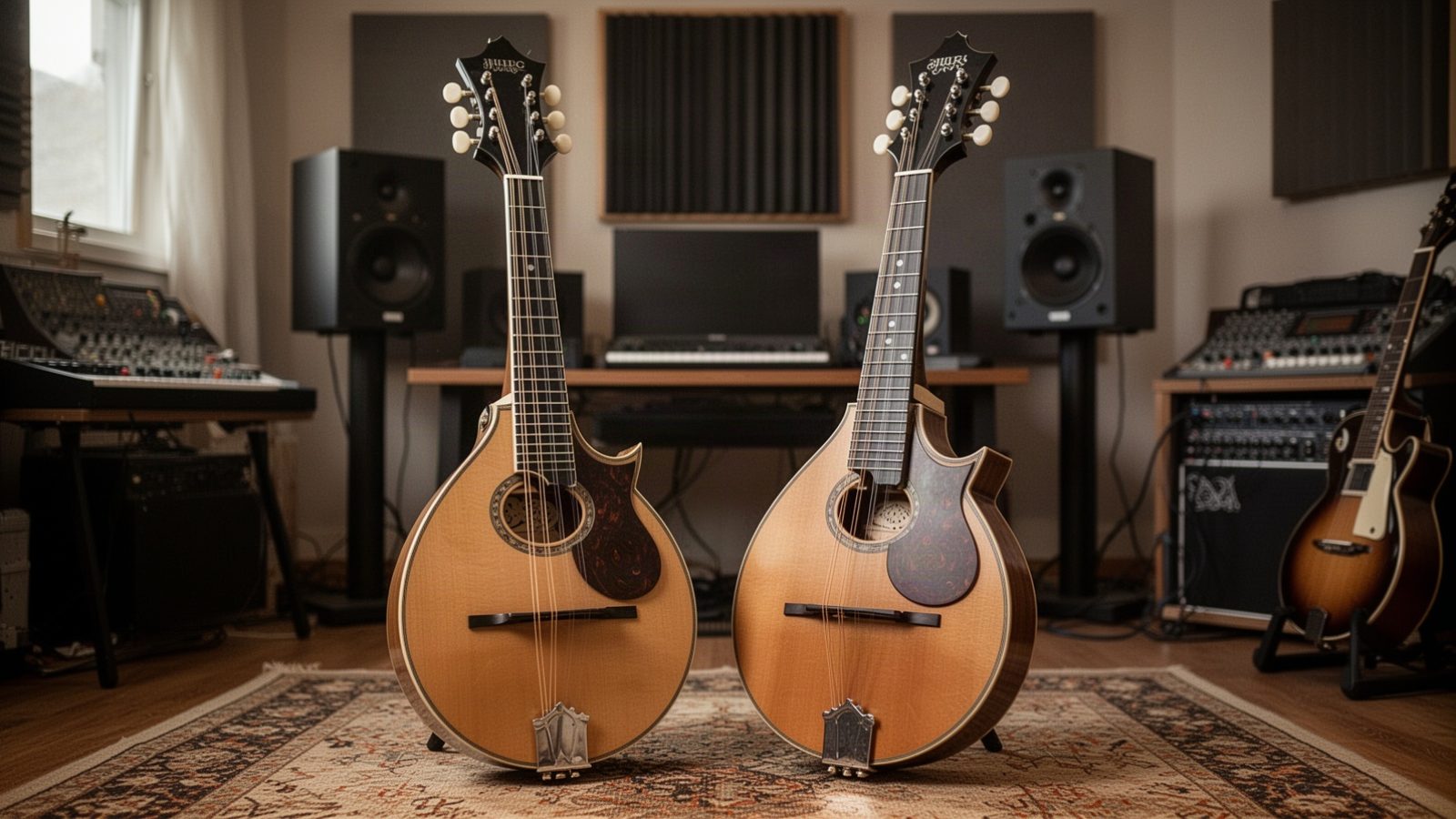
The A-style mandolin is the simple, teardrop-shaped body without the scroll and points of the fancier F-style. That simpler shape takes far less labor to build, so at any given price an A-style usually puts more of your money into the parts that affect sound: a carved solid top, solid back and sides, and a proper setup. It is the sensible choice for most players learning bluegrass, folk, Celtic or old-time music.
Mandolins are small, but they are demanding instruments. Eight strings in pairs at high tension mean a poorly made or badly set-up mandolin is hard to play and hard to keep in tune. We compared long-running A-style models from Eastman, Kentucky, The Loar and Ibanez, weighing top construction, sound-hole style and reputation for build quality, and picked the best option for different budgets and goals.
Our top picks
-
1
 Illustration
Best overall
Eastman MD305 All-Solid A-Style Mandolin
Serious beginners and improving players who want a mandolin for life
TopSolid carved spruceBack & sidesSolid mapleScale length13-7/8 inches -
2
 Illustration
Best value carved mandolin
Kentucky KM-150 Standard A-Model Mandolin
Beginners who want an all-solid carved mandolin at a lower outlay
TopHand-carved solid spruceBack & sidesSolid mapleScale length13-7/8 inches -
3
 Illustration
Best budget carved top
The Loar LM-110 Honey Creek A-Style Mandolin
Budget-minded beginners who still want a hand-carved solid top
TopHand-carved solid spruceBack & sidesMapleScale lengthAbout 13-7/8 inches -
4
 Illustration
Best entry-level
Ibanez M510 A-Style Mandolin
Guitarists and beginners trying mandolin for the first time
TopSpruceBack & sidesLaminated hardwoodScale lengthAbout 13-3/4 inches (350 mm)
Eastman MD305 All-Solid A-Style Mandolin
Illustration
A hand-carved, all-solid A-style with f-holes, an ebony fingerboard and an adjustable ebony bridge.
Best for: Serious beginners and improving players who want a mandolin for life- Top
- Solid carved spruce
- Back & sides
- Solid maple
- Scale length
- 13-7/8 inches
- Sound holes
- F-holes
- Fingerboard
- Ebony
What we like
- Carved solid spruce top with solid maple back and sides
- Ebony fingerboard and adjustable compensated bridge
- Eastman has a strong reputation for build quality
- Usually comes with a padded gig bag
Keep in mind
- Mid-priced, a bigger outlay than starter mandolins
- Satin finish shows wear over time
- Solid woods need humidity care
Eastman has built a strong reputation for hand-carved instruments at sensible prices, and the MD305 is one of the most recommended A-style mandolins for players who want to buy once. It is all-solid: a carved spruce top over carved solid maple back and sides, with f-holes for the punchy, focused sound bluegrass players look for.
The fittings match the woods. An ebony fingerboard, an adjustable compensated ebony bridge and a bone nut are details you usually see on pricier mandolins, and they help with intonation, sustain and long-term durability. A padded gig bag is typically included.
The trade-offs are cost and care. It is mid-priced, so it is a bigger commitment than starter mandolins, and solid woods need humidity control in dry climates. The satin finish is thin, which helps the top vibrate but will show wear with heavy playing. For a mandolin that will not hold you back, it is the pick.
Bottom line: An all-solid, hand-carved A-style that many players never need to replace.
Kentucky KM-150 Standard A-Model Mandolin
Illustration
A long-running all-solid A-model with a hand-carved spruce top, solid maple body and classic sunburst finish.
Best for: Beginners who want an all-solid carved mandolin at a lower outlay- Top
- Hand-carved solid spruce
- Back & sides
- Solid maple
- Scale length
- 13-7/8 inches
- Sound holes
- F-holes
What we like
- Hand-carved, all-solid construction
- Long track record as a recommended first mandolin
- High-gloss sunburst finish looks traditional
- Padded gig bag usually included
Keep in mind
- Open-geared tuners are basic
- Benefits from a professional setup
- High-gloss finish shows scratches and fingerprints
The Kentucky KM-150 has been one of the go-to first mandolins for years, because it offers carved, all-solid construction at a level where many rivals still use laminated tops. The top is hand-carved solid spruce, the back and sides are solid maple, and the scale is the standard 13-7/8 inches.
For a beginner, that construction matters. A carved solid top gives a stronger, more responsive voice than a pressed one, so the KM-150 sounds like a real bluegrass mandolin rather than a toy. Its high-gloss sunburst finish and snakehead headstock give it a traditional look, and it usually ships with a padded gig bag.
The compromises are in the details. The open-geared tuners are serviceable but basic, and owners commonly recommend a professional setup to dial in string height and bridge position. With that done, it is a mandolin many players keep well past the beginner stage.
Bottom line: A proven all-solid, carved mandolin that gives beginners a real bluegrass voice.
The Loar LM-110 Honey Creek A-Style Mandolin
Illustration
A hand-carved solid spruce-top A-style with maple back and sides and a slim neck profile.
Best for: Budget-minded beginners who still want a hand-carved solid top- Top
- Hand-carved solid spruce
- Back & sides
- Maple
- Scale length
- About 13-7/8 inches
- Neck
- Maple, slim V profile
What we like
- Hand-carved solid spruce top at an affordable level
- Slim V neck is comfortable for many players
- Satin brownburst finish has a vintage look
- Version with a built-in pickup available (LM-110E)
Keep in mind
- Less refined fittings than the Eastman
- Setup may need adjustment
- Availability can vary by finish
The Loar specializes in vintage-inspired mandolins and archtop guitars, and the LM-110 — also sold as the Honey Creek A-Style — is its affordable hand-carved model. It pairs a hand-carved solid spruce top with maple back and sides and a maple neck with a slim V profile.
The carved solid top is the reason to choose it over budget pressed-top mandolins. On paper it should deliver a punchier, more responsive voice, which is what beginners need to hear progress. The satin brownburst finish gives it an understated vintage look, and an LM-110E version adds a pickup for players who need to plug in.
The trade-offs are in refinement. Fittings and hardware are simpler than on the Eastman, and owners suggest checking the setup — especially the bridge position and string height — when it arrives. As an affordable way to get a carved top, it is a strong contender.
Bottom line: An affordable way into a hand-carved solid-top mandolin with vintage style.
Ibanez M510 A-Style Mandolin
Illustration
An affordable A-style mandolin with a spruce top from a widely available brand.
Best for: Guitarists and beginners trying mandolin for the first time- Top
- Spruce
- Back & sides
- Laminated hardwood
- Scale length
- About 13-3/4 inches (350 mm)
- Frets
- 20
What we like
- Most affordable pick in this guide
- Widely available from a familiar brand
- Several sunburst finishes
- Good way to find out whether mandolin suits you
Keep in mind
- Not a carved solid top, so less punch and volume
- Basic tuners and hardware
- Often needs a setup for comfortable playing
The Ibanez M510 is an affordable way to try mandolin. It is an A-style instrument with a spruce top and laminated back and sides, a 350 mm scale and 20 frets, offered in several sunburst finishes. Ibanez’s wide distribution makes it easy to find, and it is a common choice for guitarists who want to add mandolin parts to their playing.
The key difference from the other picks is construction. The M510 does not have a hand-carved solid top, so on paper it will sound less punchy and less loud than the Eastman, Kentucky or Loar. For learning chord shapes, melodies and tremolo picking, though, it does the job.
Expect to budget for a basic setup: lowering the action and adjusting the floating bridge can transform how a budget mandolin plays. If you fall for the instrument, plan to step up to a carved-top model later.
Bottom line: An affordable, low-risk way to try mandolin — just budget for a setup.
Side-by-side comparison
| Product | Top | Back & sides | Scale length | Sound holes | Score |
|---|---|---|---|---|---|
| Eastman MD305 All-Solid A-Style MandolinBest overall | Solid carved spruce | Solid maple | 13-7/8 inches | F-holes | 9.2 |
| Kentucky KM-150 Standard A-Model MandolinBest value carved mandolin | Hand-carved solid spruce | Solid maple | 13-7/8 inches | F-holes | 8.9 |
| The Loar LM-110 Honey Creek A-Style MandolinBest budget carved top | Hand-carved solid spruce | Maple | About 13-7/8 inches | — | 8.5 |
| Ibanez M510 A-Style MandolinBest entry-level | Spruce | Laminated hardwood | About 13-3/4 inches (350 mm) | — | 7.8 |
Specifications are from manufacturer listings at the time of writing and can change between production runs.
Carved top or pressed top?
This is the most important decision. Carved tops are shaped from a thick piece of solid wood, usually spruce, into an arch — the traditional way to build a mandolin. They respond quickly, project well and have the strong, punchy sound associated with bluegrass. Pressed or laminated tops are bent into shape, which is cheaper but produces a less powerful, less complex tone. If your budget allows, a hand-carved solid top is worth stretching for.
F-holes or oval hole?
- F-holes give a punchy, focused, “chop”-friendly sound with a quick decay — the classic bluegrass voice.
- Oval sound holes produce a sweeter, more sustained and rounder tone that suits folk, Celtic and classical styles.
Neither is better; choose based on the music you want to play.
Why the setup matters so much
Mandolins have eight strings at high tension and a floating bridge held in place only by string pressure. A good setup — correct string height at the nut and bridge, a properly fitted bridge and accurate intonation — makes a huge difference to playability. Many specialist dealers set up mandolins before shipping; if yours feels hard to play, a local shop can adjust it.
Because the bridge is not glued, it can move when you change strings. Change one string pair at a time, and mark the bridge position lightly with low-tack tape before you start.
What to expect at different levels
- Budget-friendly starters usually have laminated or pressed tops. Fine for trying the instrument, but they can sound boxy.
- Mid-priced hand-carved models with solid tops are where mandolins start to sound and play like the real thing.
- All-solid carved models with ebony fittings and quality tuners are instruments many players keep for life.
Care tips
Mandolins are tuned G-D-A-E, like a violin, and need frequent tuning at first. Keep solid-wood mandolins in a case with a humidifier during dry months, and never leave them in a hot car. Wipe the strings after playing; mandolin strings corrode quickly. Pick choice matters more than guitarists expect: a medium-heavy to heavy pick gives a fuller tone and better control across paired strings than a thin, floppy one.
Frequently asked questions
What is the difference between an A-style and an F-style mandolin?
The body shape. A-style mandolins have a simple teardrop shape, while F-style models add a decorative scroll and points. F-styles take more work to build and cost more, but an A-style with the same top and woods can sound just as good.
Is the mandolin hard to learn?
Its short scale makes chords and melodies reachable, and it is tuned like a violin, so violin players adapt quickly. The paired strings and high tension take some finger strength, and a good setup makes learning much easier.
Should a beginner buy an f-hole or oval-hole mandolin?
Choose f-holes for bluegrass and a punchy, cutting tone, or an oval hole for folk, Celtic and a sweeter, more sustained sound. Both are fine for learning.
How often should mandolin strings be changed?
Every one to three months for regular players, or when they sound dull or will not stay in tune. Change one pair at a time so the floating bridge stays in place.
Do I need a pickup on a mandolin?
Only if you will play through an amp or PA. Many models are offered in versions with built-in pickups, and add-on pickups are available for acoustic mandolins.
How we picked
We compared manufacturer specifications — top construction, back and sides, sound-hole style, scale length, fittings and included cases — for long-running A-style mandolins that are consistently available online, and weighed how mandolin teachers and players describe their sound, setup and build quality. Our picks and scores are based on this research — we have not tested these products hands-on. Brands cannot pay to be included. Read our full method.